Artwork
Untitled
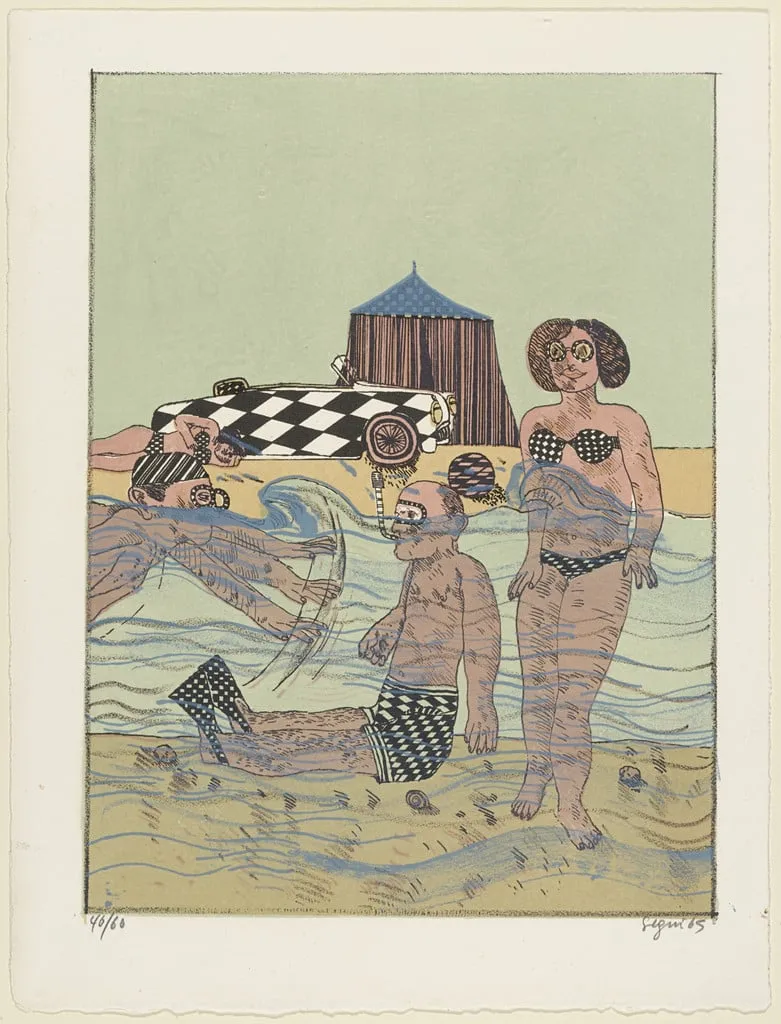
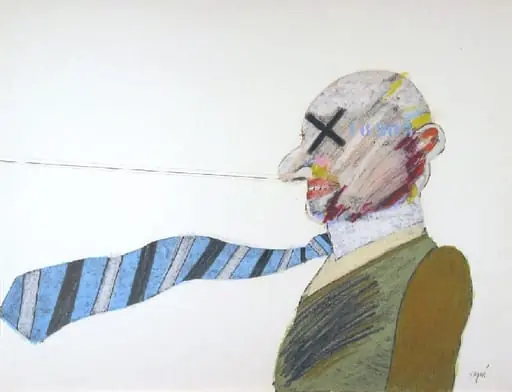
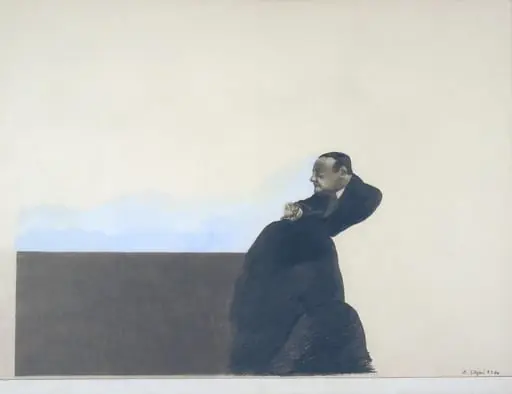
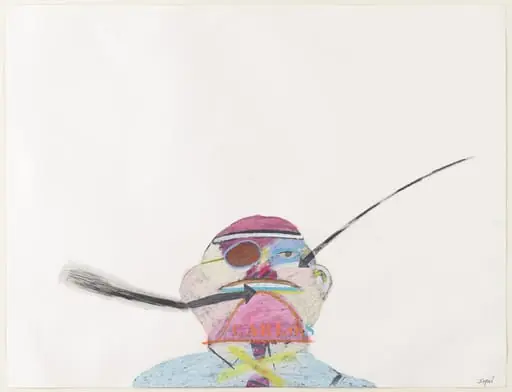
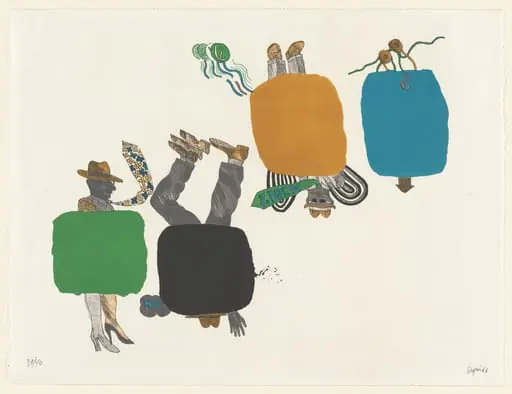
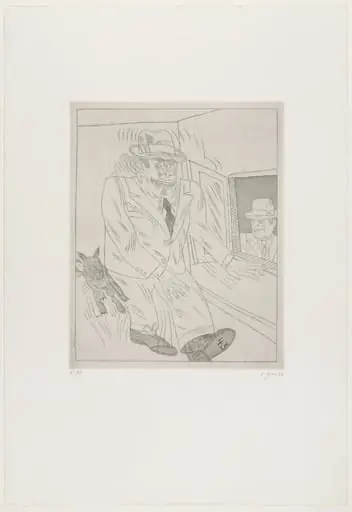
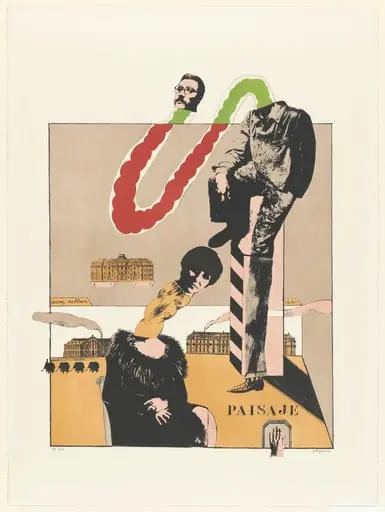
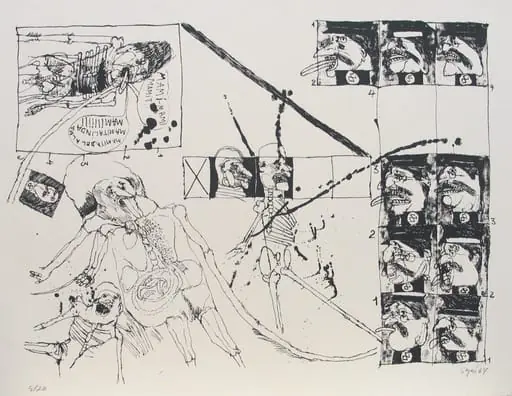
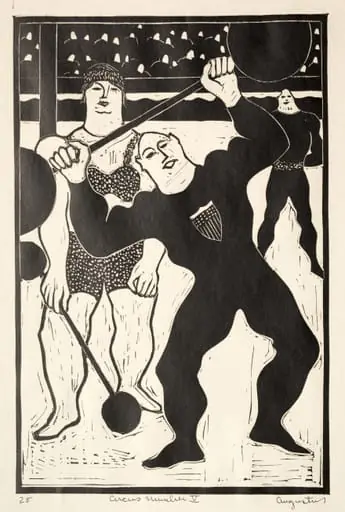
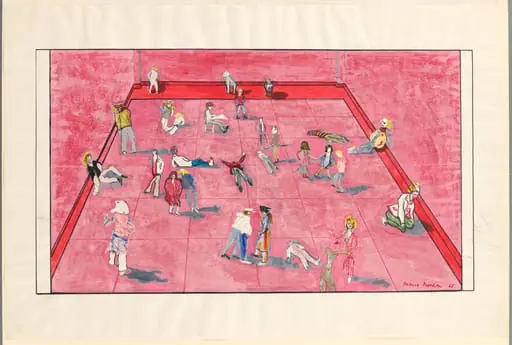
Untitled is an ink print by Antonio Segui. It dates from 1965 and is held in the collection of the Museum of Modern Art. Antonio Seguí created this lithograph in 1965, part of his series exploring everyday scenes with a stylized, graphic sensibility.
About this work
Overview
Antonio Seguí created this lithograph in 1965, part of his series exploring everyday scenes with a stylized, graphic sensibility. The work is held in the collection of The Museum of Modern Art. Its composition captures a quiet beach moment through simplified forms and flat, saturated colors, avoiding realistic detail in favor of rhythmic visual patterns that suggest movement and mood.
Subject & Meaning
The scene depicts three figures at a seaside location: one seated in shallow water, another standing with glasses, and a third floating face-down.
The scene depicts three figures at a seaside location: one seated in shallow water, another standing with glasses, and a third floating face-down. A striped beach hut and a parked car anchor the background. The submerged figure introduces ambiguity—neither clearly alive nor dead—inviting contemplation without resolution. The work avoids narrative clarity, instead emphasizing the quiet strangeness of ordinary leisure.
Technique & Style
Seguí employed lithography to achieve bold, unmodulated color fields and clean outlines. The sand is rendered in warm yellow, the sea in pale blue with rhythmic wave lines. Forms are reduced to essential shapes—circles for heads, rectangles for the car and hut—creating a graphic, almost cartoon-like rhythm. The absence of shading and fine detail enhances the work’s playful, detached tone.
History & Provenance
Created in 1965, the lithograph entered The Museum of Modern Art’s collection shortly after its production. It reflects Seguí’s engagement with postwar printmaking in Europe and his interest in capturing urban and leisure scenes with a distinctive, ironic detachment. The work has remained in institutional hands since acquisition, with no known private ownership history.
Context
In mid-1960s Europe, artists like Seguí responded to mass culture with stylized imagery that blurred the line between illustration and fine art. This print aligns with broader trends in pop-inflected printmaking, where mundane subjects—beaches, cars, swimwear—were elevated through graphic simplification. Seguí’s approach avoided overt political commentary, favoring subtle, observational wit.
Legacy
The work exemplifies Seguí’s enduring interest in the visual poetry of daily life. Its influence can be seen in later artists who use print media to explore social rituals with minimalism and ambiguity. While not widely reproduced, it remains a key example of how lithography could convey emotional nuance through restraint and formal clarity.
Artist & collection

Artist
Antonio Hugo Seguí was an Argentine cartoonist, painter, engraver, book illustrator, and sculptor, who lived and worked in Paris.