Artwork
Female Saint
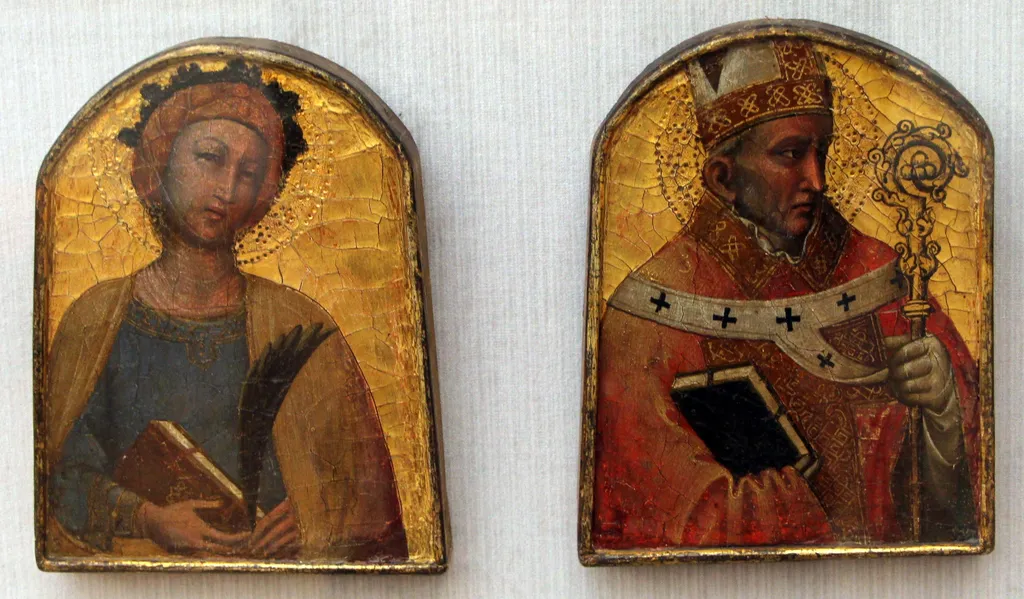
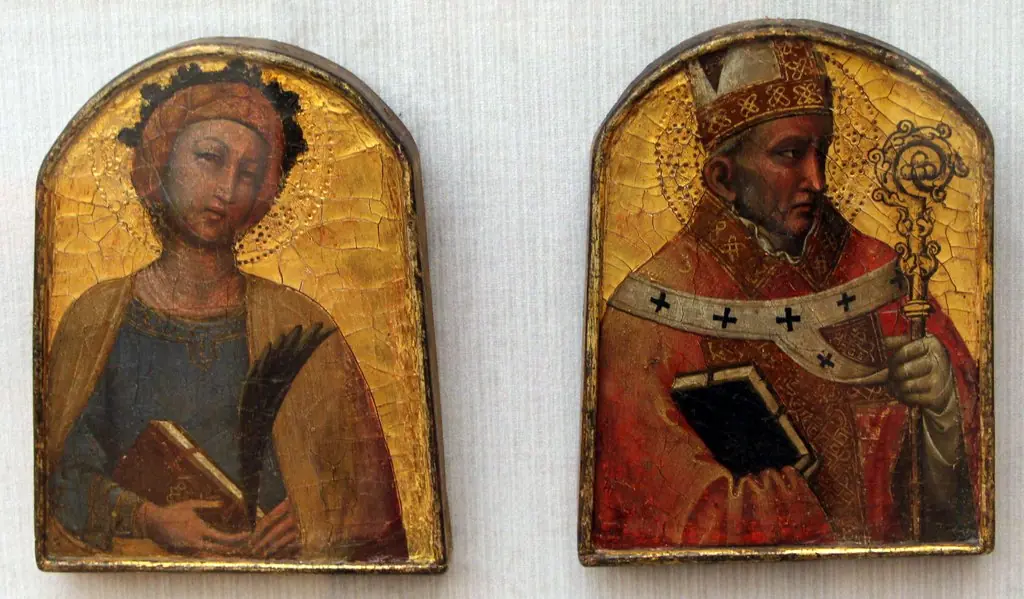
Female Saint is a paint painting by the Byzantine icon painting artist Antonio Veneziano. It dates from 1400 and is held in the collection of the Gemäldegalerie Berlin.
About this work
Overview
Female Saint is a panel painting by Antonio Veneziano, dated to around 1400. It forms part of a diptych, paired with a depiction of a male saint. Both panels share a gold-leaf background and formal composition, typical of late medieval devotional art. The work is currently held in the Gemäldegalerie, Berlin, where it is displayed as a pair, reflecting its original liturgical function.
Subject & Meaning
The female saint is portrayed with a book, indicating her scholarly or scriptural authority, common in representations of learned holy women.
The female saint is portrayed with a book, indicating her scholarly or scriptural authority, common in representations of learned holy women. Her blue robe and gold cloak signify purity and divine status, while the accompanying male saint likely represents a male martyr or bishop. Together, the pair may have served as altarpiece companions, reinforcing complementary ideals of sanctity through gendered symbolism.
Technique & Style
The painting employs tempera on wood with extensive gold leafing, a technique common in early 15th-century Italian panels. Rich pigments and intricate textile patterns in the robes reflect attention to detail, while the flat, frontal pose and lack of spatial depth align with Byzantine traditions. The use of color and ornamentation prioritizes symbolic presence over naturalism, characteristic of the transitional phase before full Renaissance perspective.
History & Provenance
The diptych originated in southern Italy, likely Sicily, where Veneziano was active. It entered the Gemäldegalerie Berlin’s collection in the 19th century, possibly through the acquisition of private ecclesiastical holdings. Its survival as a matched pair is uncommon, as many diptychs were separated over time. The panels retain their original frames, suggesting minimal later intervention.
Context
Created during the early Renaissance, the work reflects the persistence of medieval iconographic conventions in southern Italy, even as northern centers embraced new spatial and anatomical approaches. The gold background and hierarchical scale signal its devotional purpose, likely intended for private prayer or chapel use. Such panels were often commissioned by wealthy patrons seeking spiritual intercession through saintly imagery.
Legacy
Female Saint and its companion remain important examples of late Gothic painting in the Italian south. They illustrate how traditional forms endured alongside emerging humanist trends. The diptych contributes to scholarly understanding of regional artistic practices and the continuity of religious iconography across the transition from medieval to Renaissance aesthetics.
Artist & collection
Artist
Antonio Veneziano painted delicate panels of saints and angels around the turn of the 1400s, their gold halos glowing against soft reds and blues.

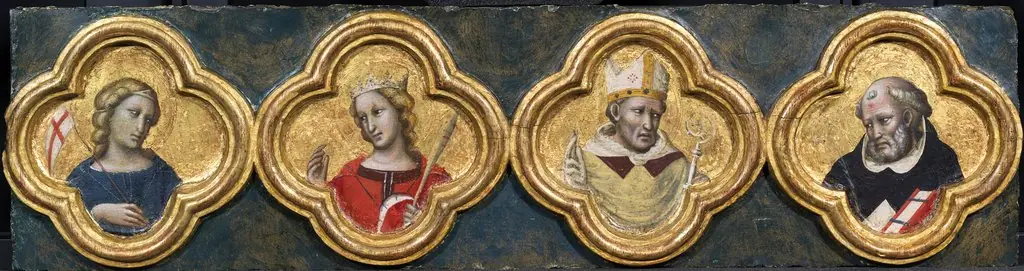 Four Saints: St Ursula, St Catherine, ?St Augustine and St Dominic
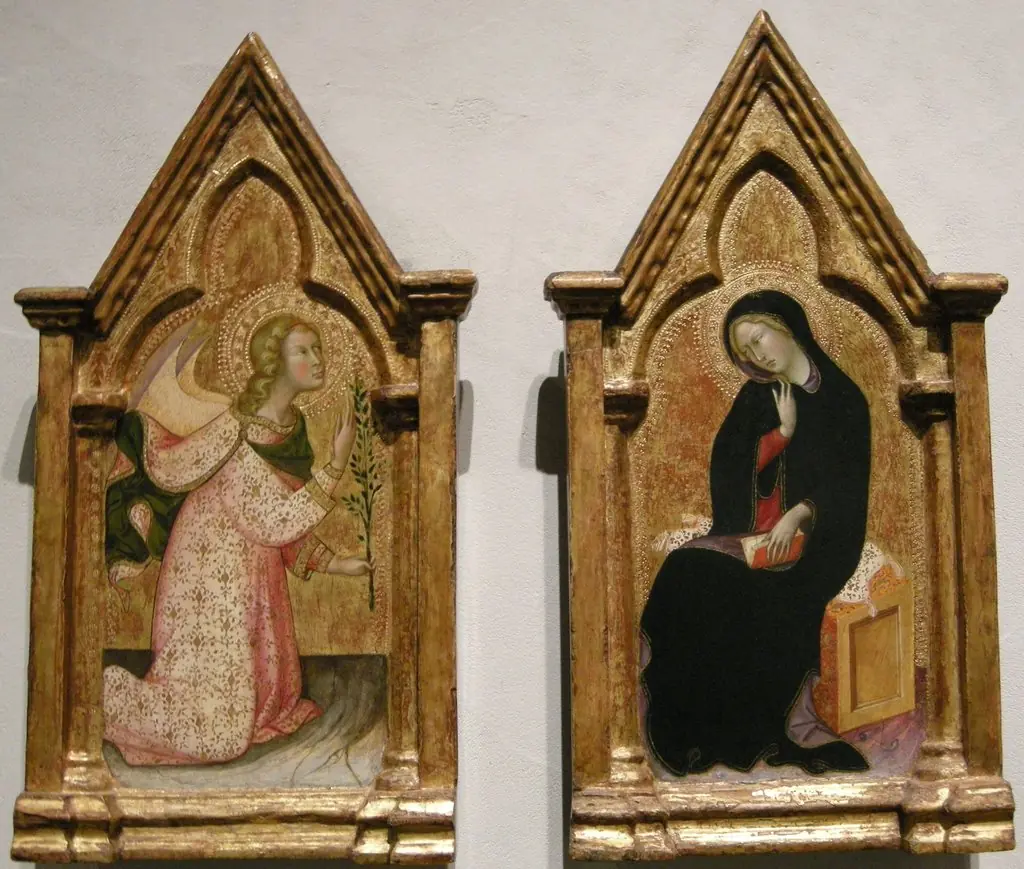 Untitled
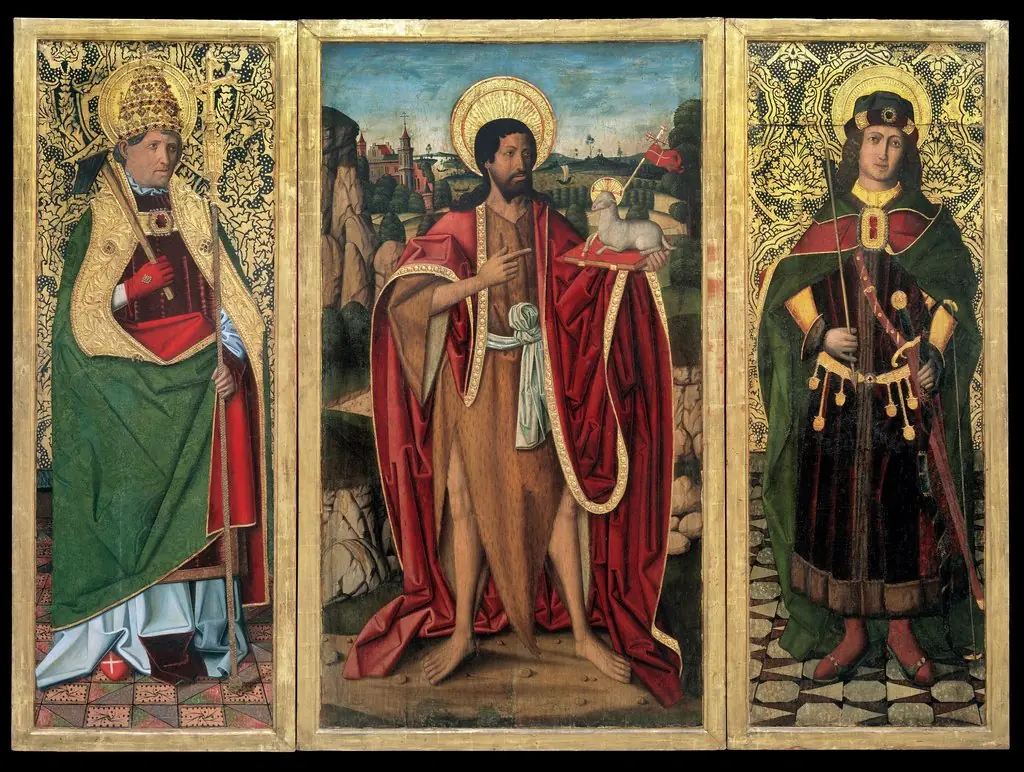 Saint John the Baptist, Saint Fabian and Saint Sebastian
 Saints John the Evangelist(?) and Martin of Tours
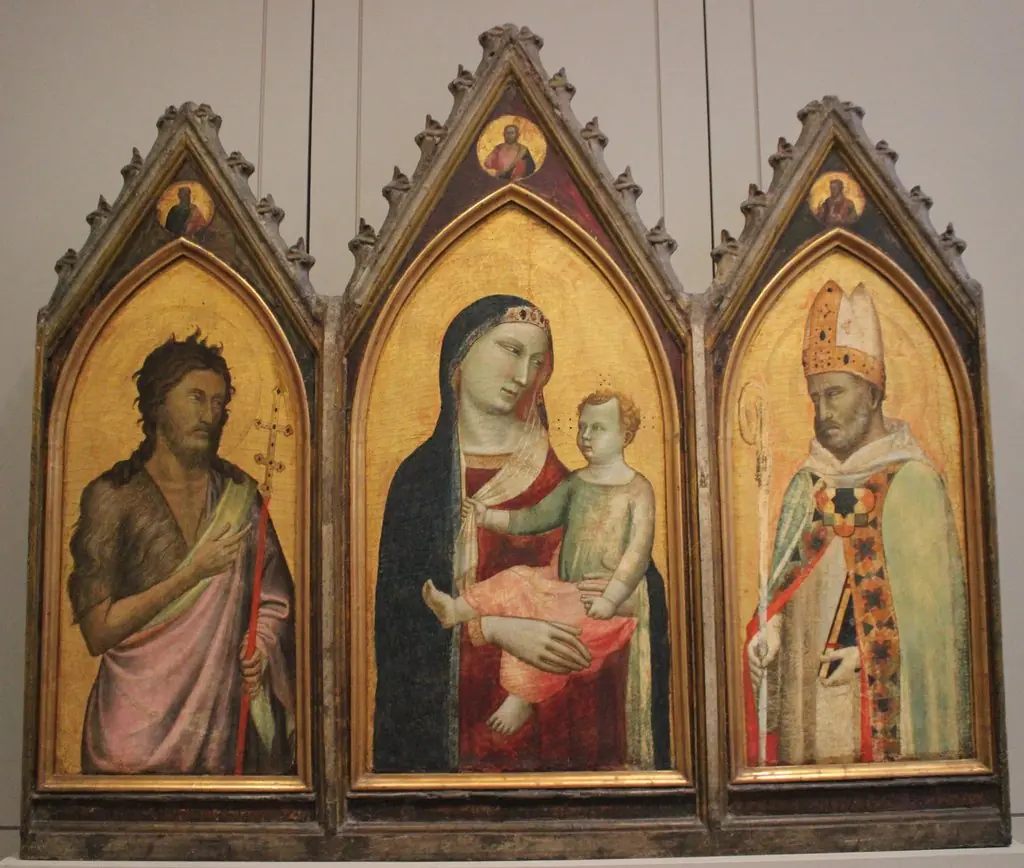 Virgin and Child with Saints John the Baptist and Giles, Two Prophets, and Christ the Redeemer
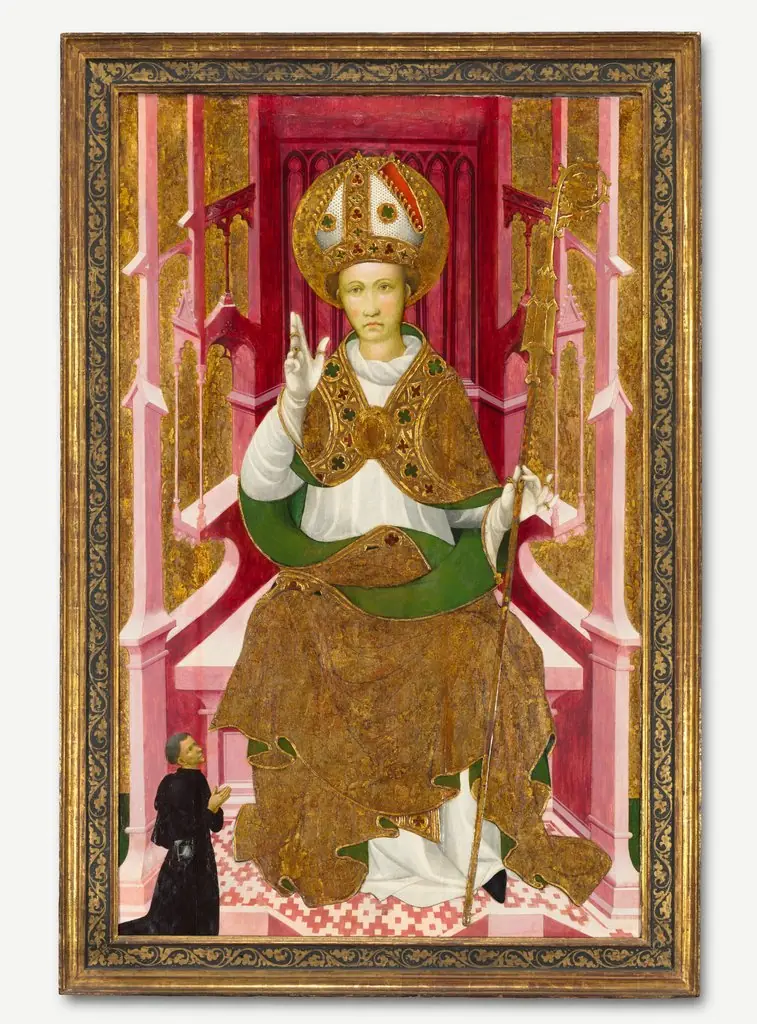 A Bishop Saint with a Donor (Saint Louis of Toulouse?)
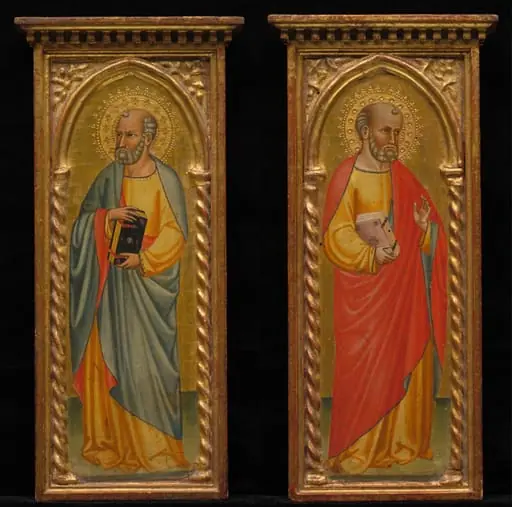 Standing Saint and Saint in Red Cloak (pair)
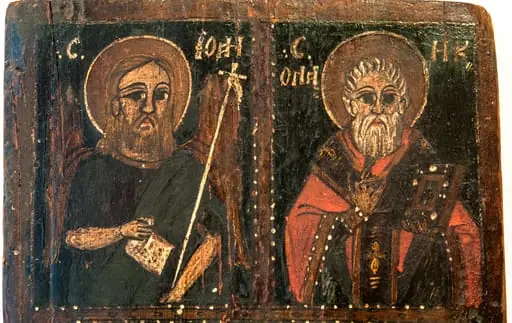 Câmpul icoanei este împărțit în patru casete dreptunghiulare în care sunt redati 3/4: Sfântul Ioan Botezătorul(ipostaza de înger al pustiului, în stânga cu o cruce, în dreapta un rotulus, mantie verde peste blana de cămilă), sfântul Nicolae ierarh(sacos roșu, capul desoperit, binecuvântând cu stânga, în dreapta Evanghelia), Arghanghelul Mihail(cu sabia de foc în stânga, în dreapta un înscris), Arhanghelul Gavriil(cu o floare în dreapta, cruce în stânga). Pictură de factură populară, naivă, fețele expresive, amintind de icoana coptă. Cromatica sobră, fond întunecat, inscripții cu alb, chenare dublate cu șiruri de puncte albe.