Artwork
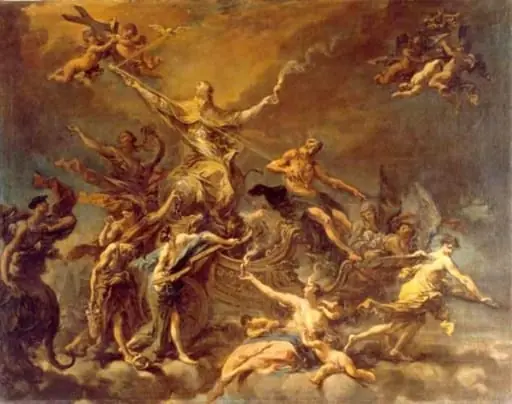
Minerva with Allegorical Figures of the Arts and Sciences (sketch for the ceiling of the Banqueting House, Hampton Court Palace)
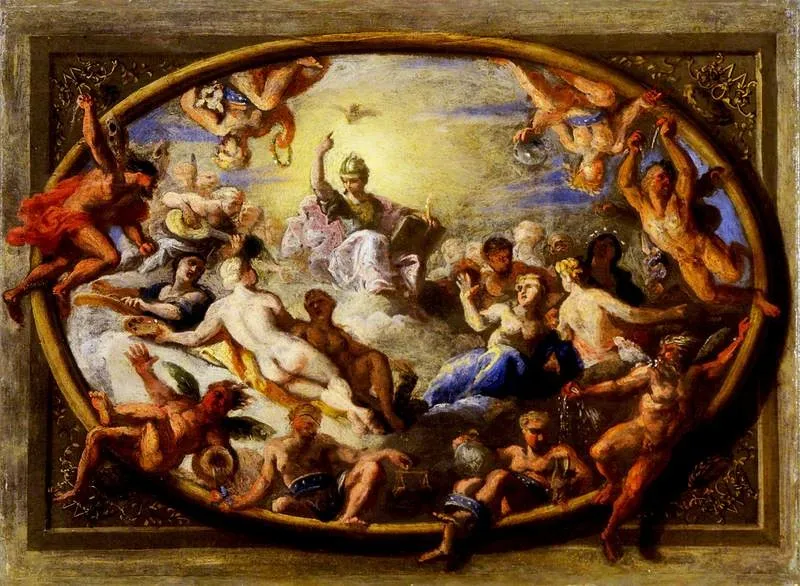
Minerva with Allegorical Figures of the Arts and Sciences (sketch for the ceiling of the Banqueting House, Hampton Court Palace) is an unspecified painting by the Rococo painting artist Antonio Verrio. It dates from 1700 and is held in the collection of the Victoria and Albert Museum.
About this work
Overview
Though executed in a restrained palette of browns, beiges, and blues, the composition conveys dynamic movement through its swirling arrangement of figures.
Antonio Verrio, an Italian artist active in England, produced this oil sketch circa 1700 as a preparatory study for the ceiling decoration of the Banqueting House at Hampton Court Palace. Though executed in a restrained palette of browns, beiges, and blues, the composition conveys dynamic movement through its swirling arrangement of figures. The work is now part of the Victoria and Albert Museum’s collection, reflecting its role in the development of decorative painting in early 18th-century Britain.
Subject & Meaning
The central figure is Minerva, Roman goddess of wisdom, surrounded by personifications of the arts and sciences. Figures gesture and reach in varied directions, suggesting intellectual and creative activity. Their arrangement implies a harmonious convergence of knowledge and artistic expression, aligning with the royal patronage’s desire to associate the monarchy with enlightenment ideals. The composition avoids literal narrative, instead evoking an abstract celebration of human achievement.
Technique & Style
Verrio employed fluid brushwork and layered glazes to suggest volume and motion within a circular format. The muted tones and soft transitions between light and shadow create atmospheric depth without theatrical intensity. Figures are rendered with loose, energetic strokes, emphasizing gesture over detail. This approach reflects a transitional style between Baroque grandeur and the emerging Rococo sensibility, prioritizing elegance and movement over rigid symmetry.
History & Provenance
Commissioned as part of William III’s renovations at Hampton Court, the sketch was intended to guide the final ceiling painting, which was later altered or lost. Verrio’s preparatory works were often retained by the artist or his workshop, and this one entered the V&A’s collection through later acquisitions. Its survival offers rare insight into the planning process of large-scale royal decorative schemes in the early 1700s.
Context
Verrio brought Italian Baroque mural traditions to England, where they were adapted to suit Protestant court tastes. His work at Hampton Court coincided with a broader effort to elevate royal spaces through allegorical imagery. While the final ceiling was never completed as envisioned, Verrio’s sketches like this one reveal how classical mythology was repurposed to legitimize political authority through cultural symbolism.
Legacy
This sketch exemplifies the transitional phase in English decorative painting, bridging the monumental Baroque and the lighter Rococo. Though Verrio’s large-scale ceilings are largely lost, his preparatory works remain vital for understanding the methods and intentions behind courtly decoration. The piece continues to inform scholarship on the transmission of continental styles to Britain and the role of allegory in early modern visual culture.
Artist & collection
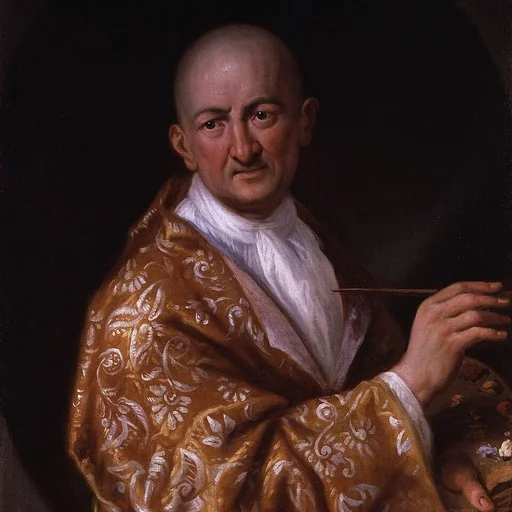
Artist
Antonio Verrio (c. 1636 – 15 June 1707) was an Italian Baroque painter. He was responsible for introducing Baroque mural painting into England and served the Crown over a thirty-year period.

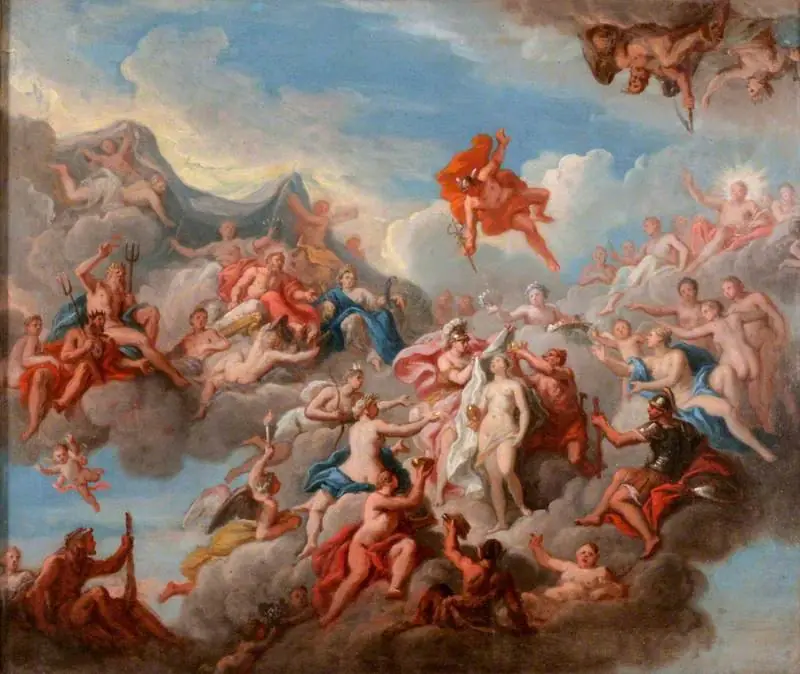 Psyche Being Robed by the Gods for Her Marriage with Cupid (sketch for the ceiling of the stairway at Kiveton)
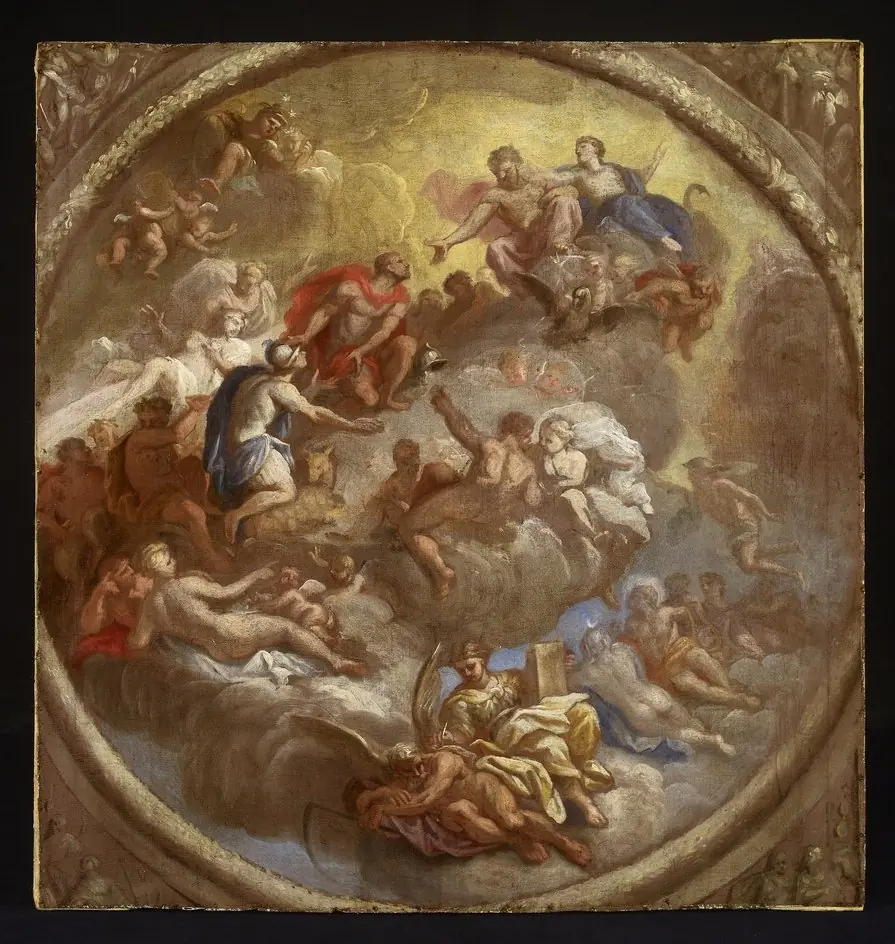 Sketch for a Ceiling Design
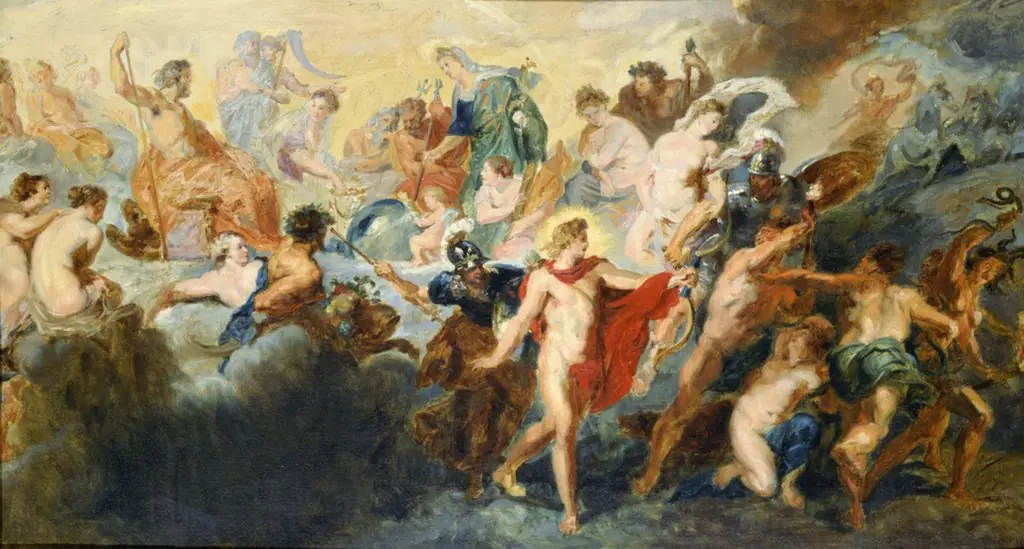 Copy after the Painting by Rubens "The Council of Gods"
 The Triumph of Galathea
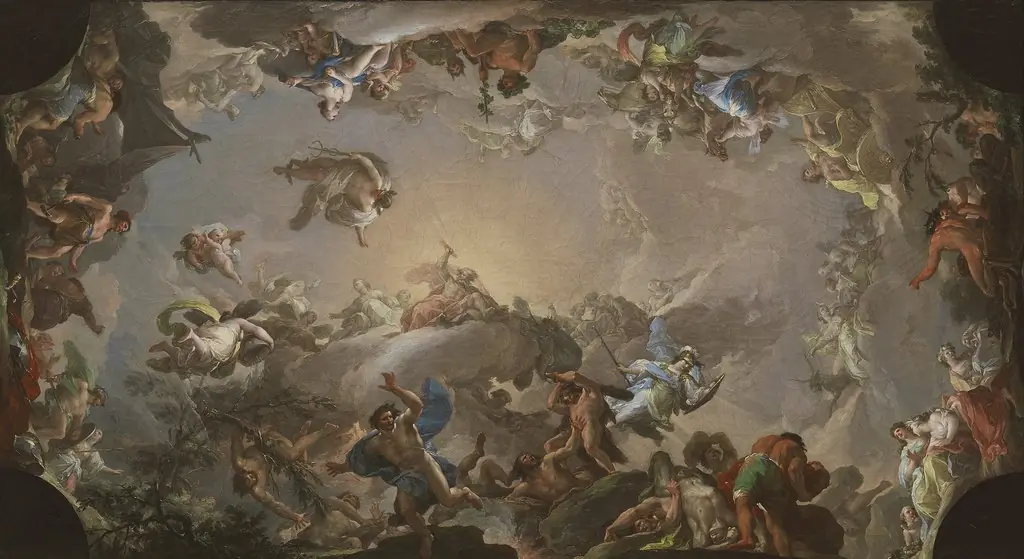 Olympus: The Fall of the Giants
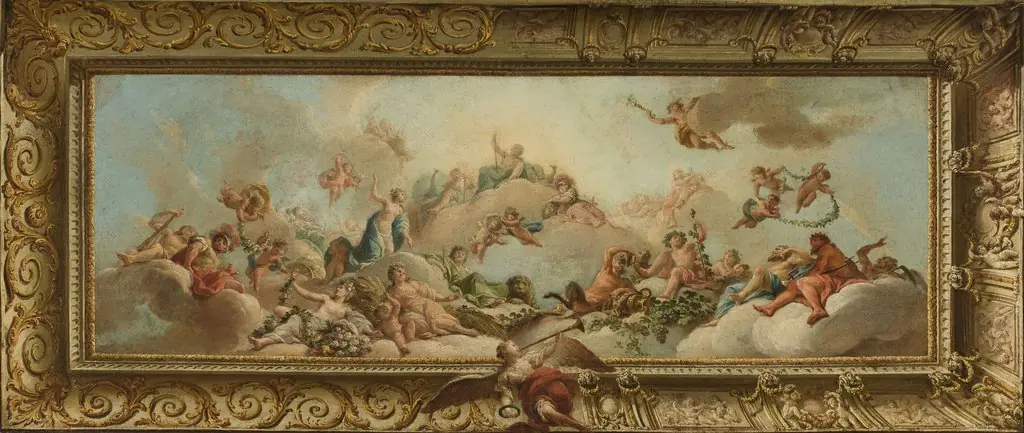 Greeting of Venus at Mount Olympus
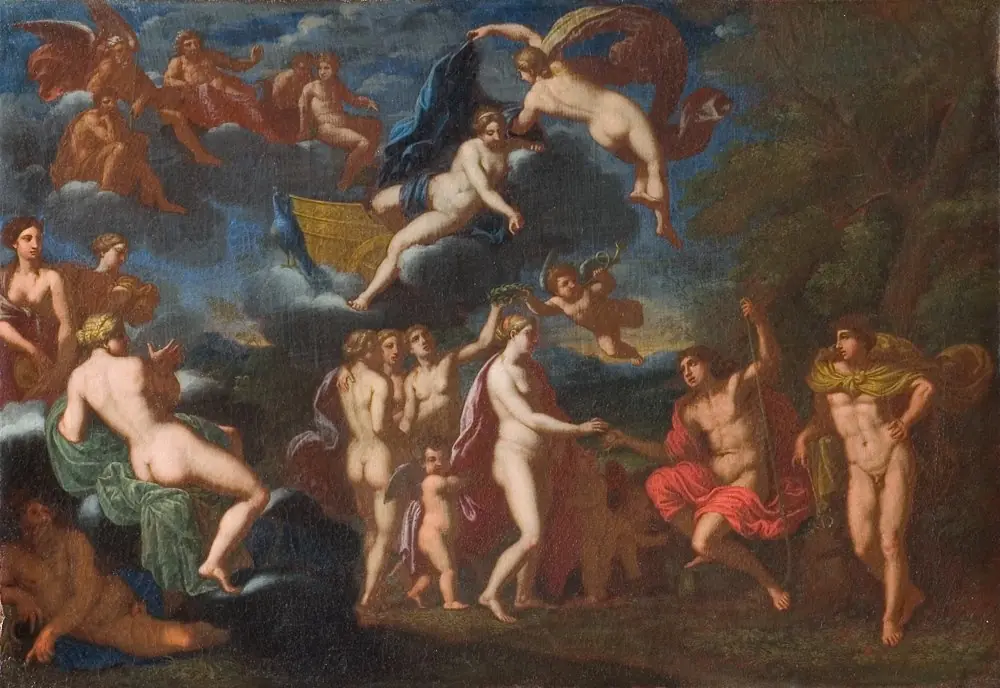 Paris Giving Venus the Apple
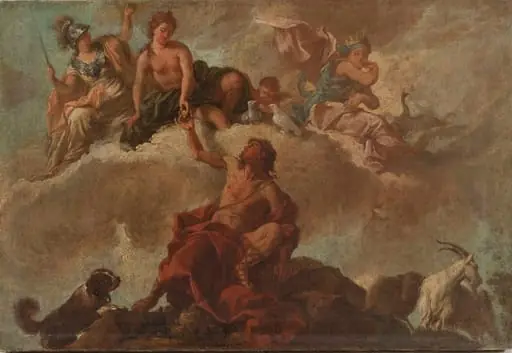 Judecata lui Paris
 Triumful credinței