Artwork
De Pottenmakersstraat in Brugge
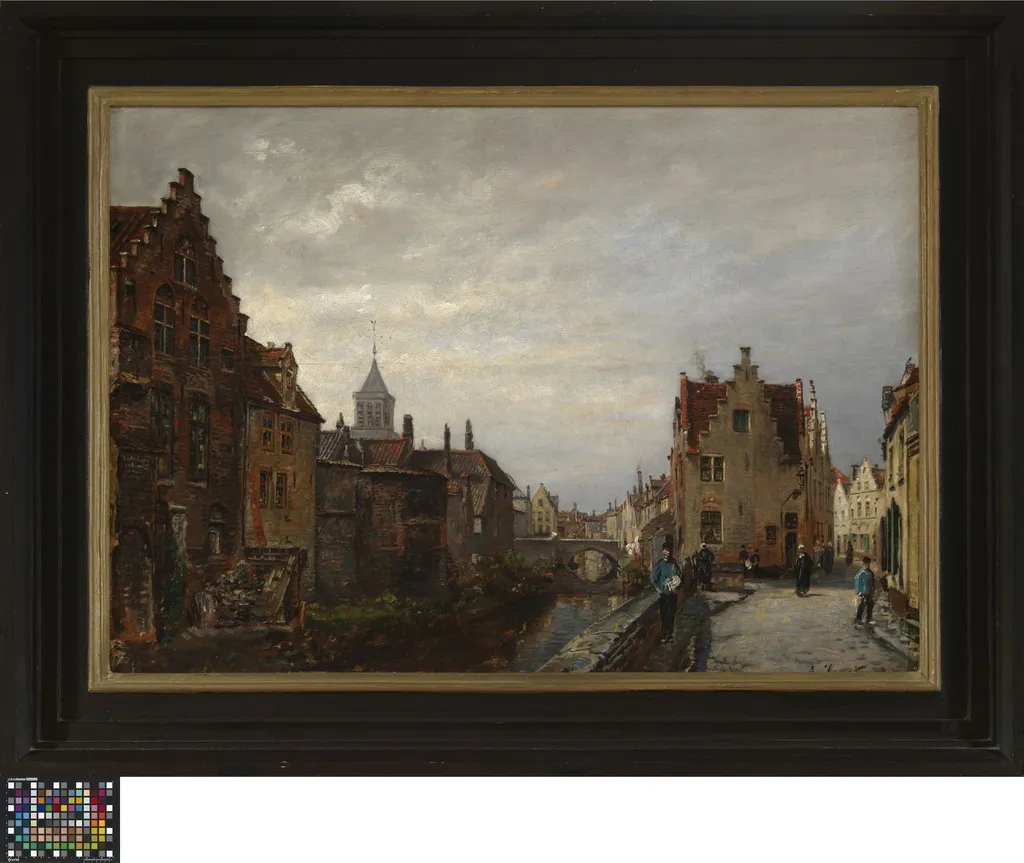
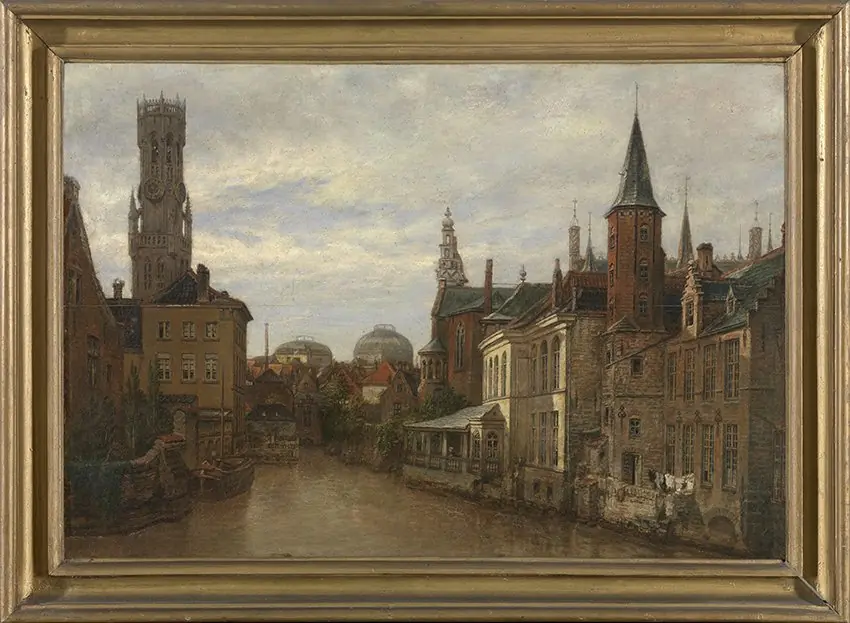
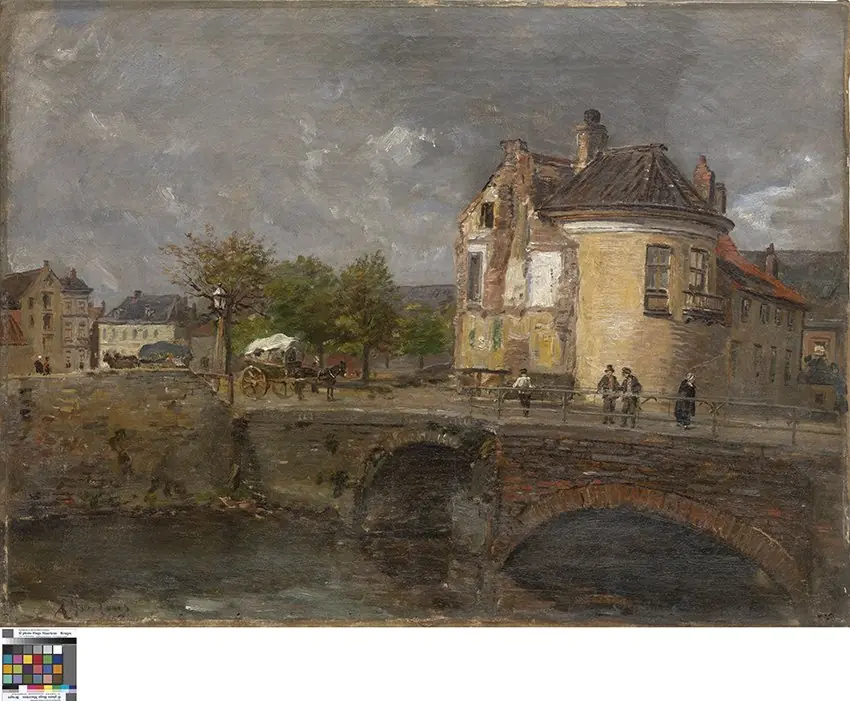
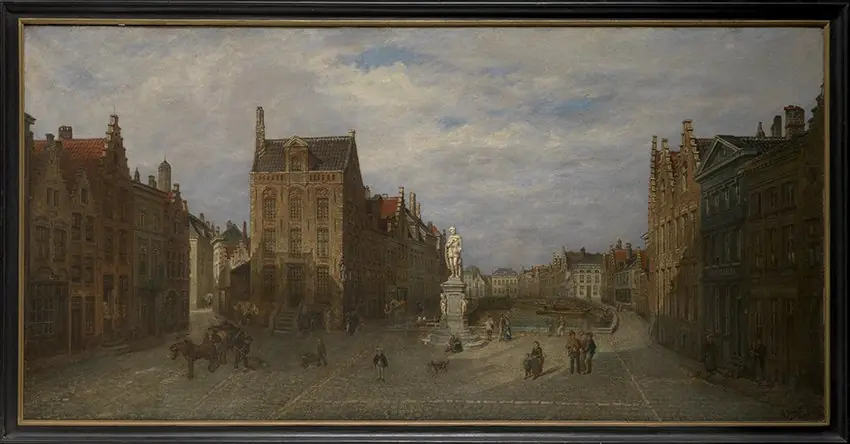
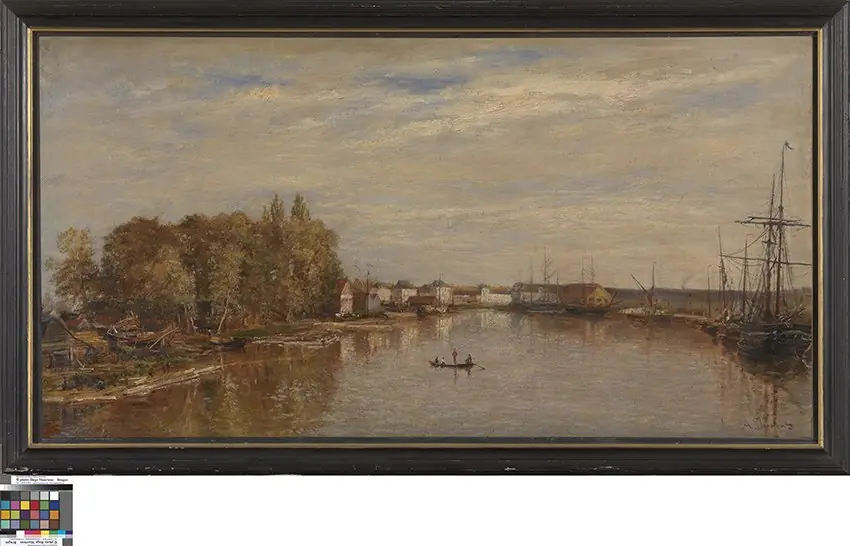
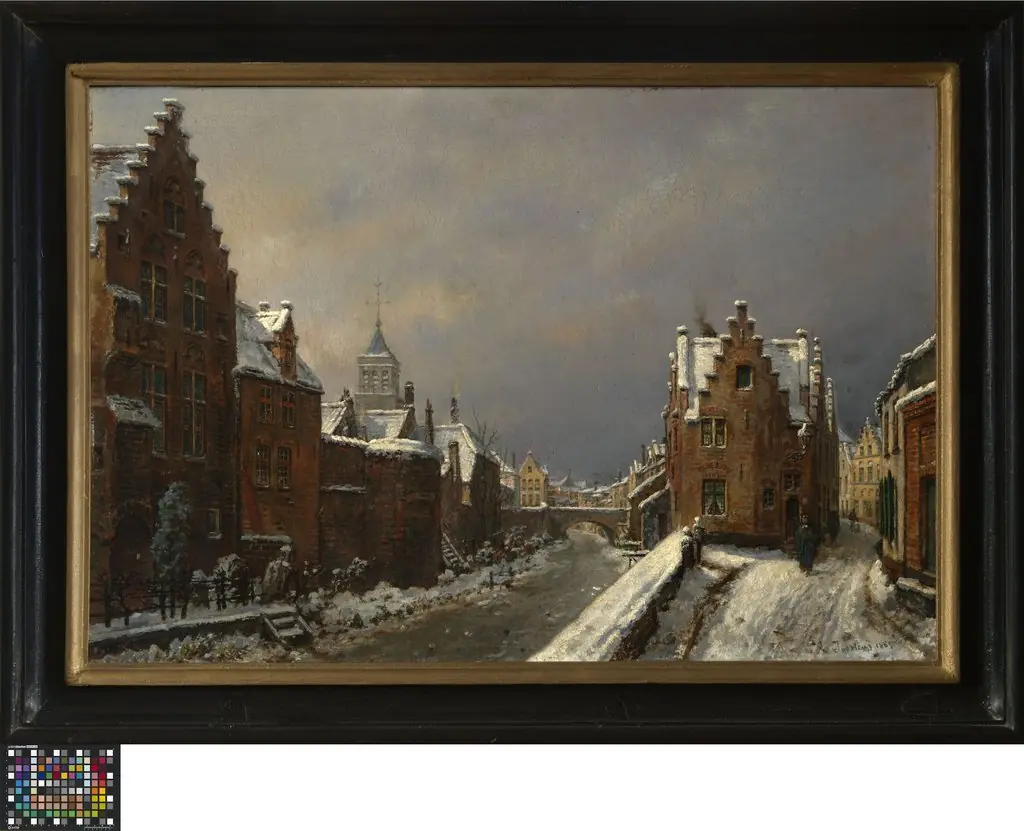
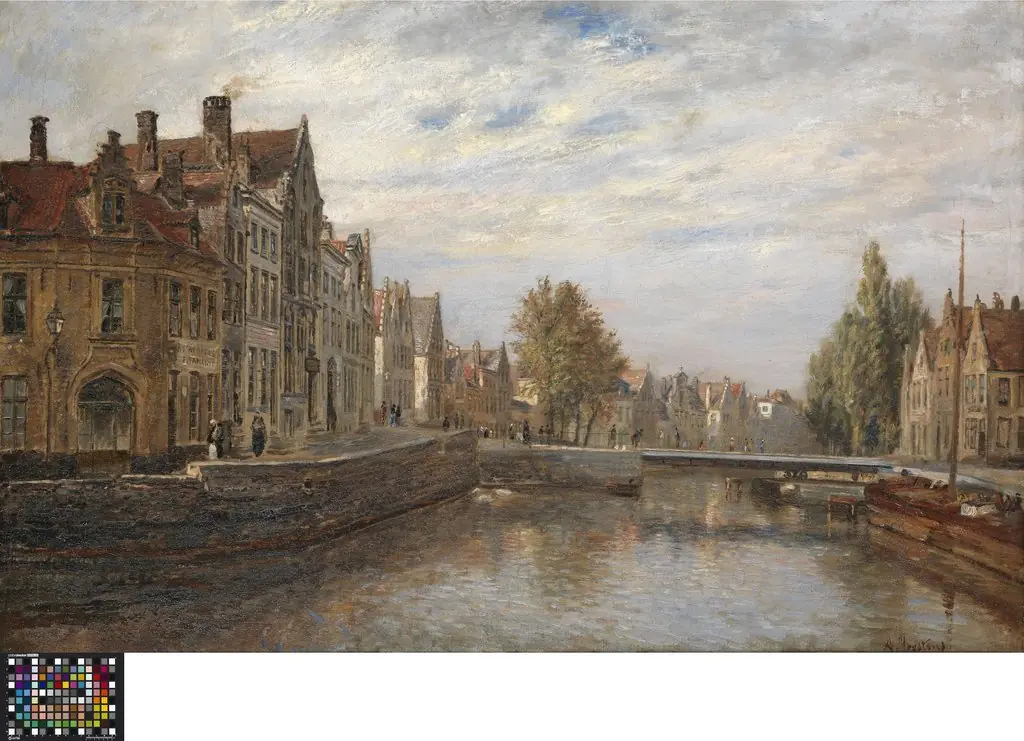
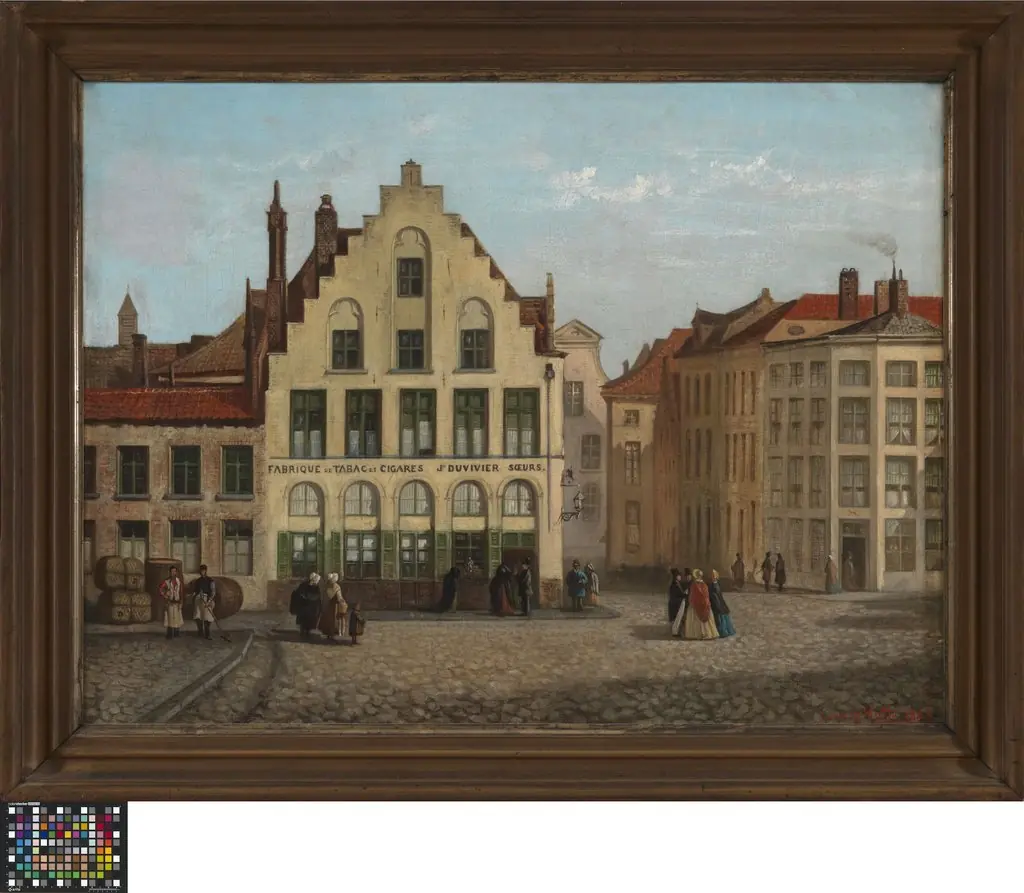
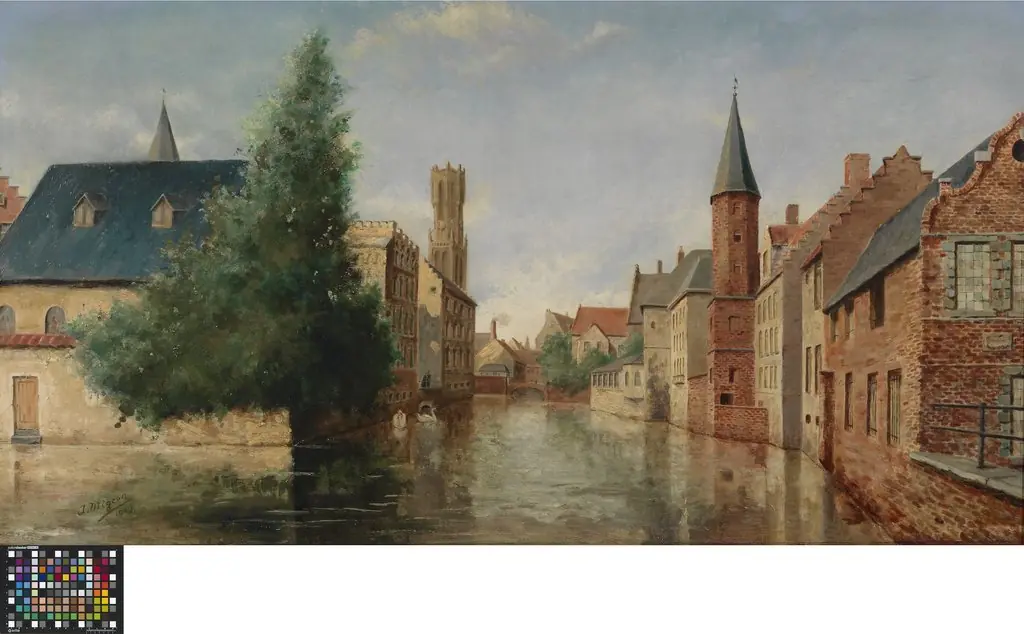
De Pottenmakersstraat in Brugge is an oil painting by Antoon Joostens. It dates from 1820 and is held in the collection of the Groeningemuseum.
About this work
Overview
The scene presents an unidealized view of urban life in early 19th-century Flanders, rendered with careful observation rather than romantic embellishment.
Painted in 1820 by Antoon Joostens, this oil-on-canvas work captures a quiet street in Bruges known as De Pottenmakersstraat. The scene presents an unidealized view of urban life in early 19th-century Flanders, rendered with careful observation rather than romantic embellishment. It belongs to the collection of the Groeningemuseum in Bruges, where it remains as a record of the city’s modest architectural fabric during a period of transition.
Subject & Meaning
The painting portrays ordinary residents navigating a narrow, uneven street flanked by weathered buildings, some showing signs of neglect. Figures are engaged in routine activities—walking, carrying goods, pausing—emphasizing the rhythm of daily existence. The absence of grand architecture or dramatic events shifts focus to the quiet dignity of common life, suggesting a documentary intent rather than a celebratory one.
Technique & Style
Joostens employed oil paint to achieve subtle tonal gradations and precise architectural detail. The brushwork is restrained, favoring clarity over flourish, with textures of stone, wood, and fabric rendered through careful layering. The overcast sky and muted palette unify the composition, reinforcing a sense of stillness and atmospheric cohesion that grounds the scene in observable reality.
History & Provenance
Created in 1820, the painting entered the Groeningemuseum’s collection in the 19th or early 20th century, likely through municipal acquisition or donation. Its preservation reflects a growing interest in documenting local urban environments during Belgium’s post-Napoleonic cultural reawakening. No significant alterations or restorations are recorded, and it has remained in public ownership since its acquisition.
Context
In the early 1800s, Bruges was a city slowly emerging from economic decline, its medieval structures still standing but often poorly maintained. Artists like Joostens turned to everyday streetscapes as subjects, moving away from historical or religious themes. This work aligns with a regional trend of recording vernacular architecture and civic life, anticipating later realist movements in Belgian art.
Legacy
Though not widely known outside regional art circles, the painting contributes to a body of work that preserves the visual character of Bruges before large-scale modernization. It stands as a quiet testament to the value of ordinary spaces and the artists who observed them without embellishment, offering a reference point for later studies of Flemish urban history.
Artist & collection