Artwork
De Carmersbrug in Brugge
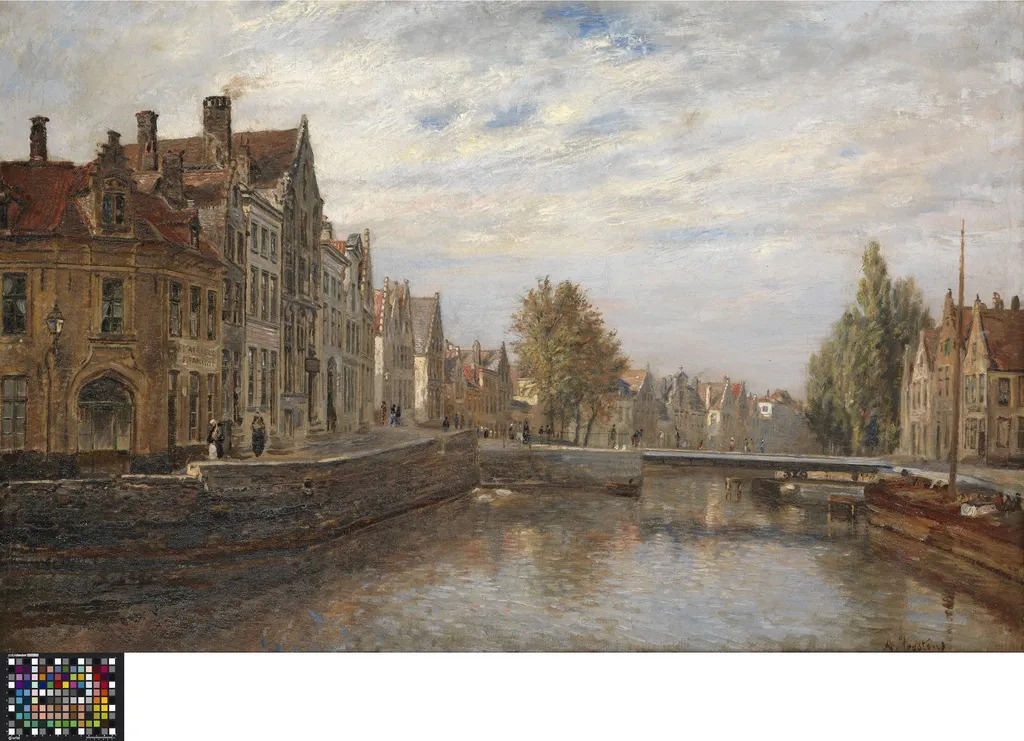
De Carmersbrug in Brugge is an oil painting by Antoon Joostens. It dates from 1851 and is held in the collection of the Groeningemuseum.
About this work
Overview
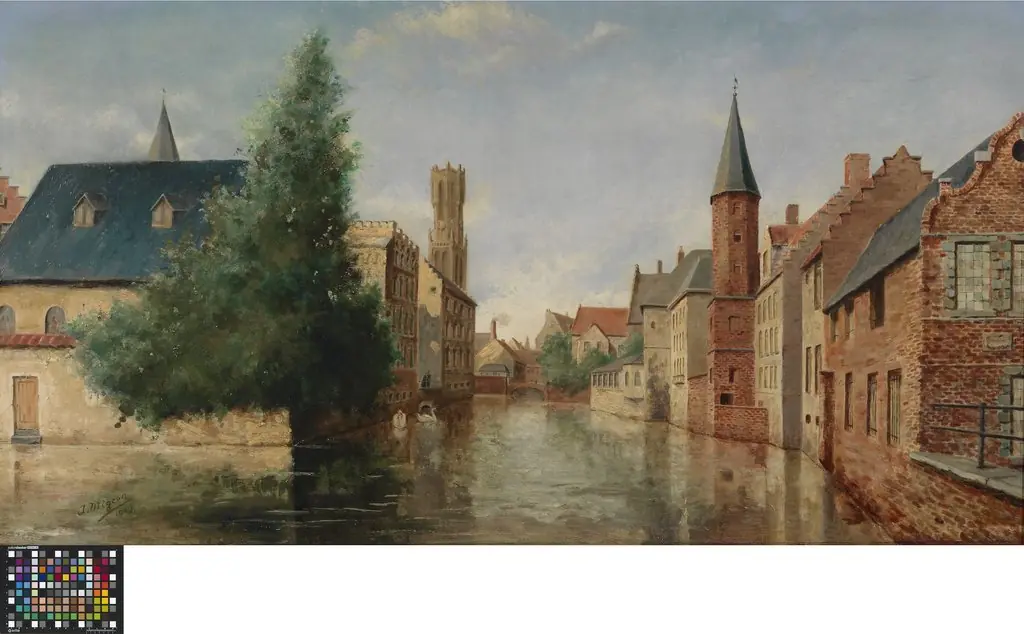
Painted in 1851 by Antoon Joostens, this oil on canvas depicts a quiet stretch of the canal system in Bruges. The work belongs to the collection of the Groeningemuseum and exemplifies mid-19th-century Belgian landscape painting. Its composition focuses on the interplay of architecture, water, and sky, capturing a moment of stillness in an urban setting without overt narrative or human activity.
Subject & Meaning
The scene portrays the Carmersbrug, a bridge over a canal in Bruges, surrounded by modest, weathered buildings. The absence of figures and the gentle stillness of the water suggest a contemplative mood, reflecting the quiet rhythm of daily life in the city. The painting does not idealize its subject but instead honors the ordinary architecture and natural light of a working waterway.
Technique & Style
Joostens employs soft, blended brushwork to render the sky and its reflection on the water, creating a seamless transition between atmosphere and surface. Warm ochres and browns in the buildings contrast with the cool grays and blues of the sky and canal, enhancing spatial depth. Light is handled subtly, with no dramatic highlights, reinforcing the painting’s tranquil tone.
History & Provenance
The painting was completed in 1851 and entered the Groeningemuseum’s collection in the late 19th or early 20th century. It has remained in the museum’s holdings since, with no documented changes in ownership. Its preservation reflects institutional interest in regional landscape traditions from the period, though Joostens himself remains a relatively obscure figure in art history.
Context
Created during a period when Belgian artists increasingly turned to local scenes for inspiration, the work aligns with a broader trend of documenting urban and rural environments with quiet realism. Bruges, though no longer a commercial hub, retained cultural significance, and painters like Joostens contributed to a growing visual record of its enduring character beyond tourism or grandeur.
Legacy
While not widely reproduced or studied, the painting contributes to the understanding of 19th-century Flemish landscape painting outside major metropolitan centers. It stands as a modest but deliberate record of Bruges’ canal architecture, offering insight into how local artists engaged with their surroundings without romanticizing them.
Own this work as a print
Artist & collection

 De Rozenhoedkaai in Brugge
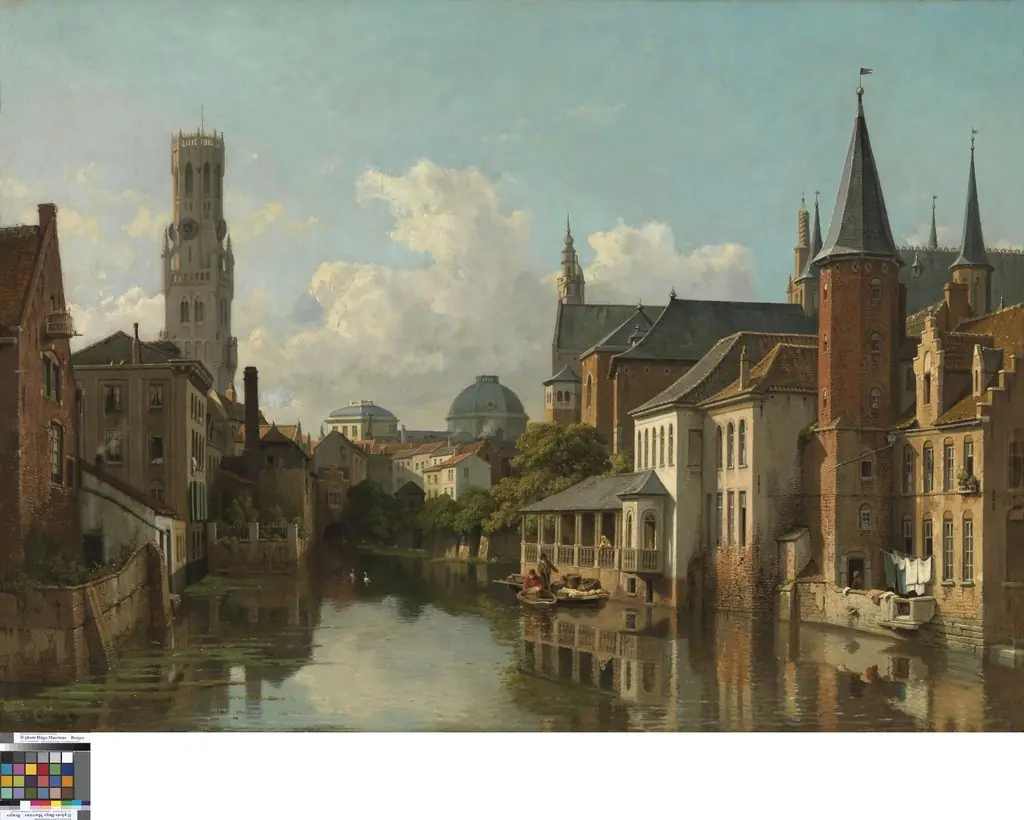 De Rozenhoedkaai in Brugge
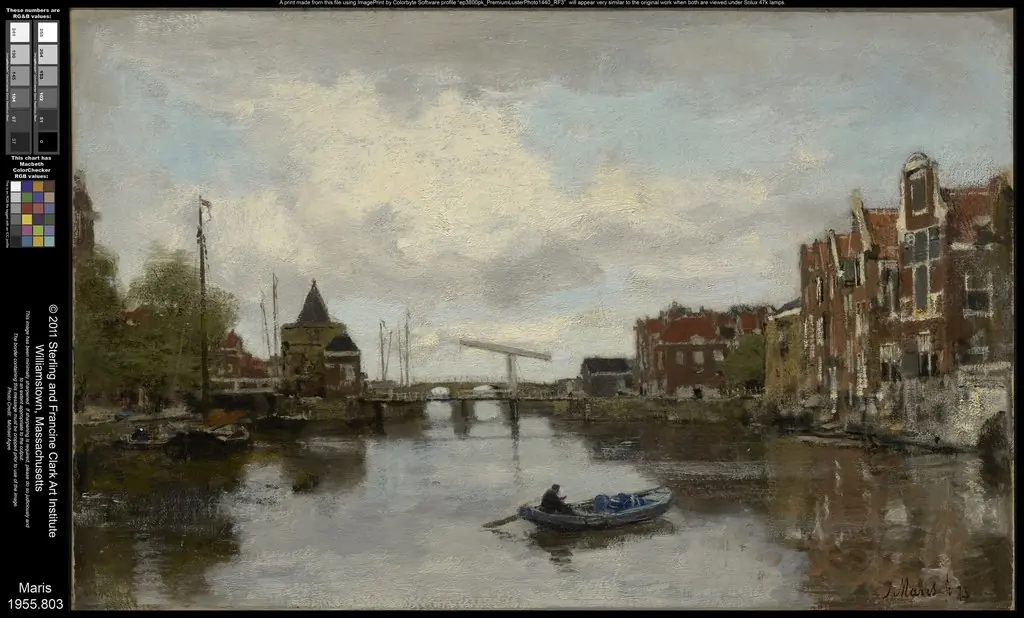 View of a Dutch City with the Schreierstoren in Amsterdam
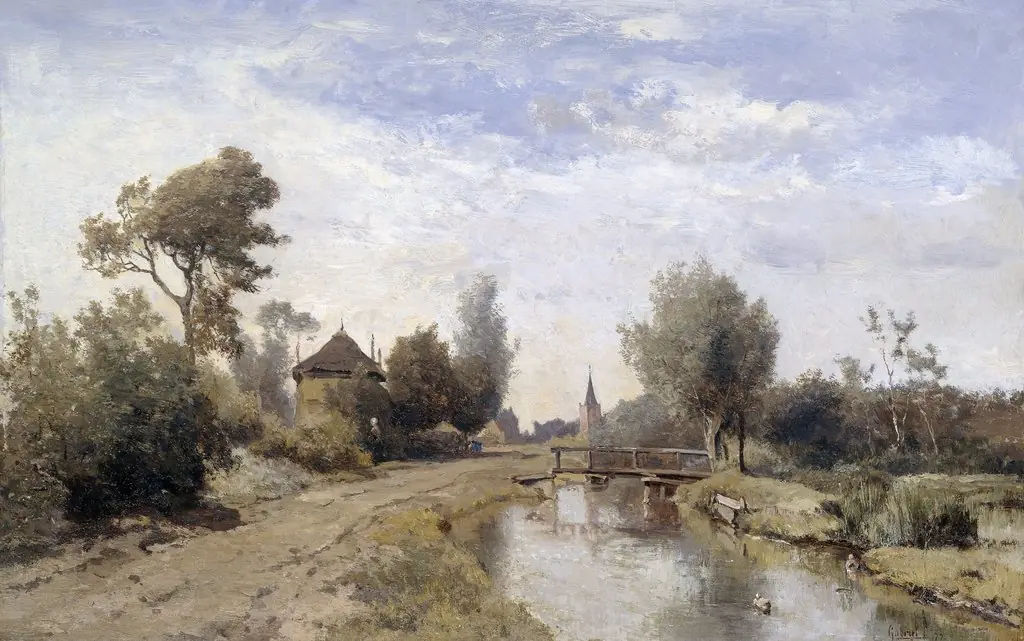 Landscape at Kortenhoef
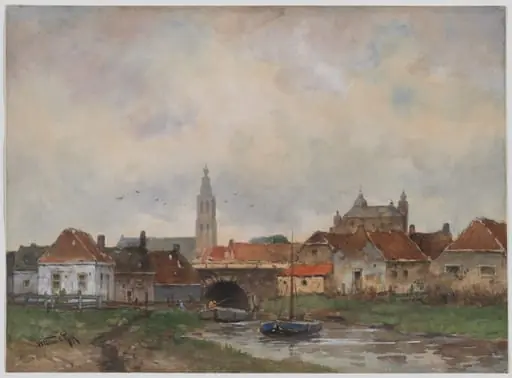 Upper Lock at Steenbergen
 De Schreierstoren met de brug over de Gelderse Kade te Amsterdam
 Stadsgezicht
 The Zuiderhavendijk, Enkhuizen
 View Down a Dutch Canal
 The Church of Overschie