Artwork
Fog
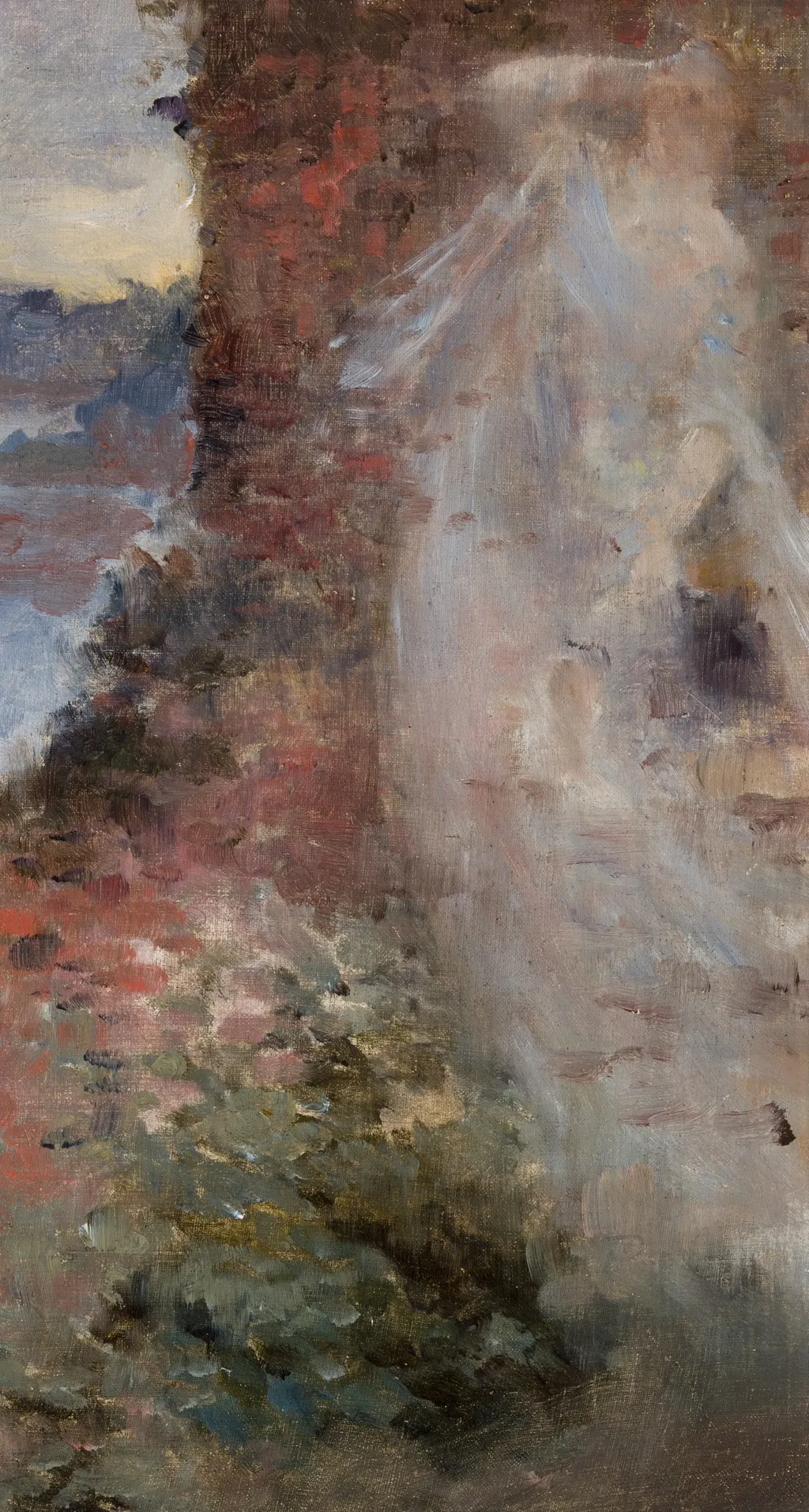
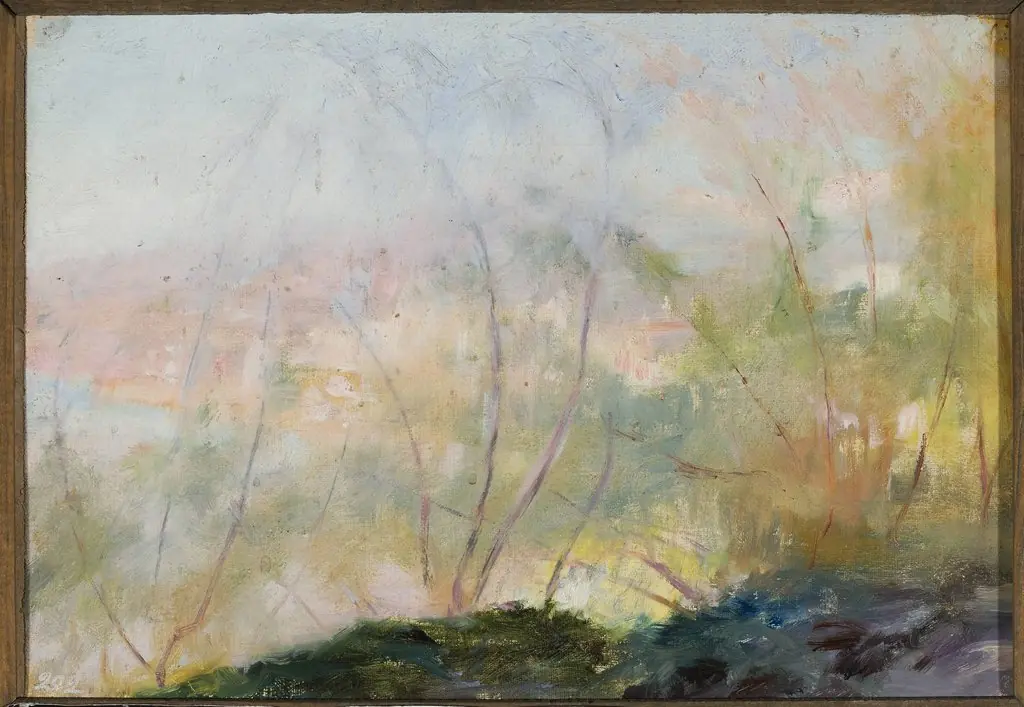
Fog is an unspecified painting by Apolinary Kotowicz. It dates from 1900 and is held in the collection of the National Museum in Kraków.
About this work
Overview
The work belongs to the National Museum in Kraków’s collection and exemplifies his interest in natural phenomena.
Apolinary Kotowicz painted *Fog* in 1900, capturing a quiet, obscured landscape in muted tones. The work belongs to the National Museum in Kraków’s collection and exemplifies his interest in natural phenomena. Kotowicz, primarily known for landscapes and genre scenes, often explored transient atmospheric conditions, and this piece reflects his sensitivity to light and weather as central subjects rather than mere backdrops.
Subject & Meaning
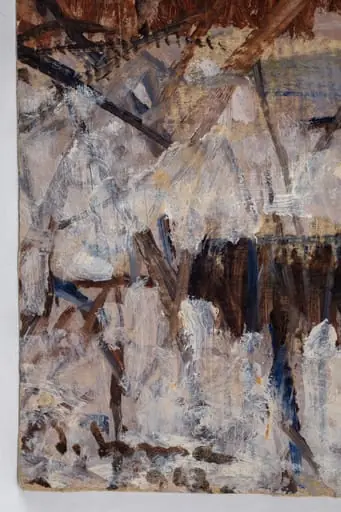
A solitary tree, its trunk thick and brown, rises from a dense veil of gray and white fog. The surrounding environment dissolves into indistinct darkness, emphasizing isolation and obscurity. The composition avoids narrative or human presence, focusing instead on the sensory experience of visibility lost to mist. This suggests a contemplative mood, where nature’s quiet forces obscure familiar forms, inviting quiet reflection rather than storytelling.
Technique & Style
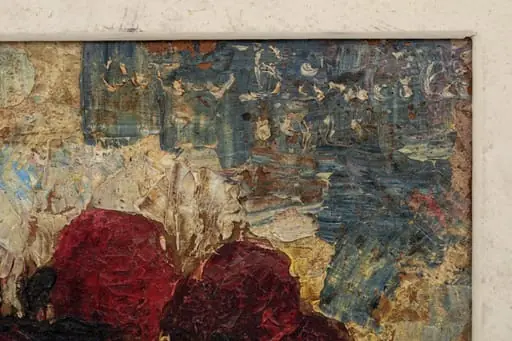
Kotowicz employed visible, textured brushwork to build the fog’s layered opacity and the tree’s rough bark. Muted browns, grays, and whites dominate, with no sharp contrasts or vivid hues. Edges blur intentionally, and the background recedes through loose, smudged strokes. The technique mirrors the physical sensation of fog—soft yet dense—while the deliberate roughness of the paint surface reinforces the tactile, imperfect quality of the scene.
History & Provenance
Created in 1900, *Fog* entered the National Museum in Kraków’s collection shortly after its completion. Kotowicz, active in Kraków’s artistic circles, was known for his dual roles as a painter and set designer, and his photographic experiments may have influenced his interest in light and tone. The painting remained within Poland’s cultural institutions, preserving its connection to late 19th- and early 20th-century Polish landscape traditions.
Context
In the early 1900s, Polish artists increasingly turned to intimate, mood-driven landscapes as national identity evolved under foreign partitions. Kotowicz’s focus on atmospheric effects aligned with broader European trends in Symbolism and Impressionism, though his approach remained restrained and observational. *Fog* reflects a shift from grand historical themes to personal, sensory responses to nature’s subtleties.
Legacy
Though not widely exhibited beyond Poland, *Fog* endures as a quiet example of Kotowicz’s atmospheric studies. It contributes to understanding how Polish painters engaged with nature not as spectacle but as a meditative, elusive presence. The work’s restrained palette and emphasis on mood influenced later regional artists interested in emotional resonance over detail, preserving its relevance within national art history.
Artist & collection
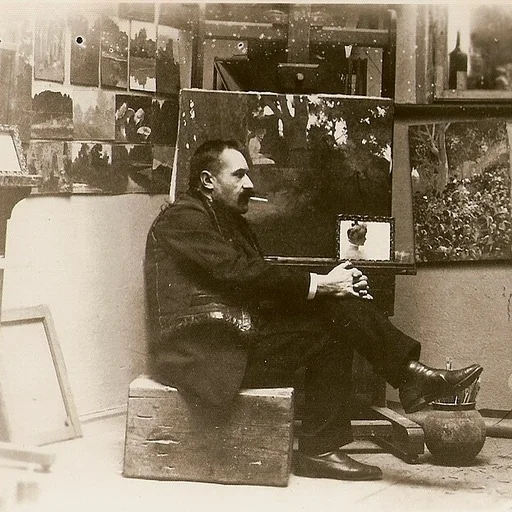
Artist
Apolinary Stanisław Kotowicz (24 March 1859 – 21 April 1917) was a Polish painter of landscapes, portraits and genre scenes. He was also a set decorator and amateur photographer.