Artwork
Landscape
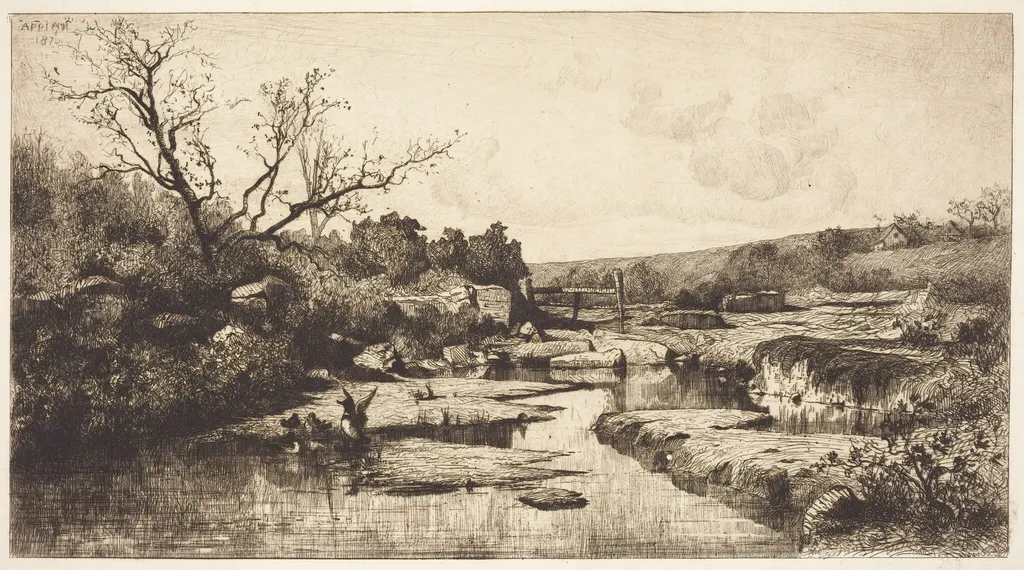
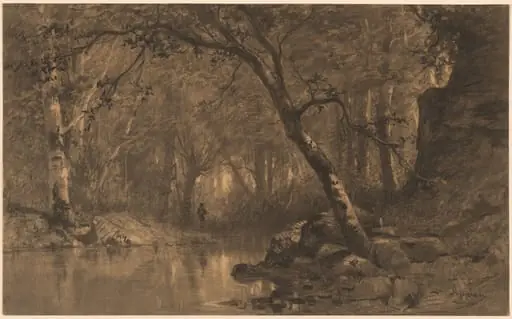
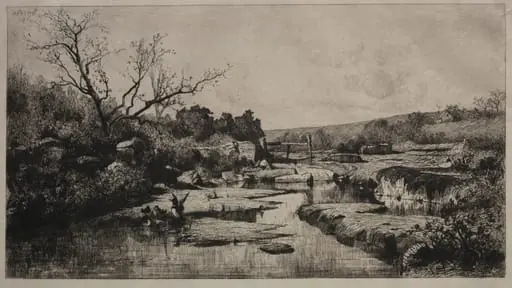
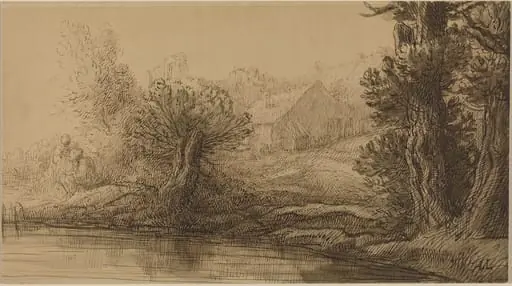
Landscape is an ink print by the Impressionist artist Adolphe Appian. It dates from 1870 and is held in the collection of the National Gallery of Art.
About this work
Overview
Though primarily known as a painter, he engaged deeply with etching as a medium, valuing its capacity for subtle tonal variation.
Adolphe Appian produced this etching in 1870 as part of a broader French revival in printmaking during the 19th century. Though primarily known as a painter, he engaged deeply with etching as a medium, valuing its capacity for subtle tonal variation. This work exemplifies his interest in capturing quiet natural environments with precision and restraint, reflecting a shift toward intimate, observational subjects in print culture of the period.
Subject & Meaning
The scene portrays a tranquil riverside in a wooded landscape, with calm water winding between rocks and sparse vegetation. Bare and leafed trees line the banks, while distant dwellings suggest quiet human presence without intrusion. The composition avoids dramatic narrative, instead emphasizing stillness and harmony between land, water, and architecture. It reflects a contemplative approach to nature, common among artists seeking authenticity beyond idealized landscapes.
Technique & Style
Appian employed fine, controlled lines to model light and form, using etching’s capacity for delicate hatching and cross-hatching to suggest depth and texture. The water’s surface, tree bark, and distant rooftops are rendered with varying line density, creating a sense of three-dimensionality on a flat plane. The absence of broad tonal areas keeps the image crisp, emphasizing detail over atmosphere, a hallmark of his precise, observational style.
History & Provenance
Created during a period of renewed interest in etching as an independent art form, this work aligns with French artists reclaiming printmaking from reproductive roles. While specific ownership history is not documented, the piece likely circulated among collectors and print societies in late 19th-century France. Appian’s participation in exhibitions and print portfolios helped establish his reputation as a serious printmaker during this revival.
Context
In the 1870s, French artists increasingly turned to etching as a means of personal expression, moving away from academic painting norms. Appian’s focus on unidealized rural scenes mirrored broader trends among Realist and Barbizon-influenced painters. His etchings, like this one, offered an alternative to grand historical or mythological subjects, valuing quiet observation and technical mastery over spectacle.
Legacy
Appian’s etchings contributed to the legitimization of printmaking as a serious artistic practice in France. Though less widely known today than his painterly contemporaries, his precise technique and restrained compositions influenced later generations of printmakers interested in naturalism. His work remains a quiet but significant example of how etching could convey depth, mood, and detail without color or large scale.
Artist & collection
Artist
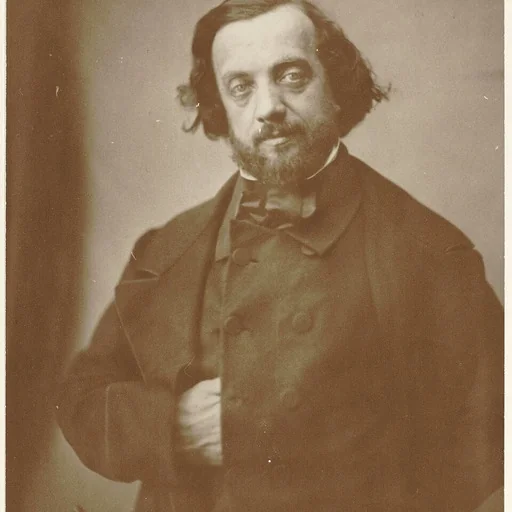
Adolphe Appian (born as Jacques Barthelemy Adolphe Appian; 28 August 1819 – 29 April 1898) was a French landscape painter and etcher.

 Source of the Albarine
 The Brook in the Woods
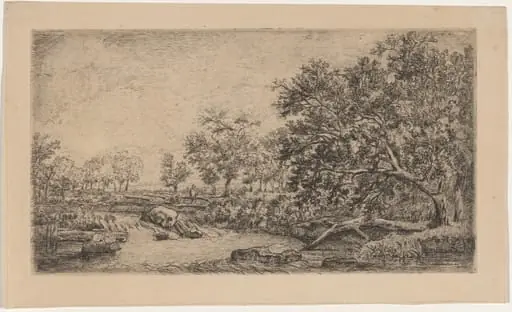 A t Pontchéry, Isère (A Pontcheruy , Isère, vue d’une chute d’eau)
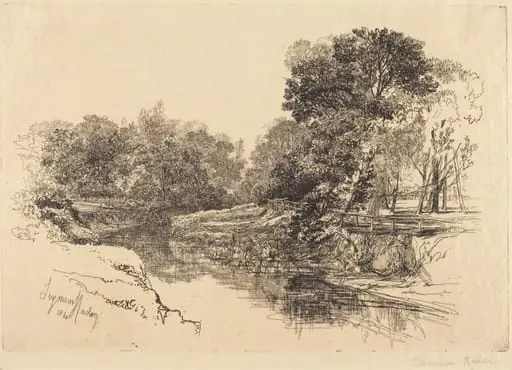 A River in Ireland
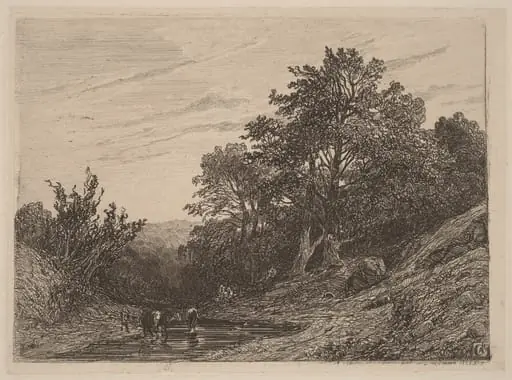 Herd in a Stream
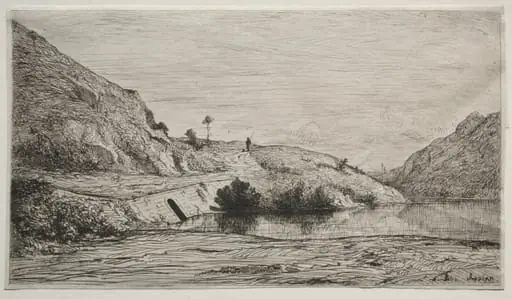 Banks of the Rhone
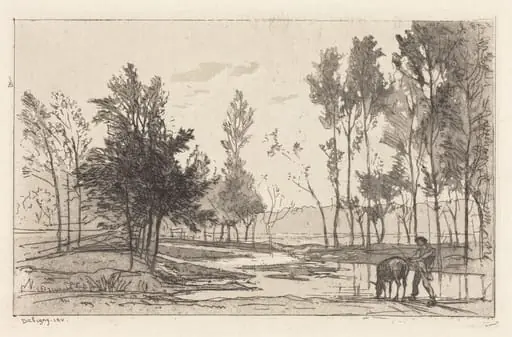 Donkey at a Watering Place (L'Ane a l'abreuvoir)
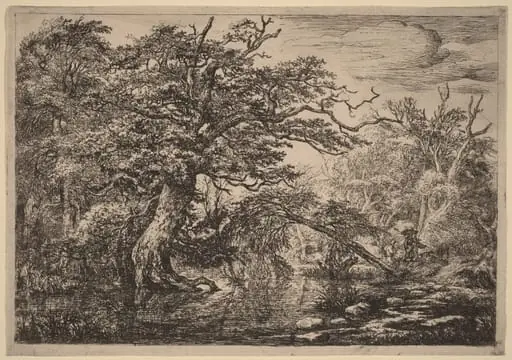 A Forest Marsh with Travelers on a Bank (The Travelers)
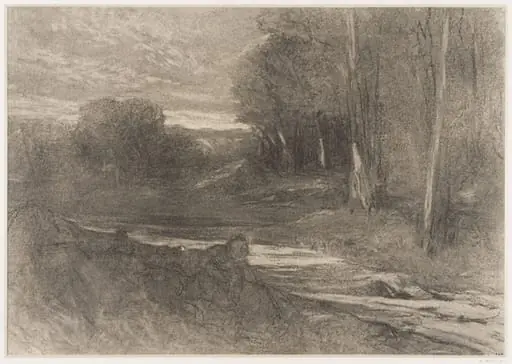 By the Waters of Babylon.
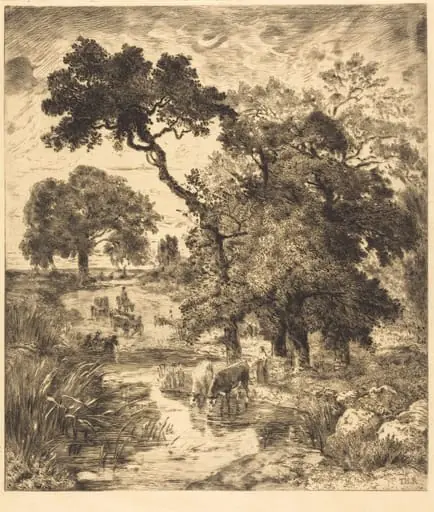 Evening
 Bank of a River
 Canal Seen by Morning Light (Le canal: Effet du matin)