Artwork
Donkey at a Watering Place (L'Ane a l'abreuvoir)
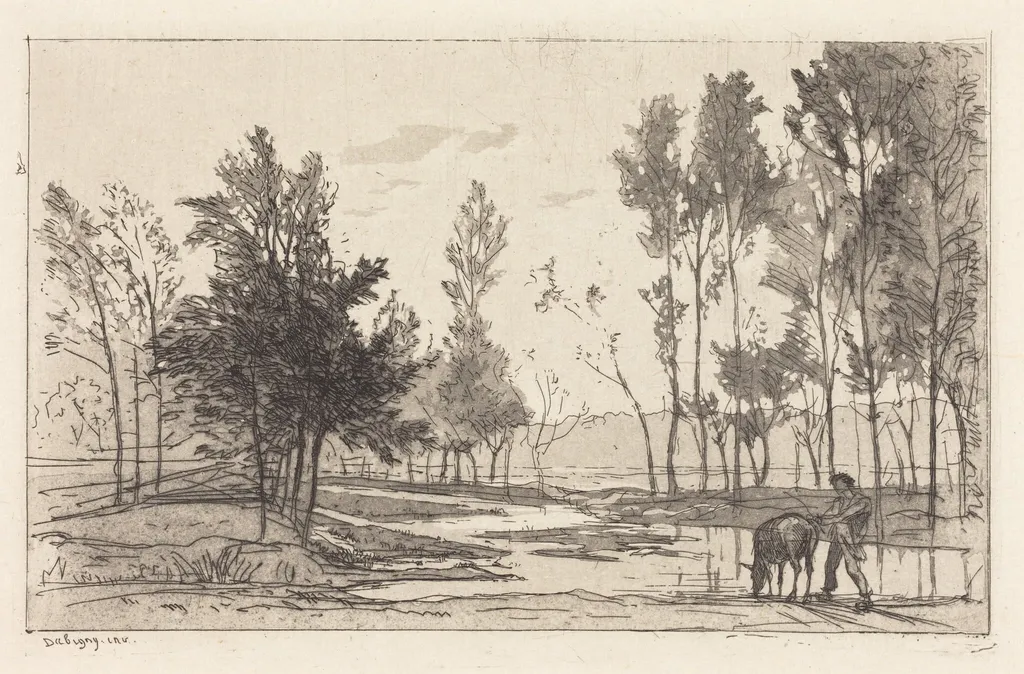
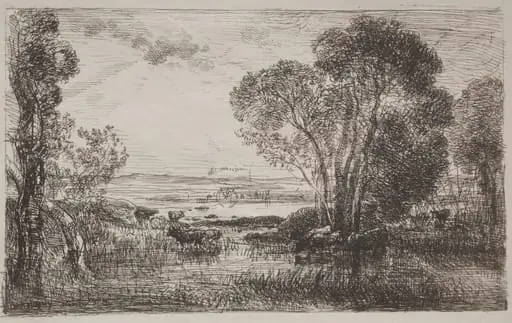
Donkey at a Watering Place (L'Ane a l'abreuvoir) is an ink print by the Impressionist artist Charles François Daubigny. It dates from 1850 and is held in the collection of the National Gallery of Art.
About this work
Overview
Donkey at a Watering Place (L'Ane a l'abreuvoir) is an aquatint print created by Charles-François Daubigny around 1850.
Subject & Meaning
The print depicts a serene scene of a person leading a donkey through a wooded area to a watering place, reflecting Daubigny's interest in rural life and natural environments.
Technique & Style
The aquatint technique is used to achieve a soft, dreamy effect, with subtle gradations of tone that blend the trees and shadows together, creating a gentle and natural atmosphere.
Context
As a member of the Barbizon school and a precursor to Impressionism, Daubigny's work often explored the relationship between humans and the natural world.
Artist & collection
Artist
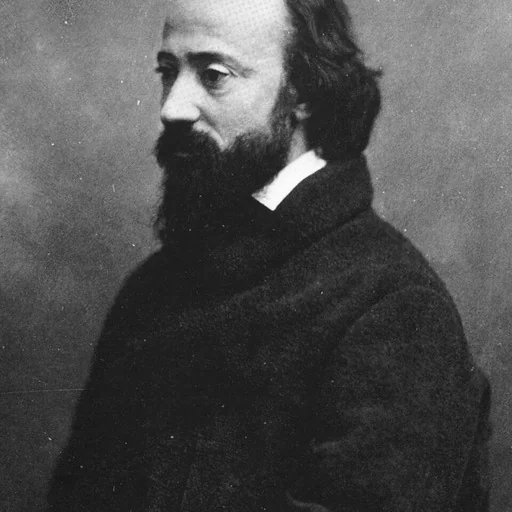
Charles-François Daubigny ( DOH-bin-yee, US: DOH-been-YEE, doh-BEEN-yee, French: ; 15 February 1817 – 19 February 1878) was a French painter, one of the members of the Barbizon school, and is considered an important precursor of…

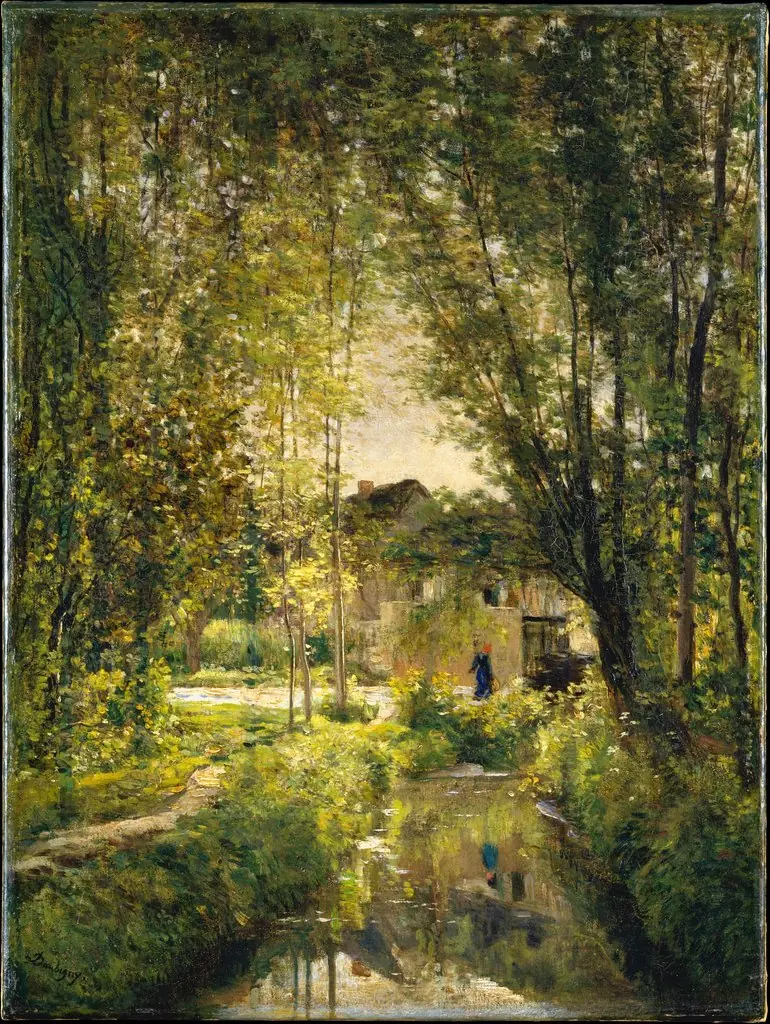
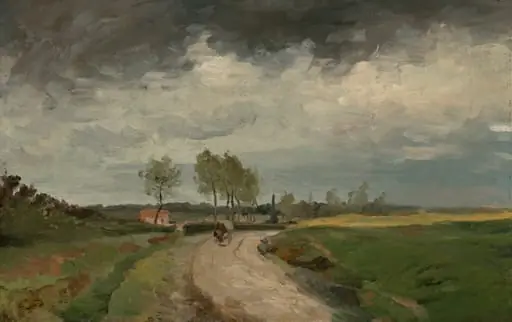
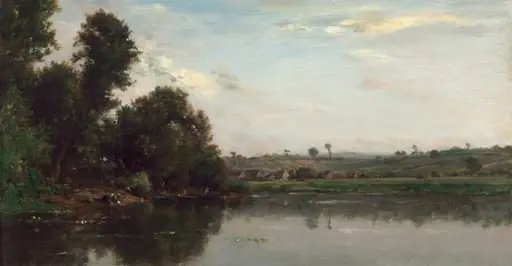
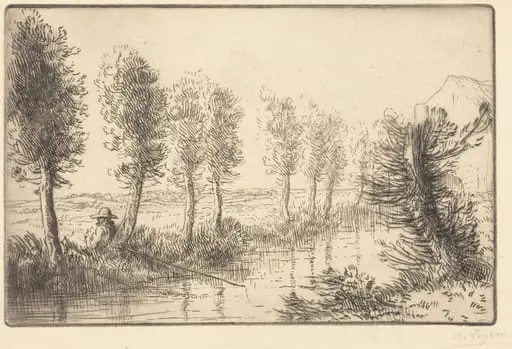 Near the Mill (Pres du moulin)
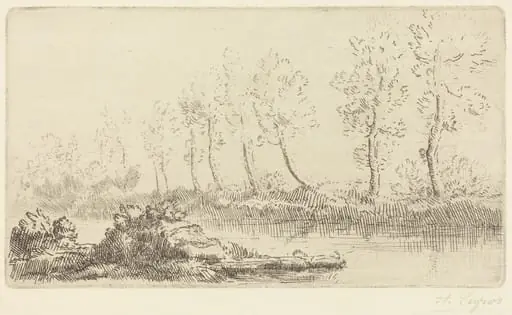 Banks of the Adour (Bord de l'Adour)
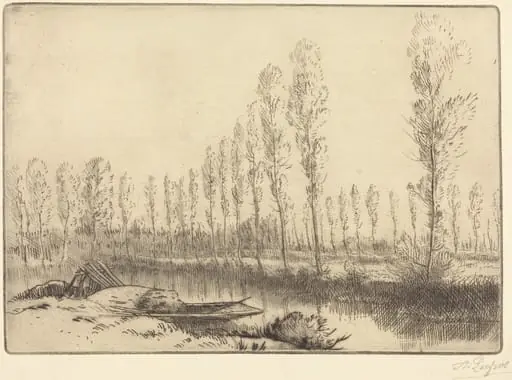 Poplars near Amiens (Pres d'Amiens, les tourbieres)
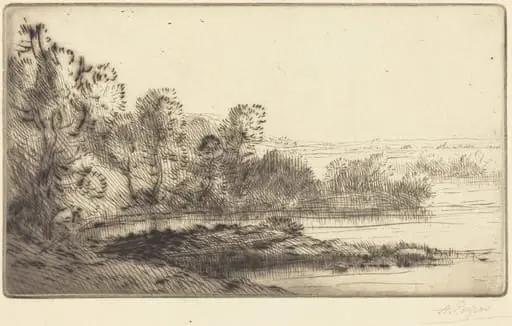 Along the Terne (Sur la terne)
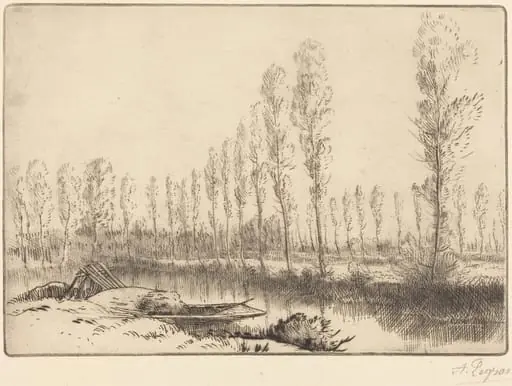 Poplars near Amiens (Pres d'Amiens, les tourbieres)
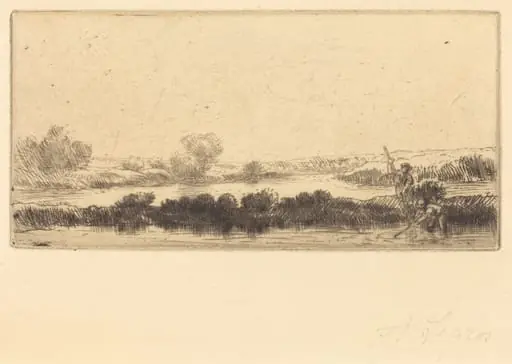 Landscape with Peat-bog; In the Marsh (Paysage des tourbieres; Dans les marais)
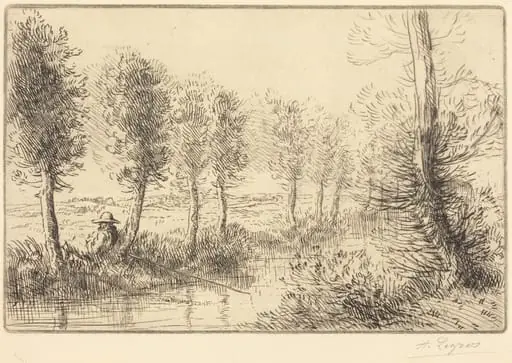 Near the Mill (Pres du moulin)
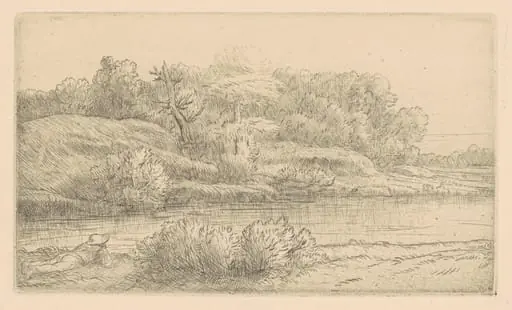 Banks of the Venelle (Bord de la Venelle)
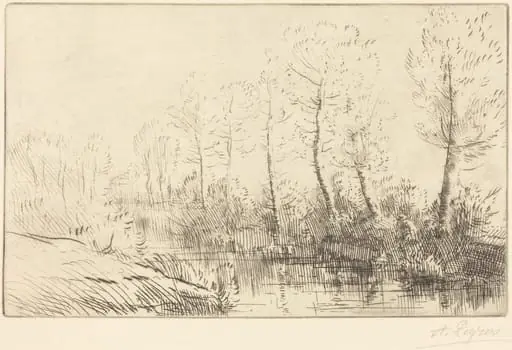 Birch Trees: Water's Edge Seen in Morning Light (Les bouleaux: Bord de l'eau, effet du matin
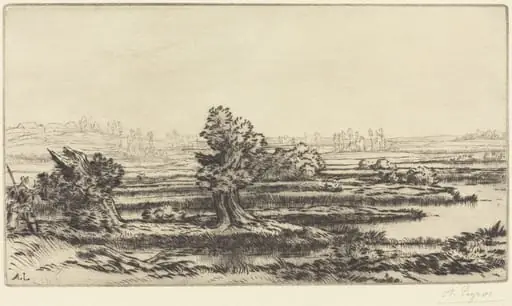 Peat-bogs (Les Tourbieres)
 The Hydraulic Machine
 Banks of the Marne (Bord de la Marne)