Artwork
A t Pontchéry, Isère (A Pontcheruy , Isère, vue d’une chute d’eau)
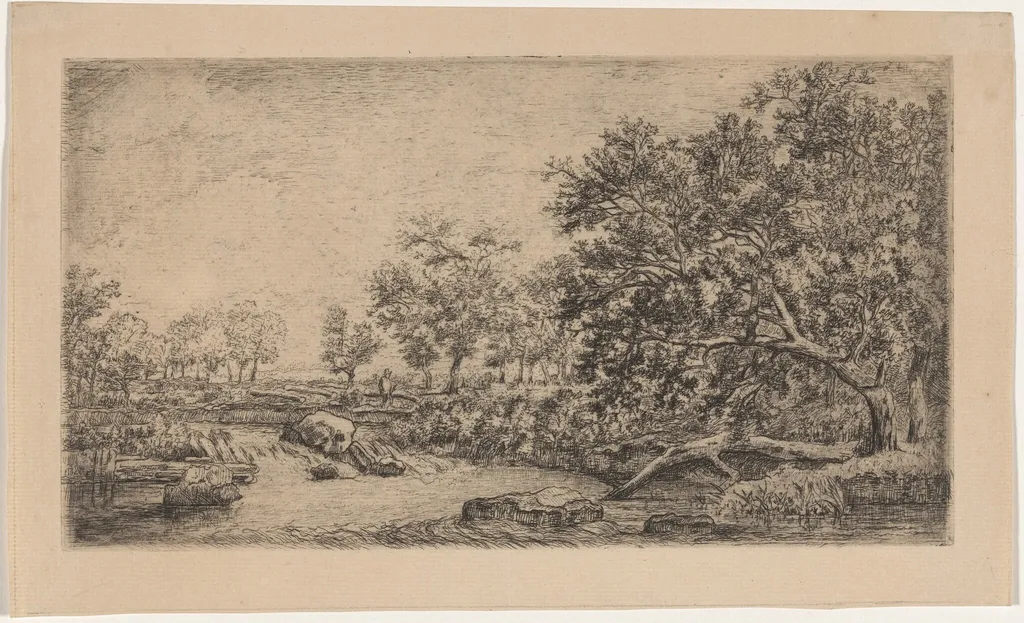
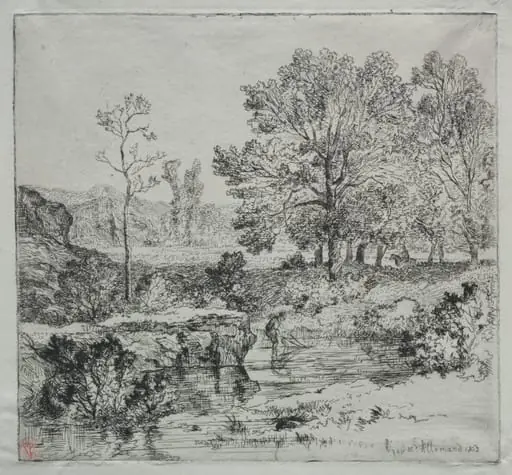
A t Pontchéry, Isère (A Pontcheruy , Isère, vue d’une chute d’eau) is an ink print by the Impressionist artist Louis Hector François Allemand. It dates from 1857 and is held in the collection of the National Gallery of Art.
About this work
Next, check out etching to see how artists create detailed prints like this.
This is a black-and-white print of a wooded riverbank. Trees with thick trunks and tangled branches line the shore. The water rushes over rocks, creating small rapids. In the distance, a few people stand near the water’s edge.
The artist used a sharp, precise line to show every leaf and ripple. This was made in 1857, before color became common in prints.
Next, check out etching to see how artists create detailed prints like this.
Overview
A t Pontchéry, Isère is a black-and-white print created by Louis Hector François Allemand in 1857 using etching and drypoint techniques on tan laid paper.
Subject & Meaning
The print depicts a wooded riverbank with trees, rocks, and rushing water, featuring a few people in the distance. The scene captures the natural beauty of the Isère region.
Technique & Style
Allemand employed a sharp, precise line to render the details of the landscape, including leaves and ripples, characteristic of the etching and drypoint techniques used.
History & Provenance
Created in 1857, the print predates the widespread use of color in prints. It is currently held at the National Gallery of Art, Washington.
Own this work as a print
Artist & collection
Artist
Louis Hector François Allemand
Louis Hector François Allemand (1809–1886) was a French artist, born in Lyon.

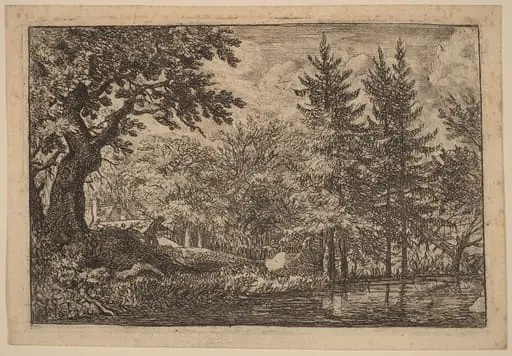 Fir Trees at the Water
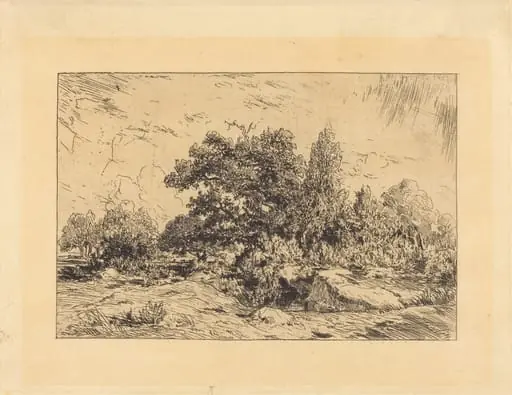 Vue du Plateau de Bellecroix
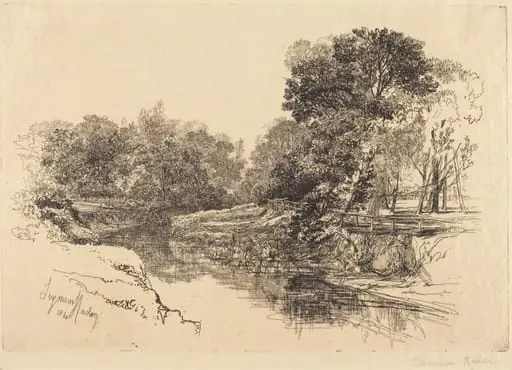 A River in Ireland
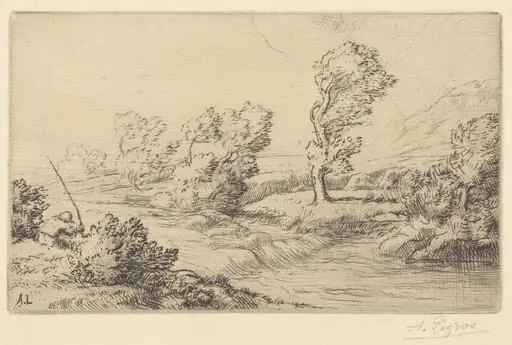 Banks of the Marne (Bord de la Marne)
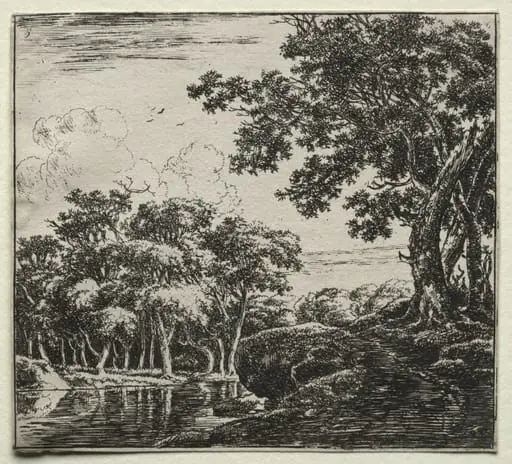 The Three Large Trees
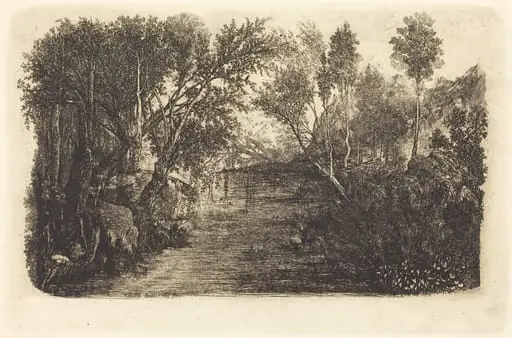 The Water's Course
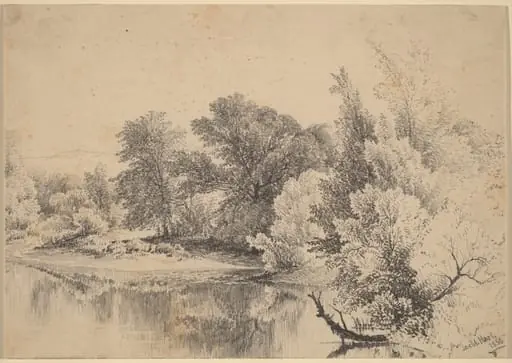 Pond Edge
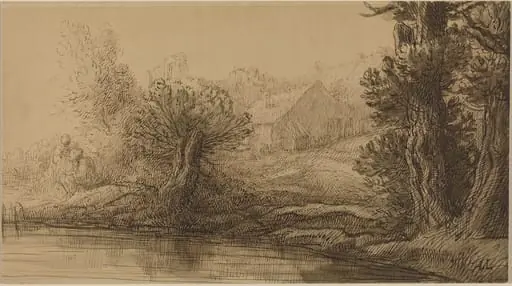 Bank of a River
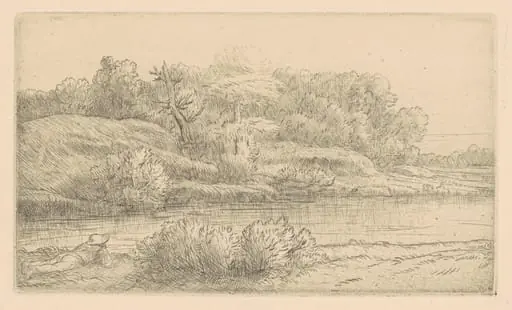 Banks of the Venelle (Bord de la Venelle)
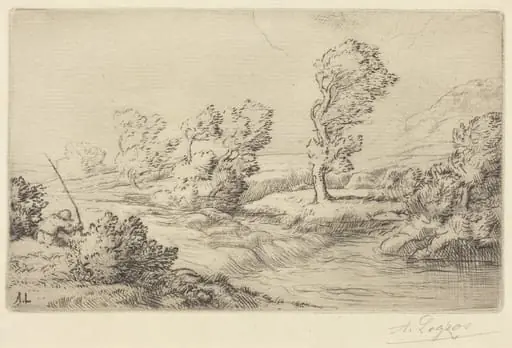 Banks of the Marne (Bord de la Marne)
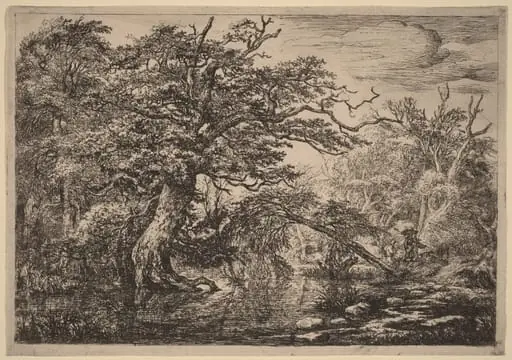 A Forest Marsh with Travelers on a Bank (The Travelers)
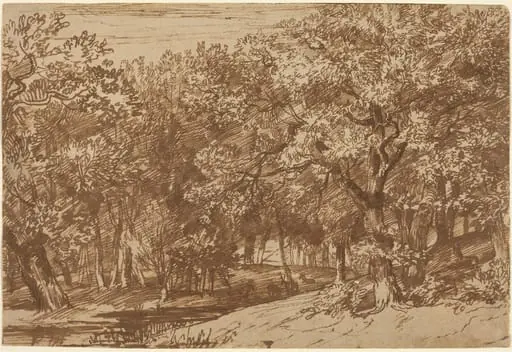 Deer Park