Artwork
The Port of Genoa
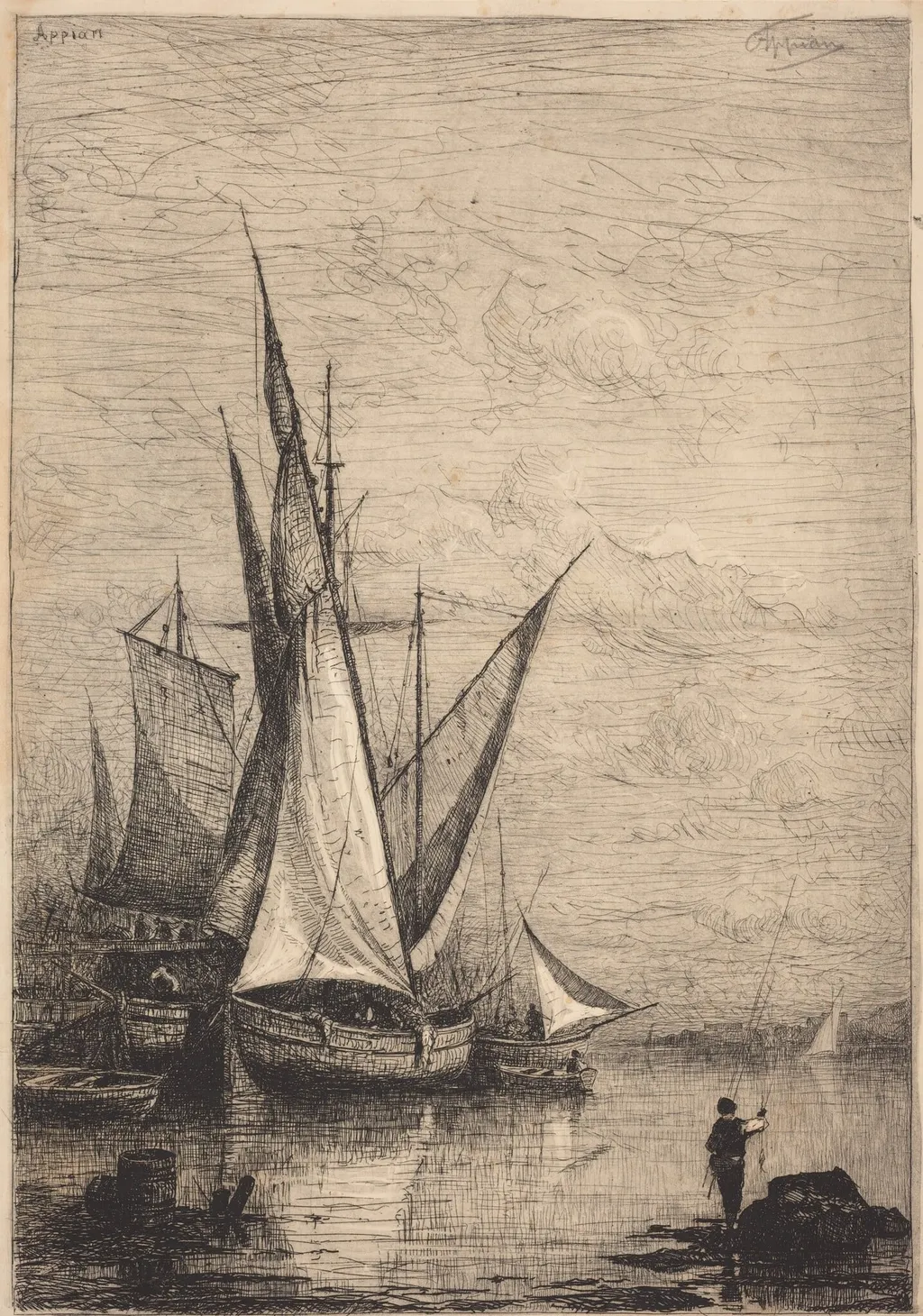
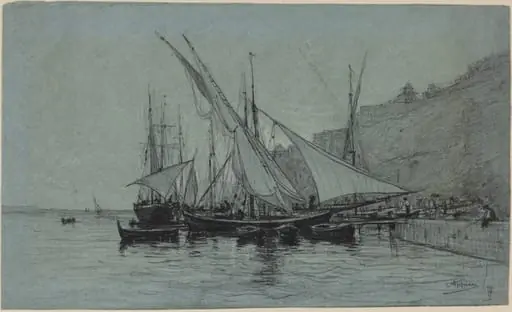
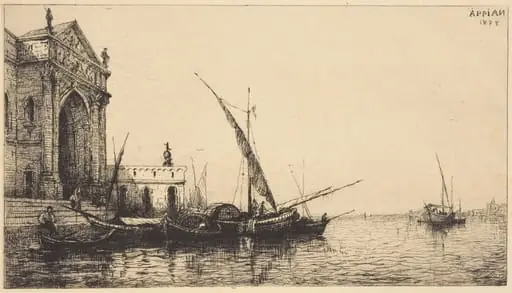
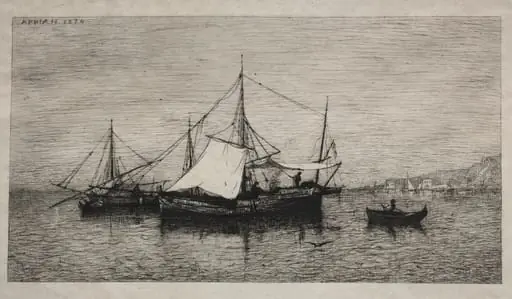
The Port of Genoa is an ink print by the Romanticist artist Adolphe Appian. It dates from 1877 and is held in the collection of the National Gallery of Art.
About this work
Overview
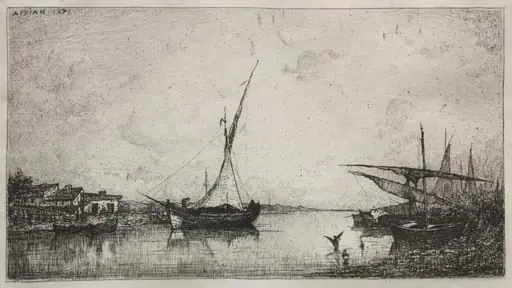
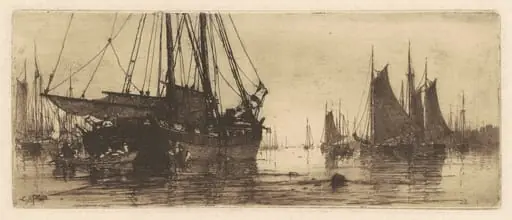
Created circa 1877, *The Port of Genoa* is an etching combined with a monoprint inking on wove paper by French artist Adolphe Appian. The work presents a bustling harbor scene, rendered in dark, interlaced lines that convey the movement of water and the rigging of ships.
Subject & Meaning
The composition centers on three tall sailing vessels anchored in choppy sea, their masts forming a tangled network above restless waves. A solitary figure on the shoreline, holding a fishing rod, underscores the contrast between human scale and the imposing maritime activity.
Technique & Style
Appian employed traditional etching—acid‑etched metal plates—to generate fine linear detail, then applied a monoprint inking process that adds broader, textured washes. The resulting interplay of precise lines and dense ink creates a sense of turbulence and depth uncommon in his more tranquil landscape prints.
History & Provenance
Born in 1819, Appian was active as both a landscape painter and printmaker throughout the mid‑19th century. This particular print is noted as a rare example of his port scenes, signed in the lower corner, and is catalogued as a proof rather than a mass‑produced edition.
Context
During the 1870s, European artists increasingly explored industrial and maritime subjects, reflecting the era’s expanding trade networks. Appian’s depiction of Genoa’s harbor aligns with this trend, offering a French perspective on an Italian port that was a hub of commercial activity.
Artist & collection
Artist
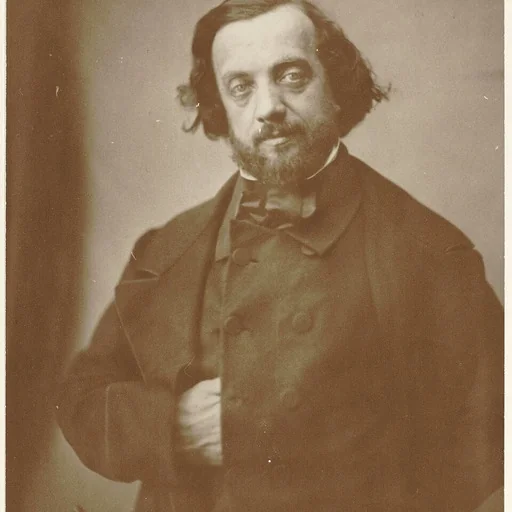
Adolphe Appian (born as Jacques Barthelemy Adolphe Appian; 28 August 1819 – 29 April 1898) was a French landscape painter and etcher.