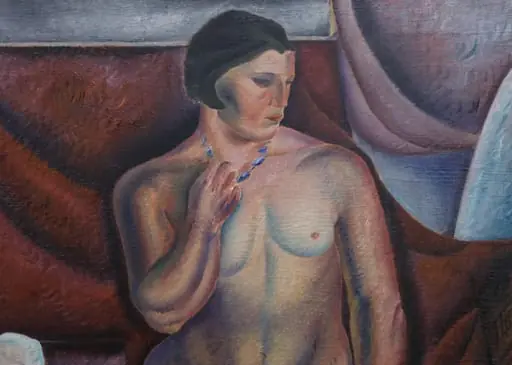
Artwork
Autoportret
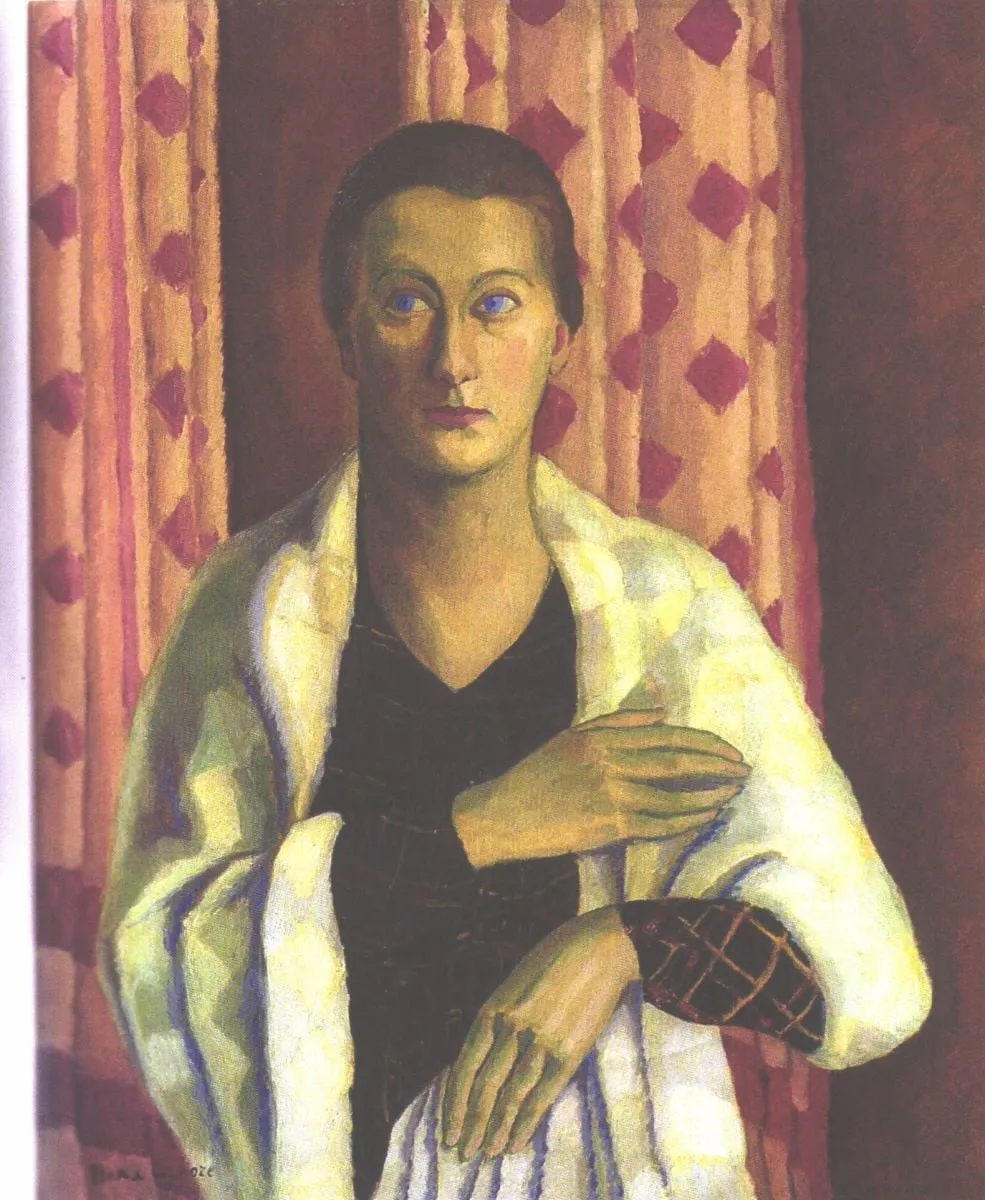
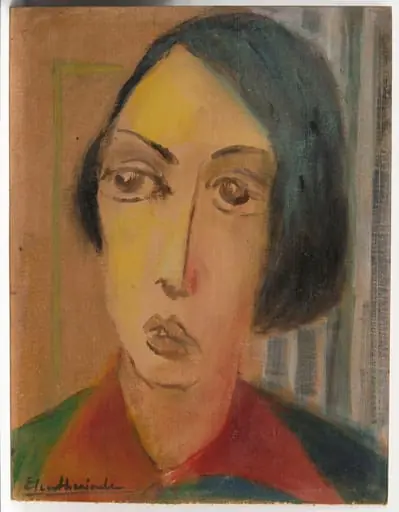
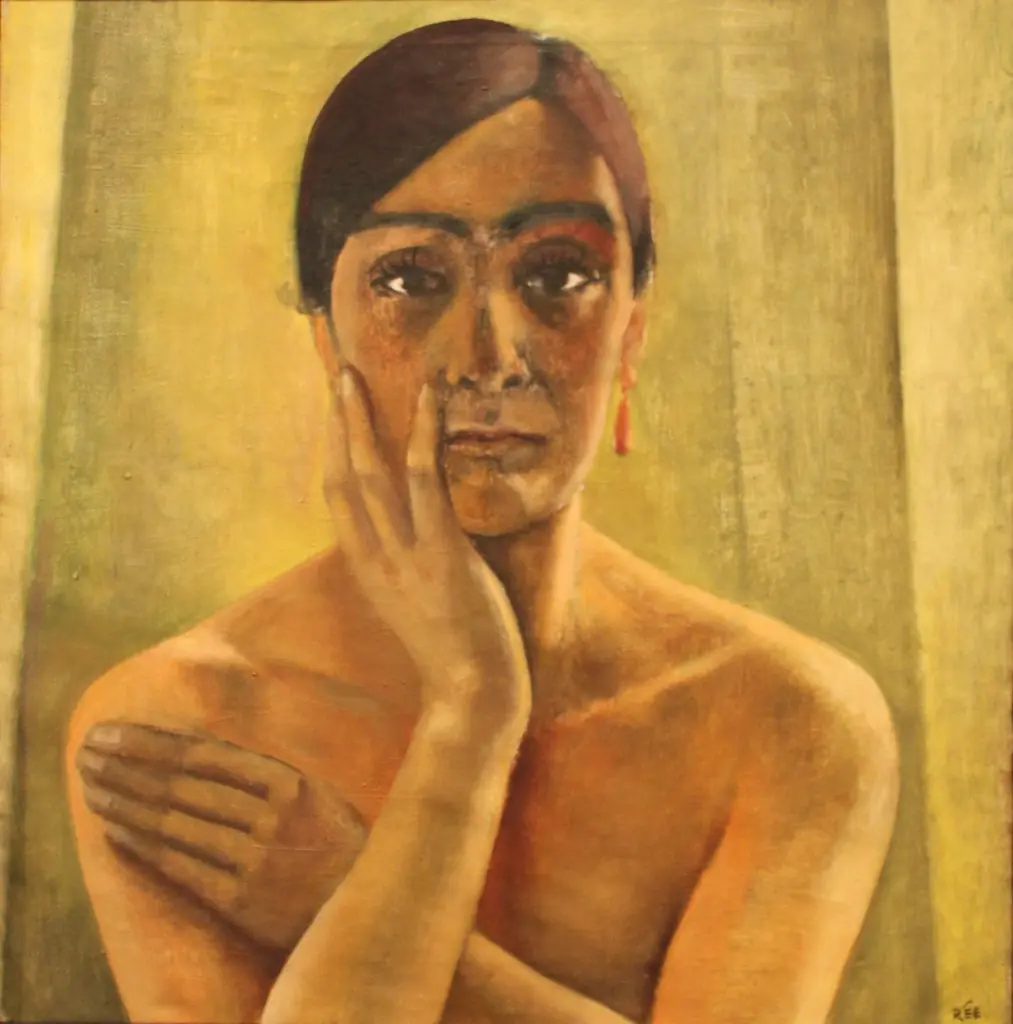
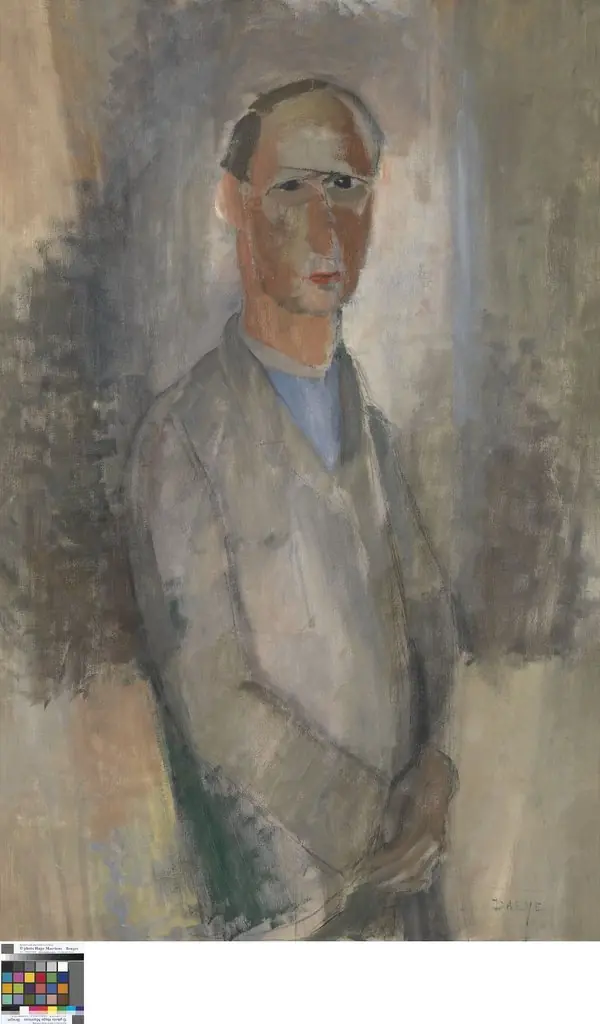
Autoportret is an unspecified painting by Nina Arbore. It dates from 1928 and is held in the collection of the Bucharest Municipality Museum.
About this work
Overview
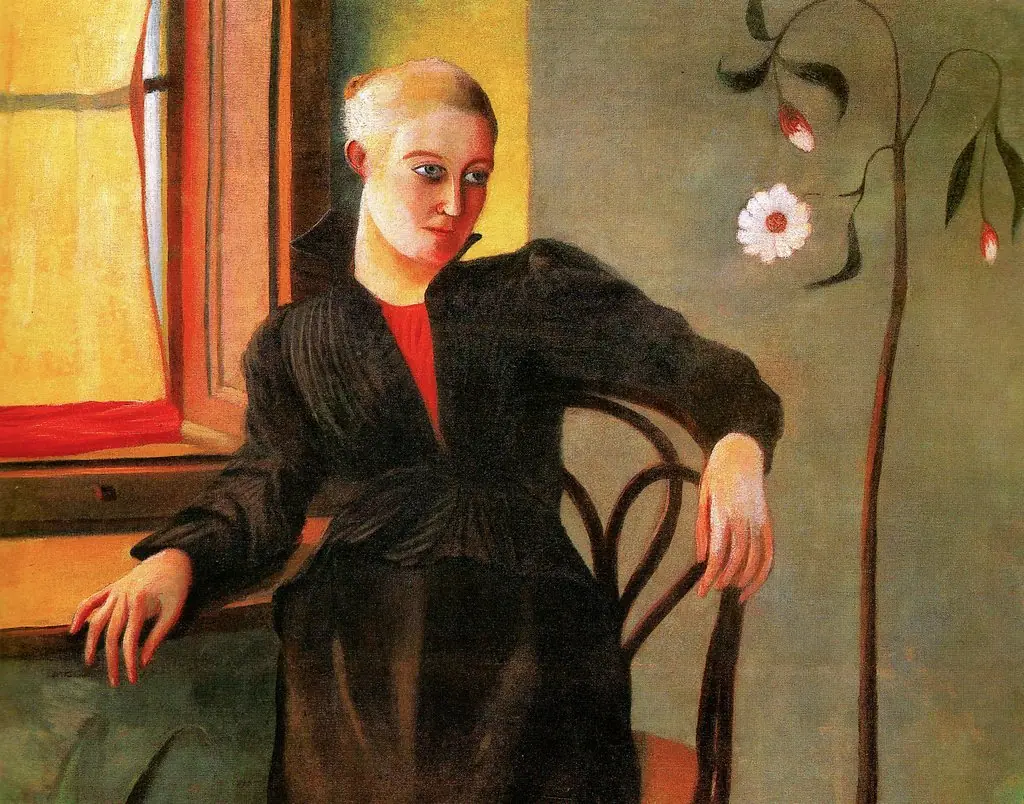
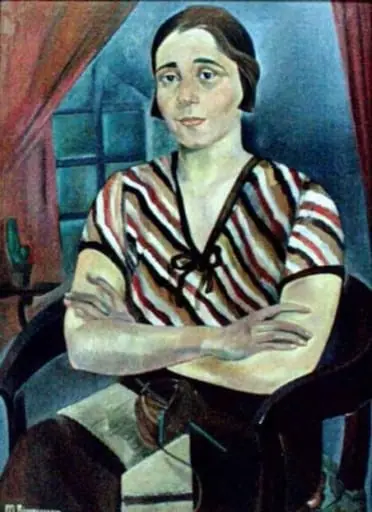
Autoportret, created circa 1928 by Nina Arbore, is a self-portrait painting housed at the Museum of Ethnography. The work depicts the artist wearing a light-colored coat over a dark top, holding a small, unidentified object in one hand, set against a vibrant, patterned red and yellow curtain.
Subject & Meaning
The subject of Autoportret is the artist herself, portrayed with a serious expression. The inclusion of a small, unidentifiable object in her hand introduces a subtle enigma, though its significance remains ambiguous without further context.
Technique & Style
Arbore employed thick, visible brushstrokes, akin to impasto, to create a textured, almost scraped, effect. This technique enhances color vibrancy and imparts a rough, tactile quality to the painting, emphasizing the physicality of the artistic process.
History & Provenance
Created around 1928, Autoportret is part of the collection at the Museum of Ethnography, though the path it took to arrive there is not detailed in available information.
Context
While specific contextual details about the painting's creation are scarce, its style reflects early 20th-century artistic tendencies towards expressive brushwork and vibrant coloration, potentially aligning with regional or broader European avant-garde movements of the time.
Legacy
The legacy of Autoportret, in terms of its influence or reception over time, is not prominently documented in the provided sources, suggesting it may be more appreciated for its stylistic and technical attributes within Arbore's oeuvre or the museum's collection rather than widespread renown.
Artist & collection
Artist
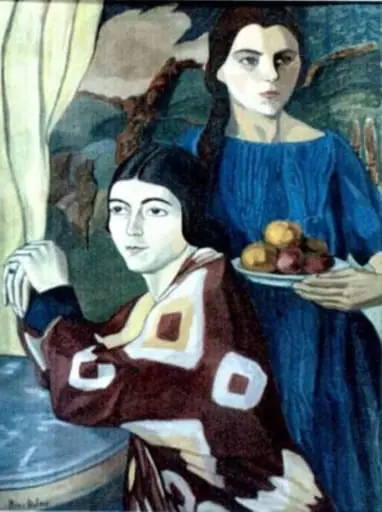
Nina Arbore painted portraits and still lifes in early 20th-century Romania. Her brush captured intimate scenes like Două surori, Autoportret, and Portret de femeie, revealing quiet family bonds and quiet moods. Look…