Artwork
Portret de femeie
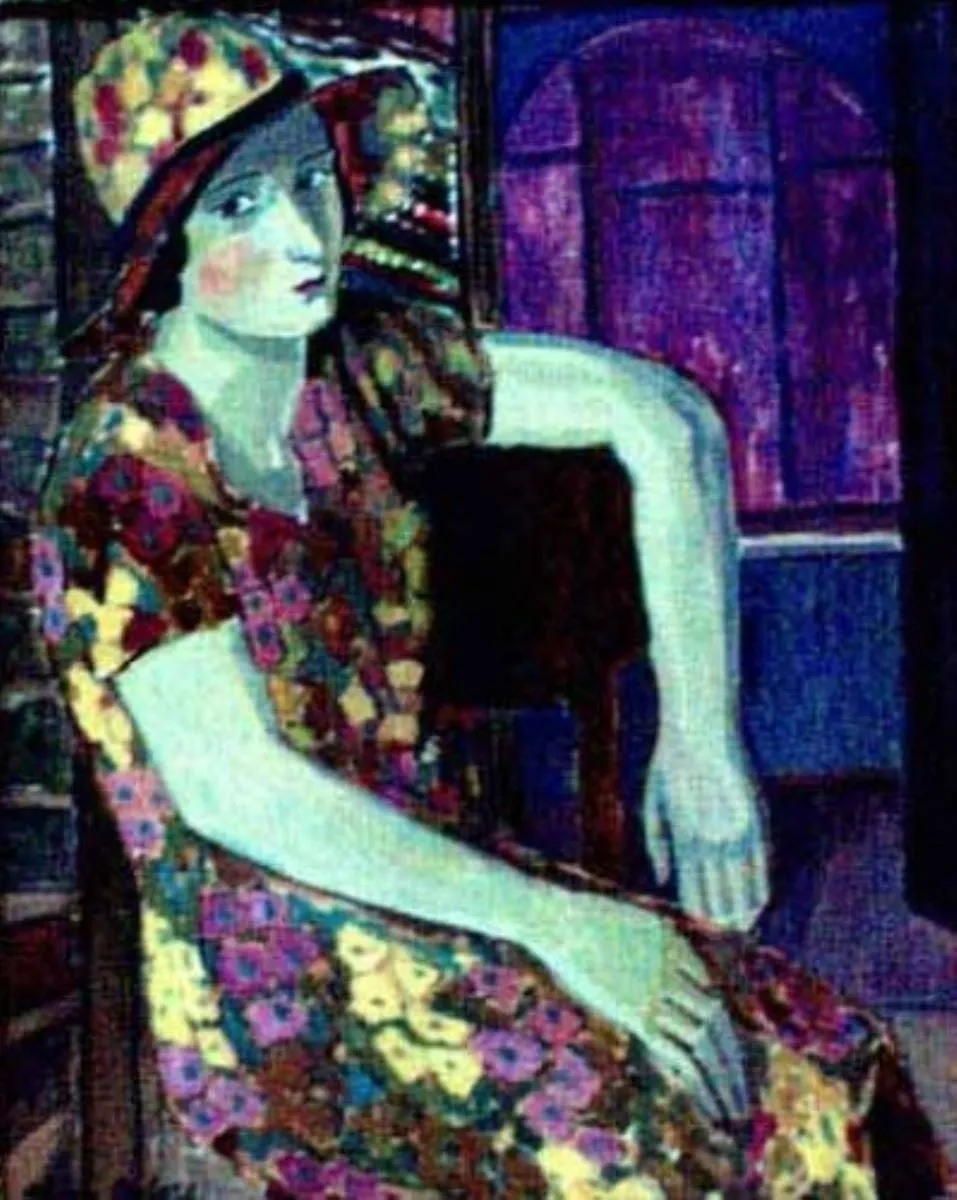
Portret de femeie is an unspecified painting by Nina Arbore. It dates from 1927 and is held in the collection of the National Museum of Art of Romania.
About this work
Overview
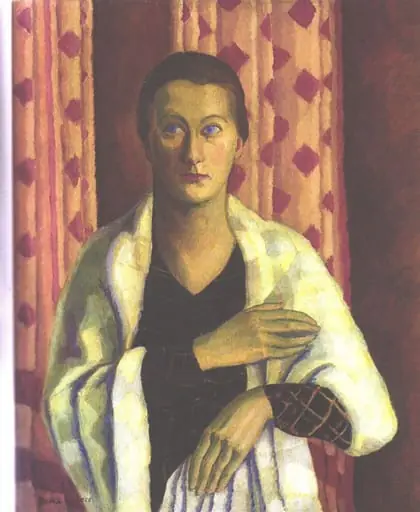
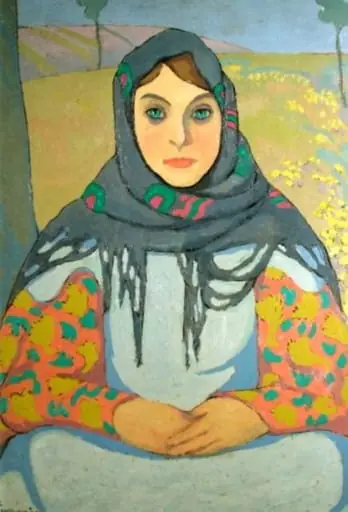
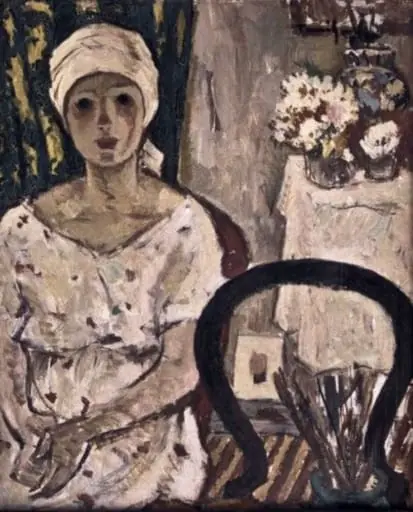
Painted in 1927 by Romanian artist Nina Arbore, this portrait captures a woman seated in a quiet, intimate moment. The composition centers on her figure, framed by the curved arm of a chair and set against a deep, luminous background. The work reflects Arbore’s interest in personal expression through color and texture, moving beyond conventional portraiture toward a more emotive visual language.
Subject & Meaning
The subject is a woman dressed in a vibrant floral gown, adorned with a matching hat and a white scarf that softens her presence. Her stillness and direct gaze suggest introspection rather than performance. The rich patterns and layered clothing imply a sense of personal identity and domestic elegance, while the shadowed background isolates her, emphasizing inner presence over external context.
Technique & Style
Arbore employs thick, expressive brushstrokes to build texture in the fabric and floral motifs, a technique known as impasto. The paint is applied with deliberate weight, creating a tactile surface that catches light unevenly. This method enhances the materiality of the clothing and contrasts with the smooth, atmospheric darkness of the background, heightening the figure’s physicality.
History & Provenance
Created during Arbore’s mature period, the painting emerged from a time when Romanian artists were exploring modernist approaches while retaining personal and national themes. Though specific ownership history is not widely documented, the work remains part of public collections in Romania, reflecting its recognized place in early 20th-century Romanian art.
Context
In the 1920s, Romanian art was shifting from academic traditions toward greater individual expression. Arbore, influenced by Post-Impressionism and Fauvism, used color and texture to convey psychological depth. This portrait aligns with broader European trends that valued emotional resonance over realism, positioning her within a generation redefining portraiture.
Legacy
Nina Arbore’s portrait stands as a quiet example of early modernist portraiture in Romania, notable for its emotional restraint and tactile richness. While not widely exhibited internationally, it continues to inform discussions of gender, identity, and technique in Romanian art history, offering a nuanced alternative to more dramatic modernist narratives.
Artist & collection
Artist
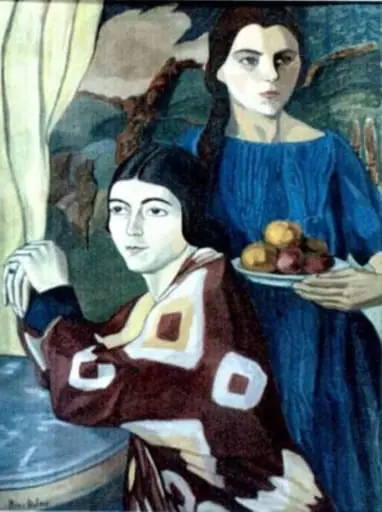
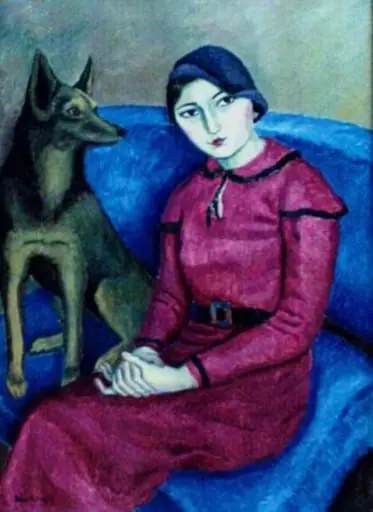
Nina Arbore painted portraits and still lifes in early 20th-century Romania. Her brush captured intimate scenes like Două surori, Autoportret, and Portret de femeie, revealing quiet family bonds and quiet moods. Look…