Artwork
Downton Church
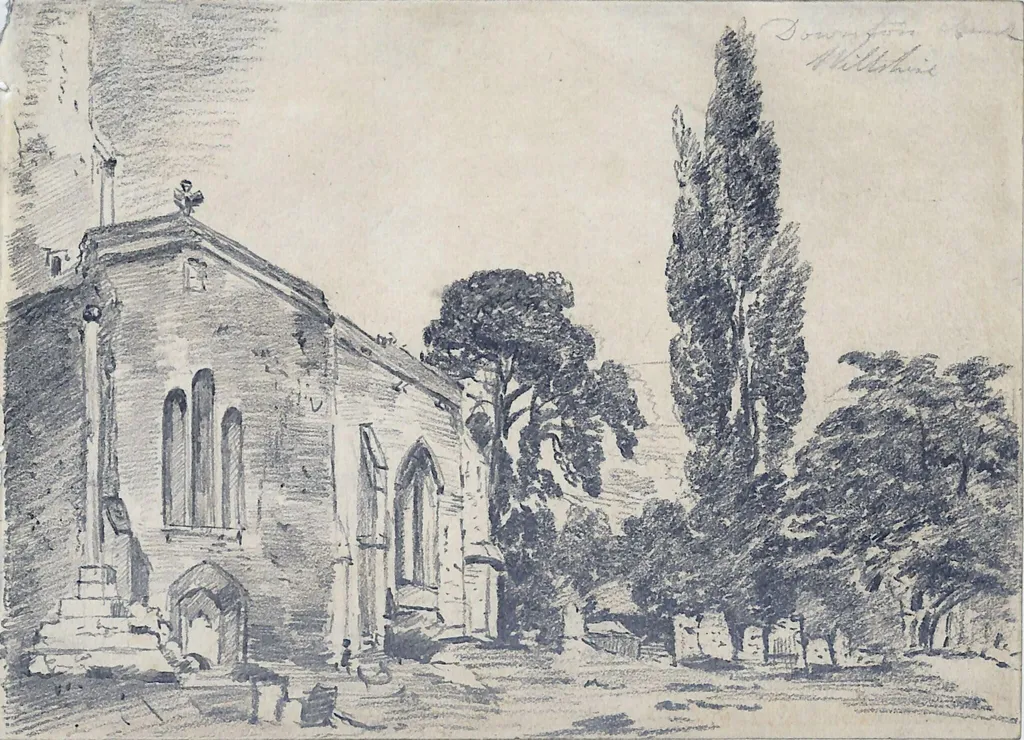
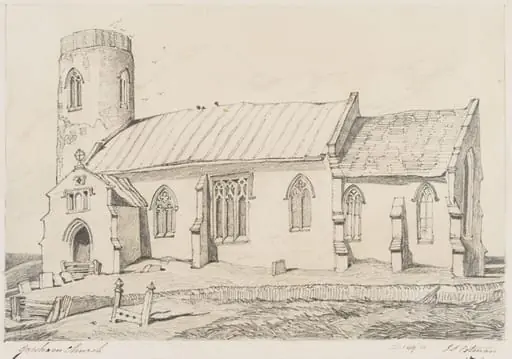
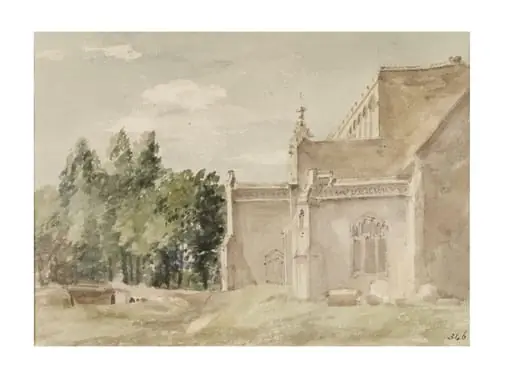
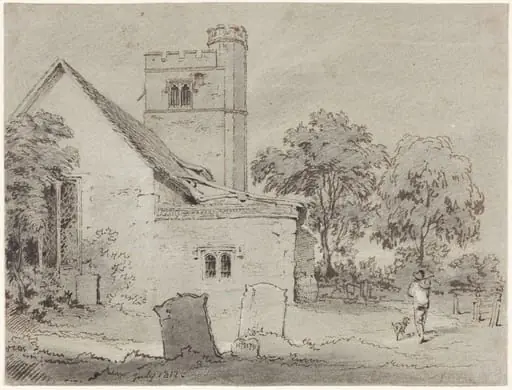
Downton Church is a drawing by the Romanticist artist Archdeacon John Fisher. It dates from 1822 and is held in the collection of the Victoria and Albert Museum.
About this work
Overview
The work is labeled with its subject, and the name Constable is noted on the reverse, reflecting Fisher’s close association with the painter.
Created in 1822, this pencil drawing by Archdeacon John Fisher captures Downton Church in Wiltshire as part of a personal sketchbook. The work is labeled with its subject, and the name Constable is noted on the reverse, reflecting Fisher’s close association with the painter. Fisher’s technique echoes Constable’s observational approach, though his focus remains intimate and unembellished, recording the church’s quiet decay with restrained precision.
Subject & Meaning
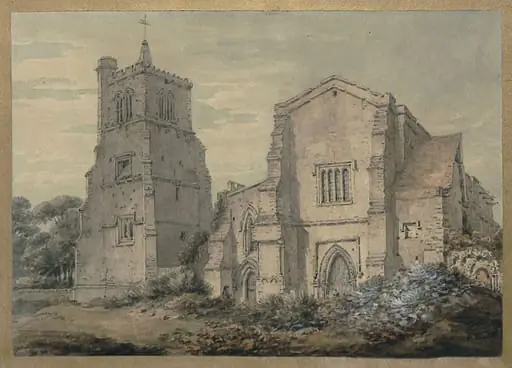
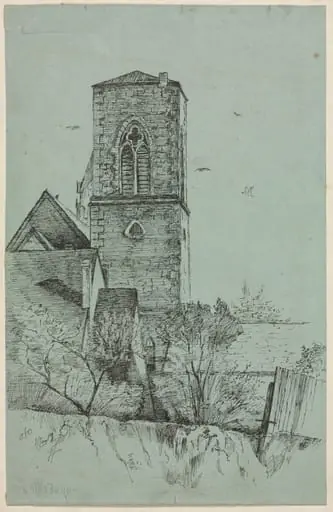
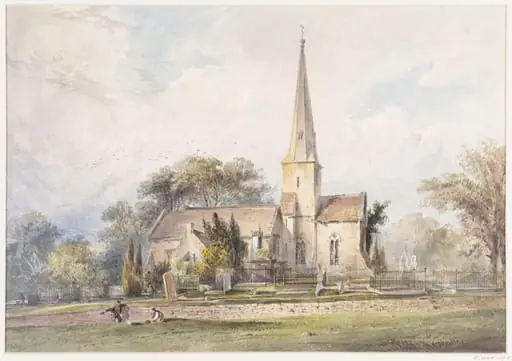
The drawing portrays a weathered stone church surrounded by natural encroachment—ivy climbs its walls, and two trees frame the entrance. A modest arched doorway opens to a churchyard littered with stones and uneven earth. The scene conveys a sense of time’s passage, not through grandeur but through neglect: the building’s simplicity and wear reflect a quiet, unromanticized reverence for the sacred in everyday decay.
Technique & Style
Fisher employed loose, rapid pencil strokes to suggest texture and light, avoiding polished finish in favor of immediacy. Cross-hatching and varying pressure create subtle gradations of shadow across the stonework and foliage. The sketchy handling emphasizes surface detail—cracked masonry, tangled ivy, and rough ground—without idealizing the scene, aligning with a direct, unadorned mode of recording observed reality.
History & Provenance
The drawing originates from Fisher’s personal sketchbook, likely made during a visit to the church. Fisher, a longtime friend of John Constable from 1811 until the painter’s death in 1837, shared his interest in landscape and architectural observation. The presence of Constable’s name on the reverse suggests either a mark of association or a later annotation, reinforcing the network of artistic exchange among early 19th-century English observers of the natural and built environment.
Context
In the early 1820s, interest in rural ecclesiastical architecture grew among amateur and professional artists alike, often tied to antiquarianism and changing attitudes toward heritage. Fisher’s depiction of Downton Church, with its unvarnished state and lack of restoration, reflects a broader cultural moment in which the passage of time in sacred spaces was seen not as deterioration but as a form of authentic presence.
Legacy
Though Fisher was not a professional artist, his drawings contribute to a quiet tradition of clerical sketching that documented England’s ecclesiastical landscape with sincerity. His work, alongside Constable’s, helps illustrate how personal observation, rather than formal training, shaped early 19th-century responses to place. This drawing remains a modest but enduring record of a specific moment in the life of a local church.
Artist & collection
Artist
This British artist filled sketchbooks with quiet pencil drawings of parish life around 1815–1830.