Artwork
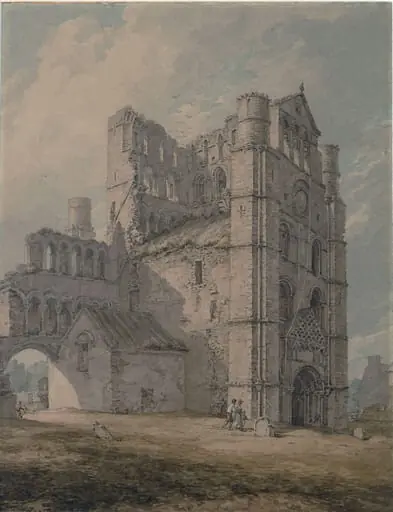
Priory church, Elstow, Bedfordshire
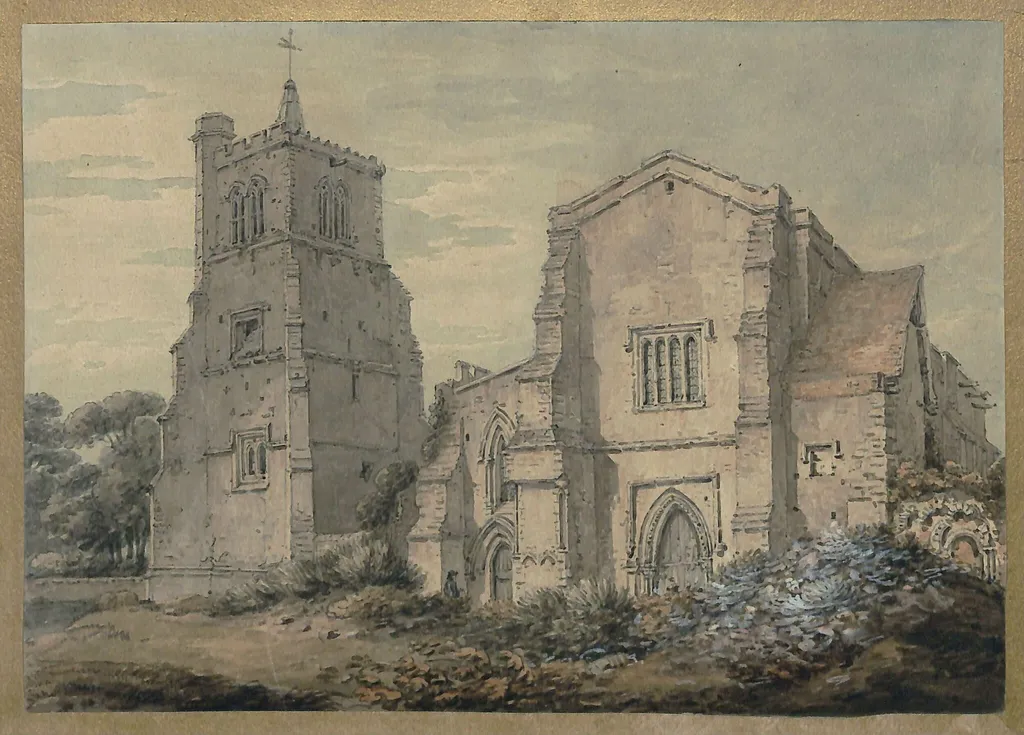
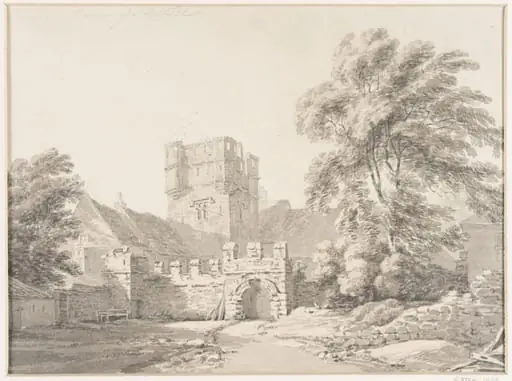
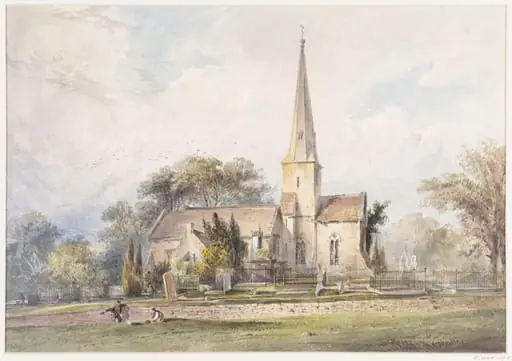
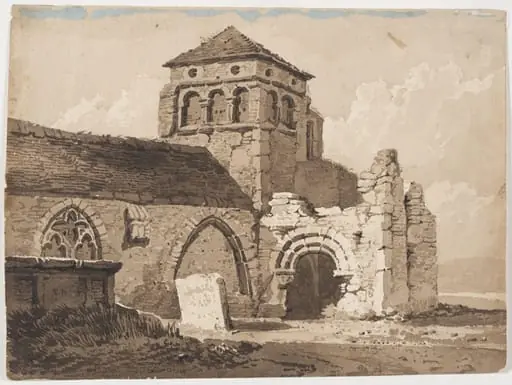
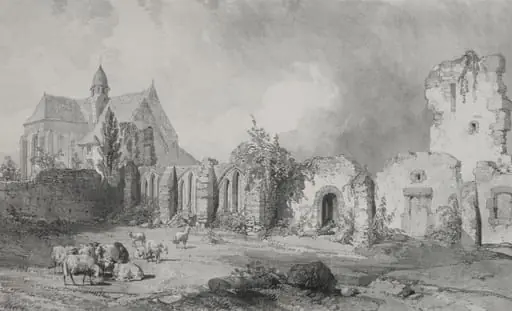
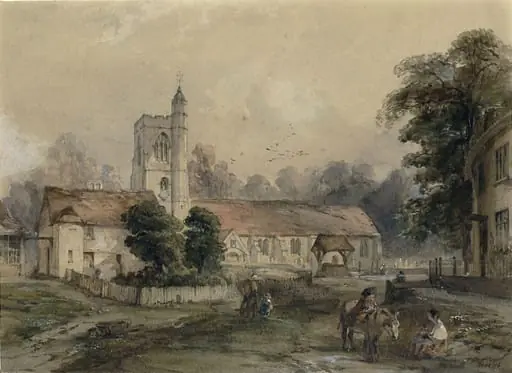
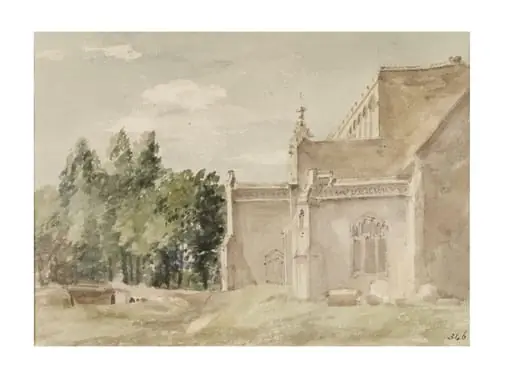
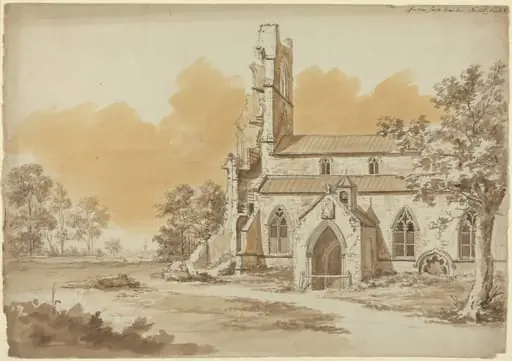
Priory church, Elstow, Bedfordshire is a watercolor work on paper by the Rococo painting artist Thomas Hearne. It dates from 1760 and is held in the collection of the Victoria and Albert Museum.
About this work
Overview
The work captures the building in a state of quiet decay, rendered with delicate washes that emphasize atmospheric light and texture.
Thomas Hearne created this watercolour in 1760, depicting the former priory church at Elstow in Bedfordshire. The work captures the building in a state of quiet decay, rendered with delicate washes that emphasize atmospheric light and texture. Unlike grand architectural records, Hearne’s approach focuses on the subtle interplay between structure and nature, conveying a sense of time’s quiet passage through the landscape.
Subject & Meaning
The priory church, once a center of religious life, appears here as a solitary, weathered structure. Ivy clings to its stonework, and sections of masonry show signs of erosion, suggesting abandonment. The absence of figures or activity enhances the impression of solitude. Hearne’s choice to depict the site in this state reflects an early interest in the emotional resonance of ruins, not merely their historical record.
Technique & Style
Hearne employed transparent watercolour washes to suggest the softness of daylight and the roughness of aged stone. Delicate layering creates subtle gradations in tone, while sparing use of white pigment highlights areas where light strikes the surface. The brushwork is restrained, avoiding sharp detail in favor of atmospheric effect, aligning with the topographical tradition of the period but with a distinctly lyrical sensibility.
History & Provenance
The painting was made during Hearne’s early career, before he became known for his extensive topographical commissions. It likely originated as a personal study, possibly made during a journey through Bedfordshire. The work entered the Victoria and Albert Museum’s collection in the 19th century, where it remains as part of a broader archive of British architectural watercolours from the 1700s.
Context
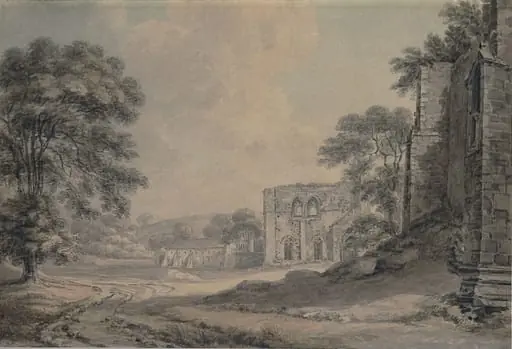
In the mid-18th century, antiquarian interest in monastic ruins was growing, fueled by Romantic ideals and the dissolution of the monasteries over two centuries prior. Hearne’s depiction aligns with this trend, though it avoids overt nostalgia. Instead, it presents the church as a quiet participant in the natural landscape, reflecting a shift toward observing decay as an inherent part of time’s rhythm.
Legacy
This watercolour contributes to a body of work that helped redefine architectural representation in British art. Hearne’s focus on texture, light, and mood influenced later topographical artists and early landscape painters. Though not widely exhibited in his lifetime, the piece endures as a quiet testament to the aesthetic value found in neglected structures and the passage of time.
Artist & collection
Artist
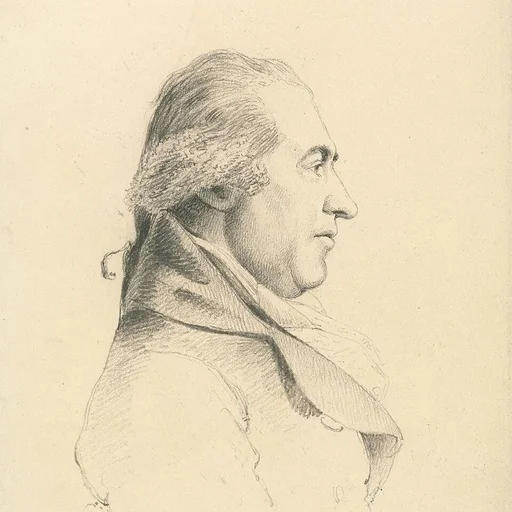
Thomas Hearne (22 September 1744 – 13 April 1817) was an English landscape painter, engraver and illustrator.