Artwork
The Banquet of Ahasuerus
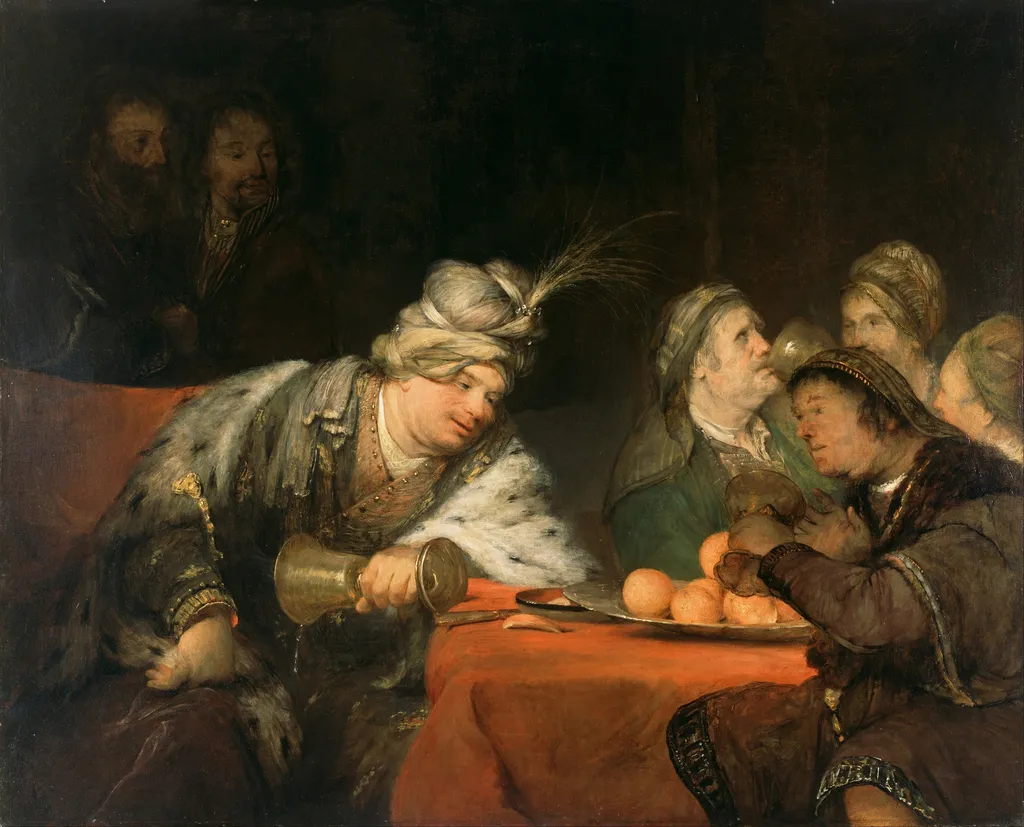
The Banquet of Ahasuerus is an oil painting by the Dutch Golden Age artist Arent de Gelder. It dates from 1690 and is held in the collection of the J. Paul Getty Museum.
About this work
Overview
The Banquet of Ahasuerus is a 1690 oil painting by Dutch artist Arent de Gelder, continuing the late style of Rembrandt into the 18th century. It is a religious genre piece held in the J. Paul Getty Museum collection.
Subject & Meaning
The painting depicts a biblical scene of a lavish feast, focusing on the interaction between a man in a white turban and dark coat (likely Ahasuerus) and a woman in green (possibly Esther), set amidst a group at a table with a red cloth.
Technique & Style
De Gelder employs chiaroscuro, using warm light against a dark background to create depth and drama, highlighting the central figures. The work showcases meticulous attention to detail in clothing folds and expressive facial expressions.
History & Provenance
Created in 1690, the painting is part of the J. Paul Getty Museum's collection, attributed to Arent de Gelder, the last artist to perpetuate Rembrandt's late style into the 18th century.
Context
The work aligns with the Dutch Golden Age tradition of biblical scene depictions, reflecting the artistic and religious sensibilities of the time.
Legacy
As the final exponent of Rembrandt's late style, de Gelder's *The Banquet of Ahasuerus* serves as a culmination of this artistic lineage, though its broader impact on the development of subsequent art movements is not distinctly defined.
Own this work as a print
Artist & collection
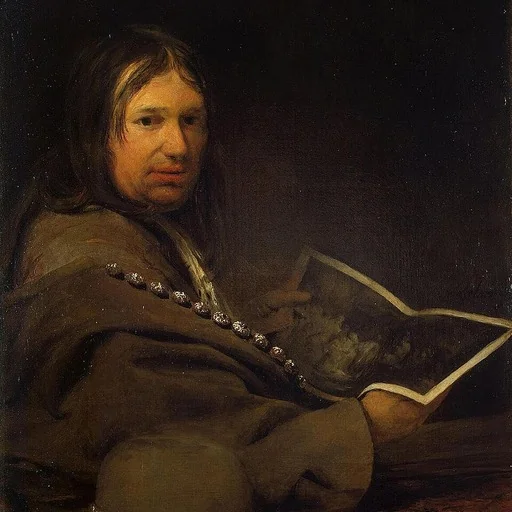
Artist
Aert de Gelder (Dutch: ; October 26, 1645 – August 27, 1727) was a Dutch painter, the only Dutch artist to paint in the tradition of Rembrandt's late style into the 18th century.

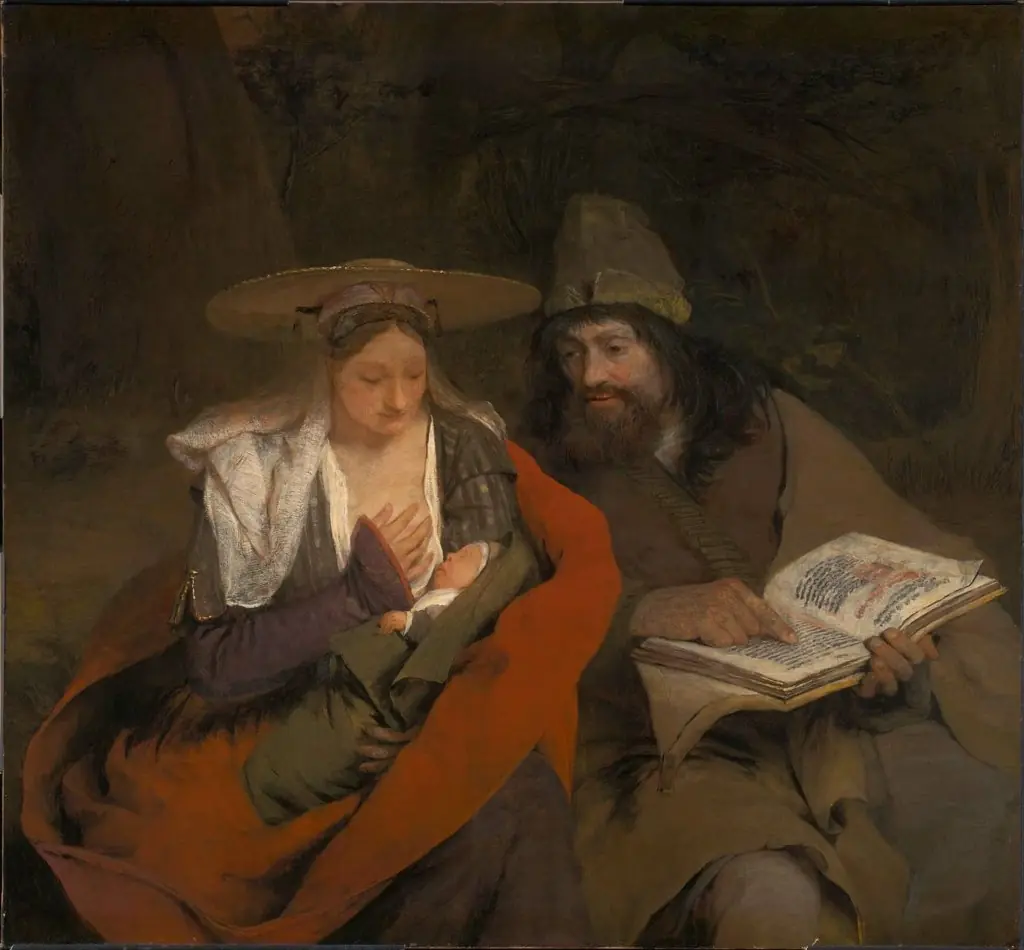 Rest on the Flight into Egypt
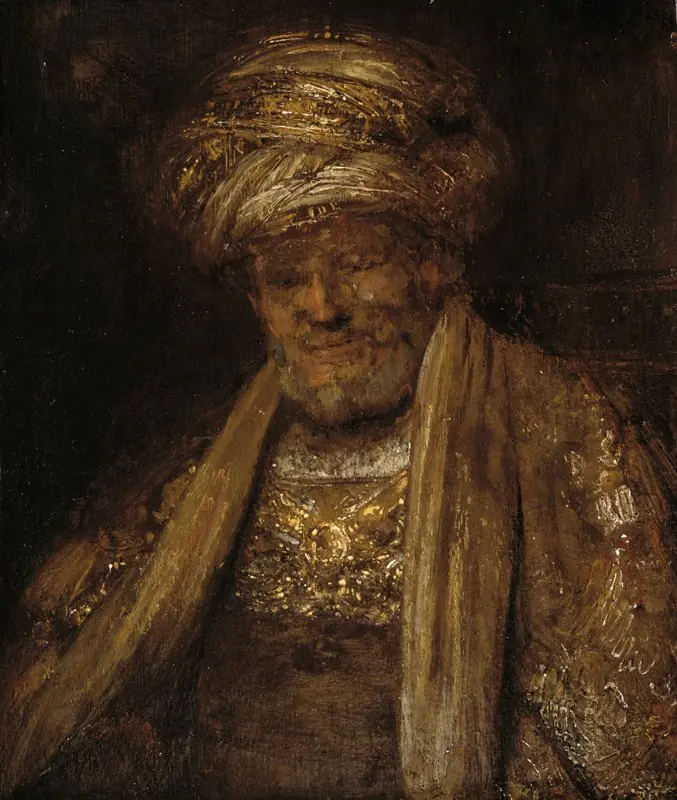 Portrait of an Oriental Man
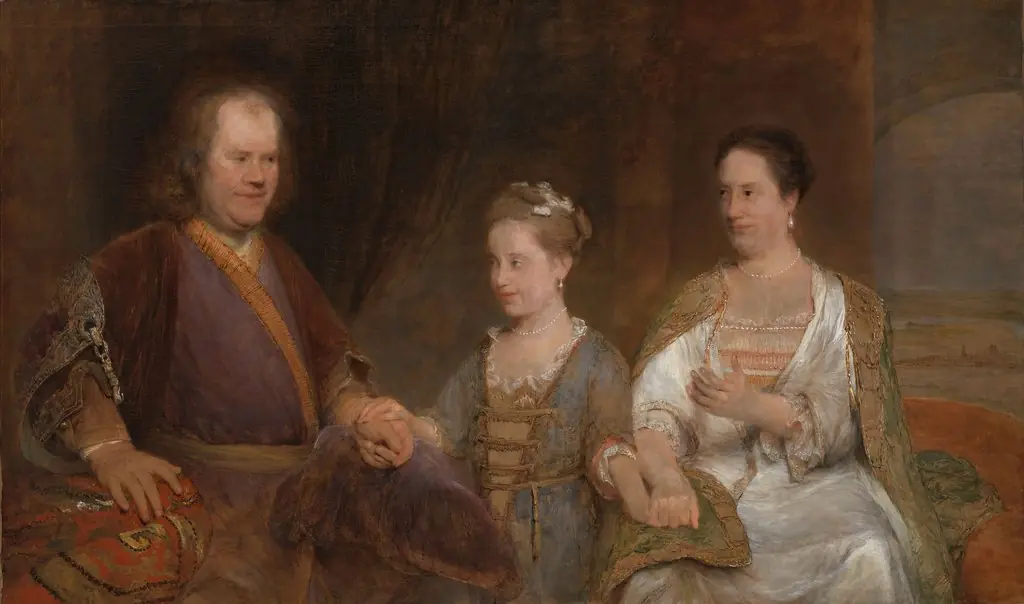 Portrait of Hermanus Boerhave (1668-1738), professor of medecine at the university of Leiden, with his wife Maria Drolenvaux (1686-1746) and their daughter Johanna Maria (1712-91)
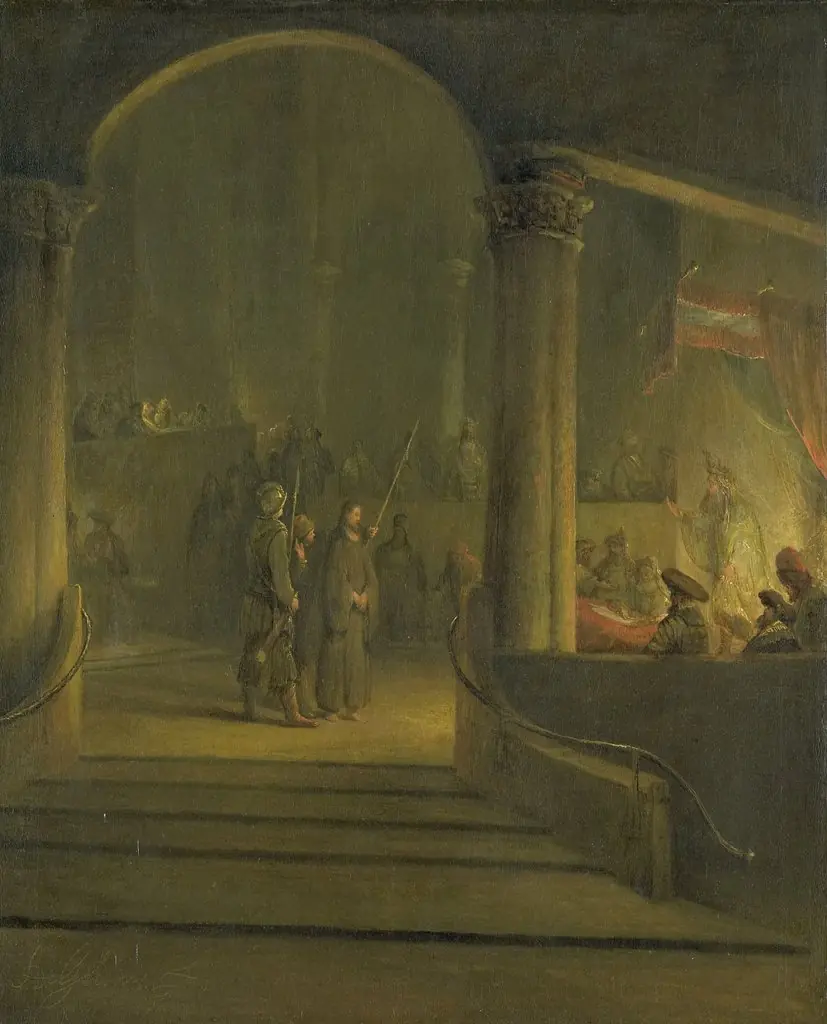 Christ before Caiphas
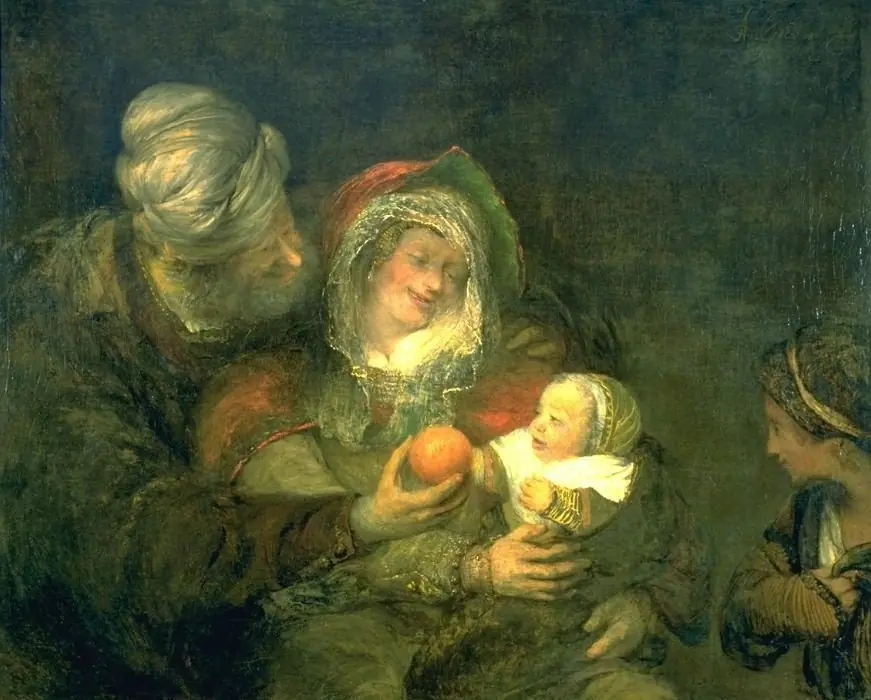 Holy Family
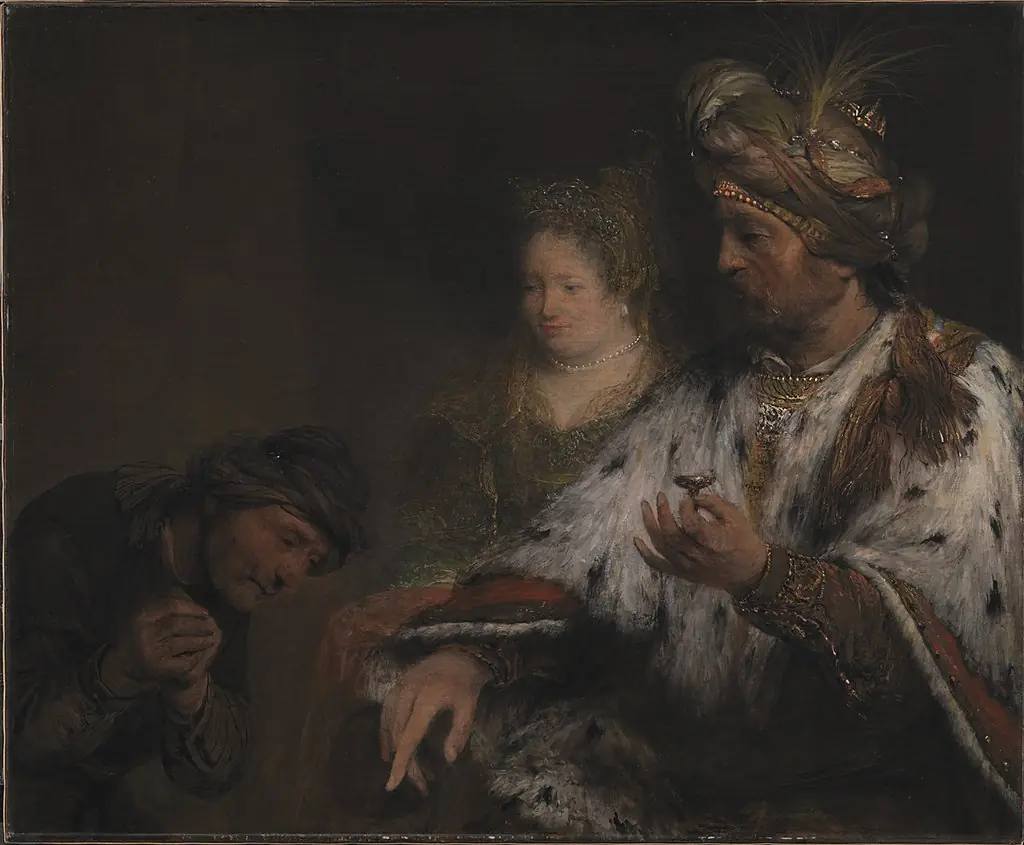 Den persiske kong Ahasverus giver Mordokaj ringen
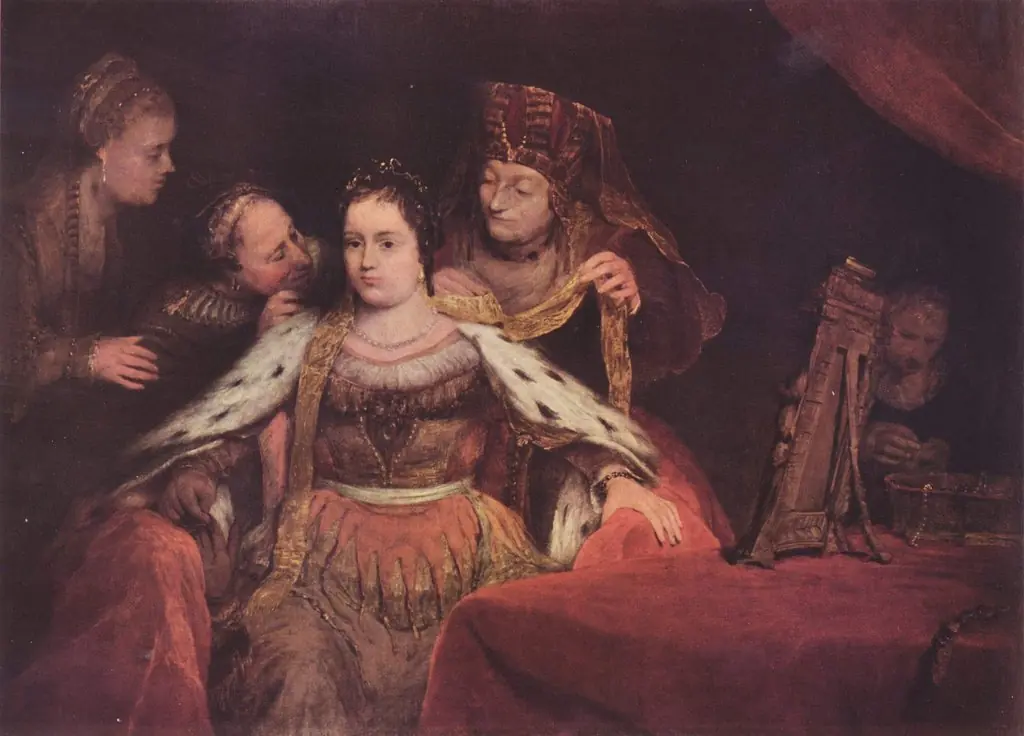 Esther's toilet
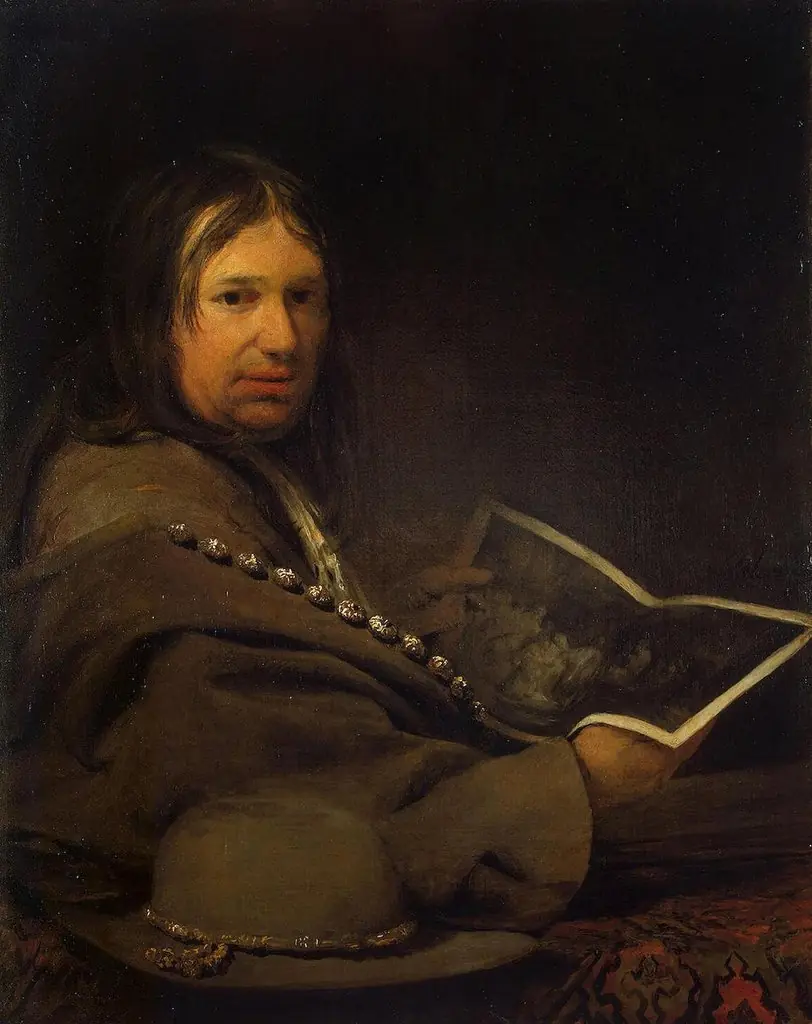 Portrait of a Collector
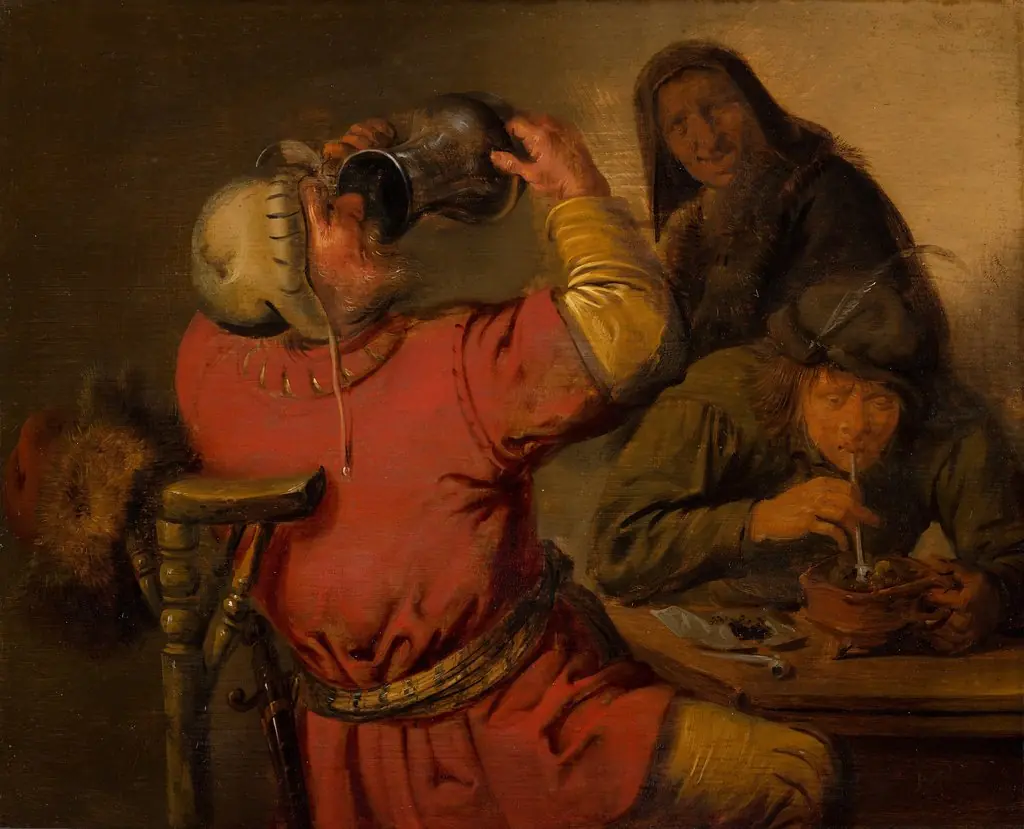 Taste: The five senses by J.M. Molenaer
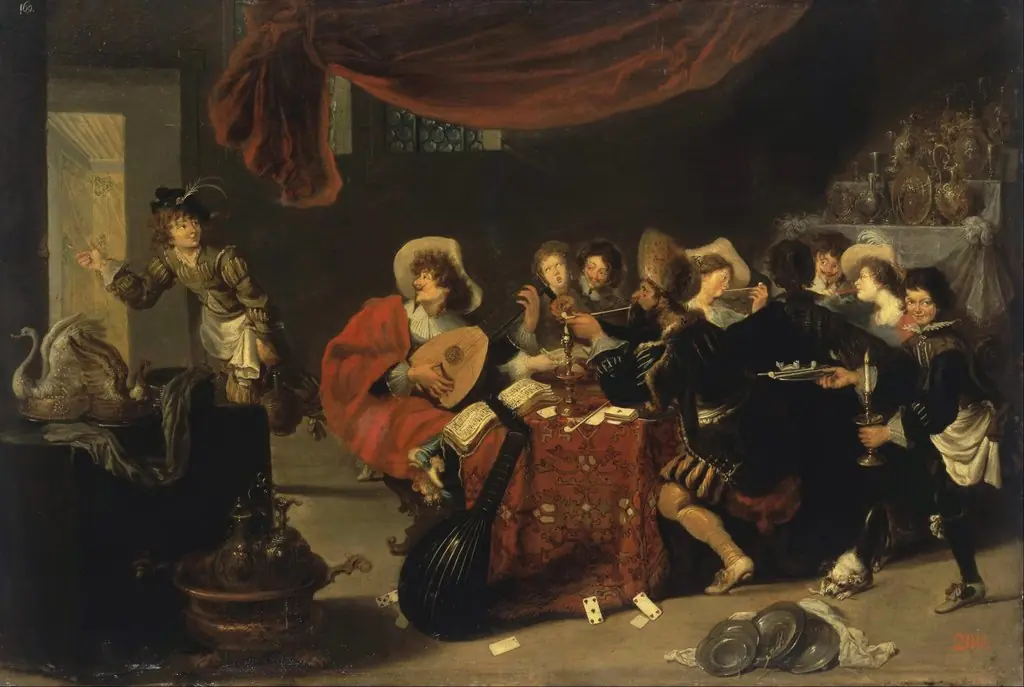 Merry Company
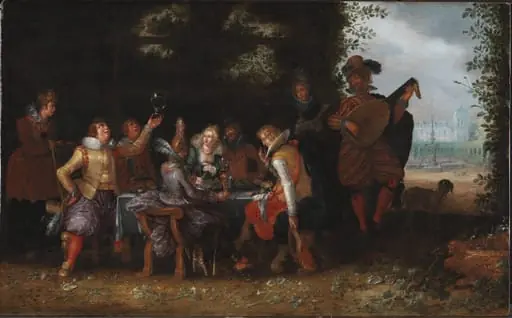
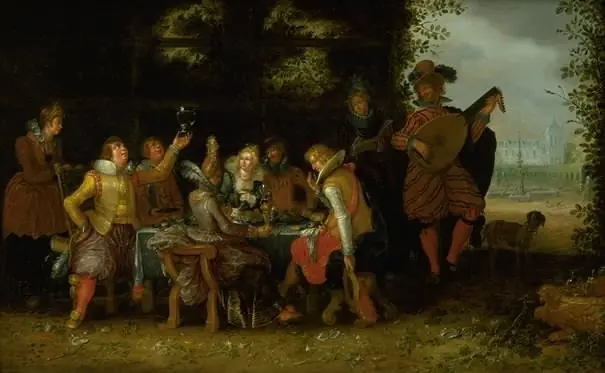 Banquet in a Park (The Prodigal Son among the Harlots?)
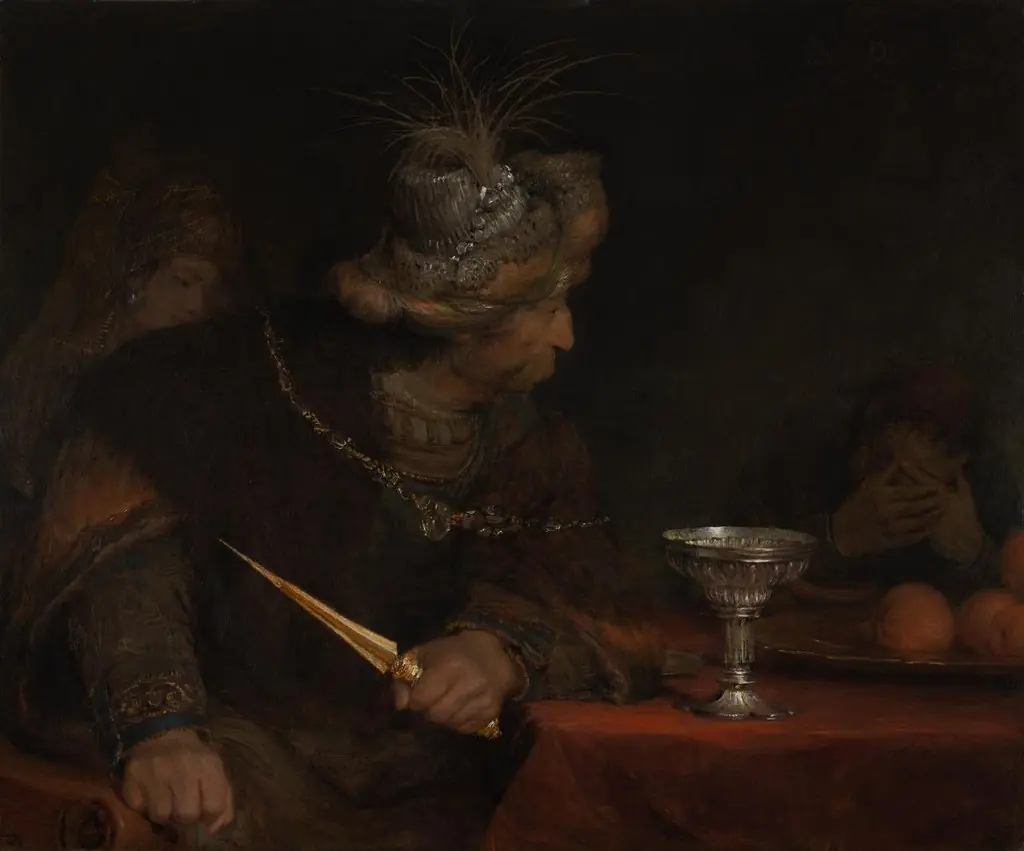 King Ahasuerus condemning Haman
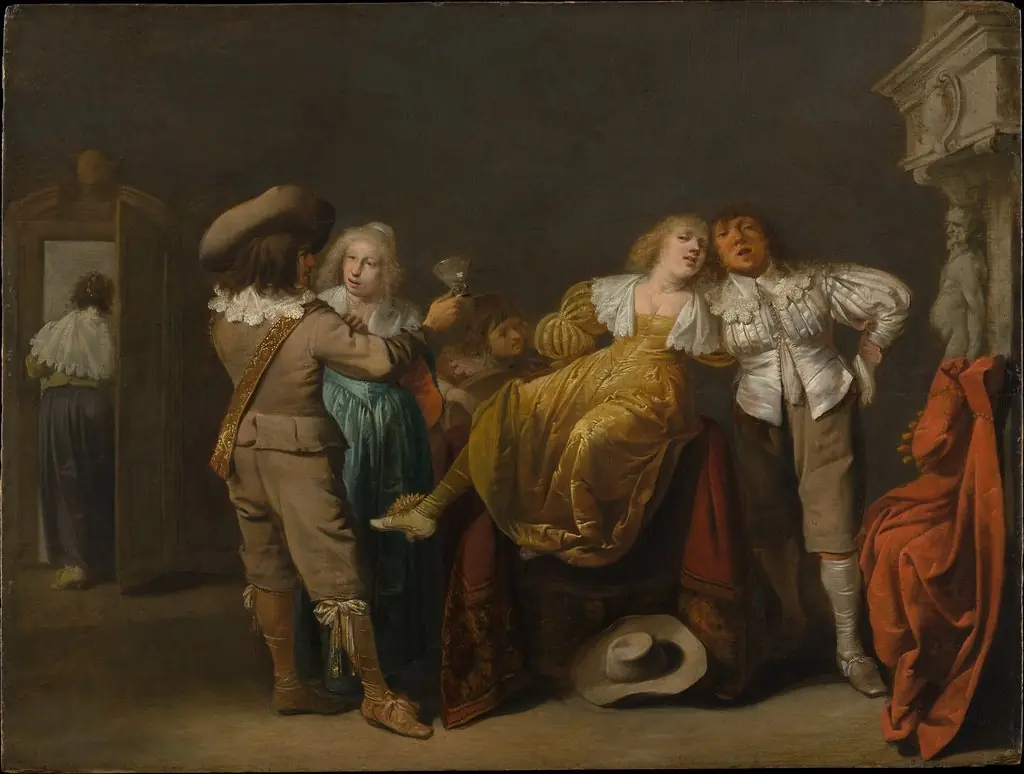 A Party of Merrymakers
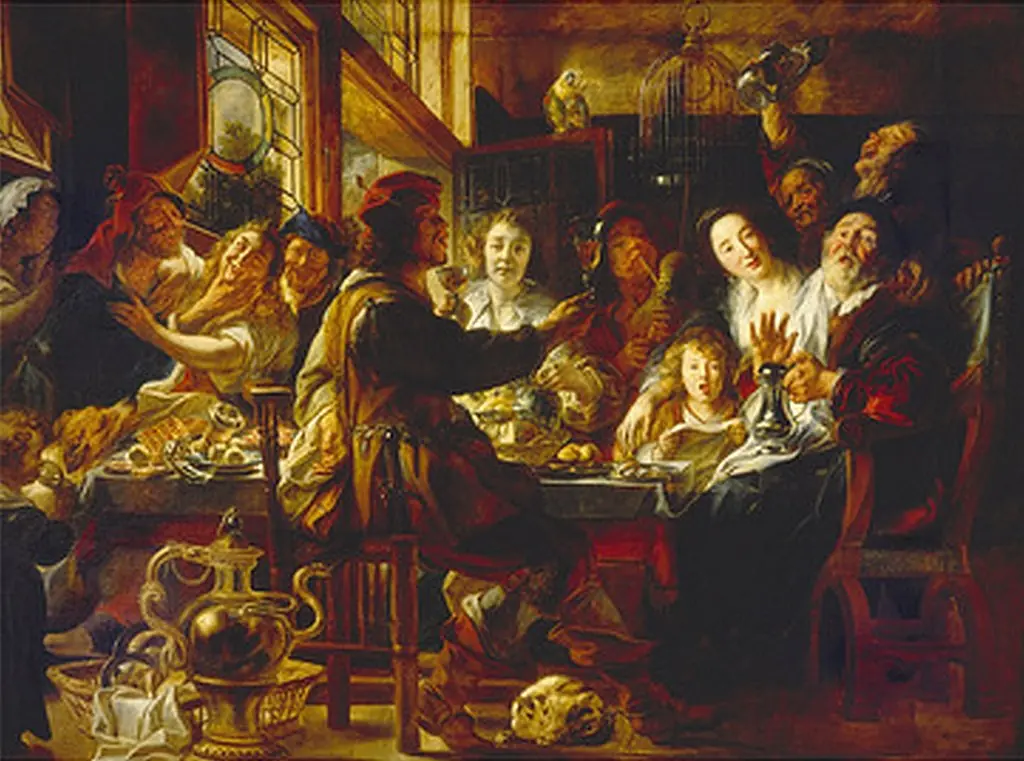 As the old sing so the young chirp
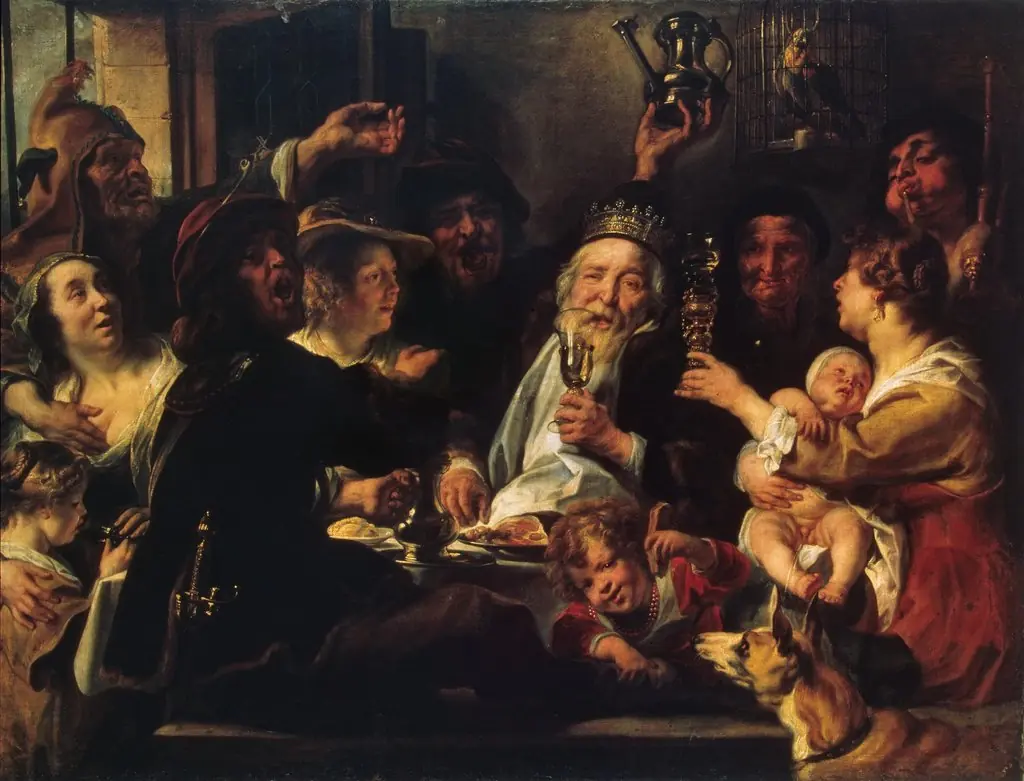 The Bean king
 Christ Healing at the Pool of Bethesda
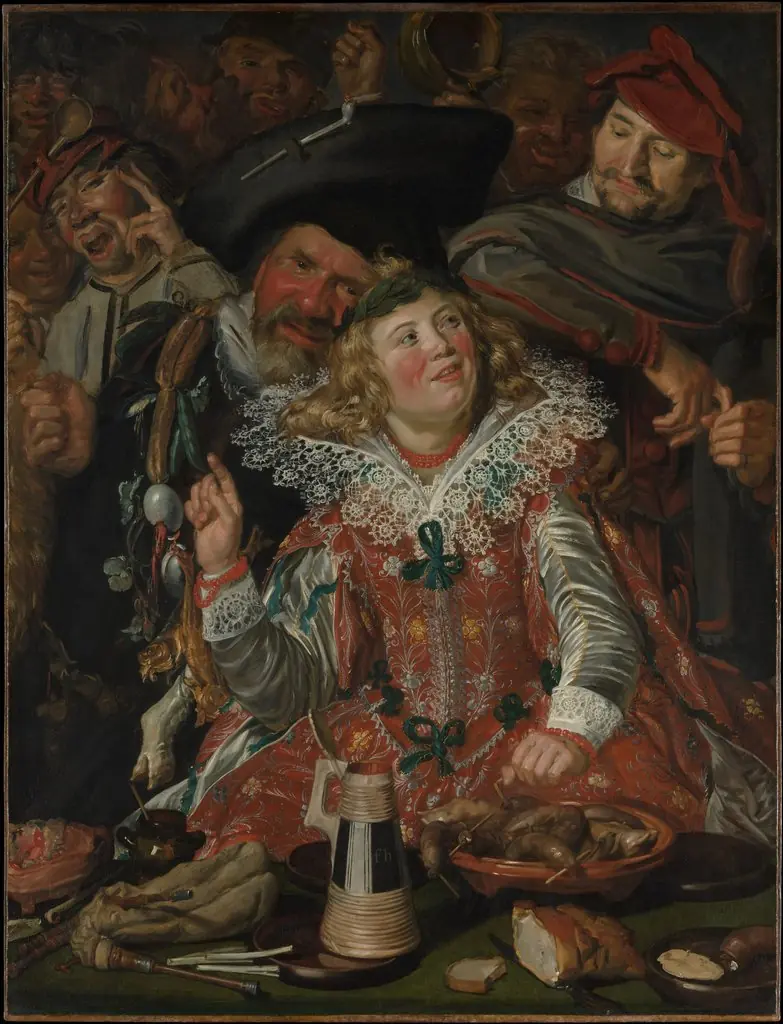 Merrymakers at Shrovetide
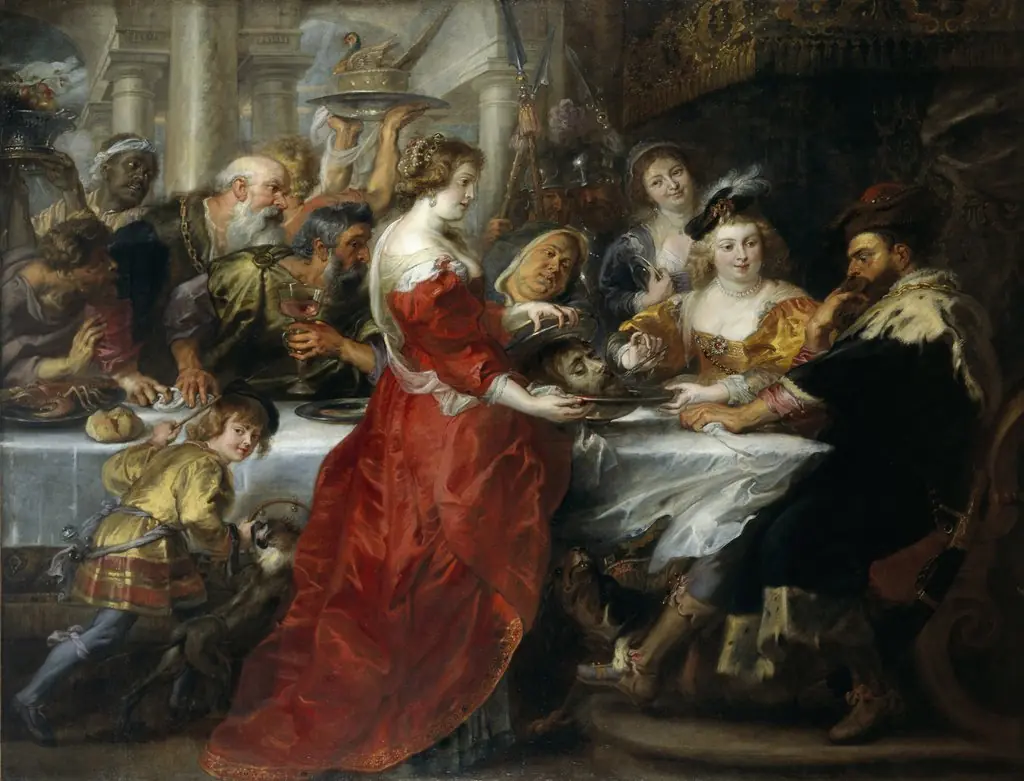 The Feast of Herod
 Merry Company (As the Old Ones Sing, so the Young Ones Pipe)
 Hearing