Artwork
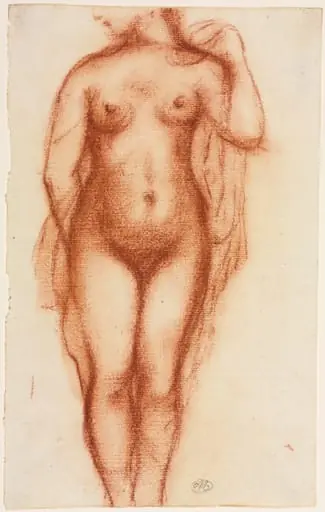
Nude Study
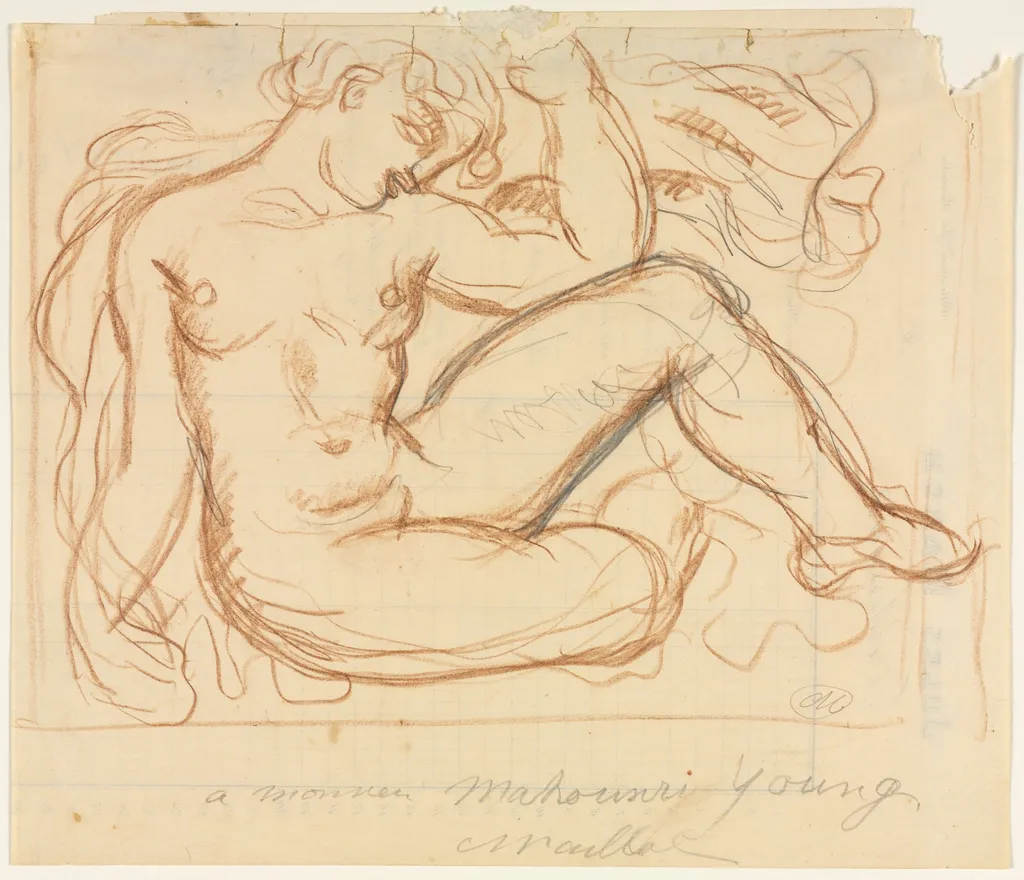
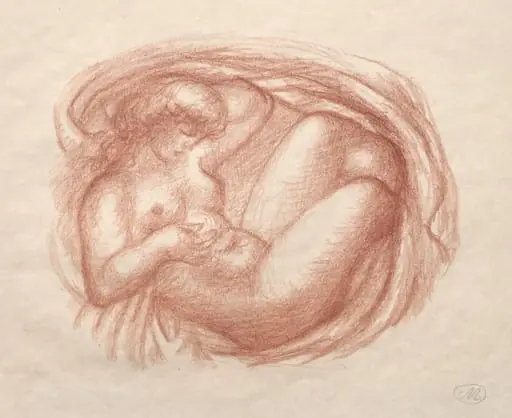
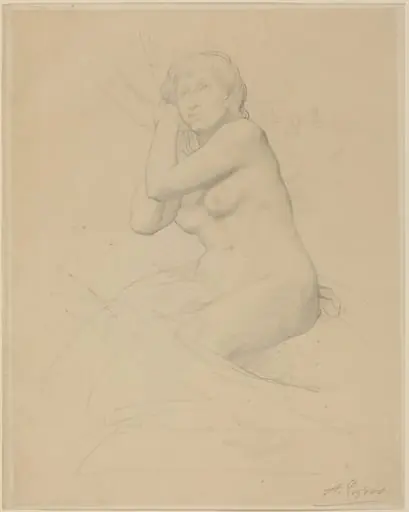
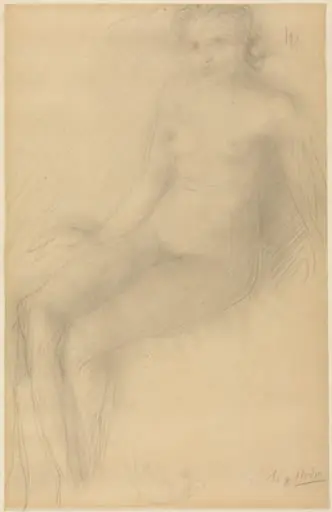
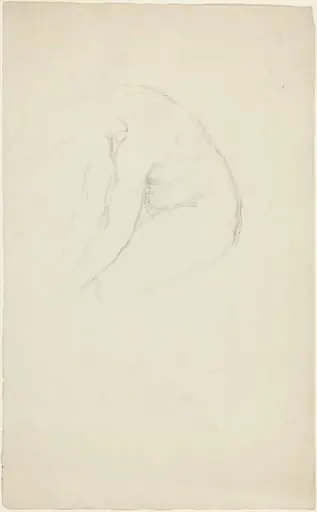
Nude Study is a drawing by the Impressionist artist Aristide Maillol. It dates from 1912 and is held in the collection of the Cleveland Museum of Art.
About this work
Overview
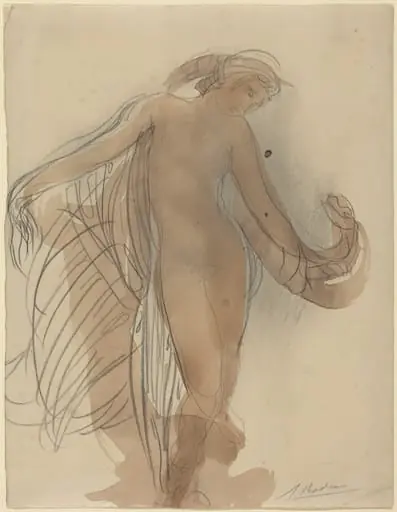
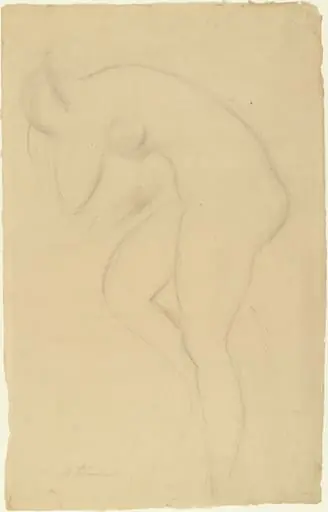
Executed on light beige paper with a brownish-red medium, likely charcoal or pencil, it captures a figure in motion through swift, undulating strokes.
Created in 1912, this drawing by Aristide Maillol is a straightforward study of the human form. Executed on light beige paper with a brownish-red medium, likely charcoal or pencil, it captures a figure in motion through swift, undulating strokes. The composition is unadorned, with no background or detail beyond the torso and limbs. The title, handwritten at the bottom, confirms its function as an exercise in observation rather than a finished work.
Subject & Meaning
The subject is a female nude, rendered without facial features or defined hands, emphasizing volume and posture over individuality. Maillol focuses on the body’s weight and flow, suggesting movement through the rhythm of the lines. The omission of details invites attention to the silhouette and gesture, reflecting his interest in classical forms stripped to their essential contours. It is a study of presence, not narrative.
Technique & Style
Maillol employs loose, confident strokes that suggest form through suggestion rather than definition. The medium’s softness allows for smudging and variation in line weight, creating a sense of breath and rhythm. Blank areas on the paper are not errors but deliberate choices, leaving space for the viewer’s perception to complete the figure. The technique aligns with his broader approach: simplicity, economy, and a focus on mass over detail.
History & Provenance
The drawing entered the collection of The Cleveland Museum of Art as part of a broader acquisition of Maillol’s works, likely through a donation or purchase in the mid-20th century. Its modest scale and unpolished nature suggest it was kept in the artist’s studio as a working sketch. No record indicates it was exhibited publicly during Maillol’s lifetime, reinforcing its role as a private, observational exercise.
Context
In 1912, Maillol was transitioning from sculpture to more direct studies of the body, seeking clarity in form before translating it into three dimensions. This drawing reflects his engagement with the French tradition of life drawing, while distancing himself from the expressive distortions of contemporaries like Matisse or Modigliani. His focus remained on harmony, balance, and the enduring qualities of the human figure.
Legacy
Though unassuming, this study exemplifies Maillol’s enduring commitment to essential form. It reveals the quiet discipline behind his sculptural achievements and stands as a testament to the value of preparatory work in modern art. Its preservation in a major museum underscores its significance as a window into the artist’s process, not as a finished object but as a moment of focused seeing.
Artist & collection

Artist
Aristide Joseph Bonaventure Maillol was a French Catalan sculptor, painter, and printmaker.