Artwork
The Georgics: Lemon Tree (Les Géorgiques: Citronnier)
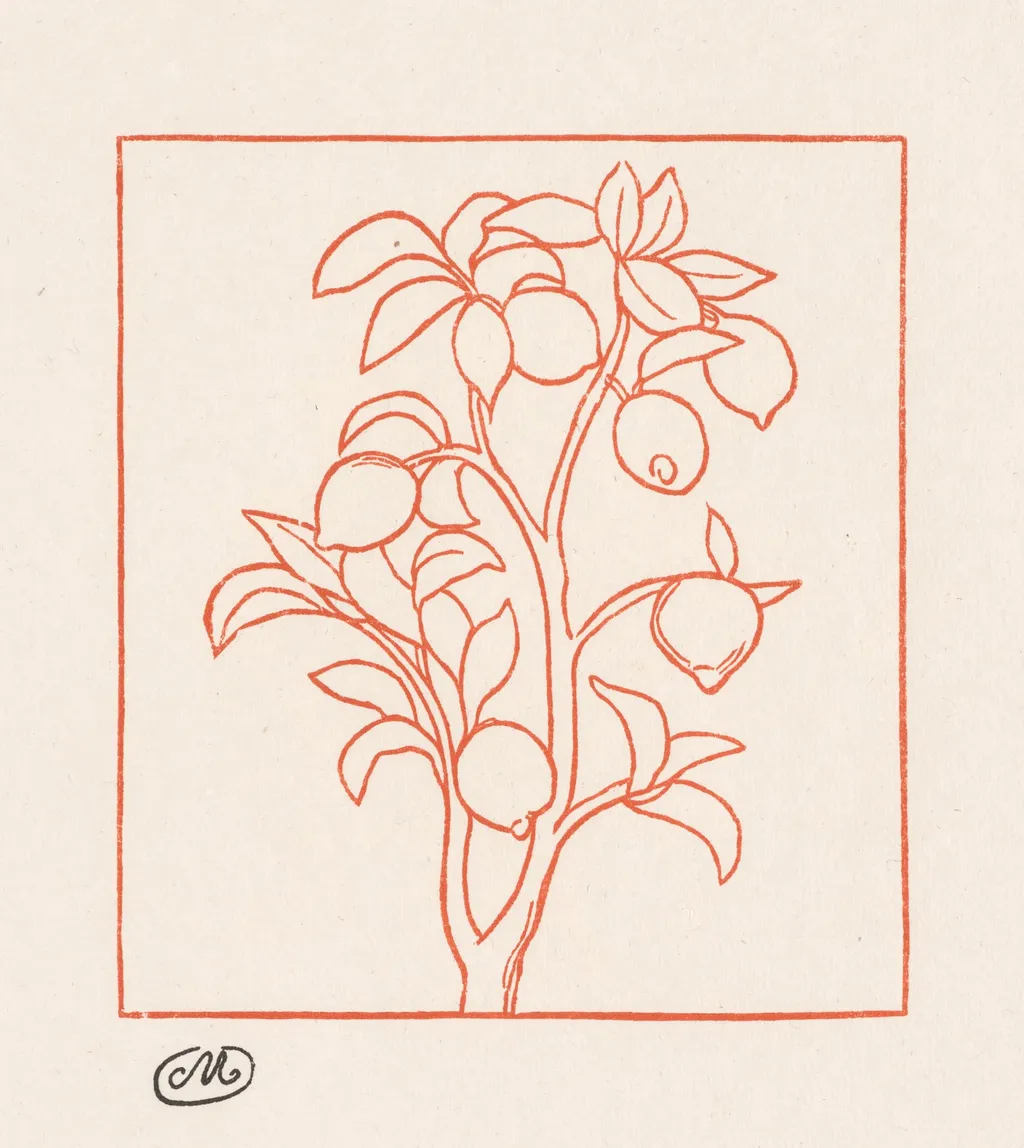
The Georgics: Lemon Tree (Les Géorgiques: Citronnier) is a print by Aristide Maillol. It dates from 1940 and is held in the collection of the Cleveland Museum of Art.
About this work
Overview
Created in 1940, The Georgics: Lemon Tree is a monochromatic drawing by Aristide Maillol, executed in reddish-brown ink on paper.
Created in 1940, The Georgics: Lemon Tree is a monochromatic drawing by Aristide Maillol, executed in reddish-brown ink on paper. It presents a single branch of a lemon tree, rendered with restrained lines and minimal detail. The composition is framed by a narrow red border, and the artist’s signature, a small 'M', appears discreetly in one corner. The plain white background isolates the subject, emphasizing its formal qualities over narrative or environmental context.
Subject & Meaning
The drawing depicts a solitary lemon tree branch bearing rounded fruit and broad, sturdy leaves. It reflects Maillol’s enduring interest in natural forms as embodiments of quiet stability. Though titled in reference to Virgil’s Georgics, the work avoids pastoral symbolism, instead focusing on the tree’s physical presence. The absence of soil, roots, or sky suggests a meditation on structure and growth, stripped of seasonal or agricultural context.
Technique & Style
Maillol employed a single tone of ink to define contours with smooth, unbroken lines, avoiding shading or texture. The simplicity of the line work recalls classical sculpture in its emphasis on volume and proportion. The drawing’s economy of means—no background, no color variation—heightens the sense of stillness. Each element is carefully balanced, suggesting a deliberate reduction to essential forms.
History & Provenance
The work was produced during Maillol’s later years, a period when he increasingly turned to drawing as a means of refining his sculptural vision. It entered the collection of The Cleveland Museum of Art in 1942, acquired shortly after its creation. The drawing’s modest scale and intimate character align with Maillol’s private studies, distinct from his large-scale public sculptures.
Context
Made during the early years of World War II, the drawing stands apart from the turmoil of its time, offering a contemplative alternative to the era’s expressive or political art. Maillol’s focus on enduring natural forms may reflect a personal retreat into timeless aesthetics. His engagement with the Georgics was less literary than formal, drawing on classical ideals of order and harmony rather than pastoral themes.
Legacy
The drawing exemplifies Maillol’s late style—reductive, serene, and rooted in observation. It influenced later artists seeking clarity in representation and a return to essential form. While not widely exhibited, it remains a key example of how sculpture-minded artists used drawing to distill nature into pure structure, bridging classical tradition and modernist simplicity.
Artist & collection

Artist
Aristide Joseph Bonaventure Maillol was a French Catalan sculptor, painter, and printmaker.

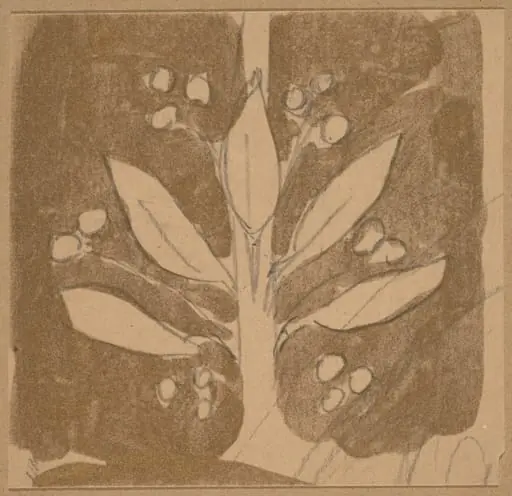 Study for a Border Design
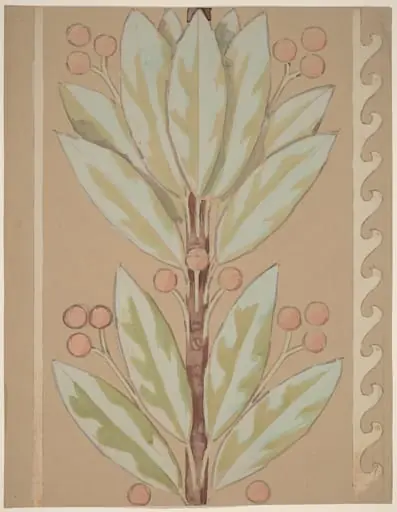 Study for a Border Design
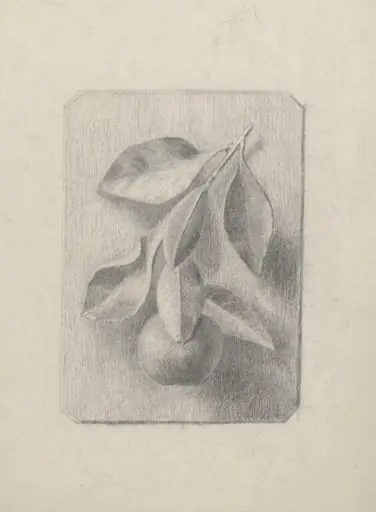 Drawing of a plaster cast of a peach and spray of leaves
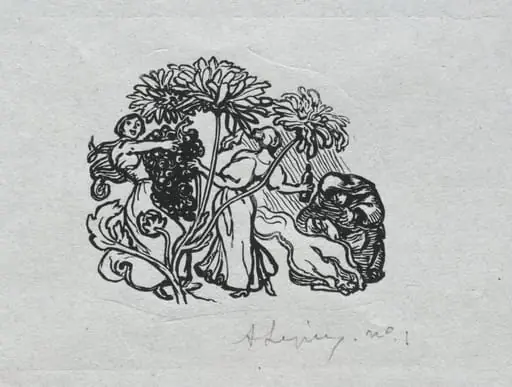 Paris Almanac, 1897: Tail-piece, Autumn
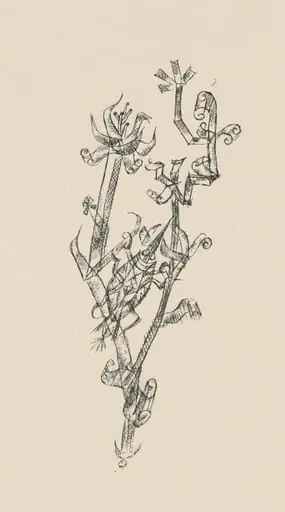 Riesenblattlaus (Giant Aphid) from Deutsche Graphiker der Gegenwart (German Printmakers of Our Time)
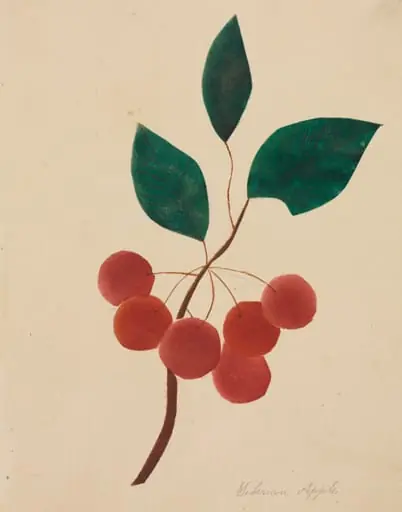 Siberian Apple
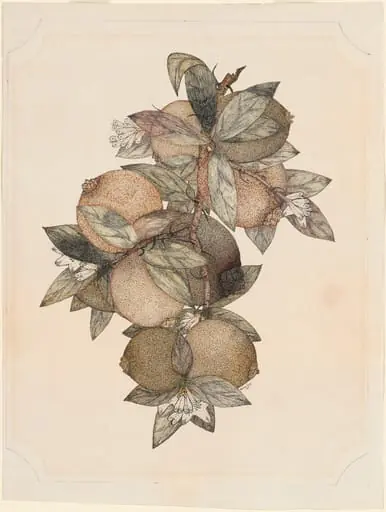 Pomegranate Fruit
 Un Cul-de-lampe
![Study for a Border Design [recto], by Charles Sprague Pearce](https://artifactworldgallery.com/img/charles-sprague-pearce--study-for-a-border-design-recto--b4b4b2aab40da45b-w320.webp) Study for a Border Design [recto]
Study for a Border Design [recto] Paris Almanac, 1897: Tail-piece, Summer
 Léger relief pour une reliure (Light Relief for a Binding)
 Study for a Border Design