Artwork
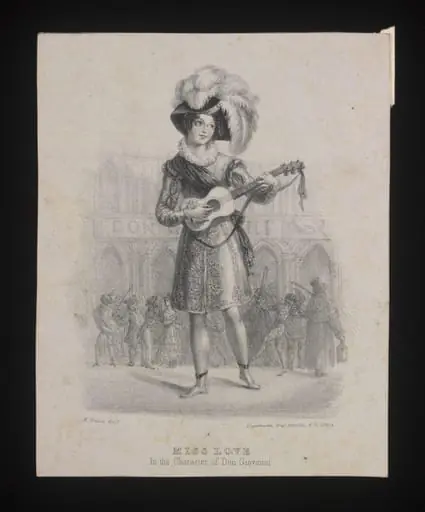
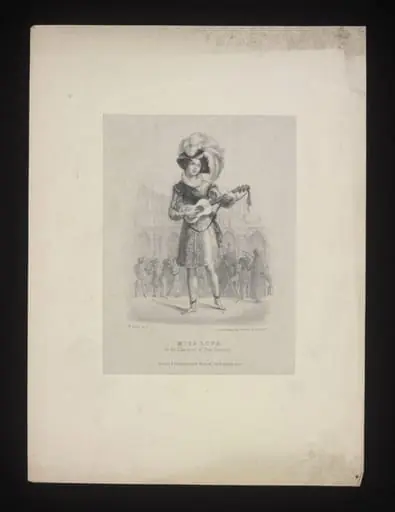
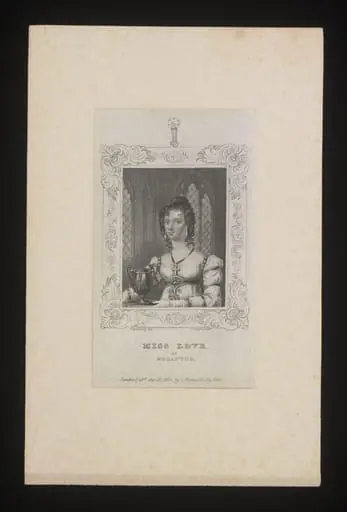
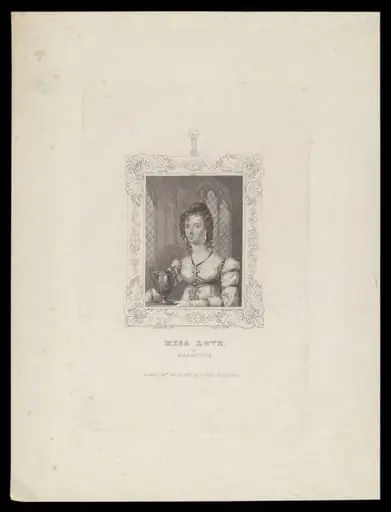
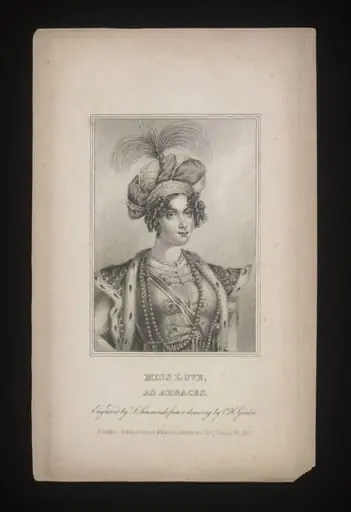
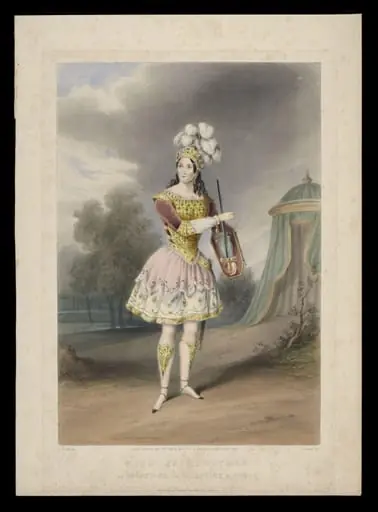
Miss Love in the character of Don Giovanni
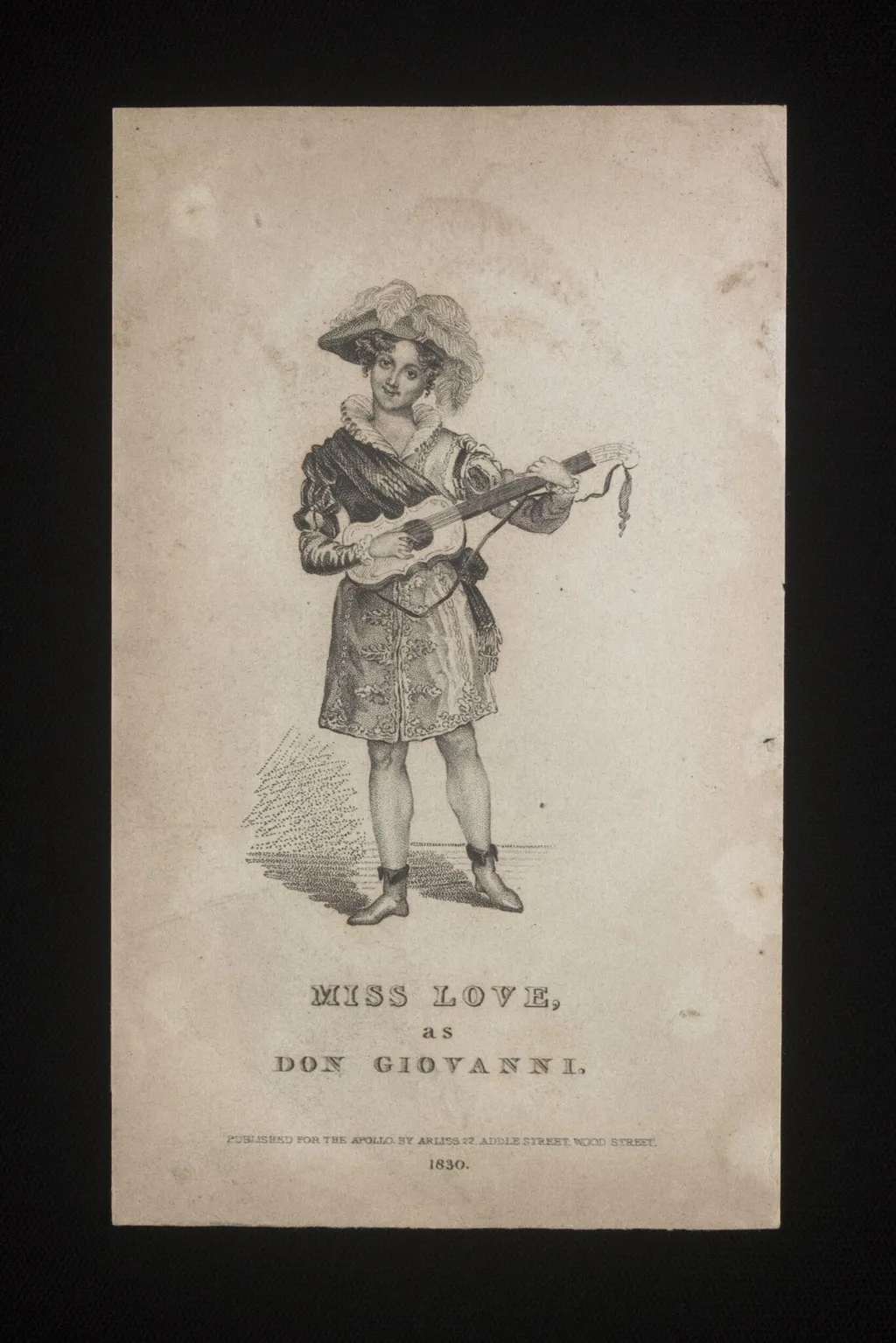
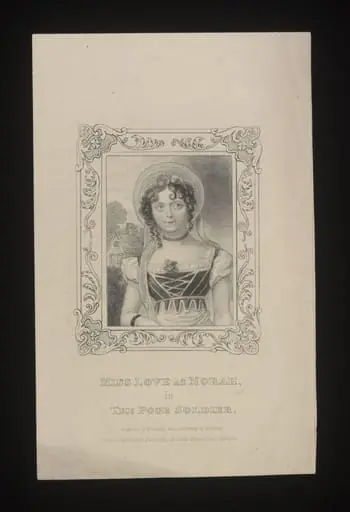
Miss Love in the character of Don Giovanni is a print by the Romanticist artist Arliss. It dates from 1830 and is held in the collection of the Victoria and Albert Museum. This 1830 print captures Emma Sarah Love in the role of Don Giovanni, a character traditionally performed by men.
About this work
It’s a rare look at how women took on heroic or villainous parts back then.
This print shows Miss Emma Sarah Love dressed as Don Giovanni in 1830.
She’s one of the few women known to play this famous male role on stage.
It’s a rare look at how women took on heroic or villainous parts back then.
Romanticism loved bold emotions and dramatic characters like Don Giovanni.
Prints like this let fans keep a reminder of their favorite performances.
That’s why this piece still stands out today.
Check out the Victoria and Albert Museum for more prints from this time.
Overview
This 1830 print captures Emma Sarah Love in the role of Don Giovanni, a character traditionally performed by men. Published by Arliss and part of the Harry Beard Collection, it documents a rare theatrical instance in which a woman portrayed this notorious seducer. The image reflects the era’s fascination with transgressive performance and the growing public appetite for visual mementos of live theater.
Subject & Meaning
Emma Sarah Love’s portrayal of Don Giovanni challenges gender norms of early 19th-century theater. By assuming a role associated with masculine power and moral transgression, she subverted expectations of female performers. The print preserves a moment when actresses ventured beyond conventional roles, using costume and gesture to claim dramatic authority typically reserved for men.
Technique & Style
The print employs fine line engraving typical of theatrical portraiture of the period, with attention to costume detail and expressive posture. The composition emphasizes Love’s commanding stance and ornate attire, aligning with Romantic ideals of emotional intensity and individualism. Soft shading and crisp outlines enhance the theatricality, transforming stage presence into a lasting image for private collection.
History & Provenance
Created in 1830 and later acquired by Harry Beard, a noted collector of theatrical memorabilia, the print entered the Victoria and Albert Museum’s holdings through his bequest. Its survival is uncommon—few such images of female Don Giovannis were produced or preserved. The print’s existence attests to the niche but real presence of gender-bending performances in early Victorian theater culture.
Context
During the Romantic era, audiences were drawn to morally complex figures like Don Giovanni, whose defiance of social order resonated with contemporary artistic values. While women were largely confined to virtuous or tragic roles, occasional cross-gender casting occurred in burlesque or novelty performances. This print reflects a broader cultural curiosity about performance as a space for boundary-testing.
Legacy
The print remains a significant artifact in the study of gender and performance history. It offers tangible evidence of how women navigated and expanded the limits of their roles on stage. Today, it contributes to scholarly understanding of theatrical innovation and the material culture of 19th-century audiences who sought to preserve fleeting moments of dramatic rebellion.
Artist & collection
Artist
Arliss made 1830s prints that put actors into famous roles. In "Miss Love in the character of Don Giovanni," a woman dressed as the bold seducer stands center stage, her costume sharp against plain backdrops. The print…