Artwork
Miss Love In the Character of Don Giovanni
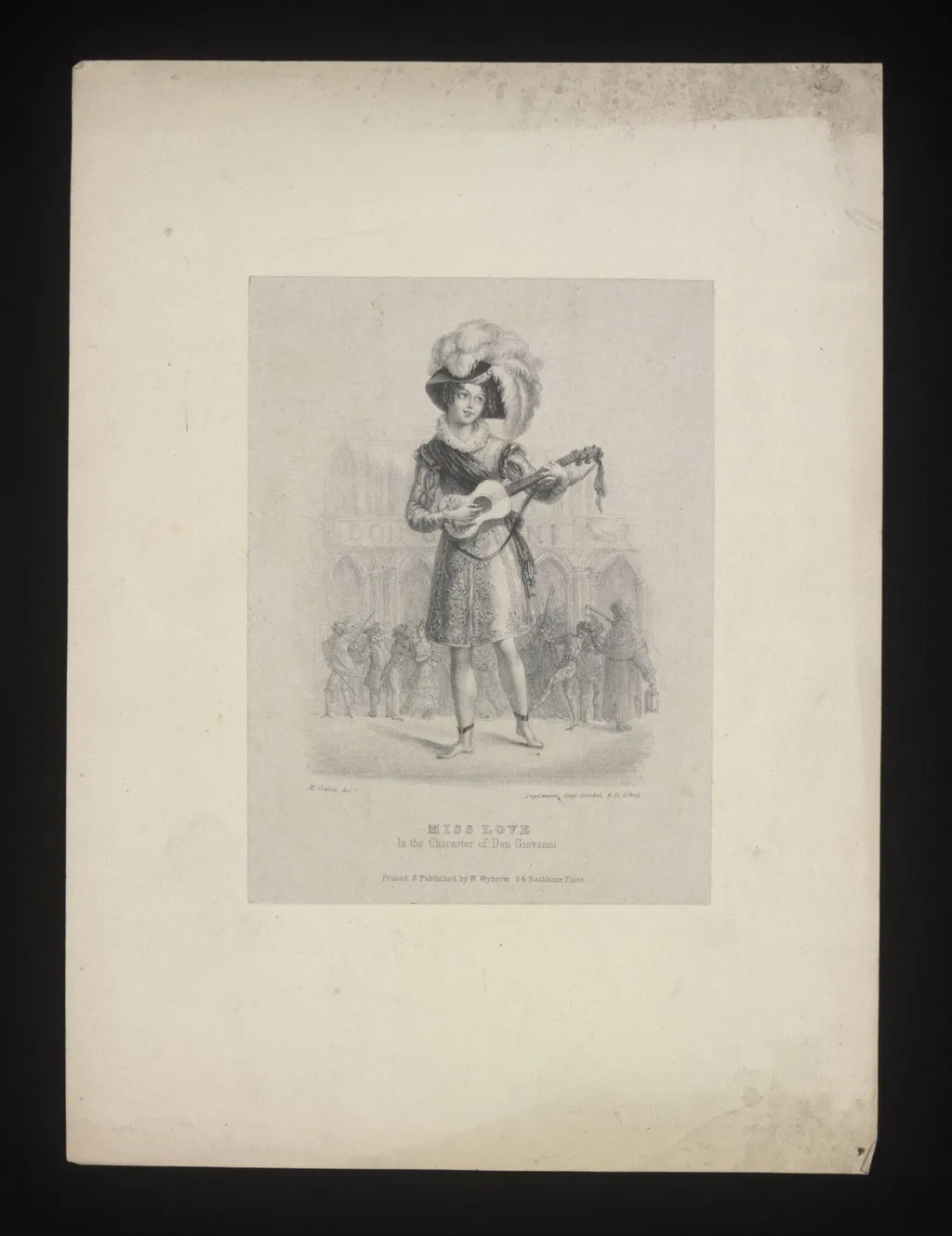
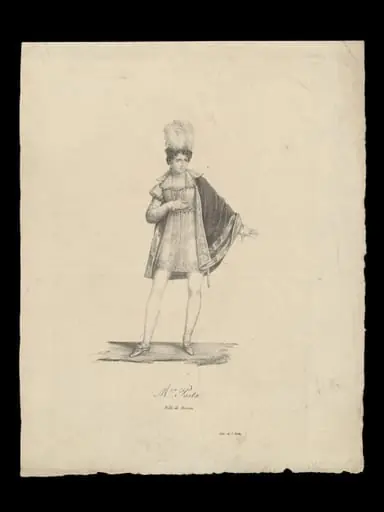
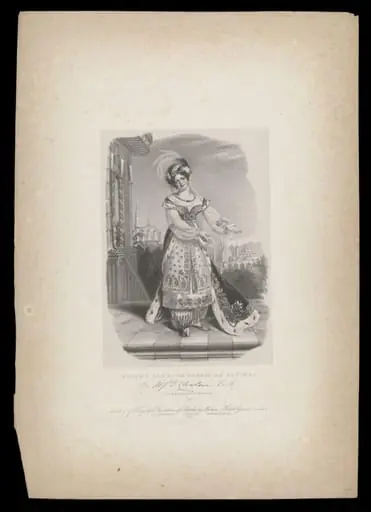
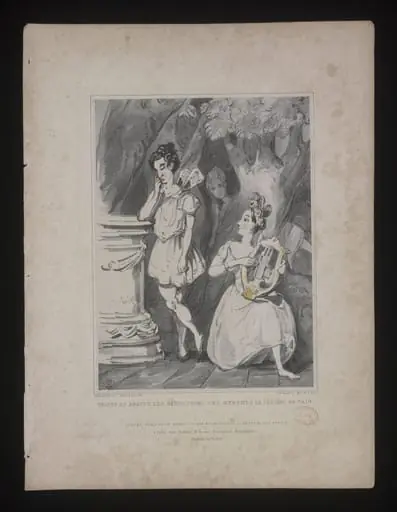
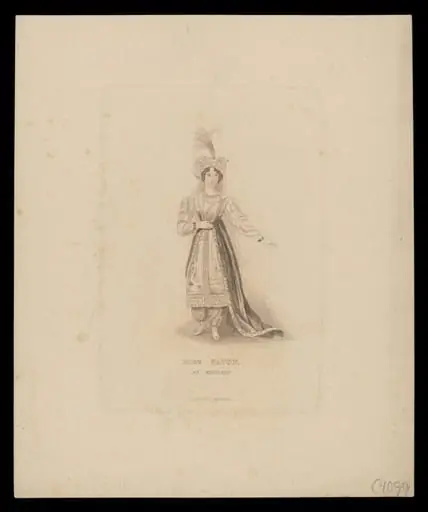
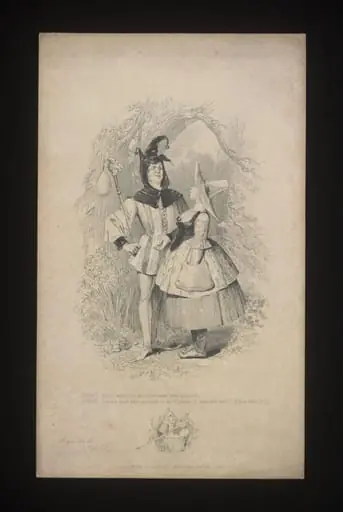
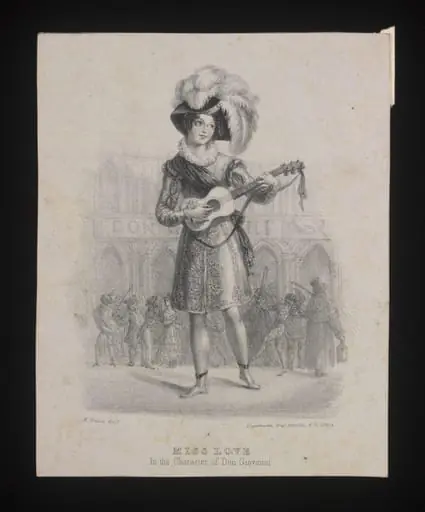
Miss Love In the Character of Don Giovanni is a print by Gauci, M.. It dates from 1833 and is held in the collection of the Victoria and Albert Museum. A black-and-white lithograph depicts a woman portraying the operatic character Don Giovanni, dressed in an elaborate masculine costume.
About this work
Overview
A black-and-white lithograph depicts a woman portraying the operatic character Don Giovanni, dressed in an elaborate masculine costume.
A black-and-white lithograph depicts a woman portraying the operatic character Don Giovanni, dressed in an elaborate masculine costume. The print, produced by Engelmann, Graf, Coindet & Co after a design by M. Gauci, captures the performer Miss Love in theatrical role. The composition includes supporting figures in the background and architectural elements suggesting a stage setting, with the title clearly identifying the subject and performance context.
Subject & Meaning
The image presents Miss Love, a female performer, assuming the role of Don Giovanni—a traditionally male lead from Mozart’s opera. Her costume blends masculine elements like a sash, slashed sleeves, and a plumed hat with theatrical flourishes, reflecting 19th-century stage conventions where gender roles in performance were fluid. The inclusion of Harlequin and other figures reinforces the theatrical setting, framing the portrait as a celebration of performance rather than a literal depiction.
Technique & Style
Rendered in lithography, the print uses fine linear detail to define costume textures and facial features. The contrast between the central figure and the smaller, less detailed background characters creates depth. The composition is formal and staged, with the figure centered beneath an arched structure bearing the opera’s title. The medium’s tonal range, though limited to black and white, effectively conveys fabric folds and the texture of the wig and plumes.
History & Provenance
The print was produced in the 19th century as a theatrical souvenir, likely distributed to audiences of the performance. It entered the Victoria and Albert Museum’s collection through the Cyril Beaumont Bequest, a significant donation of theatrical ephemera. Its survival reflects its value as a document of performance culture, preserving the image of a lesser-known actress in a prominent role.
Context
During the early 1800s, female performers often took on male roles in opera and theater, particularly in comic or romantic parts, due to tradition or casting constraints. Don Giovanni’s popularity made him a frequent subject for visual memorabilia. This print aligns with a broader trend of publishing theatrical portraits, serving both as advertising and as keepsakes for patrons of the arts.
Legacy
The print endures as a record of gender performance in 19th-century theater, illustrating how roles transcended biological sex on stage. It contributes to scholarly understanding of how opera was received and commodified, offering insight into the visibility of female performers in male-dominated narratives. Its preservation in a major museum underscores its importance as cultural artifact rather than mere illustration.
Artist & collection