Artwork
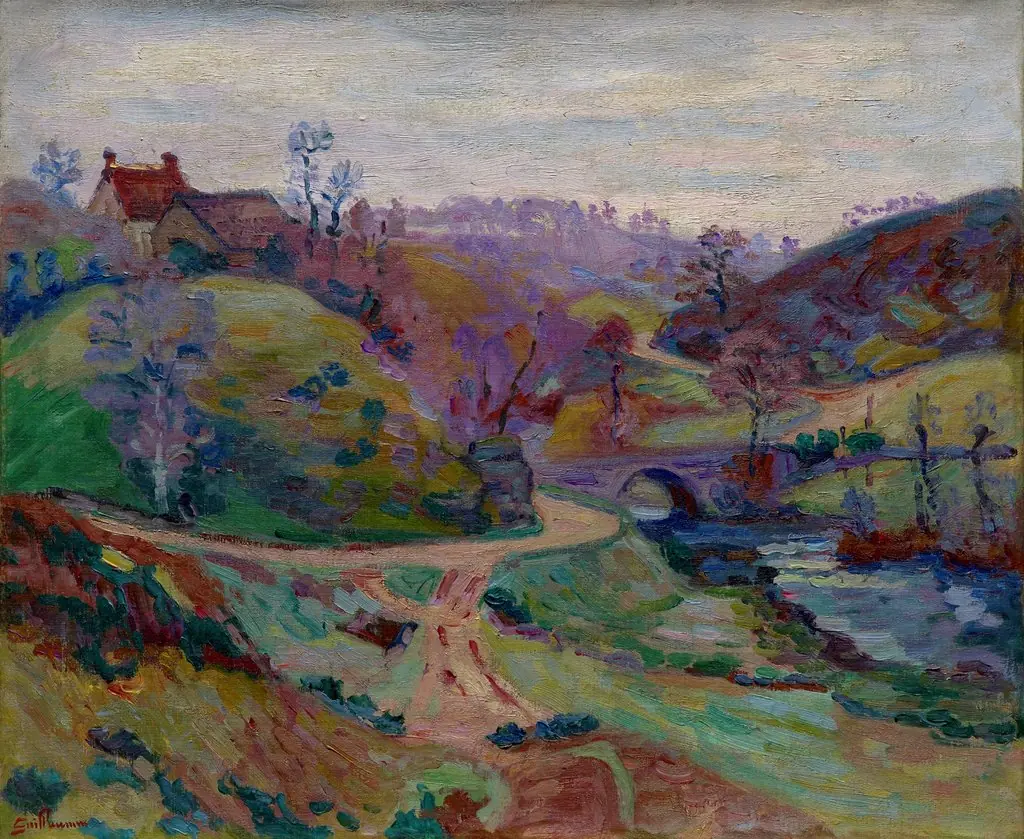
Valley of the Sédelle at Pont Charraud: White Frost
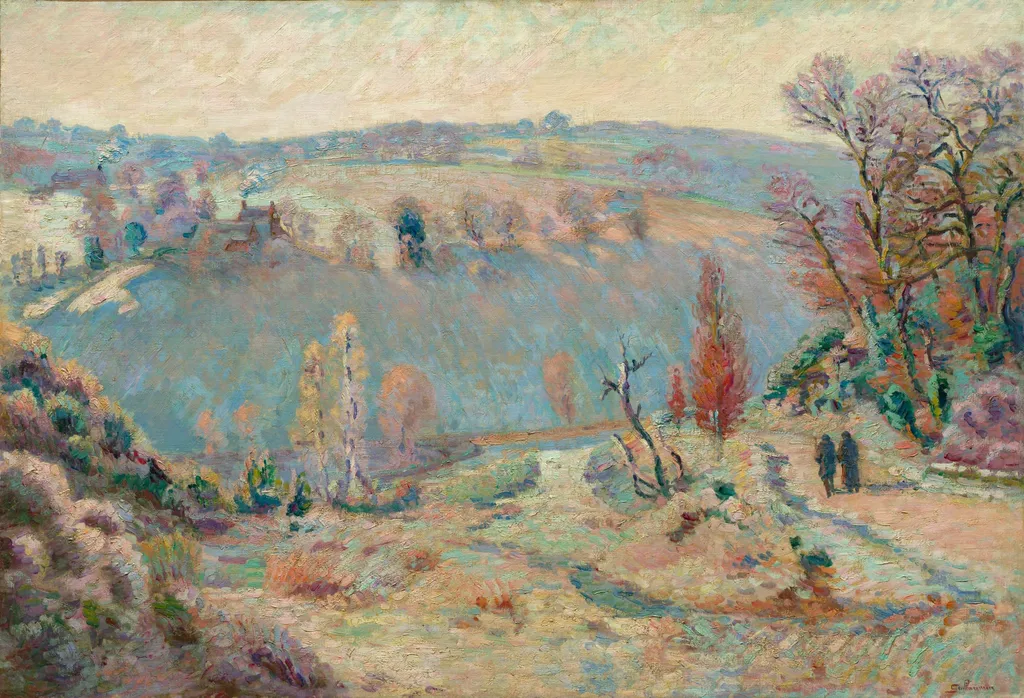
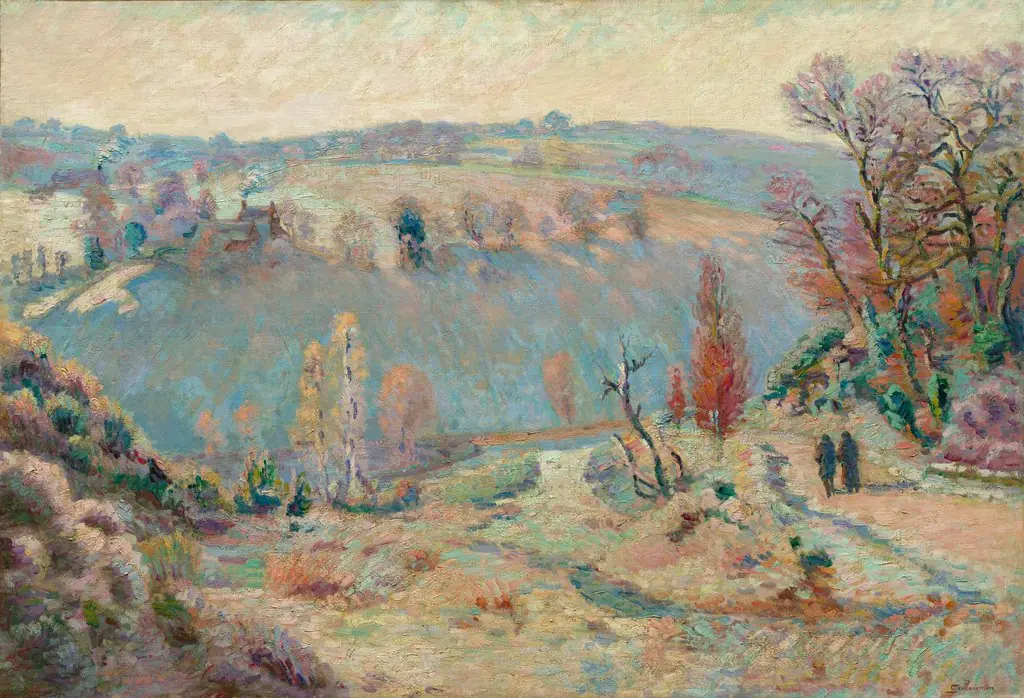
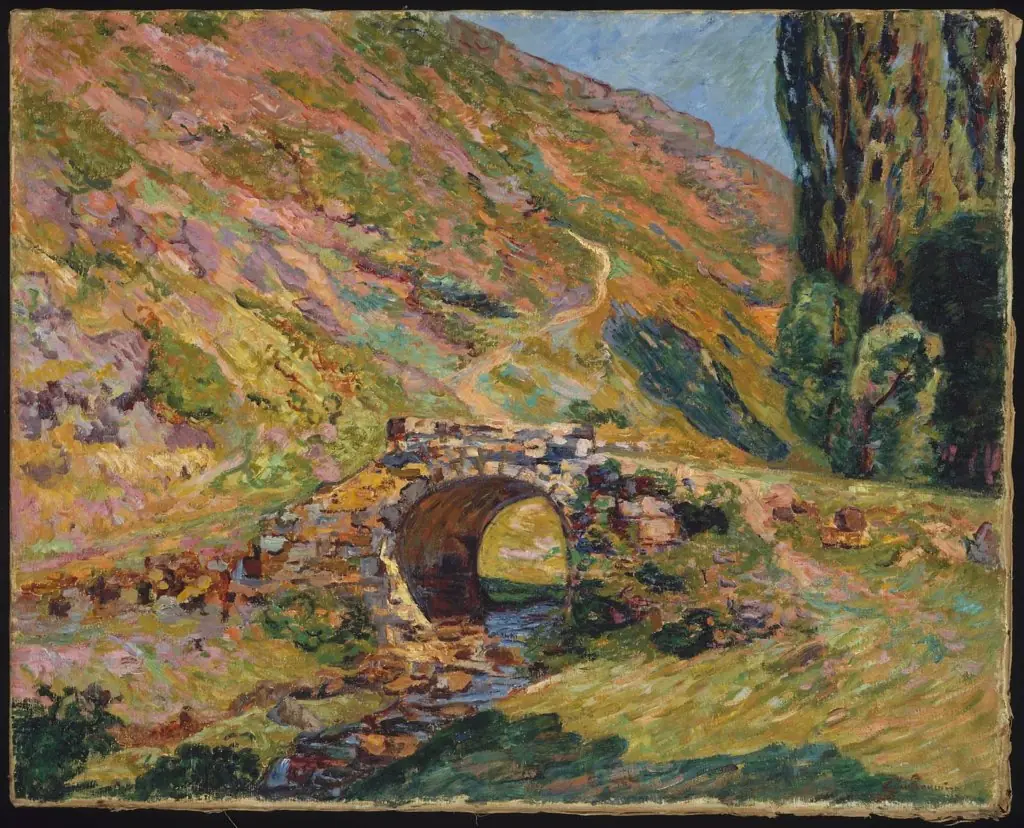
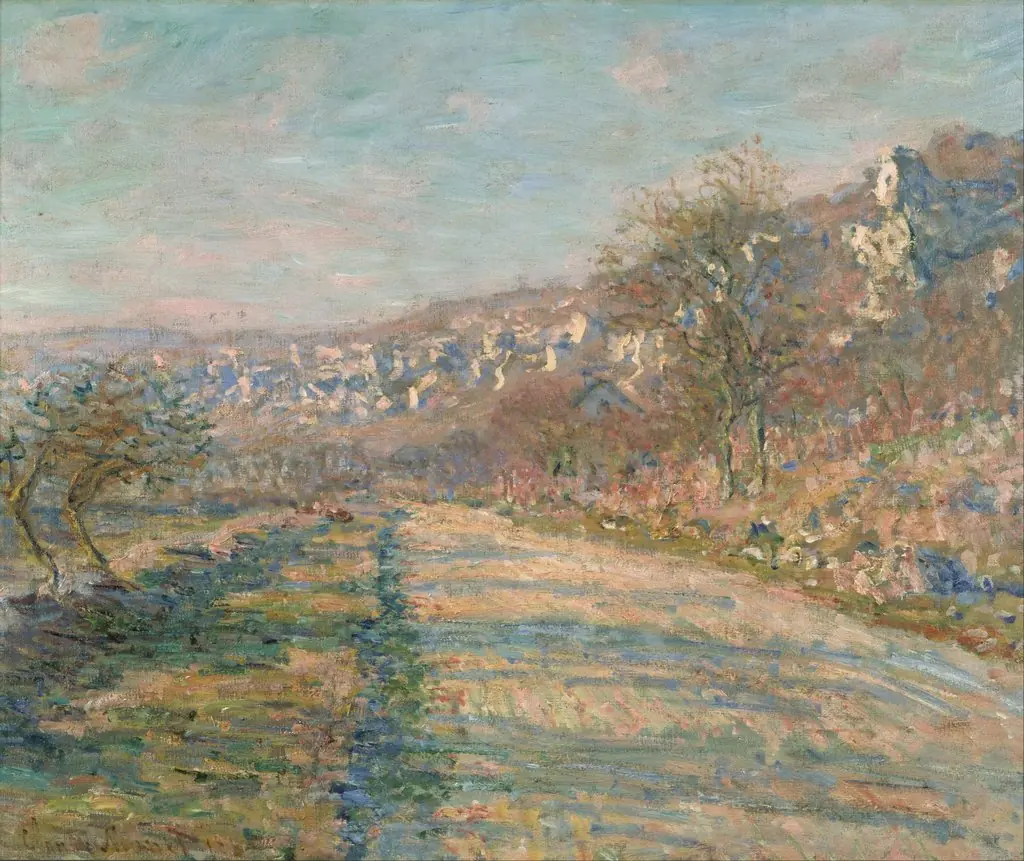
Valley of the Sédelle at Pont Charraud: White Frost is an unspecified painting by the Post-Impressionist artist Armand Guillaumin. It dates from 1907 and is held in the collection of the Cleveland Museum of Art.
About this work
Overview
Valley of the Sédelle at Pont Charraud: White Frost is a landscape painted by Armand Guillaumin around 1907. The work is part of the collection of the Cleveland Museum of Art. It depicts a broad, low‑lying valley under a muted sky, with a winding track that leads the eye through fields of pinkish and green tones.
Subject & Meaning
The composition presents a quiet rural scene: a solitary figure walks along the path, dwarfed by the expansive terrain. Bare trees and those dressed in vivid reds and yellows frame the way, suggesting the transition of seasons and the subtle presence of human activity within a largely untouched environment.
Technique & Style
Guillaumin employs a thick, uneven application of paint, creating a textured surface that conveys immediacy. The impasto brushwork, with its rapid, almost slap‑on strokes, gives the sky and fields a palpable sense of atmosphere while maintaining a loose, expressive quality that animates the otherwise still landscape.
History & Provenance
Executed circa 1907, the painting entered the Cleveland Museum of Art’s holdings at an unspecified date, becoming part of the museum’s European 19th‑ and early‑20th‑century collection. Its provenance traces back to the artist’s later period, when Guillaumin focused on plein‑air depictions of the French countryside.
Context
Created during the final phase of Guillaumin’s career, the work reflects his continued interest in the French rural scenery that he explored throughout the Impressionist movement. The subdued palette and emphasis on light and air align with contemporary trends toward atmospheric abstraction in early 20th‑century French painting.
Own this work as a print
Artist & collection