Artwork
Cloud Chariots
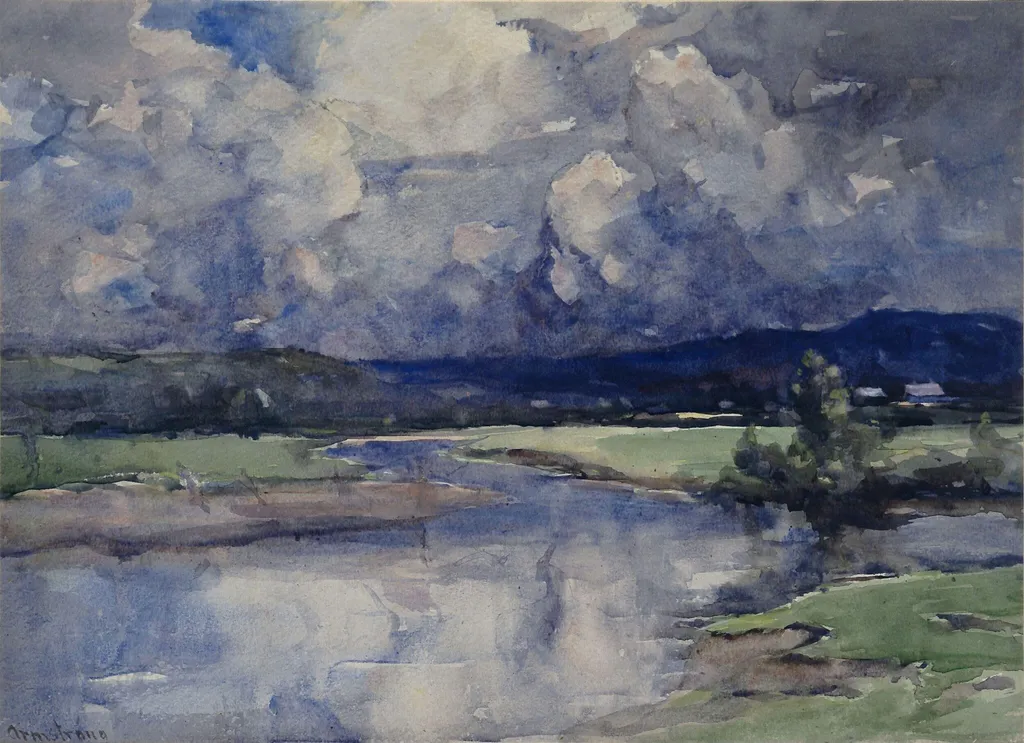
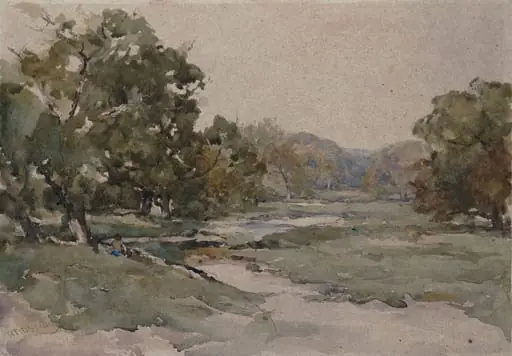
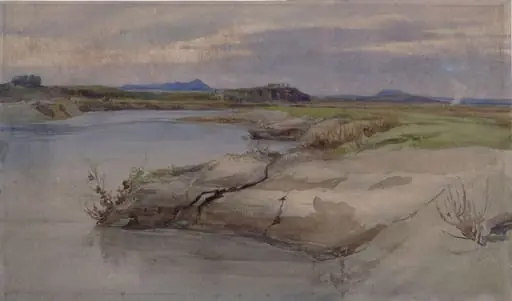
Cloud Chariots is a watercolor work on paper by the Impressionist artist Francis Abel William Taylor Armstrong. It dates from 1870 and is held in the collection of the Victoria and Albert Museum. The work is a watercolor that presents a tranquil river winding through a gently rolling landscape.
About this work
Overview
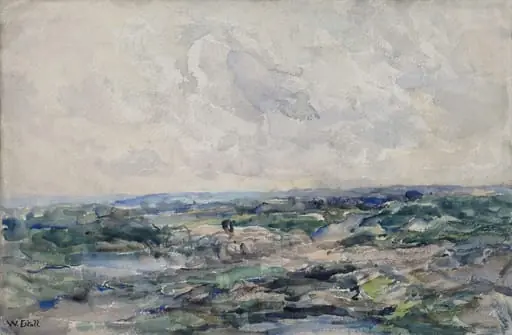
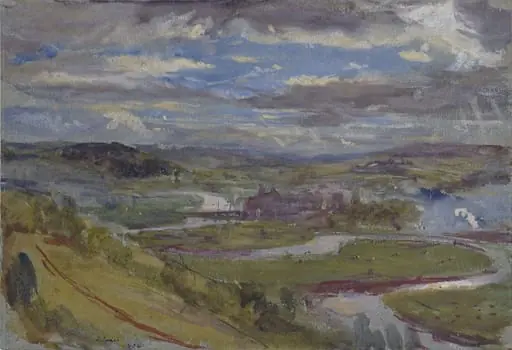
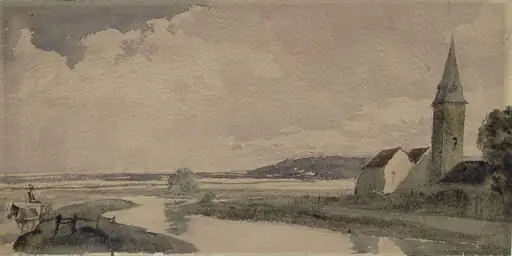
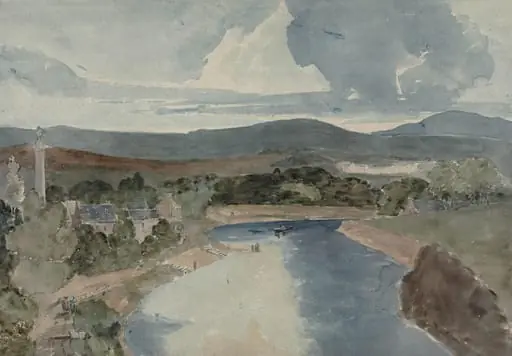
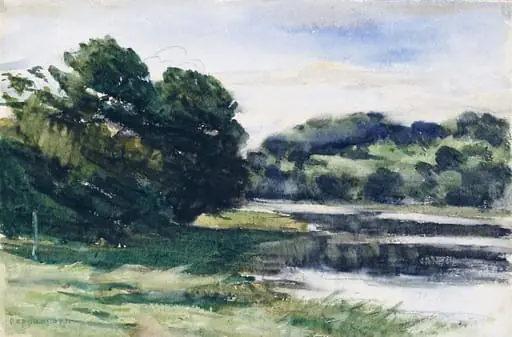
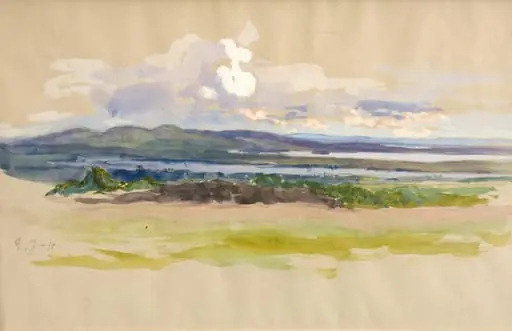
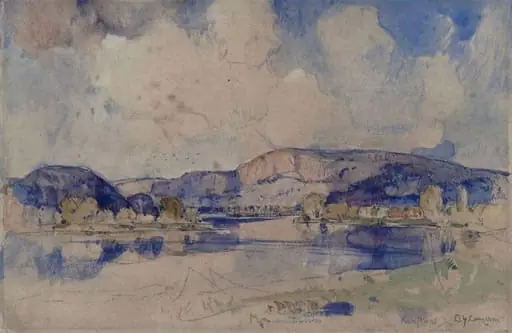
The work is a watercolor that presents a tranquil river winding through a gently rolling landscape. The waterway bisects the composition, bordered by patches of green vegetation and earth tones, while a sky above is dominated by soft, billowing clouds that convey a sense of depth. The artist’s signature appears discreetly in the lower area of the painting.
Subject & Meaning
The river’s reflective surface blurs the boundaries between foreground and background, suggesting a fleeting, contemplative experience of nature.
The scene captures a quiet moment in a rural setting, emphasizing the harmonious relationship between water, land, and atmosphere. The river’s reflective surface blurs the boundaries between foreground and background, suggesting a fleeting, contemplative experience of nature. The airy clouds contribute to a mood of calm and openness, inviting viewers to contemplate the subtle interplay of light and space.
Technique & Style
Executed with loose, light brushwork, the watercolor relies on transparent washes that convey mist and atmosphere. The artist employs a limited palette of muted greens, browns, and pale sky tones, allowing the paper’s whiteness to suggest the luminosity of clouds. This approach aligns with plein‑air practices, where rapid, gestural strokes capture the immediate impression of a landscape.
Context
Created within the tradition of 19th‑century outdoor watercolor painting, the piece reflects a period when artists sought to record natural scenes directly from observation. The emphasis on atmospheric effects and spontaneous execution situates the work among contemporaneous movements that valued immediacy over detailed realism, echoing broader trends in landscape art of the era.
Own this work as a print
Artist & collection
Artist
Francis Abel William Taylor Armstrong
Francis Armstrong painted watercolours of the English countryside between about 1865 and 1920.