Artwork
Hexham
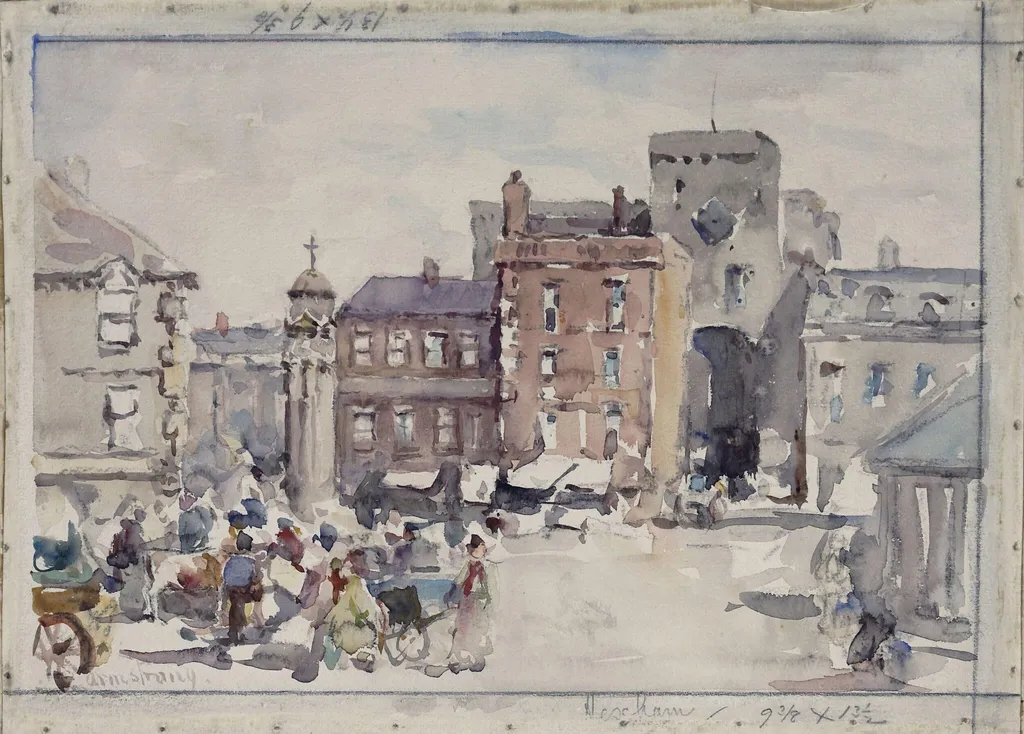
Hexham is a watercolor work on paper by the Impressionist artist Francis Abel William Taylor Armstrong. It dates from 1865 and is held in the collection of the Victoria and Albert Museum.
About this work
Overview
Created in 1865 by Francis Abel William Taylor Armstrong, this watercolour titled “Hexham” is part of the Victoria and Albert Museum’s collection. The work depicts a town scene under a light, cloud‑filled sky, with a group of figures gathered around a horse‑drawn carriage in the foreground and a cluster of historic buildings, including a church with a prominent steeple, receding behind them.
Subject & Meaning
The composition records a moment of ordinary urban activity, focusing on the interaction between townspeople and their environment. The presence of the carriage and the bustling crowd suggests a snapshot of daily commerce or travel, while the aging structures and subtle signs of wear hint at the town’s historical layers and the passage of time within a lived setting.
Technique & Style
Armstrong employs a loosely applied watercolour technique, favoring swift brushstrokes and a restrained palette of muted tones. This approach yields an impressionistic quality, softening architectural details and emphasizing atmosphere over precise rendering. The handling of light and cloud cover contributes to a sense of immediacy, capturing the fleeting impression of a lively street scene.
History & Provenance
The painting entered the Victoria and Albert Museum’s holdings, where it remains on display as part of the institution’s 19th‑century British watercolour collection. Its provenance traces back to the artist’s own output during the mid‑1860s, a period when watercolour was increasingly used to document everyday British life.
Artist & collection
Artist
Francis Abel William Taylor Armstrong
Francis Armstrong painted watercolours of the English countryside between about 1865 and 1920.

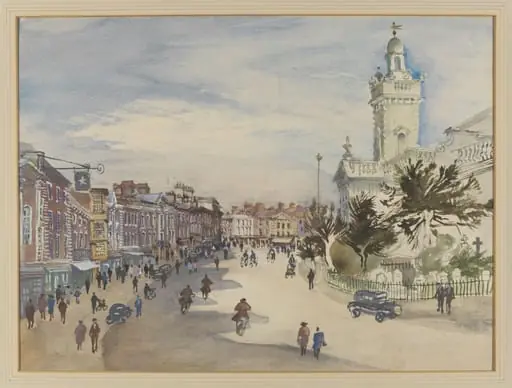 Blandford
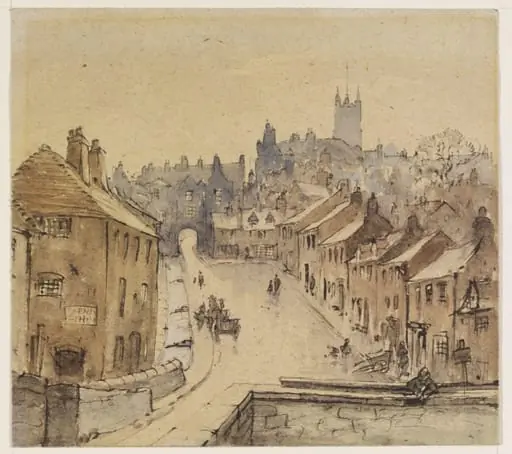 Ludlow
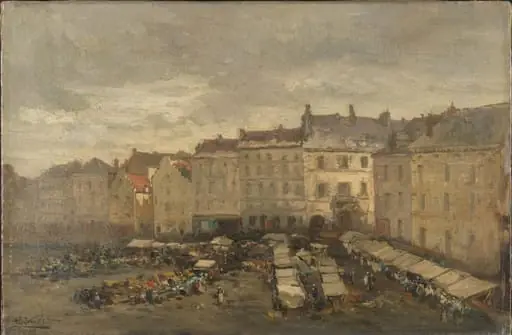 The Grote Zavel (Grand Sablon), Brussels
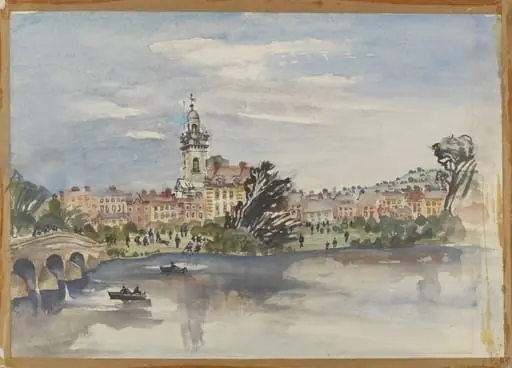 The Stour at Blandford
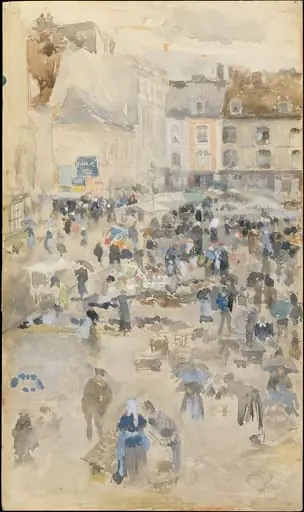 Variations in Violet and Grey—Market Place, Dieppe
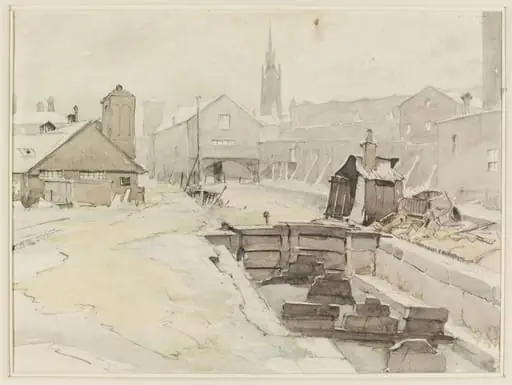 Manchester Ship Canal, Quay Street, Manchester
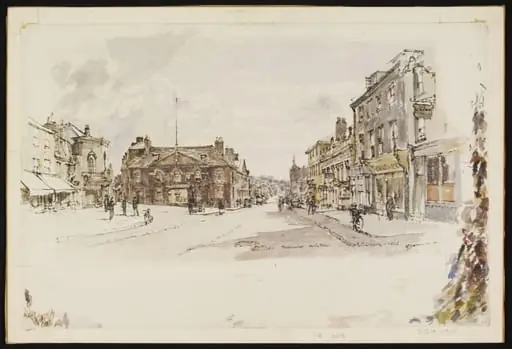 High Street and Rutland Arms, Newmarket
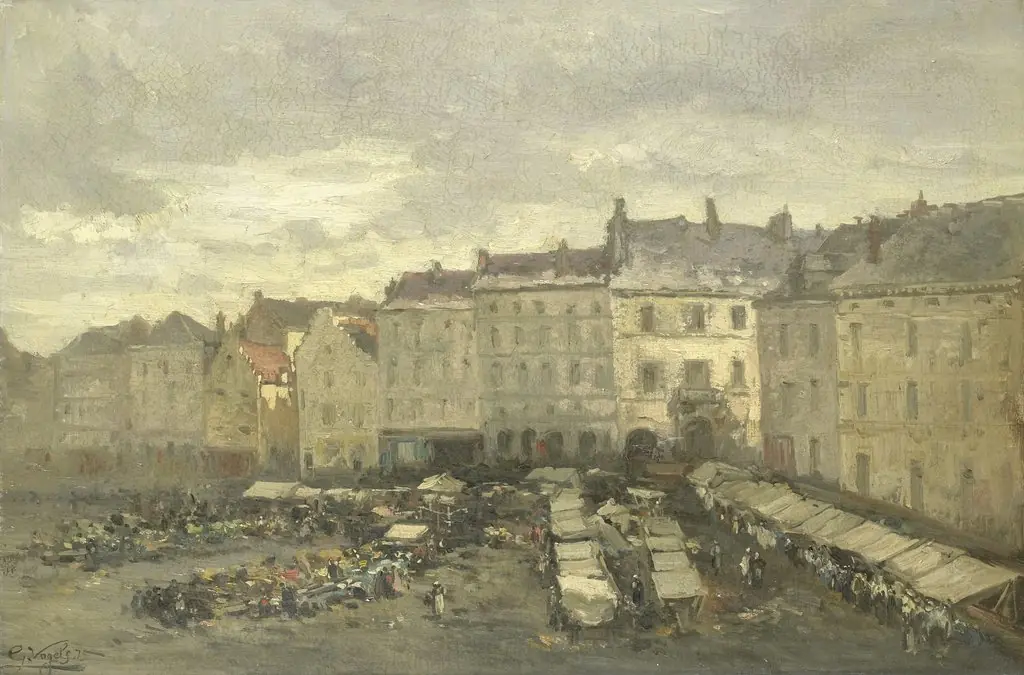 The Grote Zavel (Grand Sablon), Brussels
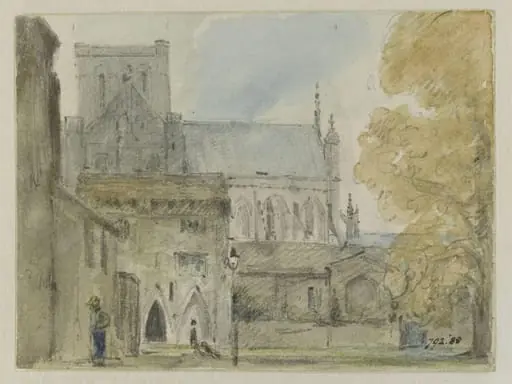 Winchester Cathedral: entrance to the Deanery from the south
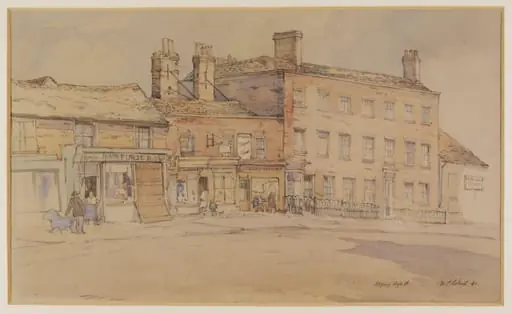 Epping High Street
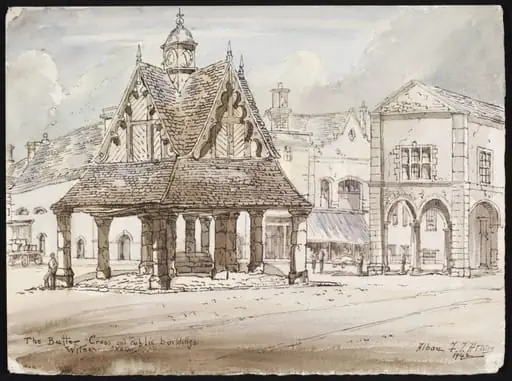 The Butter Cross and Public Buildings, Witney
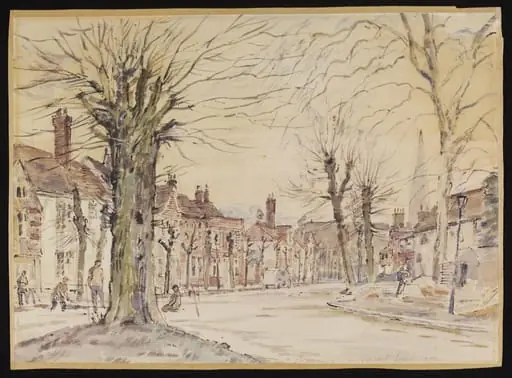 The Causeway, Horsham