Artwork
Landscape
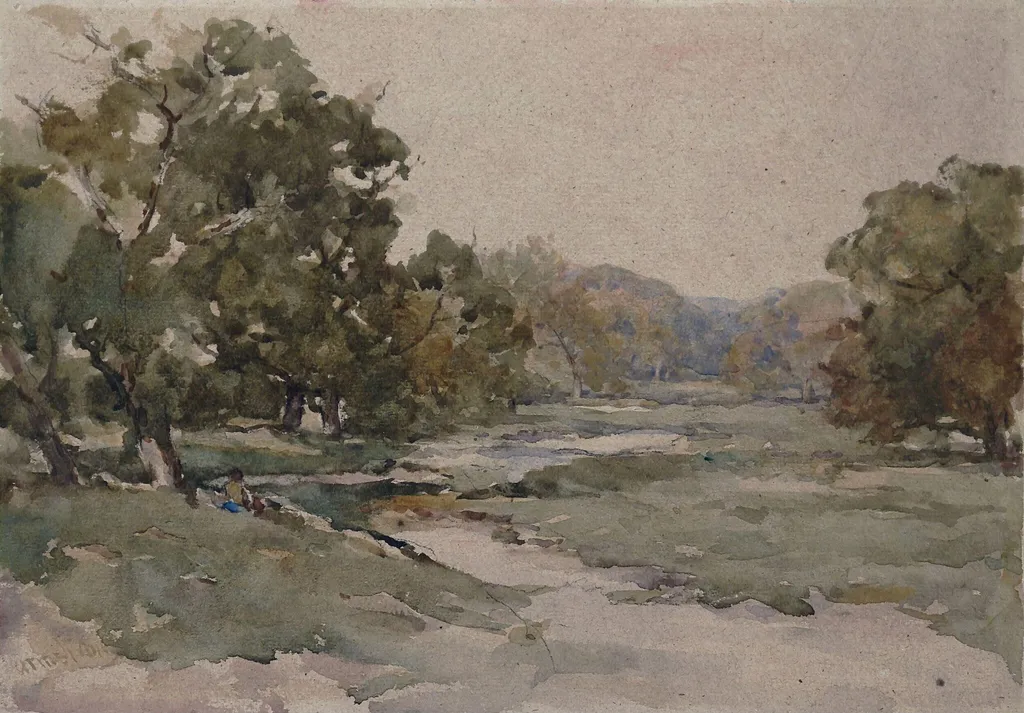
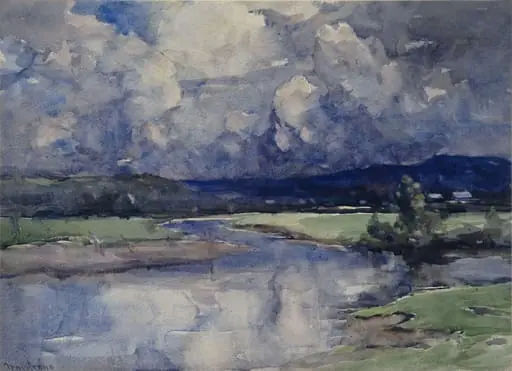
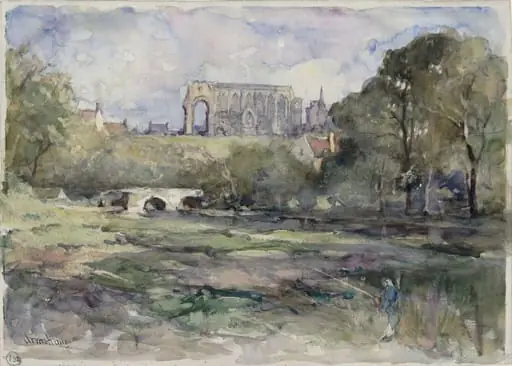
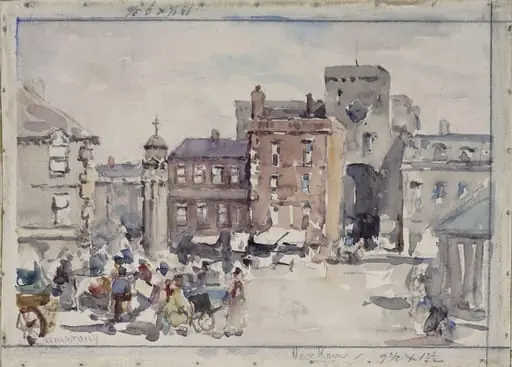
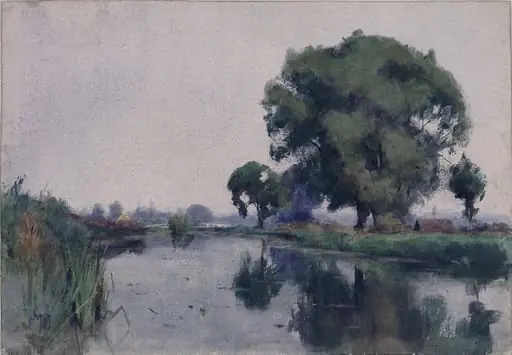
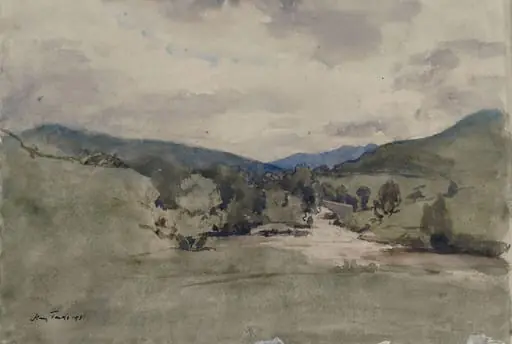
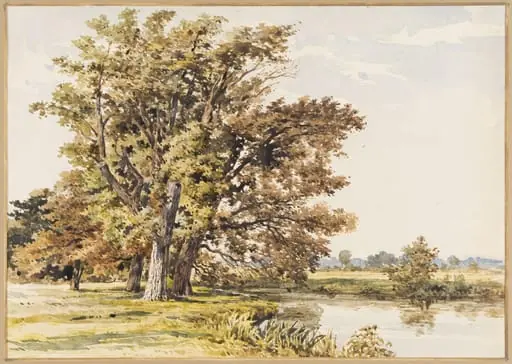
Landscape is a watercolor work on paper by the Impressionist artist Francis Abel William Taylor Armstrong. It dates from 1865 and is held in the collection of the Victoria and Albert Museum.
About this work
Overview
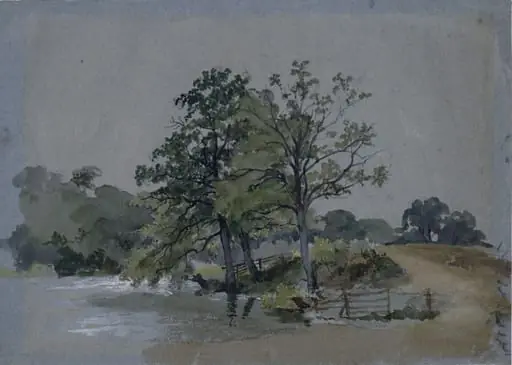
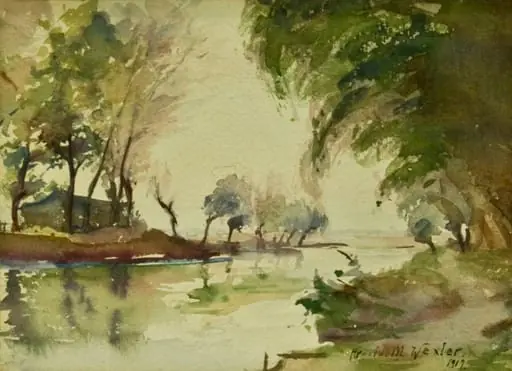
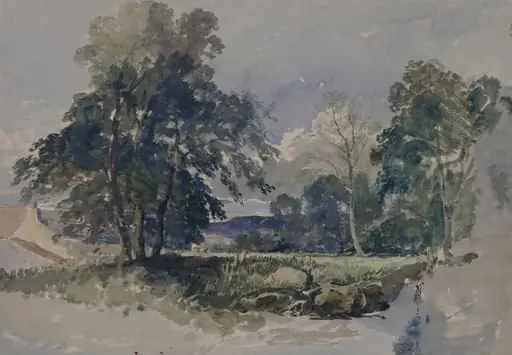
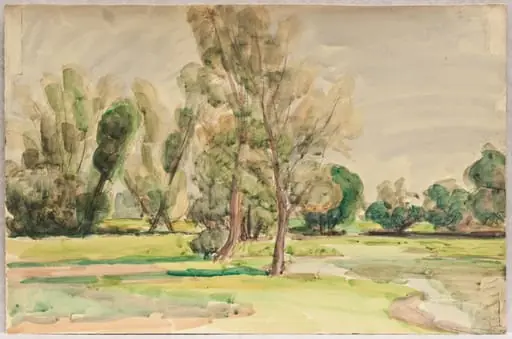
This watercolour landscape presents a tranquil riverside setting, rendered with delicate brushwork and a restrained palette. The composition centers on a quiet stretch of water flanked by wooded banks, with subtle variations in tone suggesting distance and atmosphere. The medium’s transparency allows for a light, airy quality, reinforcing the scene’s stillness and intimacy.
Subject & Meaning
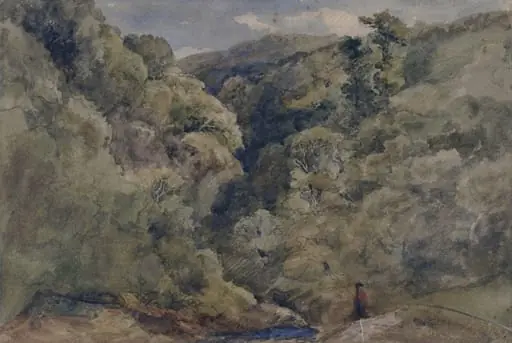
A solitary figure sits quietly on the far riverbank, rendered minimally and integrated into the landscape rather than emphasized. This small presence invites contemplation rather than narrative, suggesting solitude or reflection. The absence of human activity beyond this figure enhances the sense of peaceful isolation, aligning the scene with meditative rather than dramatic intent.
Technique & Style
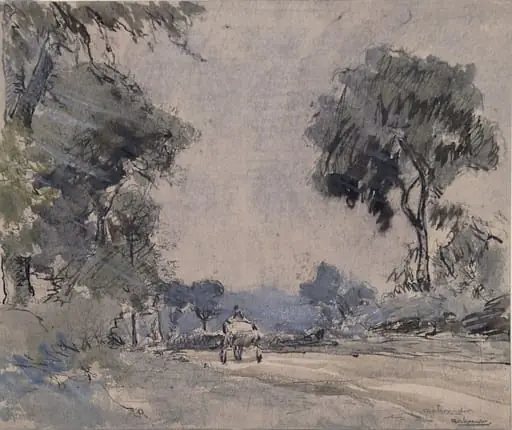
The artist employed loose, fluid watercolour strokes to suggest form without detail, allowing the paper’s white to contribute to highlights and atmospheric effects. Soft transitions between muted greens, browns, and blues create a cohesive tonal harmony. The lack of sharp outlines and the fading of forms into the distance reflect an emphasis on mood over precision.
History & Provenance
The work’s origin and ownership history are not documented in available records. Its modest scale and unassuming subject suggest it may have been a personal study or sketch rather than a commissioned piece. No exhibition or collector history is known, leaving its creation context largely speculative.
Context
Created during a period when watercolour was increasingly used for private, observational studies, this piece aligns with 19th-century trends favoring naturalism and quiet rural scenes. While not part of a known movement, its approach shares affinities with the tonal sensitivity found in early landscape watercolours of the period.
Legacy
The work contributes to a broader tradition of intimate landscape watercolours that prioritize atmosphere over detail. Though not widely recognized, its restrained technique and calm composition reflect a persistent interest in nature as a space for quiet observation, influencing later artists who valued subtlety over spectacle.
Own this work as a print
Artist & collection
Artist
Francis Abel William Taylor Armstrong
Francis Armstrong painted watercolours of the English countryside between about 1865 and 1920.