Artwork
Malmesbury
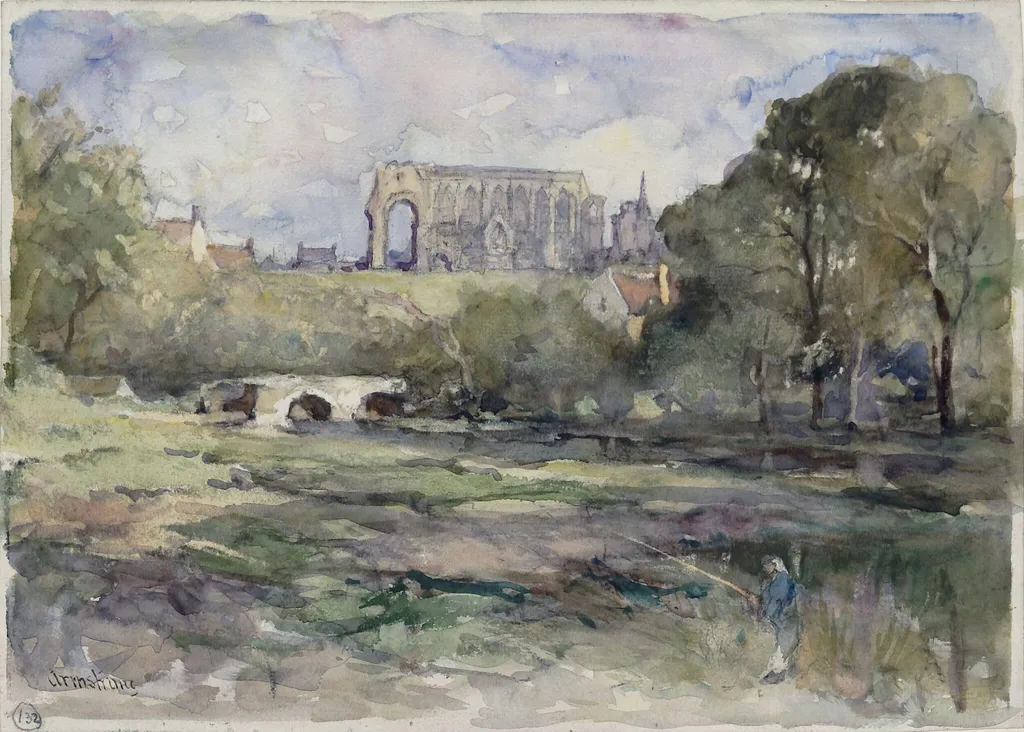
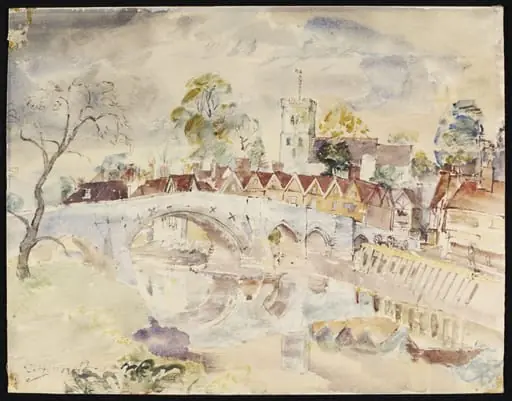
Malmesbury is a watercolor work on paper by the Impressionist artist Francis Abel William Taylor Armstrong. It dates from 1870 and is held in the collection of the Victoria and Albert Museum.
About this work
Overview
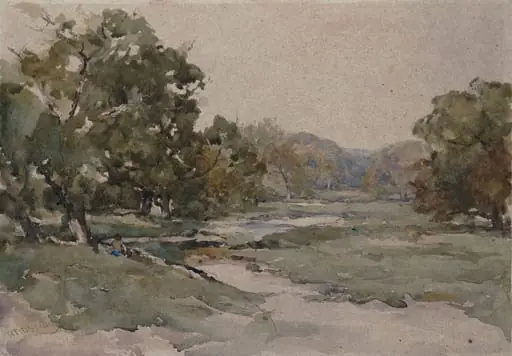
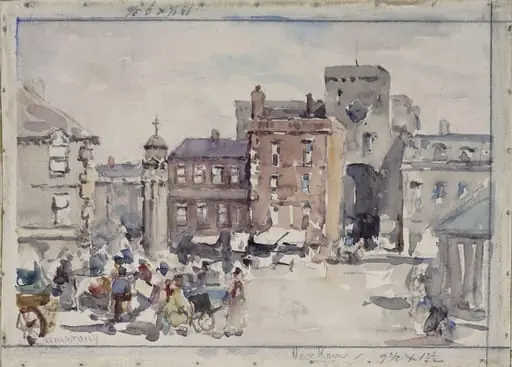
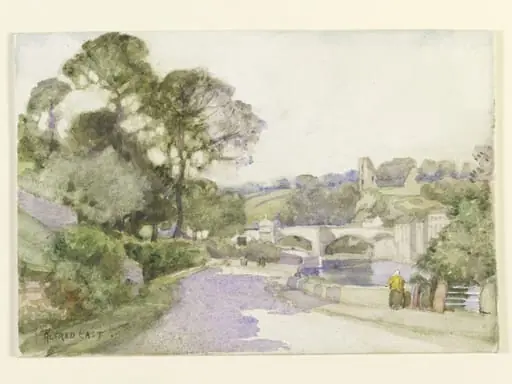
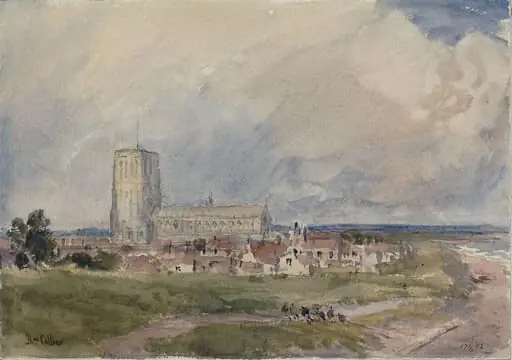
Francis Abel William Taylor Armstrong’s watercolour, dated 1870, depicts the town of Malmesbury in Wiltshire. Executed in transparent pigment on paper, the signed work captures a tranquil riverside scene that includes a modest stone bridge, an imposing parish church, and surrounding foliage. The composition presents a snapshot of rural English life in the late nineteenth century.
Subject & Meaning
The painting centers on a gentle river winding past a low stone bridge, leading the eye toward a large, historic church set against a grassy meadow. Tall windows rise from the church’s façade, while trees line the banks, their foliage rendered in muted greens and blues. The tranquil setting suggests a peaceful, everyday moment within the town’s landscape.
Technique & Style
Armstrong employs a loose, sketch‑like brushstroke that allows washes of colour to merge, especially where light meets water. The fluid handling of pigment creates a soft atmospheric effect, characteristic of late‑nineteenth‑century British watercolour practice. The approach emphasizes impression over detail, capturing the fleeting quality of light and reflection.
History & Provenance
Signed and dated by the artist, the work originates from 1870, a period when British artists frequently documented local scenery through watercolour. While specific ownership records are not detailed, the piece remains a representative example of Armstrong’s output and of the broader tradition of English topographical painting of that era.
Artist & collection
Artist
Francis Abel William Taylor Armstrong
Francis Armstrong painted watercolours of the English countryside between about 1865 and 1920.