Artwork
War
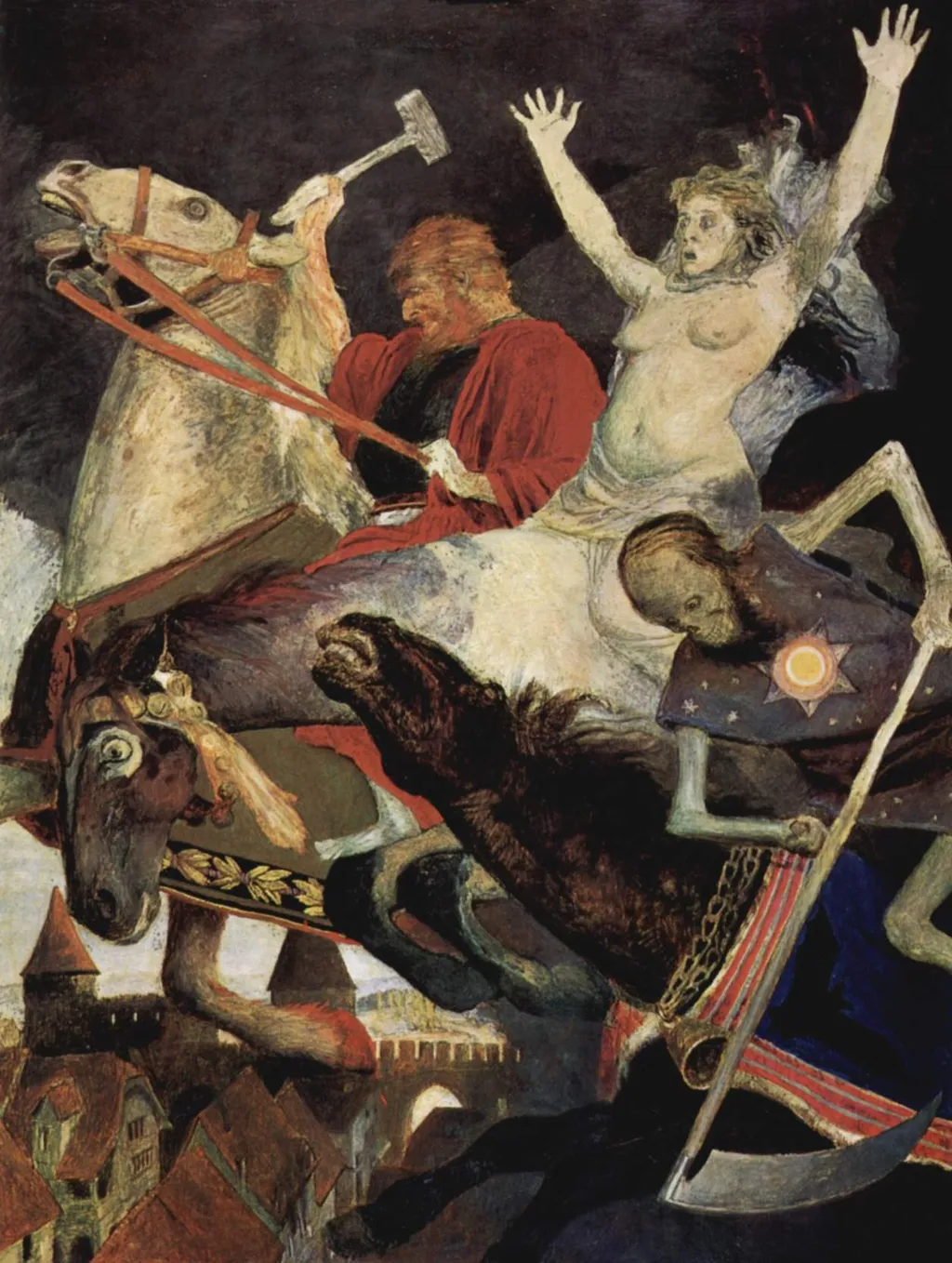
War is a tempera painting by the Symbolist artist Arnold Böcklin. It dates from 1899 and is held in the collection of the Kunsthaus Zürich.
About this work
Overview
Arnold Böcklin’s tempera work titled War was completed in 1899 and is part of the collection at the Kunsthaus Zürich.
Arnold Böcklin’s tempera work titled War was completed in 1899 and is part of the collection at the Kunsthaus Zürich. The painting presents a tumultuous battlefield scene rendered in a historicist mode, with a central focus on a nude female rider wielding a hammer, accompanied by a robed male figure also holding a hammer. The composition is set against a medieval‑type cityscape, evoking a sense of widespread upheaval.
Subject & Meaning
At the heart of the canvas a woman on horseback raises a hammer aloft, her nude form suggesting both vulnerability and defiance. Beside her, a man in a vivid red robe mirrors the gesture, reinforcing a shared agency in the conflict. The juxtaposition of these figures with a crumbling urban backdrop may allude to the destructive forces of war and the paradoxical blend of power and exposure inherent in combat.
Technique & Style
Böcklin employed tempera, a fast‑drying medium that yields a matte, layered surface. This choice allows fine detail in the figures’ musculature and the intricate architecture of the distant city, while also producing stark chiaroscuro contrasts that heighten the drama. The painter’s handling of light and shadow creates depth, emphasizing the tension between illuminated foreground and darker, receding background.
History & Provenance
Created at the close of the nineteenth century, War entered the holdings of the Kunsthaus Zürich, where it remains on display. The painting reflects Böcklin’s late‑period interest in allegorical and mythic subjects, and its acquisition by the museum underscores the work’s relevance to Swiss collections of Symbolist and historicist art.
Own this work as a print
Artist & collection
Artist
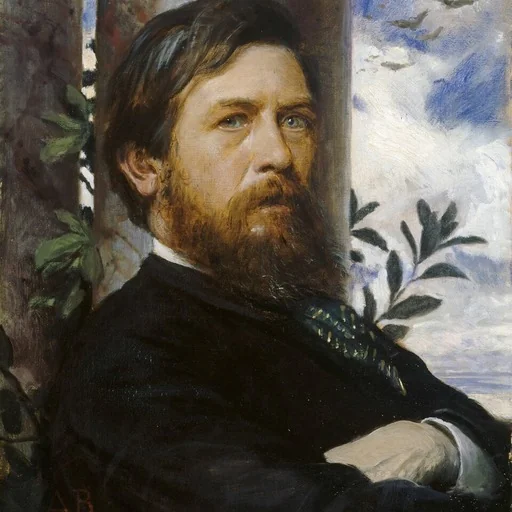
Arnold Böcklin was a Swiss Symbolist painter. His five versions of the Isle of the Dead inspired works by several late Romantic composers.

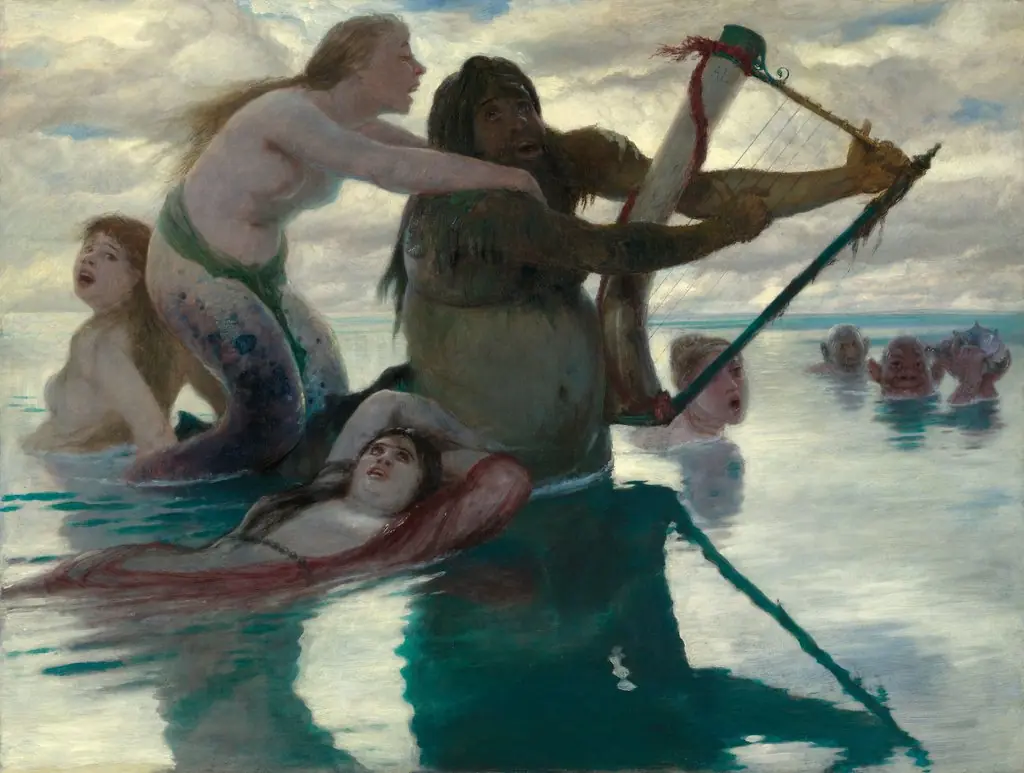
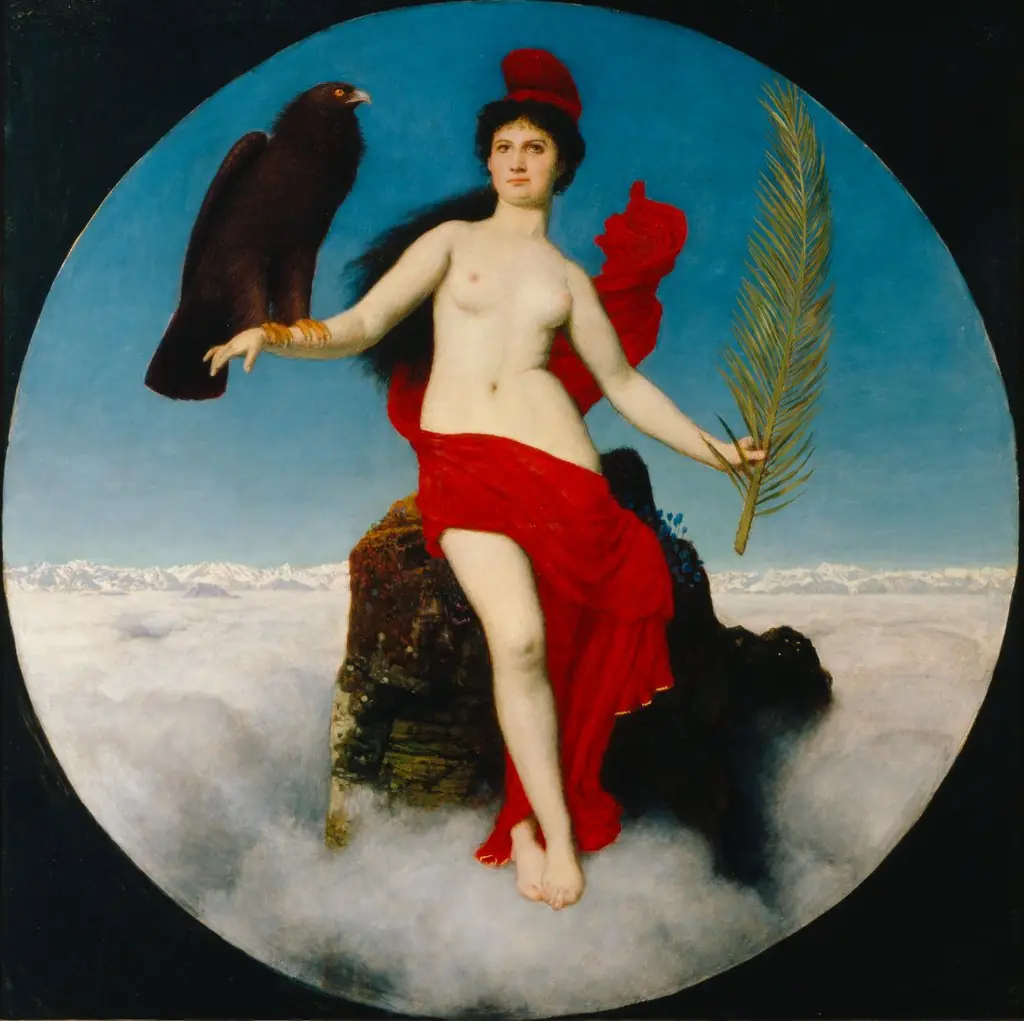
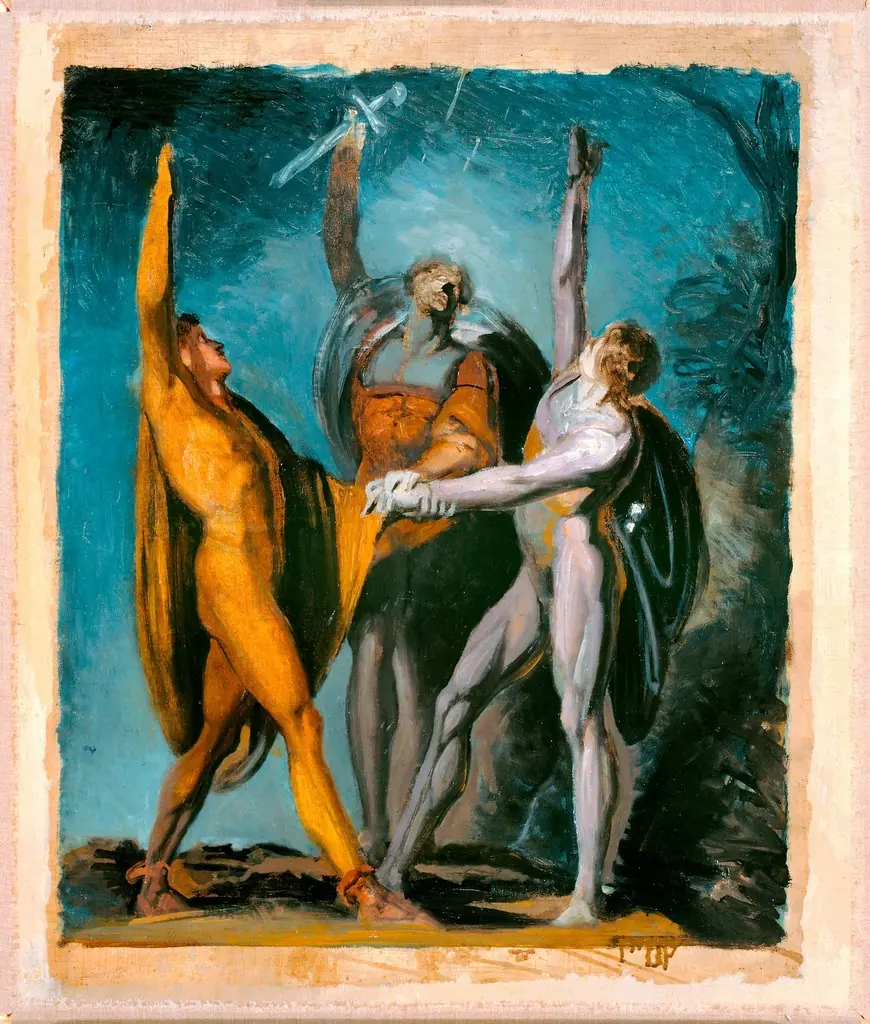 Sketch for "Oath on the Rütli," Female Figure (verso)
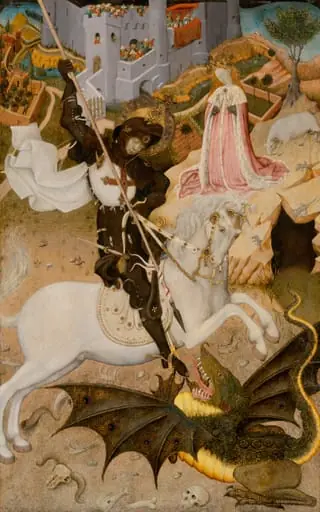 Saint George and the Dragon
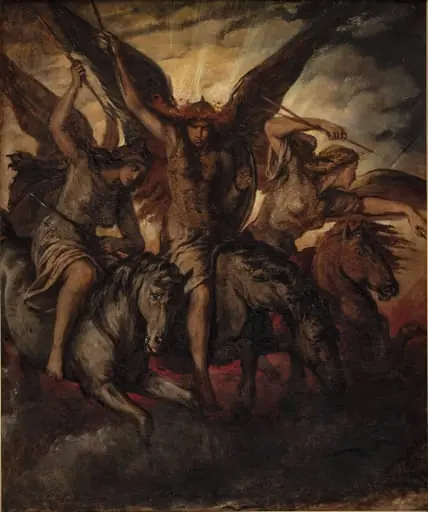 Valkyries
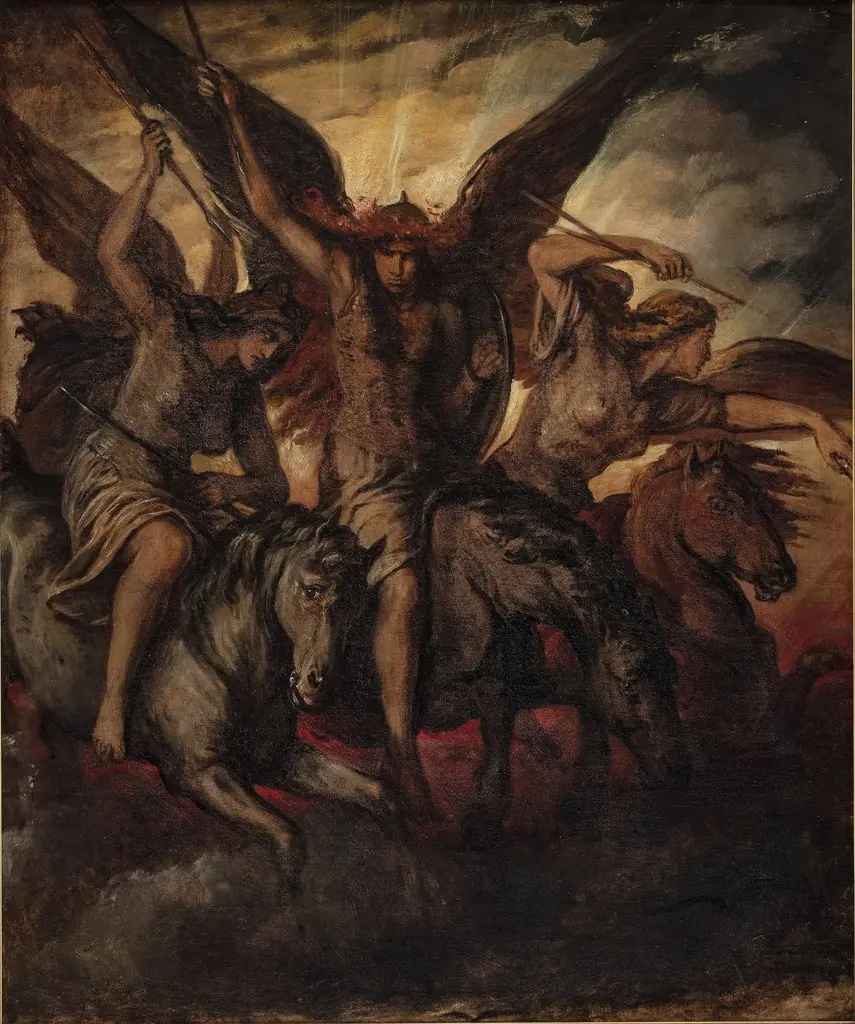 Valkyries
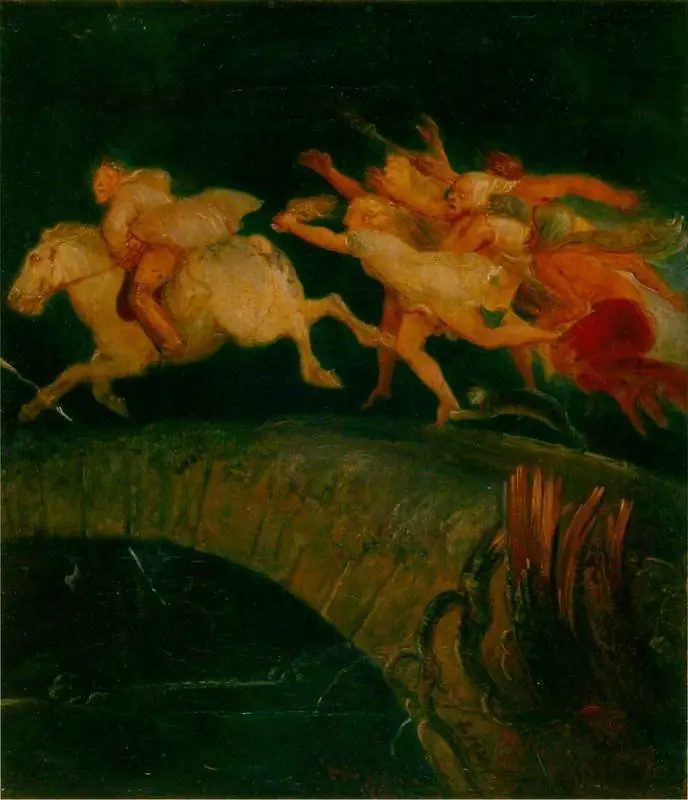 Tam o' Shanter
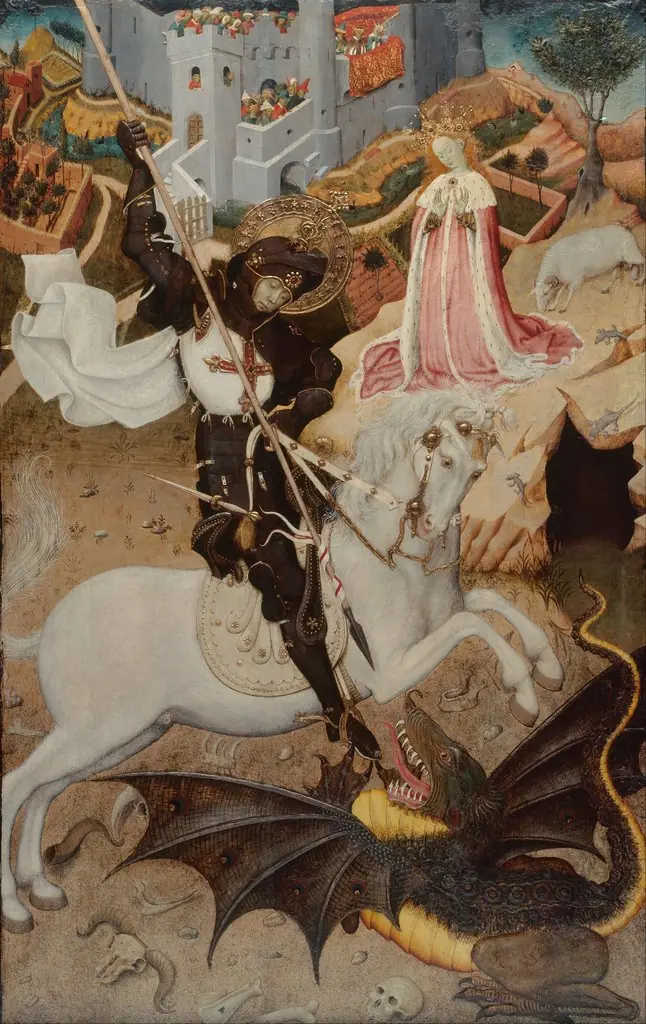 Saint George and the Dragon
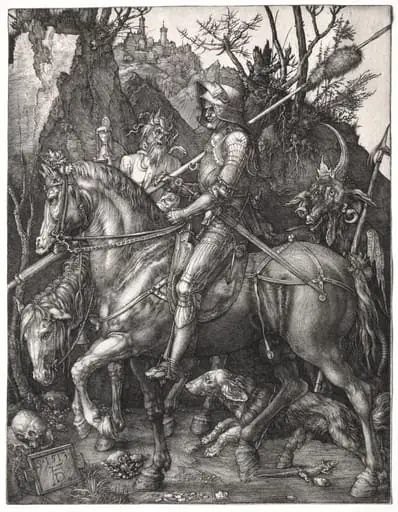 Knight, Death, and the Devil
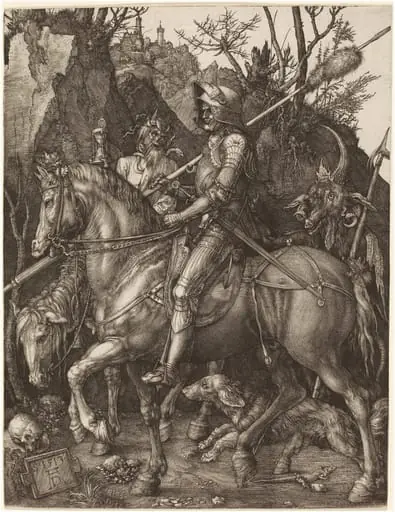 Knight, Death and Devil
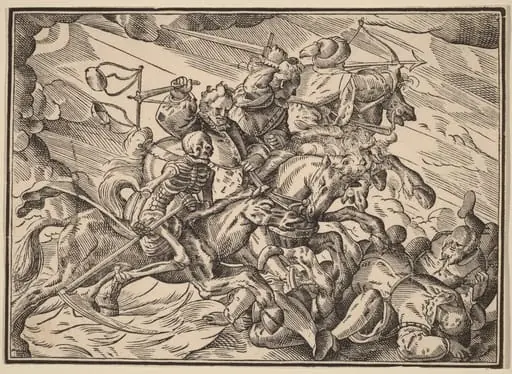 The Four Horsemen of the Apocalypse
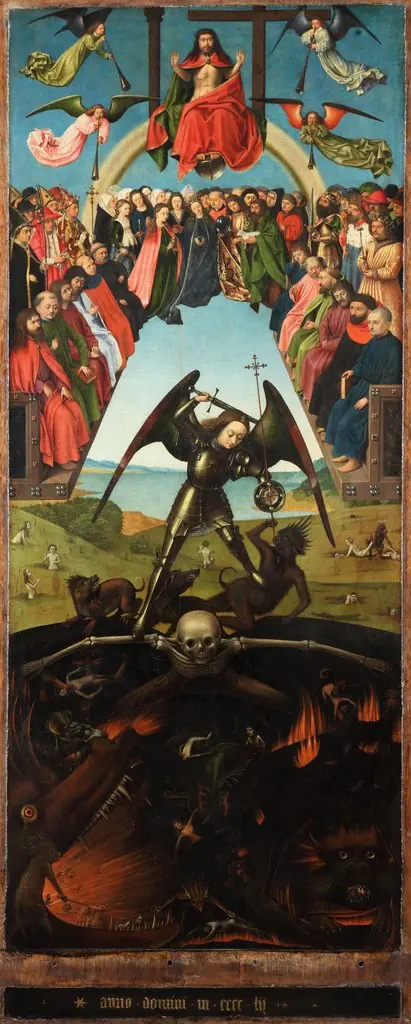 The Last Judgement
 The Four Horsemen, from The Apocalypse
 La Guerre (The War)