Artwork
Untitled
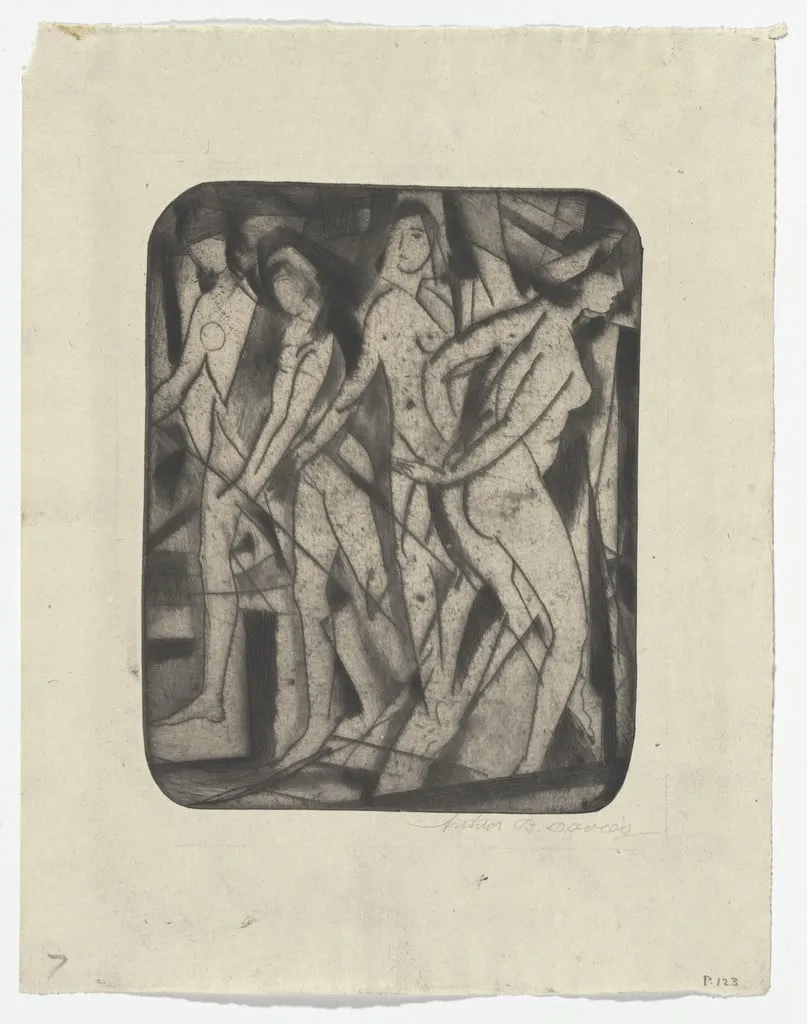
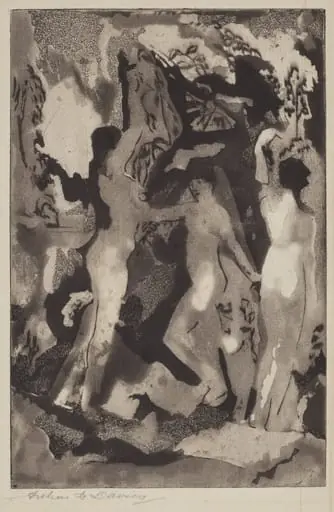
Untitled is an ink print by Arthur Bowen Davies. It dates from 1916 and is held in the collection of the Museum of Modern Art. Arthur B.
About this work
Overview
Davies produced this drypoint print in 1916, part of his exploration of abstracted figuration during a period of artistic experimentation in America.
Arthur B. Davies produced this drypoint print in 1916, part of his exploration of abstracted figuration during a period of artistic experimentation in America. The work is held in The Museum of Modern Art’s collection, reflecting its significance within early modernist printmaking. Davies, known for bridging American and European avant-garde circles, used the drypoint technique to emphasize texture and emotional intensity over naturalistic representation.
Subject & Meaning
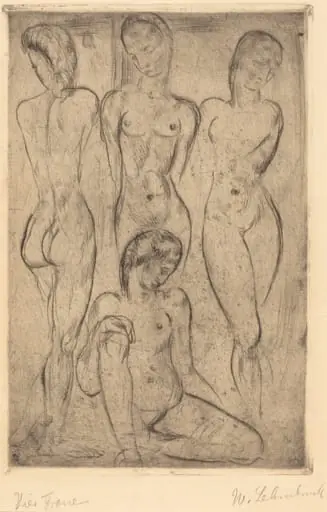
Three elongated, abstracted nudes stand in close proximity, their forms distorted with angular limbs and fragmented contours. One figure holds a slender, vertical object, possibly a staff or branch, introducing a symbolic or ritualistic element. The lack of clear narrative or setting invites interpretation as an expression of inner states rather than a literal scene, aligning with modernist interests in psychological and spiritual themes.
Technique & Style
Drypoint was employed to scratch lines directly into a metal plate, producing a rich, grainy texture with soft, blurred edges. The resulting image has a tactile, almost violent quality, with jagged contours and uneven shading that reject smooth modeling. Background marks suggest motion or drapery, enhancing the sense of instability. The style diverges from academic tradition, favoring expressive distortion over anatomical accuracy.
History & Provenance
Created during Davies’s most experimental phase, this print emerged from his engagement with European modernism and his leadership in promoting radical art in the U.S. It entered The Museum of Modern Art’s collection early, underscoring its recognition within institutional circles. Unlike his more popular landscape works, this piece reflects a lesser-known, introspective strand of his practice, preserved through museum acquisition rather than public exhibition.
Context
In 1916, American art was shifting away from realism, influenced by European movements like Cubism and Expressionism. Davies, though not a radical formalist, supported avant-garde experimentation as a curator and organizer. This print aligns with contemporaneous efforts to convey emotion through distortion, resonating with artists like Marsden Hartley and the Stieglitz circle, even as it remains distinct in its quiet, enigmatic tone.
Legacy
Though not widely reproduced, this work exemplifies Davies’s commitment to pushing printmaking beyond illustration into psychological expression. It contributes to the broader narrative of early 20th-century American modernism, where printmakers sought personal, non-narrative forms. Its presence in MoMA’s collection ensures its continued study as a quiet but significant artifact of artistic transition in American visual culture.
Artist & collection
Artist
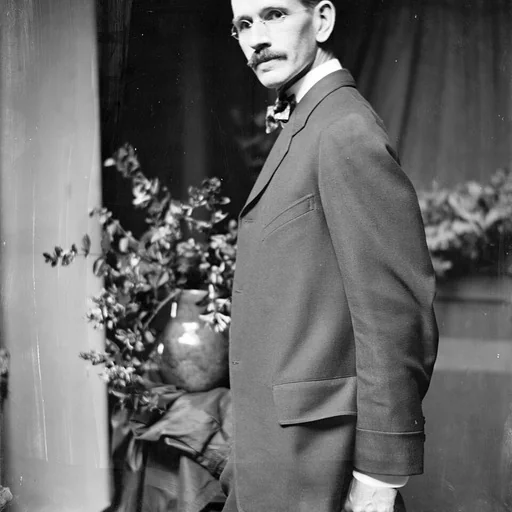
Arthur Bowen Davies (September 26, 1862 – October 24, 1928) was an avant-garde American artist and influential advocate of modern art in the United States c. 1910–1928.