Artwork
Mayer & Co.
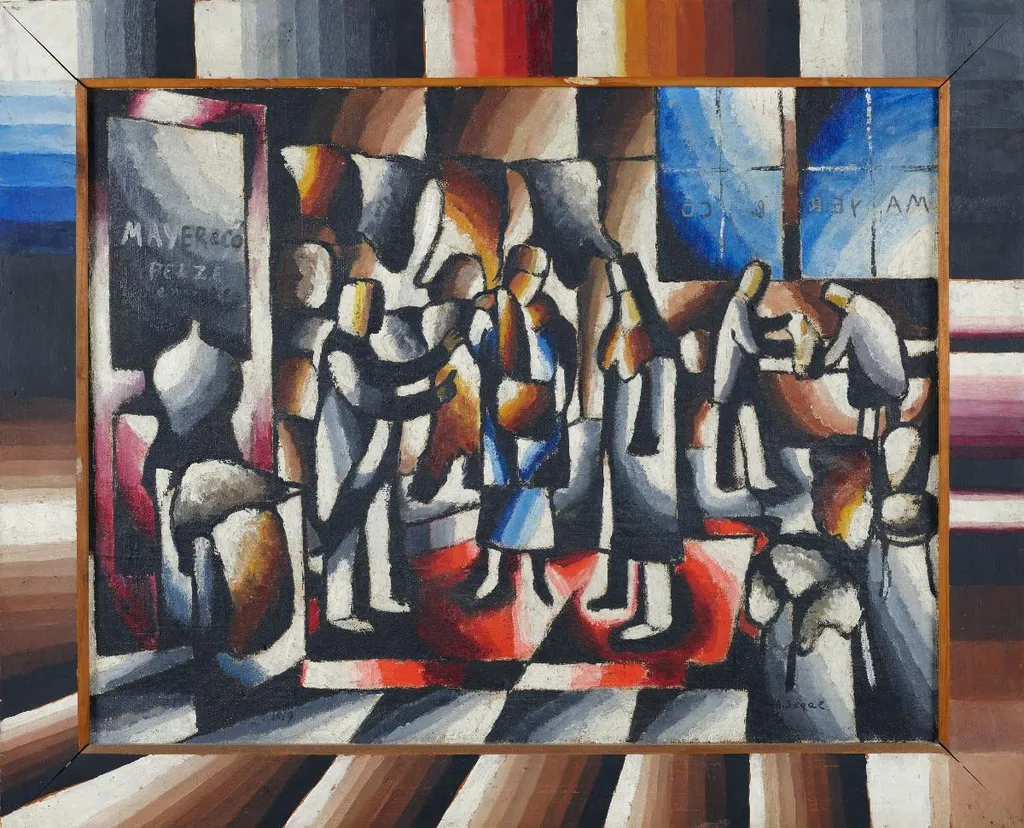
Mayer & Co. is an oil painting by Arthur Segal. It dates from 1919 and is held in the collection of the Kunsthaus Zürich.
About this work
Overview
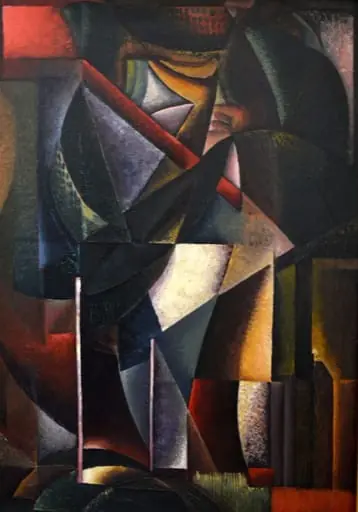
Created in 1919 by Arthur Segal, this oil painting is part of the Kunsthaus Zürich collection. It depicts a group of individuals gathered in an interior space, engaged in quiet interaction. The composition emphasizes interpersonal presence over narrative, with figures arranged in varied postures—some standing, others seated—suggesting an informal, contemplative moment.
Subject & Meaning
The figures, dressed in muted tones of white and blue, appear to be in conversation, their expressions neutral yet attentive. The ambiguous text on the wall resists legibility, shifting focus from literal meaning to atmosphere. The scene evokes post-war social introspection, capturing the tension between connection and isolation among individuals in a shared, confined space.
Technique & Style
Segal employed impasto to build thick, textured layers of paint, particularly in the figures and background. The red floor and blue wall contrast sharply, grounding the composition in bold, non-naturalistic color. Brushwork is visible and deliberate, prioritizing emotional resonance over detail, aligning with Expressionist tendencies that favor gesture and tone over realism.
History & Provenance
The painting entered the Kunsthaus Zürich collection after its creation in 1919. While its early ownership is not fully documented, its inclusion in the museum’s holdings since the 20th century reflects its recognition within Swiss modernist circles. No significant alterations or restorations are recorded in public archives.
Context
Painted in the aftermath of World War I, the work reflects a broader European artistic turn toward psychological depth and fragmented social realities. Segal, associated with the Berlin Secession and later the Expressionist movement, used color and form to convey inner states rather than external events, aligning with contemporaries like Nolde and Kirchner.
Legacy
Though not widely exhibited outside Switzerland, the painting remains a key example of Segal’s mature style. Its emphasis on emotional texture through pigment and color influenced later generations of Swiss modernists. It continues to be studied for its quiet interrogation of human presence amid societal upheaval.
Artist & collection