Artwork
City Island, New York
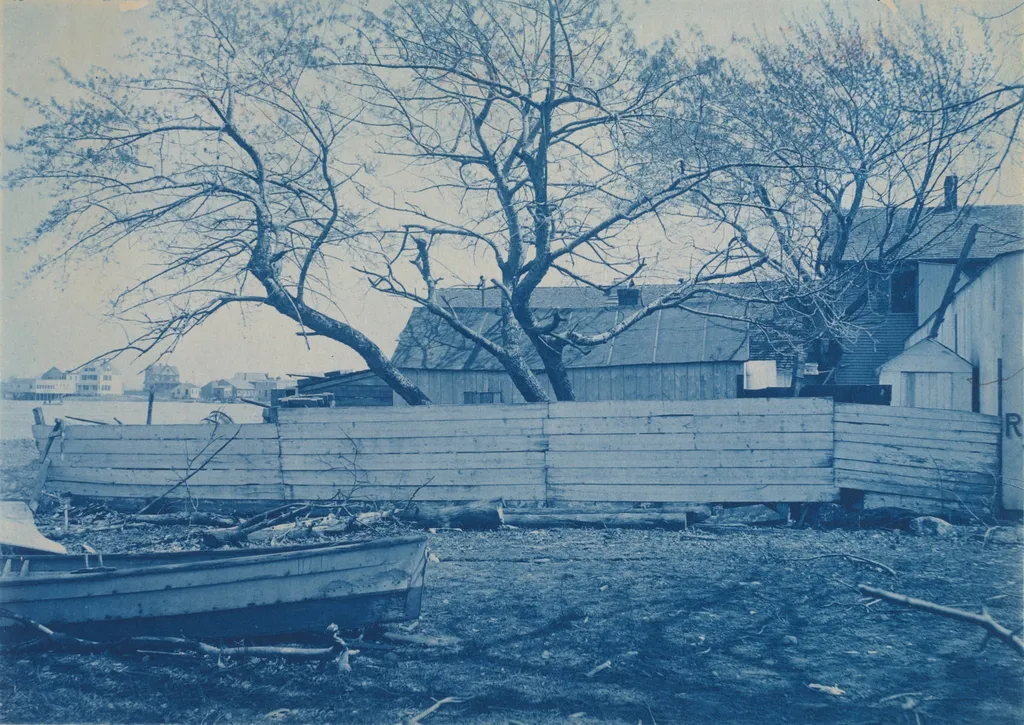
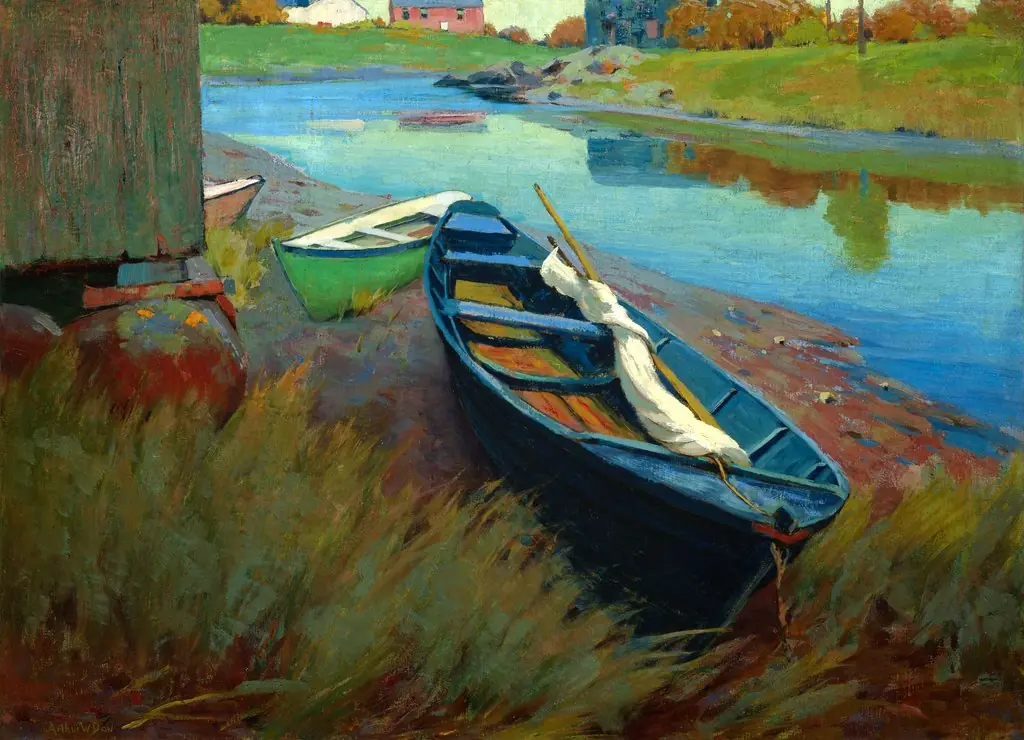
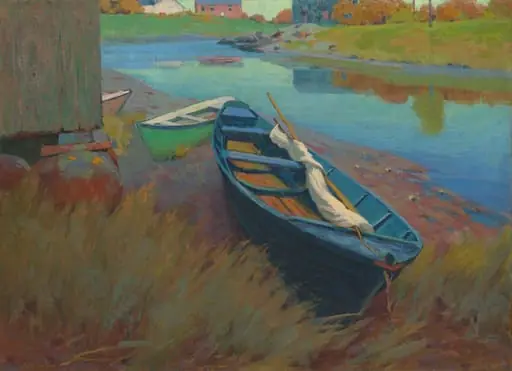
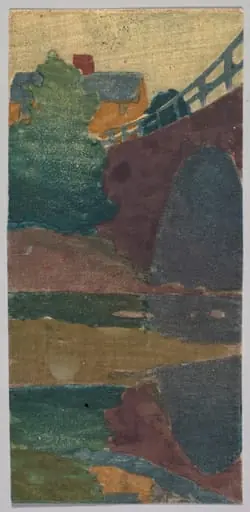
City Island, New York is a photography by the Impressionist artist Arthur Wesley Dow. It dates from 1900 and is held in the collection of the Cleveland Museum of Art.
About this work
Overview
The work is part of the Cleveland Museum of Art’s collection, reflecting his broader interest in integrating art and everyday observation.
Arthur Wesley Dow created *City Island, New York* circa 1900 as a photographic study of a quiet coastal landscape. Though known primarily as a painter and educator, Dow applied his design principles to photography, treating the medium as a vehicle for compositional balance rather than documentary realism. The work is part of the Cleveland Museum of Art’s collection, reflecting his broader interest in integrating art and everyday observation.
Subject & Meaning
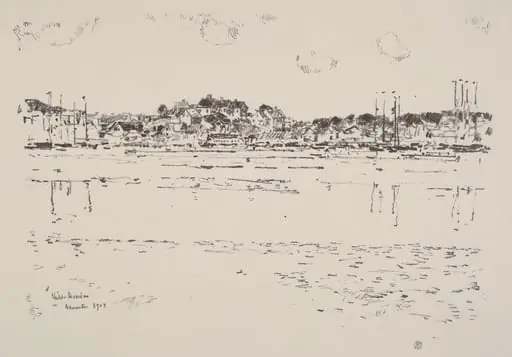
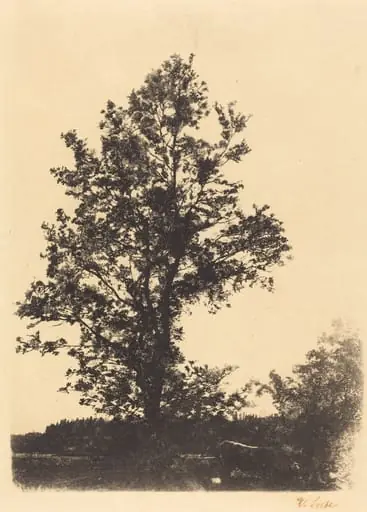
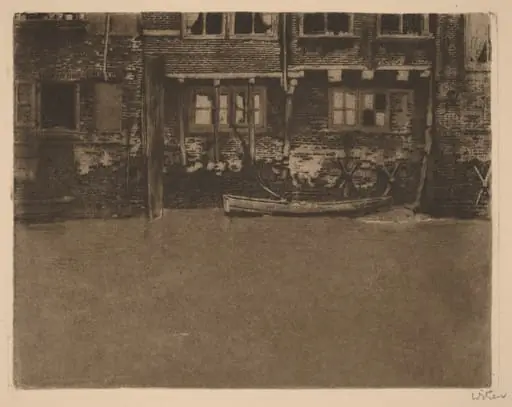
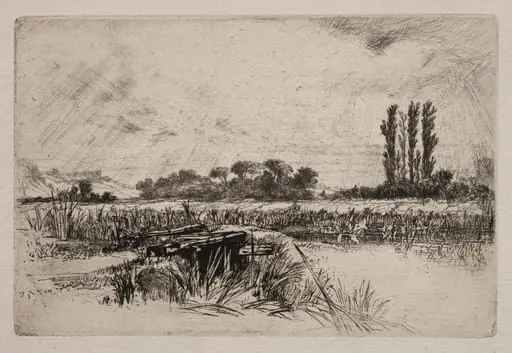
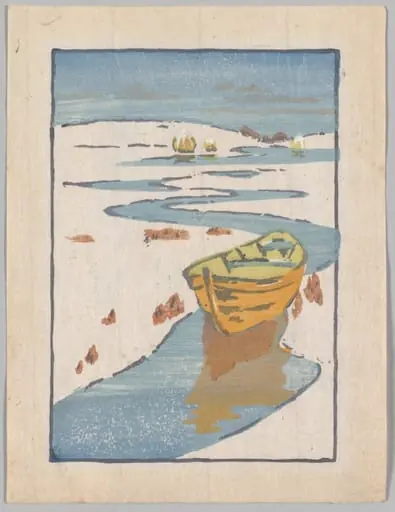
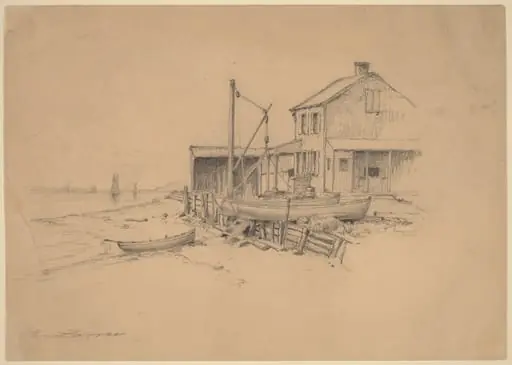
The image captures a tranquil waterfront at City Island, featuring a solitary wooden boat beached near a low fence, sparse trees, and distant dwellings. The scene conveys stillness and solitude, avoiding human figures to emphasize the quiet rhythm of the environment. Dow’s focus on modest structures and natural forms suggests an appreciation for unadorned, everyday spaces, framed as harmonious arrangements rather than narrative moments.
Technique & Style
Dow employed soft focus and a muted blue tonality to evoke a contemplative mood. The blurred edges of trees and buildings, along with the gentle gradations of light, align with Impressionist sensibilities, though filtered through his personal emphasis on design. The composition is carefully structured, with horizontal lines of fence and water balancing vertical elements of trees and structures, reflecting his teachings on formal harmony.
History & Provenance
Created around 1900, the photograph emerged during a period when Dow was actively exploring photography as an artistic medium alongside his teaching at Columbia University and the Pratt Institute. It entered the Cleveland Museum of Art’s collection through documented acquisition, likely as part of broader efforts to recognize photography’s role in modern art. Its preservation underscores its significance within early American photographic practice.
Context
At the turn of the 20th century, American artists increasingly turned to photography not merely as a tool but as a legitimate art form. Dow, influenced by Japanese aesthetics and European Impressionism, sought to elevate photographic composition beyond mere representation. *City Island, New York* reflects this shift, positioning the ordinary landscape as a subject worthy of deliberate artistic arrangement.
Legacy
Dow’s photographic work, including *City Island, New York*, contributed to the legitimization of photography within fine art institutions. His integration of design theory into the medium influenced a generation of American artists and educators. Though less widely known than his paintings, his photographs remain important examples of how early 20th-century practitioners redefined artistic boundaries across media.
Artist & collection
Artist
Arthur Wesley Dow (April 6, 1857 – December 13, 1922) was an American painter, printmaker, photographer and an arts educator.

![The Park at Sceaux [April 1925, 7a.m.], by Eugène Atget](https://artifactworldgallery.com/img/eugene-atget--the-park-at-sceaux-april-1925-7a-m--af61d3e0a0050a6f-w320.webp)