Artwork
The Long Road or Argilla Road
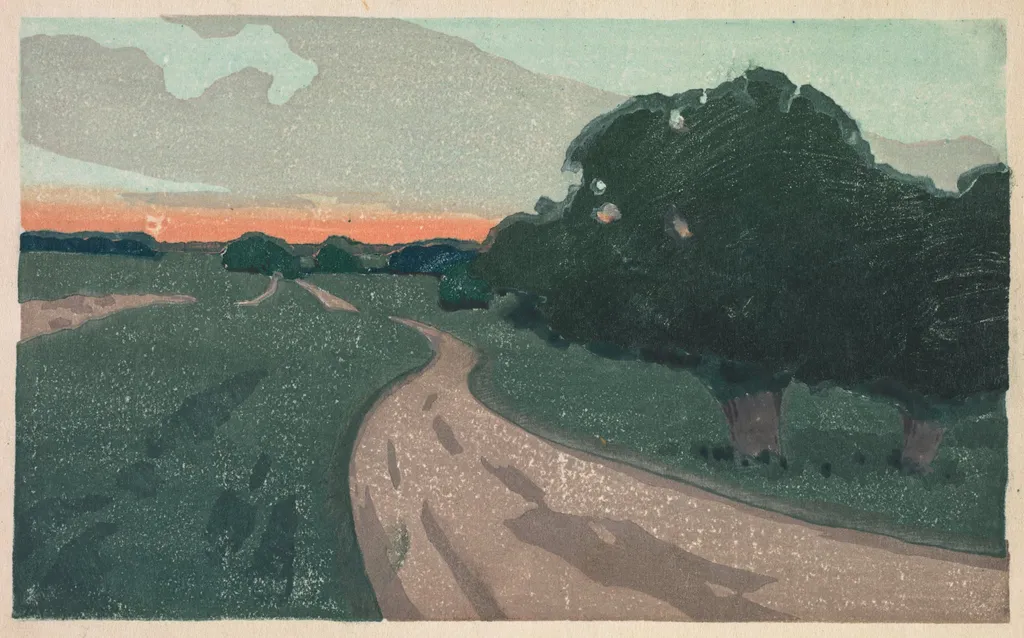
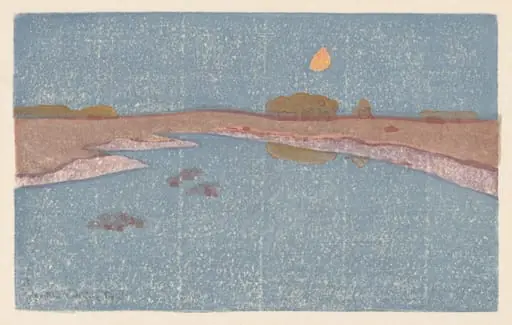
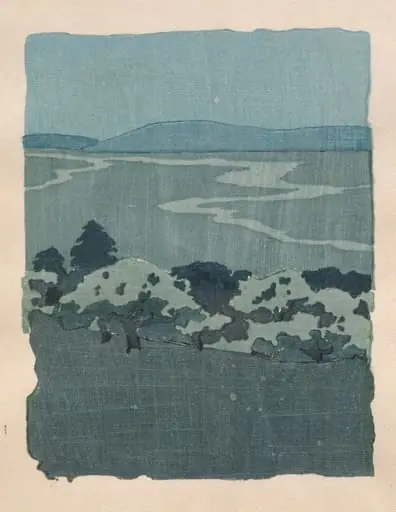
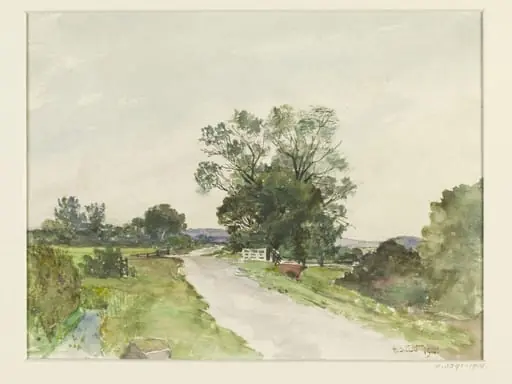
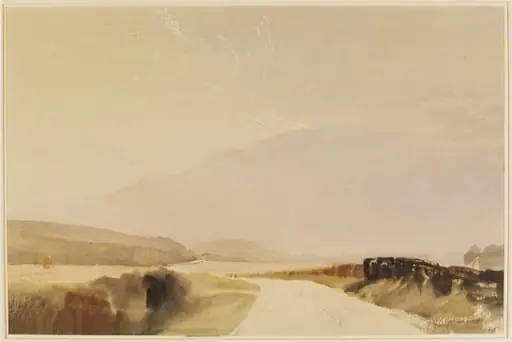
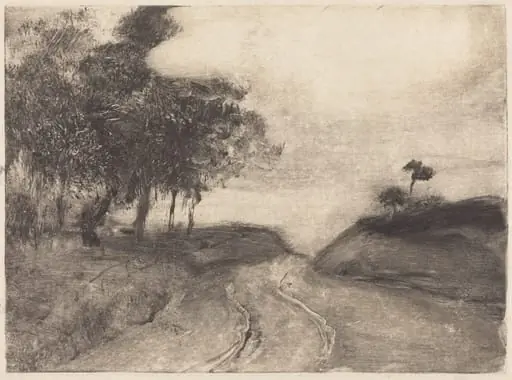
The Long Road or Argilla Road is a print by the Impressionist artist Arthur Wesley Dow. It dates from 1898 and is held in the collection of the Cleveland Museum of Art.
About this work
Overview
The work exemplifies his shift away from naturalism toward structured, abstracted forms.
Created around 1898, *The Long Road or Argilla Road* is a print by Arthur Wesley Dow, an American artist and educator known for integrating Eastern aesthetics into Western art practices. The work exemplifies his shift away from naturalism toward structured, abstracted forms. Dow’s interest in Japanese woodblock prints informed his use of flat planes and rhythmic composition, distinguishing his approach from prevailing academic traditions of the time.
Subject & Meaning
The print portrays a quiet, winding rural road cutting through a subdued landscape of rolling hills and sparse trees. The road, rendered as a dominant linear element, invites contemplation rather than narrative. Its receding path suggests movement and solitude, aligning with Dow’s belief in art as a medium for spiritual reflection. The absence of human figures reinforces a sense of stillness and introspection.
Technique & Style
Dow employed simplified geometric shapes and flattened perspective to construct depth without traditional chiaroscuro. His printmaking technique favored clean lines and tonal gradations achieved through careful ink application, likely using woodcut or etching. Forms are reduced to essential contours, emphasizing balance and harmony over realistic detail. This approach reflects his pedagogical emphasis on design principles derived from Japanese aesthetics.
History & Provenance
The work emerged during Dow’s tenure at Columbia University’s Teachers College, where he developed a curriculum centered on composition and design. *The Long Road* was likely produced as part of his personal exploration of printmaking, separate from his teaching materials. Its early 20th-century circulation among art educators and collectors helped disseminate his ideas, though it remained relatively obscure outside academic circles.
Context
In the late 19th century, American artists increasingly looked to Japan for alternatives to European realism. Dow’s work aligned with the Arts and Crafts movement’s emphasis on craftsmanship and spiritual integrity in art. His synthesis of Eastern compositional logic with American landscape themes offered a new visual language, countering the dominance of Impressionism and academic painting in U.S. art institutions.
Legacy
Dow’s prints, including *The Long Road*, influenced generations of American art students through his widely adopted textbooks. His emphasis on abstraction and design became foundational in modern art education. Though not widely exhibited in his lifetime, his approach prefigured later developments in American modernism, particularly in the work of artists who prioritized structure over representation.
Own this work as a print
Artist & collection
Artist
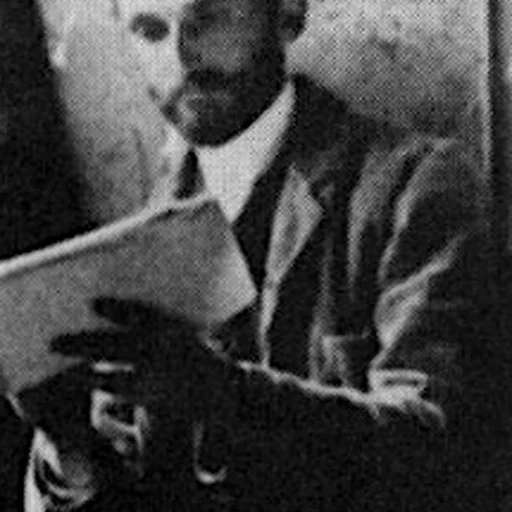
Arthur Wesley Dow (April 6, 1857 – December 13, 1922) was an American painter, printmaker, photographer and an arts educator.