Artwork
The Large Tree
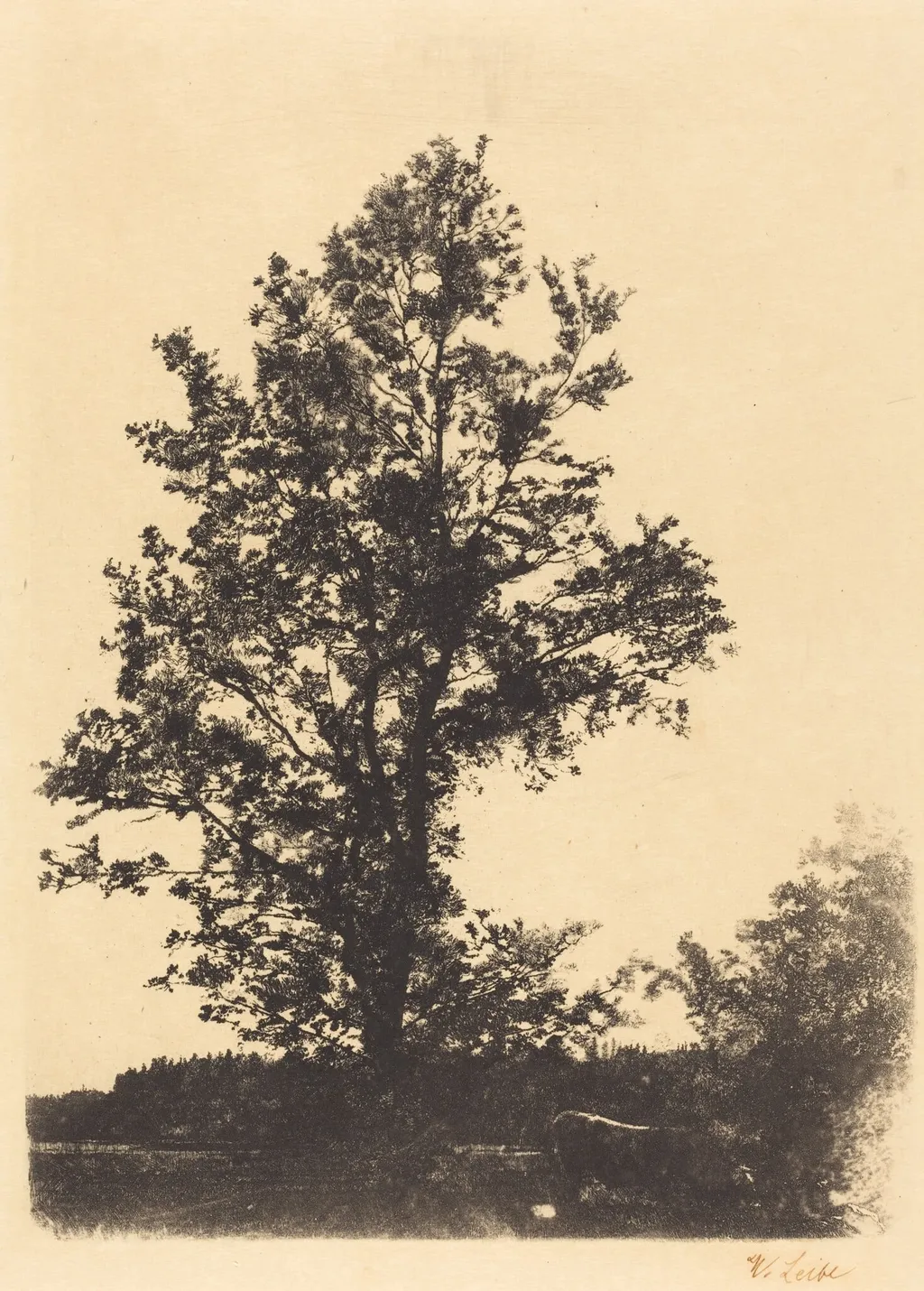
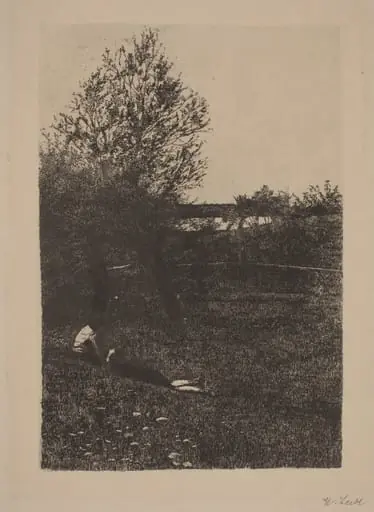
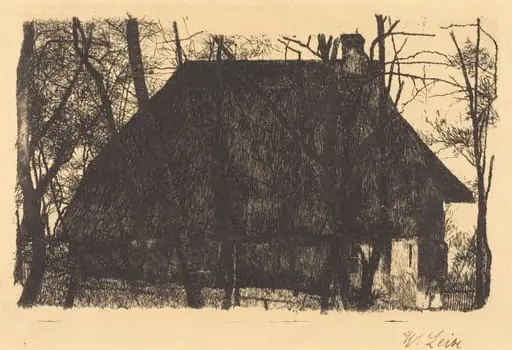
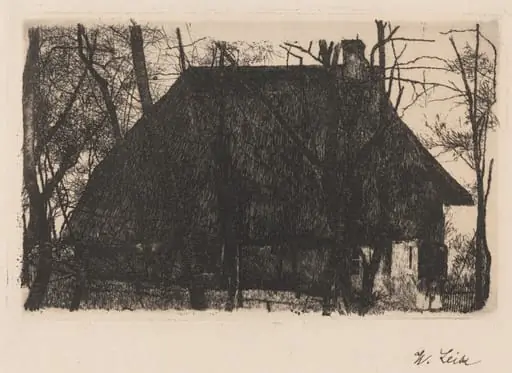
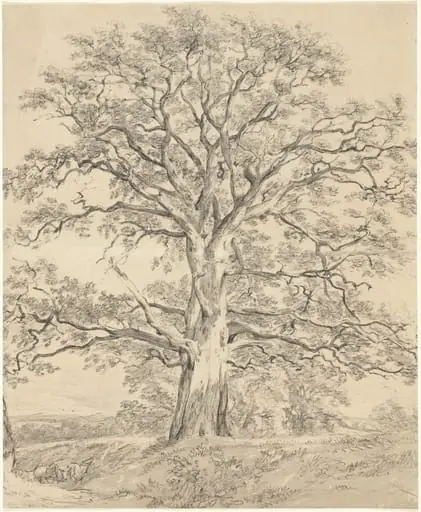
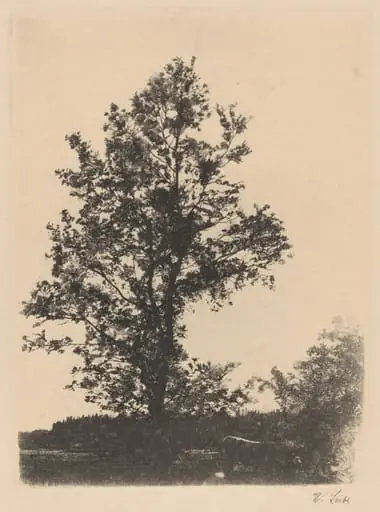
The Large Tree is an ink print by the Romanticist artist Wilhelm Leibl. It dates from 1874 and is held in the collection of the National Gallery of Art.
About this work
Overview
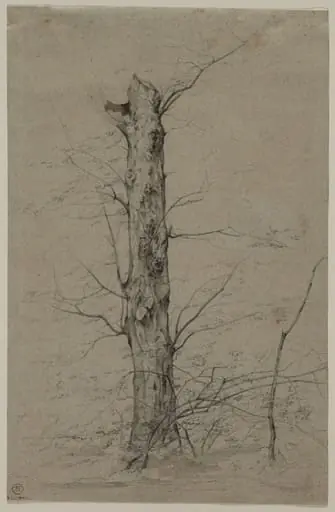
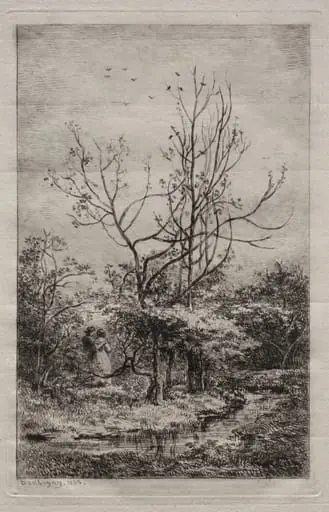
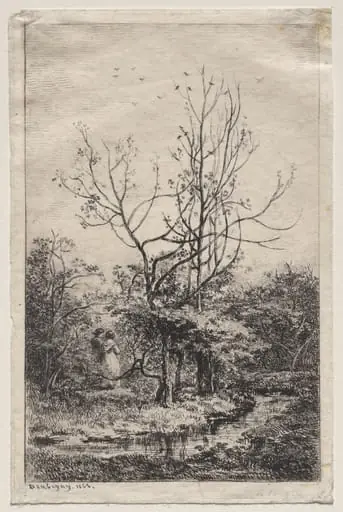
The Large Tree is a print created in 1874 by the German artist Wilhelm Leibl. Executed on Japan paper, the work is an etching that presents a solitary, gnarled tree with thick, twisting branches set against an unadorned background. The composition emphasizes the stark contrast between the dark foliage and the light paper surface.
Technique & Style
Leibl combined three printmaking methods—etching, drypoint, and aquatint—on a single metal plate. The etching provides defined line work, while drypoint adds a soft, velvety quality to the edges, and aquatint introduces subtle tonal variations. This blend yields both crisp outlines and gentle shading, giving the tree a tactile presence within the print.
Subject & Meaning
The central motif of a solitary, weathered tree may evoke themes of endurance and natural resilience. Its twisted branches suggest a struggle against time, while the plain background isolates the form, directing attention to the tree’s texture and structure as a study of organic form.
History & Provenance
The print was produced in the early phase of Leibl’s career, a period marked by his interest in realistic observation. It was originally printed on Japan paper, a material favored for its smooth surface and ability to capture fine detail. The work has since been included in several collections of 19th‑century German prints.
Artist & collection