Artwork
Peisaj panoramic
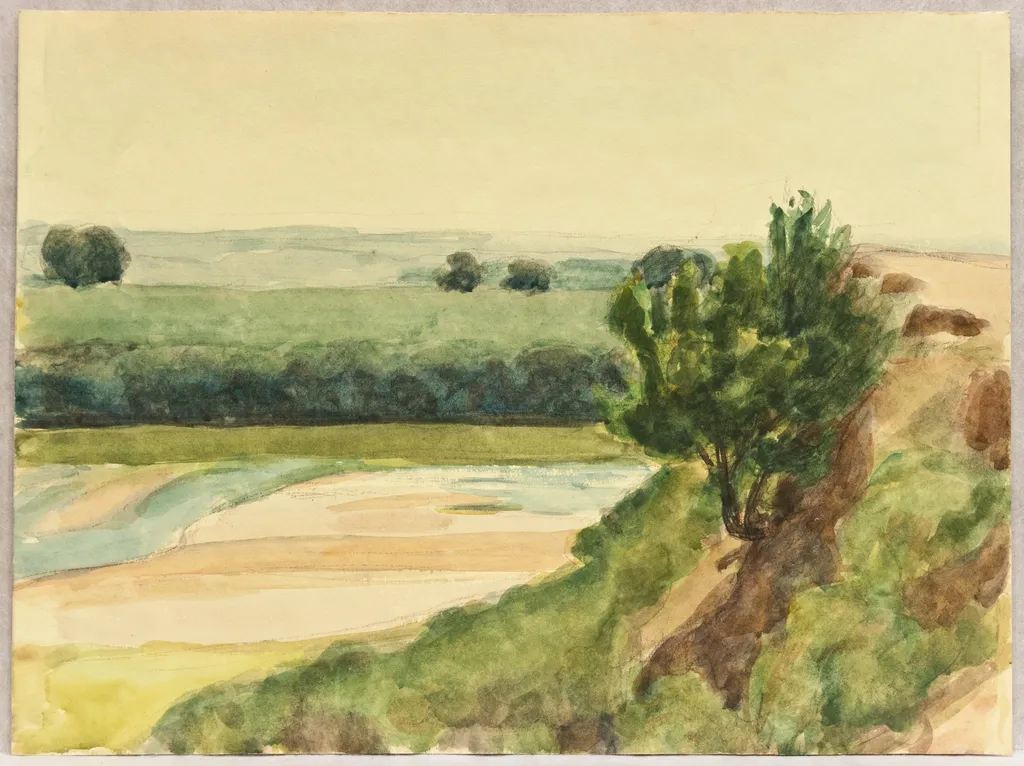
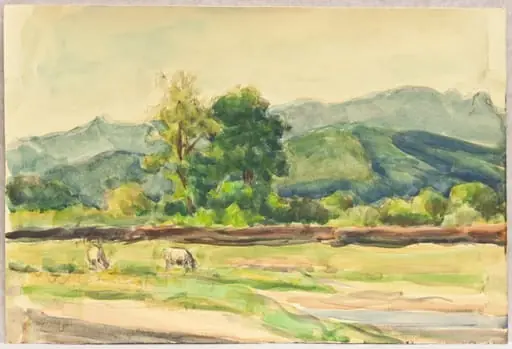
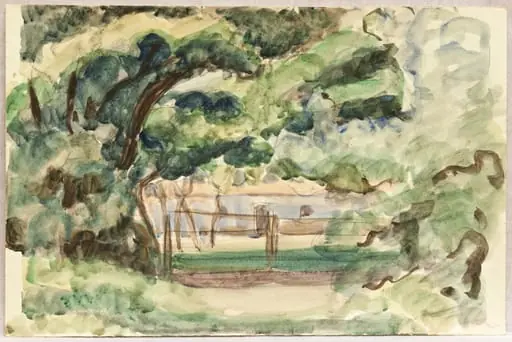
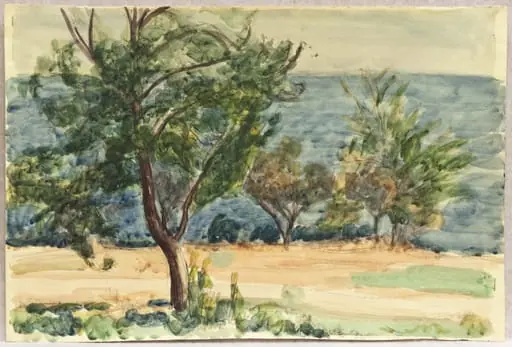
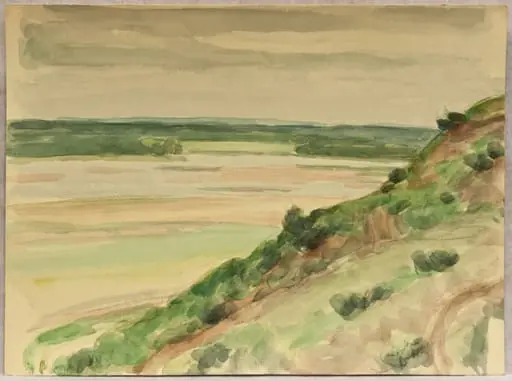
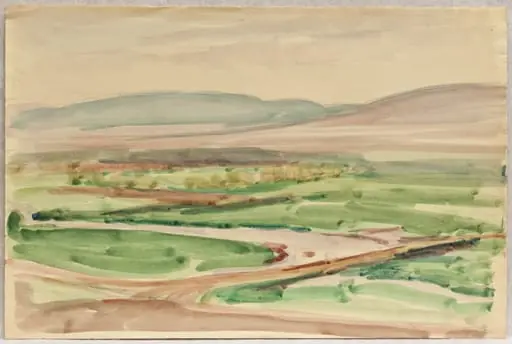
Peisaj panoramic is a print by Rodica Maniu. It dates from 1950 and is held in the collection of the Gavrila Simion Eco-Museum Research Institute Tulcea.
About this work
Overview
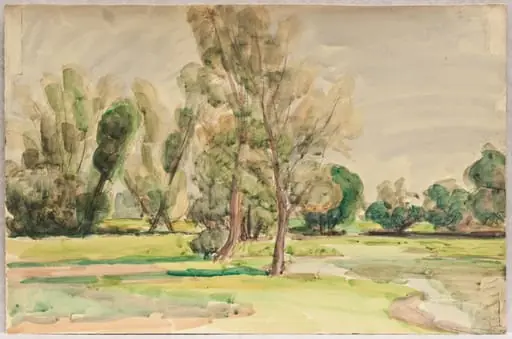
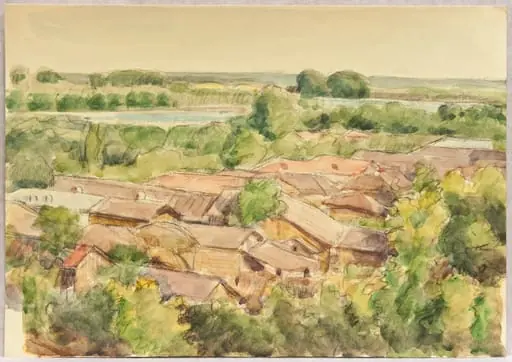
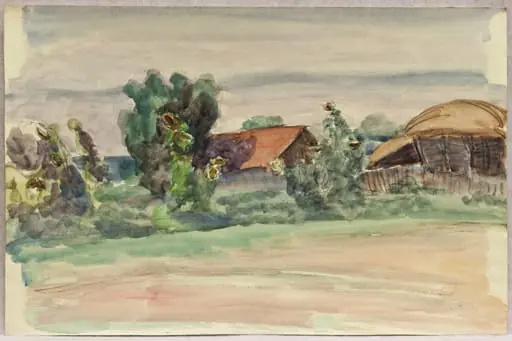
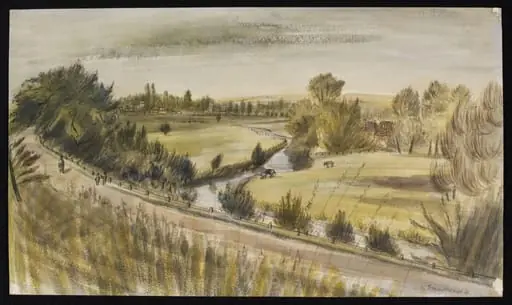
Peisaj panoramic, dated around 1950, is a landscape painting by Romanian artist Rodica Maniu. It is part of the collection at the Museum of Ethnography. The work presents a quiet, unembellished view of rural terrain, rendered in muted earth tones. Its composition emphasizes natural forms without narrative or human presence, reflecting a contemplative approach to the environment.
Subject & Meaning
The painting depicts a tranquil countryside with rolling hills, a solitary tree on the right, and layered ground tones. There is no indication of human activity or symbolic intent. The subject appears to be an observation of place rather than a statement, suggesting an interest in the quiet dignity of the land. The absence of figures invites focus on the rhythm of natural elements.
Technique & Style
Maniu employs a restrained palette of greens and browns, using subtle gradations to suggest depth and texture. Brushwork is deliberate but unobtrusive, avoiding dramatic contrasts or expressive strokes. The tree in the foreground provides structural balance and a sense of scale, while the distant hills recede through soft tonal shifts, creating a calm, atmospheric perspective.
History & Provenance
The painting was created in the early 1950s and entered the collection of the Museum of Ethnography, where it remains today. Little is documented about its exhibition history or acquisition. Its inclusion in an ethnographic institution suggests it was valued for its representation of local landscape traditions, though it lacks overt cultural or folk motifs.
Context
Created during Romania’s early communist period, the work diverges from state-promoted socialist realism. Its quiet, non-political focus on nature may reflect personal artistic priorities amid a climate favoring ideological themes. Maniu’s approach aligns with quieter regional traditions of landscape observation, distinct from official art directives of the time.
Legacy
Peisaj panoramic contributes to a lesser-known strand of Romanian modernism that prioritized intimate, non-didactic depictions of nature. While not widely exhibited beyond its institutional home, it stands as an example of an artist’s sustained engagement with the land outside dominant political narratives. Its preservation underscores the value placed on regional visual heritage.
Artist & collection
Museum
Gavrila Simion Eco-Museum Research Institute Tulcea
Continue through works from the same source collection.