Artwork
Two Large Ships under Construction
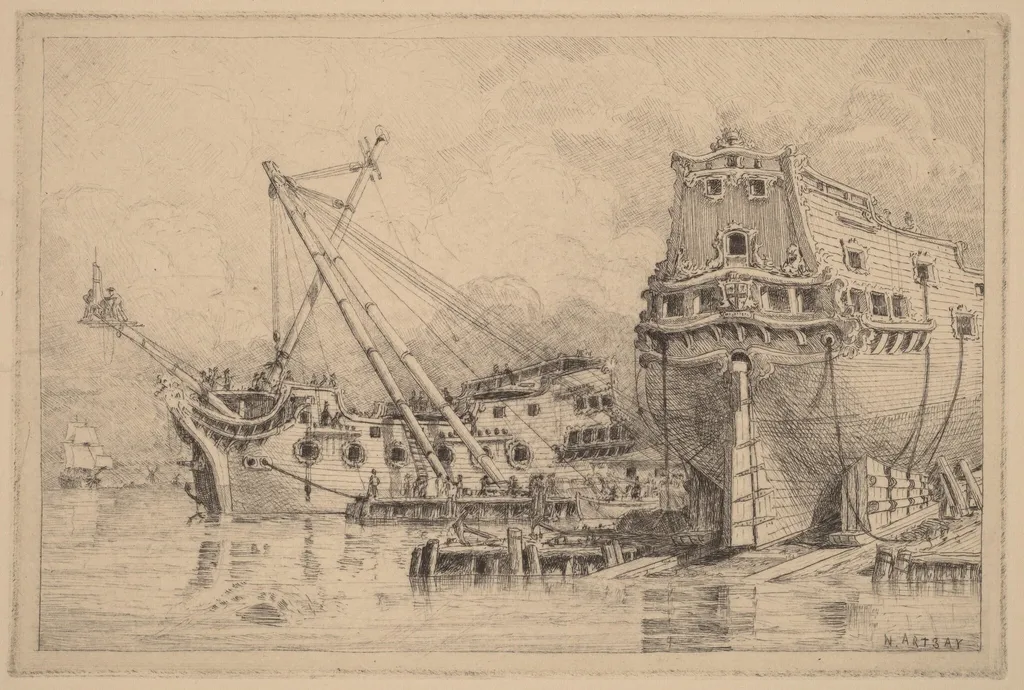
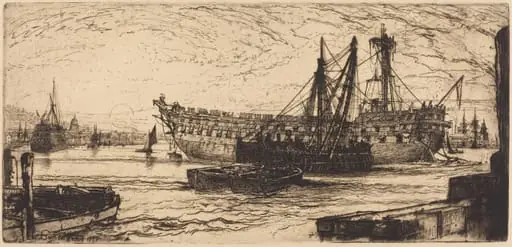
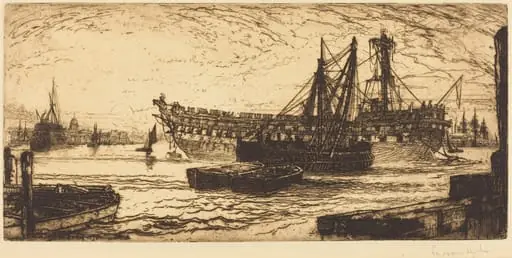
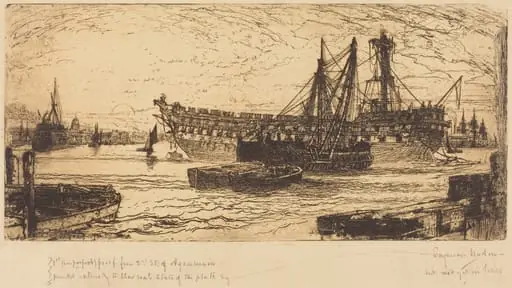
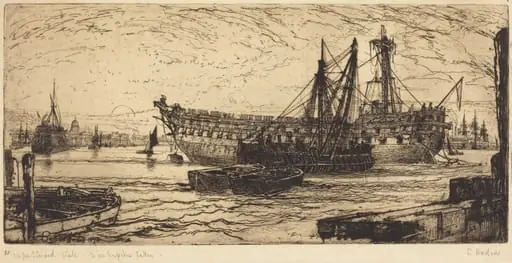
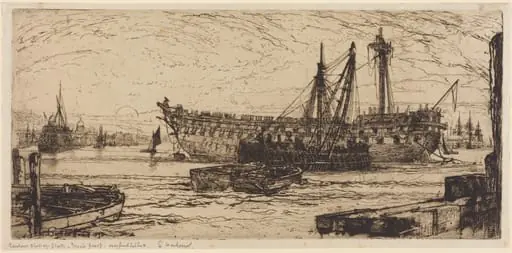
Two Large Ships under Construction is an ink print by the Romanticist artist N. Artsay. It dates from 1840 and is held in the collection of the National Gallery of Art. Created in 1840 by N.
About this work
Overview
The composition emphasizes scale and labor, framing the vessels against a looming architectural backdrop that suggests the institutional presence of a shipyard.
Created in 1840 by N. Artsay, this print combines etching and engraving techniques to depict two large vessels under construction in a dry dock. The scene captures a moment of industrial activity, with ships nearly complete but still bound to their frames and scaffolding. The composition emphasizes scale and labor, framing the vessels against a looming architectural backdrop that suggests the institutional presence of a shipyard.
Subject & Meaning
The two ships, their hulls lined with evenly spaced ports, represent maritime ambition and technological progress. Their incomplete state—surrounded by wooden frameworks and scattered tools—highlights the labor-intensive nature of 19th-century shipbuilding. The distant multi-story building implies administrative or commercial oversight, subtly reinforcing the link between industry and institutional power during the Industrial Revolution.
Technique & Style
Artsay employed fine, rapid lines typical of etching and engraving to convey motion and texture. The sketchy quality of the workers and scaffolding contrasts with the more defined outlines of the ships’ hulls, creating a sense of dynamic tension. The use of cross-hatching and varied line weight adds depth to the scene without relying on tonal gradients, characteristic of printmaking conventions of the period.
History & Provenance
The print was produced in 1840, during a period of expanding naval and commercial shipbuilding in Europe. While the artist’s full identity remains obscure, the work reflects the growing public interest in industrial processes. No documented early ownership or exhibition history is known, suggesting it may have been circulated as a standalone print or included in a technical or periodical publication.
Context
This image emerges amid the rise of mechanized shipbuilding and the transition from wooden to iron-hulled vessels. The dry dock setting and reliance on manual labor align with pre-steamship-era practices. The architectural backdrop, with its arched windows, hints at the influence of neoclassical design in industrial infrastructure, reflecting broader cultural values of order and progress in mid-19th-century Europe.
Legacy
Though not widely reproduced or studied, the print serves as a quiet record of pre-industrial shipyard labor and design. It offers a visual archive of construction methods before the widespread adoption of steam power and metal framing. Its modest scale and technical precision make it a representative example of documentary printmaking from the era.
Artist & collection