Artwork
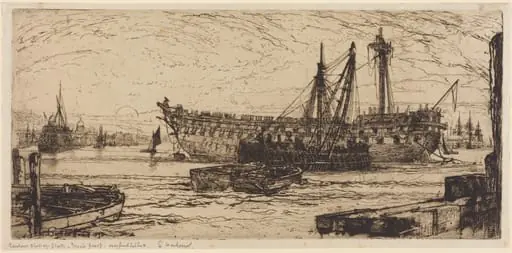
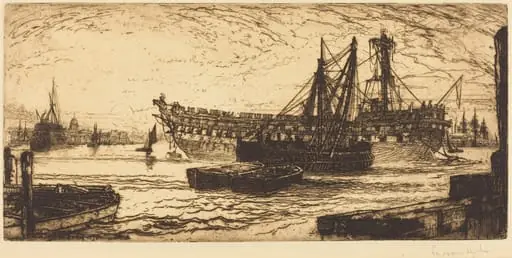
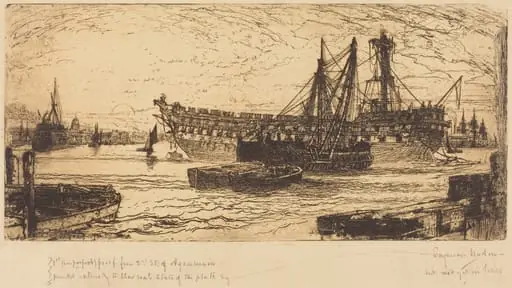
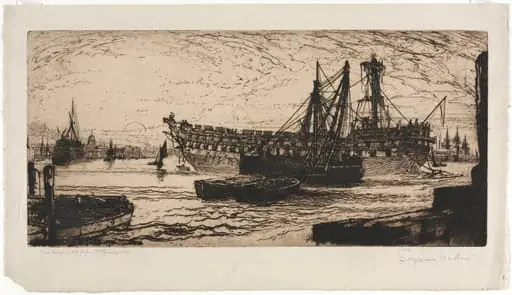
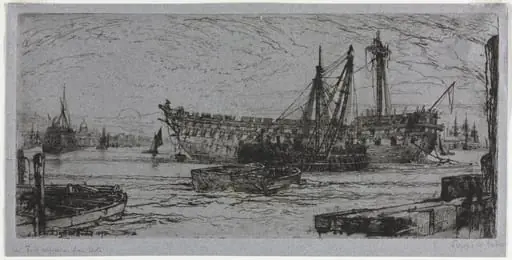
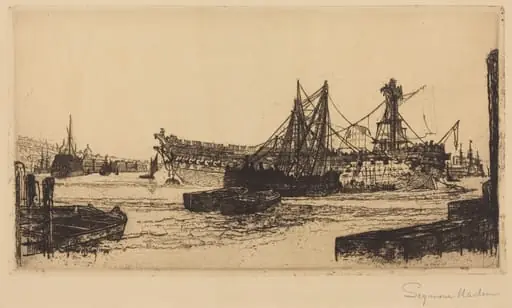
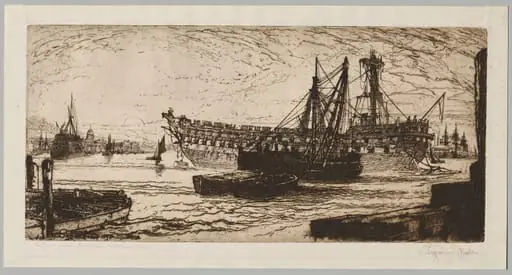
Breaking Up of the Agamemnon
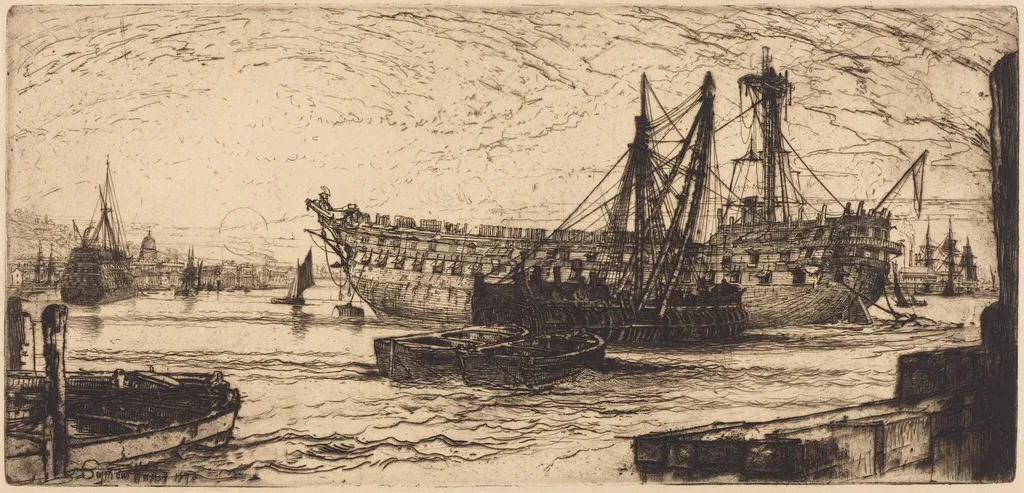
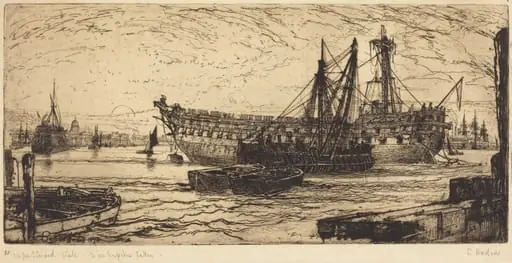
Breaking Up of the Agamemnon is an ink print by the Impressionist artist Francis Seymour Haden. It dates from 1870 and is held in the collection of the National Gallery of Art.
About this work
Overview
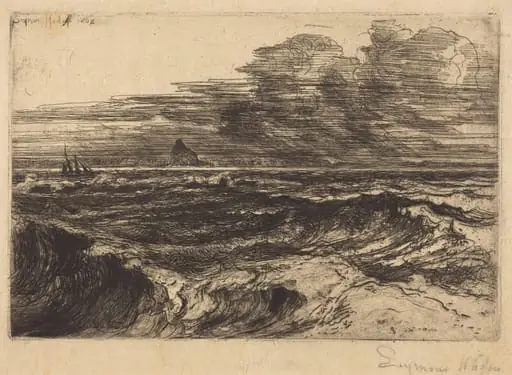
Rendered in dark brown ink on paper, the work captures the vessel in the final stages of its life, surrounded by the industrial landscape of the shore.
Created in 1870, this etching by Francis Seymour Haden depicts the dismantling of the HMS Agamemnon, a decommissioned warship, at a British dockyard. Rendered in dark brown ink on paper, the work captures the vessel in the final stages of its life, surrounded by the industrial landscape of the shore. The composition emphasizes decay and transition, with no human figures present to draw attention away from the ship’s solitude.
Subject & Meaning
The Agamemnon, once a symbol of naval power, is shown in ruin, its structure broken and scattered. The scene reflects the inevitable decline of wooden sailing ships in the age of steam. Haden’s choice to focus on the dismantling process, rather than its active service, suggests a meditation on obsolescence and the passage of time, quietly honoring the vessel’s former role without sentimentality.
Technique & Style
Haden employed a direct, expressive etching technique, scratching lines into a copper plate with minimal correction. The resulting marks are irregular and layered, mimicking the texture of weathered wood and churning water. The ink’s dark brown tone and the sketchy, sparse background enhance the sense of atmospheric haze, reinforcing the mood of quiet dissolution through tactile, hand-made mark-making.
History & Provenance
The HMS Agamemnon was launched in 1852 and served in the Crimean War before being retired. By 1870, it was sold for scrap at the Royal Navy’s dockyard in Millwall. Haden, a former naval surgeon turned artist, likely witnessed the ship’s breakup firsthand or based the work on contemporary accounts. The print was produced shortly after the ship’s final days, making it a near-contemporary record of its end.
Context
In the late 19th century, Britain’s navy was rapidly transitioning from sail to steam, rendering wooden ships like the Agamemnon obsolete. Haden’s etching emerges within a broader cultural shift, where industrial progress reshaped both technology and memory. His focus on the dismantling of a once-proud vessel aligns with a growing interest in documenting the fading remnants of the age of sail.
Legacy
Haden’s etching is regarded as a significant example of 19th-century British printmaking, valued for its emotional restraint and technical precision. It influenced later artists interested in industrial subjects and the aesthetics of decay. Though not widely exhibited during his lifetime, the work now stands as a quiet testament to the end of an era in maritime history.
Artist & collection