Artwork
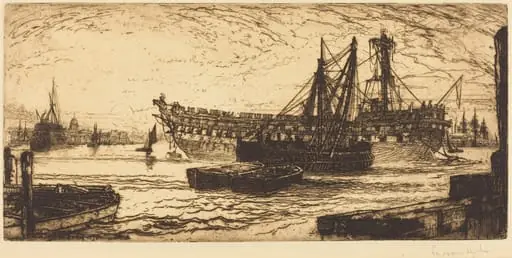
Breaking Up of the Agamemnon
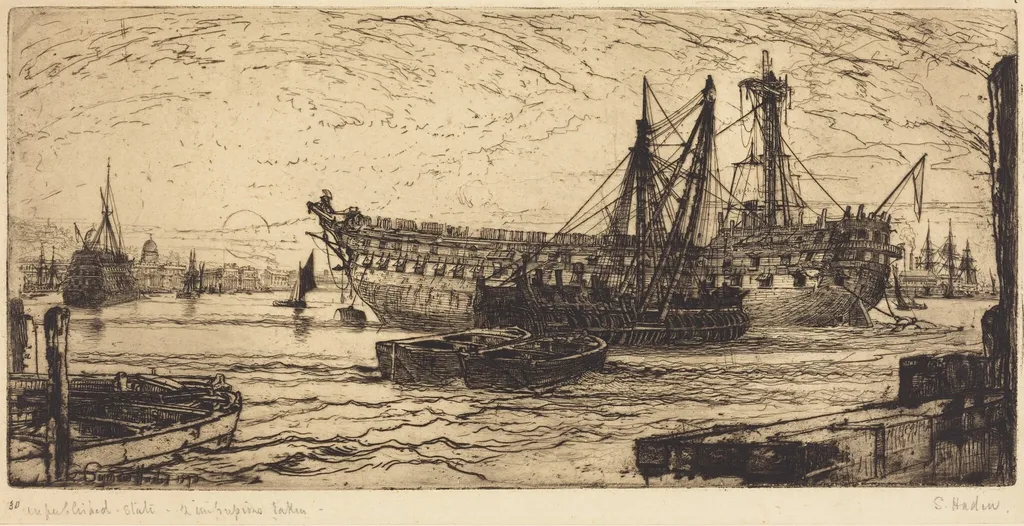
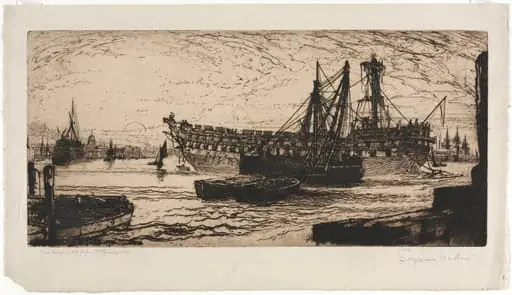
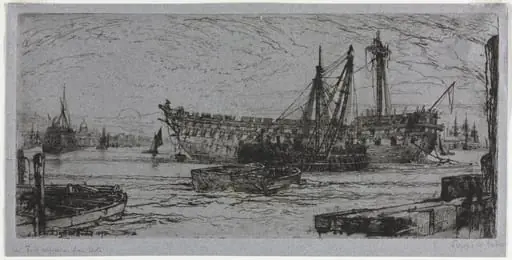
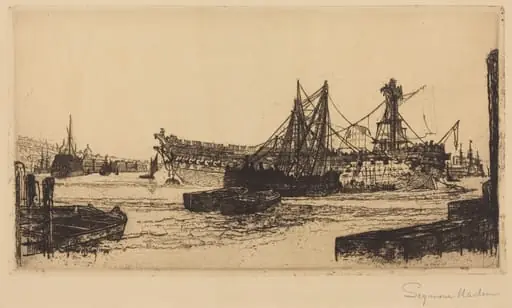
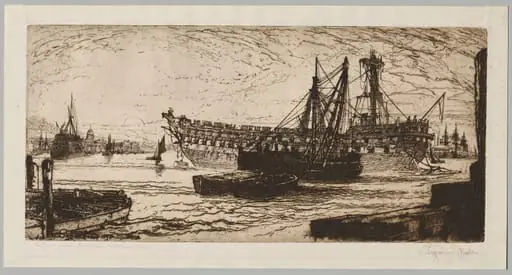
Breaking Up of the Agamemnon is an ink print by the Impressionist artist Francis Seymour Haden. It dates from 1870 and is held in the collection of the National Gallery of Art.
About this work
Overview
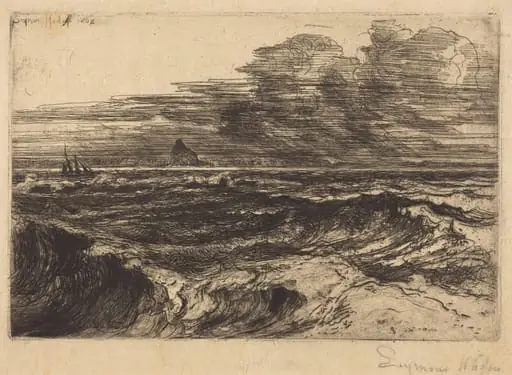
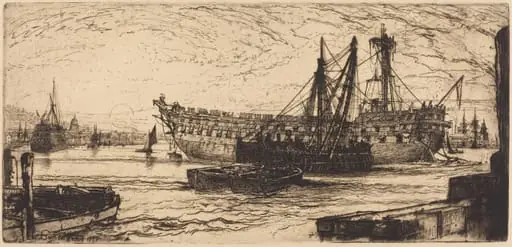
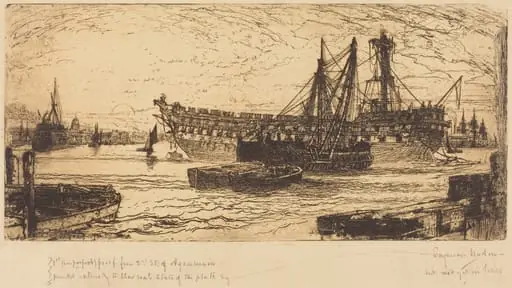
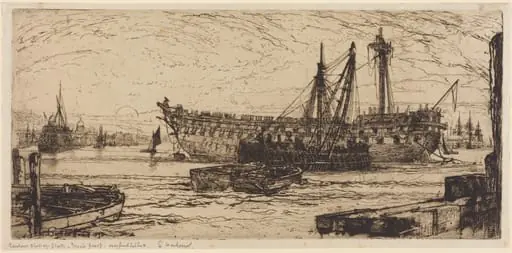
Francis Seymour Haden’s 1870 copper etching titled Breaking Up of the Agamemnon depicts a large wooden vessel being dismantled at a dock. The composition places the ship’s exposed hull in the foreground, while its masts and rigging remain upright. In the distance, a line of other vessels and shoreline structures are rendered with loose, sketch‑like strokes, suggesting a bustling harbor scene.
Technique & Style
Executed in dark brown ink, the print relies on deep incisions in the copper plate to generate pronounced chiaroscuro. Haden’s use of strong line work emphasizes the texture of the choppy water and the timber of the ship’s hull, while the lighter, hurried sketches of background elements create a sense of depth and movement within the limited tonal range of the medium.
Subject & Meaning
The work records the practical process of shipbreaking, a common industrial activity in 19th‑century ports. By focusing on the moment when the hull is exposed, Haden draws attention to the transition from a functional vessel to raw material, reflecting contemporary interests in labor, technology, and the impermanence of maritime commerce.
History & Provenance
Created in 1870, the etching forms part of Haden’s broader output of maritime subjects, a genre he pursued throughout his career. The print was produced in limited numbers, typical of his practice of hand‑pulling impressions from a single copper plate, and later entered private collections before being acquired by a public institution specializing in 19th‑century British prints.
Artist & collection