Artwork
Bathing woman
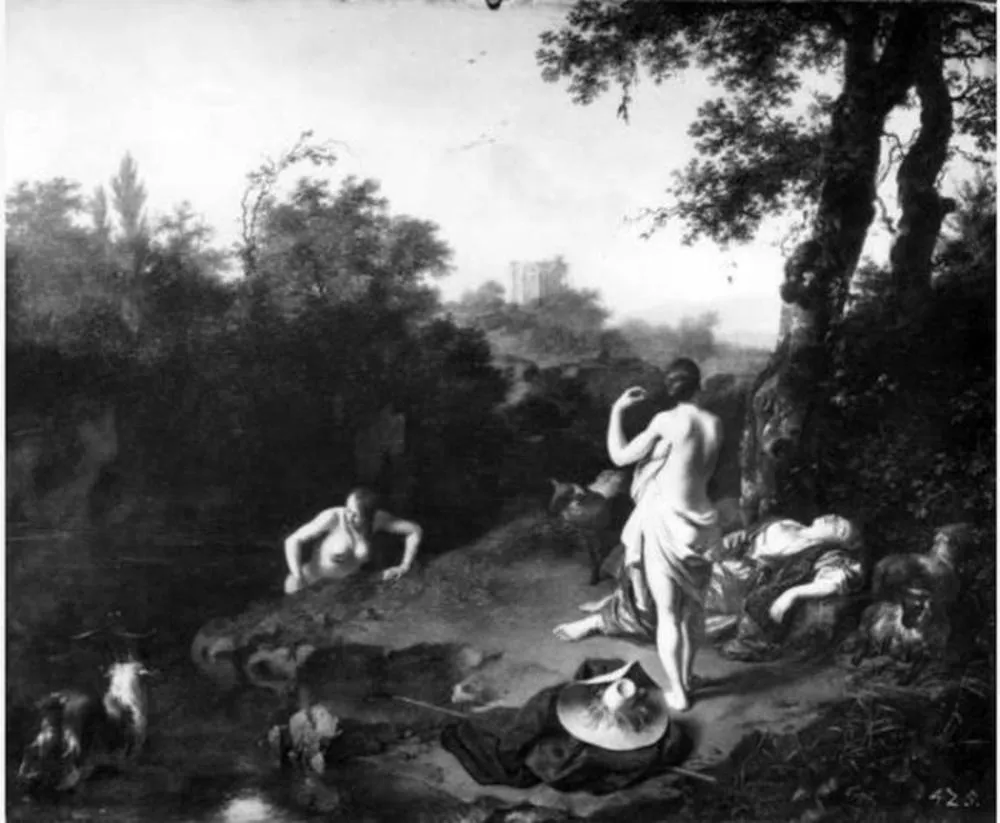
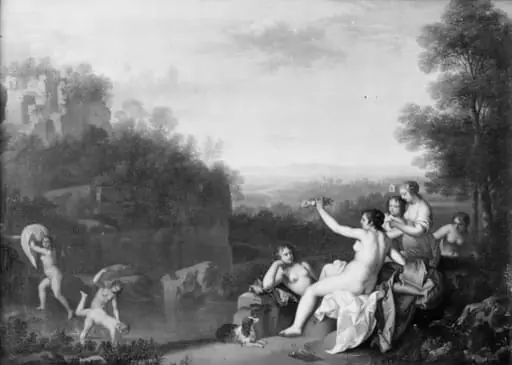
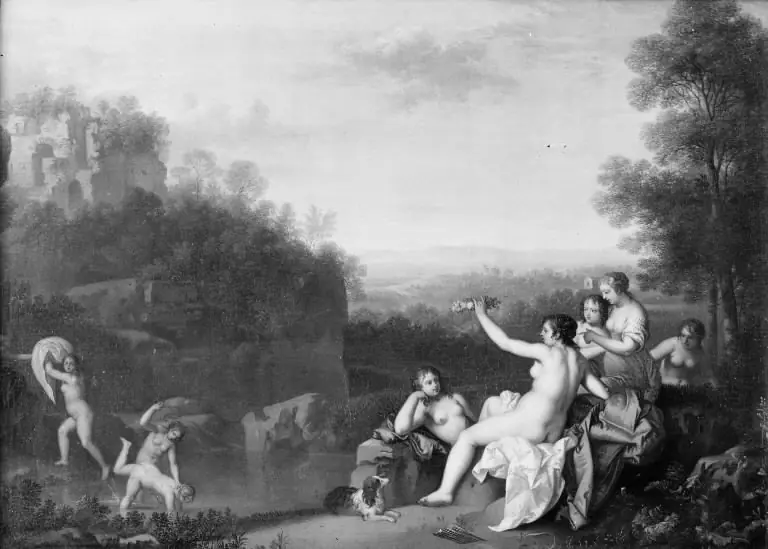
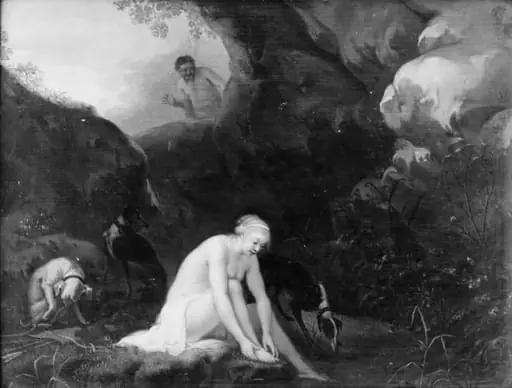
Bathing woman is an oil painting by the Dutch Golden Age artist Ary de Vois. It dates from 1666 and is held in the collection of the Staatliche Kunstsammlungen Dresden.
About this work
Overview
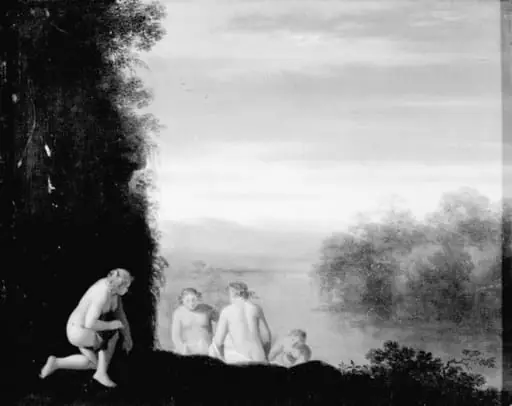
Painted in 1666, this oil on canvas work by Ary de Vois portrays a solitary woman in a quiet riverside setting.
Painted in 1666, this oil on canvas work by Ary de Vois portrays a solitary woman in a quiet riverside setting. The figure stands with her back turned, partially draped in white fabric, holding a cloth to her face. A dog rests beside a hat and folded garment on the ground. The composition emphasizes stillness and intimacy, framed by a soft, wooded landscape and gentle water. The painting is held in the Gemäldegalerie Alte Meister in Dresden.
Subject & Meaning
The figure’s modesty and withdrawn posture suggest a private, unobserved moment rather than a mythological or allegorical scene. The draped cloth and the act of covering the face imply vulnerability or introspection. The presence of the dog and personal items grounds the scene in everyday life, avoiding idealization. The work invites contemplation of solitude and quiet ritual, common in Dutch genre painting of the period.
Technique & Style
De Vois employs chiaroscuro to model the woman’s form with subtle gradations of light and shadow, enhancing volume without dramatic contrast. The brushwork is controlled yet textured, particularly in the fabric and foliage, where slight impasto adds tactile presence. The background is rendered with loose, atmospheric strokes, receding softly to focus attention on the central figure. The palette is muted, dominated by earth tones and pale linen.
History & Provenance
The painting entered the collection of the Gemäldegalerie Alte Meister in the 19th century, likely as part of a broader acquisition of Dutch and Flemish works. Its attribution to Ary de Vois has been consistently supported by stylistic analysis and archival records. No significant alterations or restorations are documented, preserving its original surface and tonal balance.
Context
Created during the Dutch Golden Age, the painting reflects a growing interest in intimate, non-narrative scenes of daily life. While mythological nudes were common in Italian art, Dutch painters often favored realism and restraint. De Vois’s work aligns with contemporaries like Rembrandt and Ter Borch, who explored private moments with psychological nuance and quiet dignity.
Legacy
Though not widely exhibited outside Germany, the painting remains a representative example of de Vois’s restrained approach to the nude. It contributes to the understanding of how Dutch artists adapted classical themes into domestic, unidealized settings. Its preservation in a major European collection underscores its value as a quiet, observational work within 17th-century genre painting.
Artist & collection