Artwork
Pește
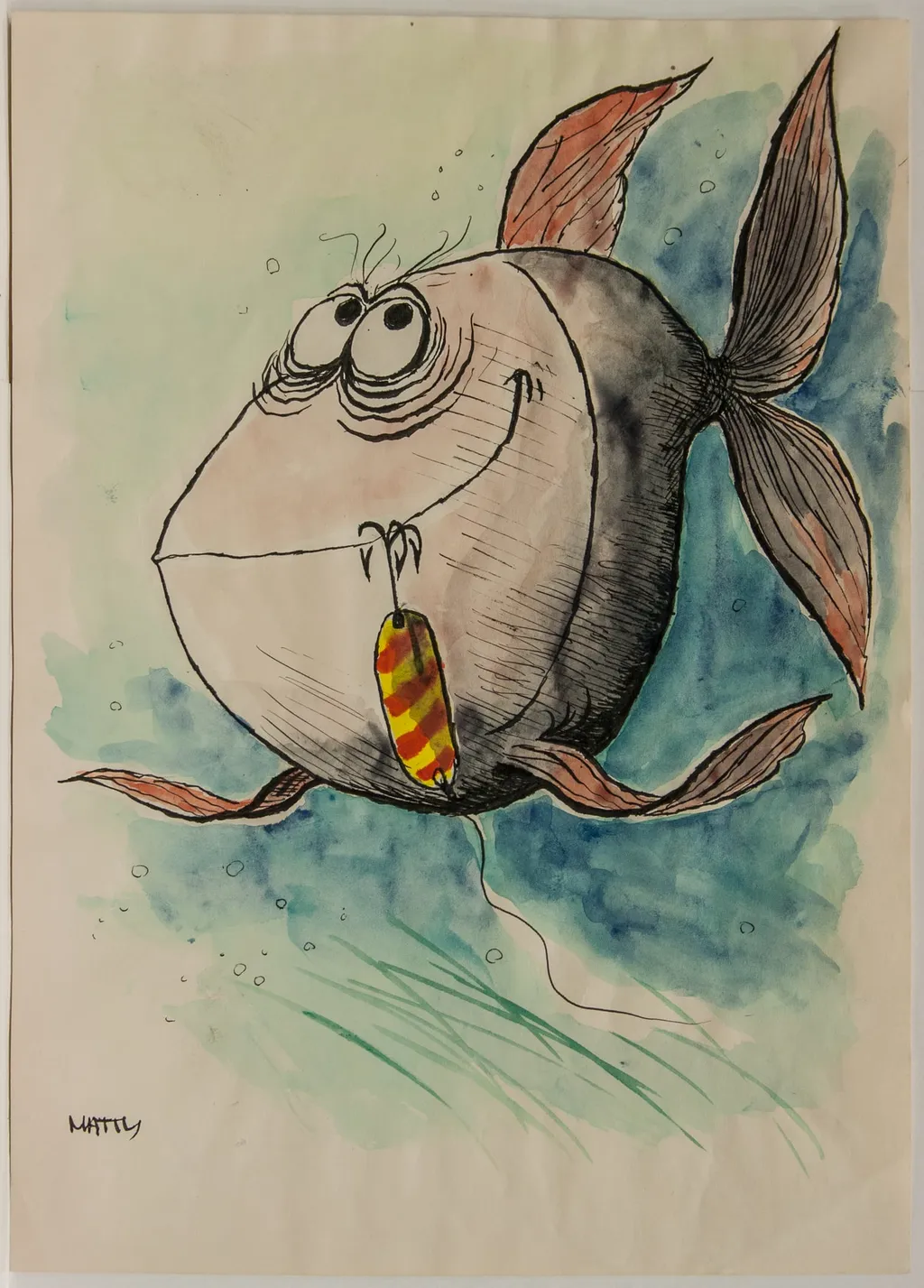
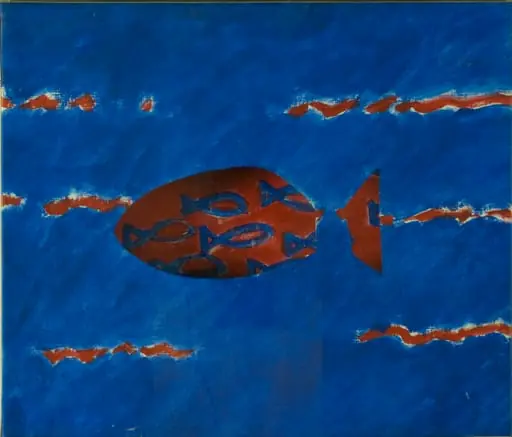
Pește is a print by Matty Aslan. It dates from 1950 and is held in the collection of the Gavrila Simion Eco-Museum Research Institute Tulcea.
About this work
Overview
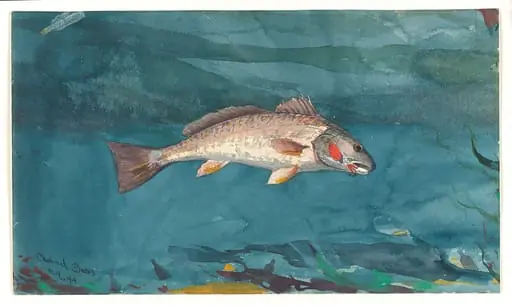
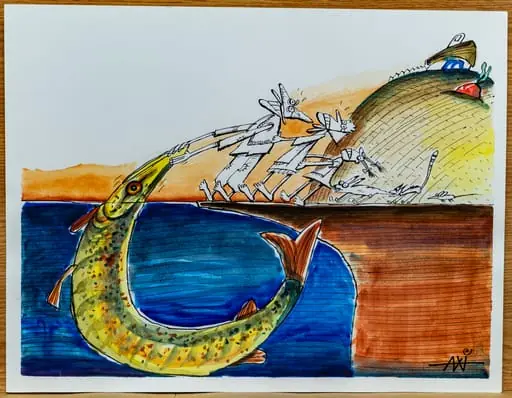
Created around 1950 by Matty Aslan, also known as Matei, this drawing depicts a stylized fish in water. The work is part of the collection at the Museum of Ethnography. Rendered in ink and watercolor, it combines playful imagery with delicate brushwork. The artist signed the piece simply as 'Matty,' suggesting a personal, informal approach to the subject.
Subject & Meaning
The central figure is a large, round fish with exaggerated, cartoon-like features: wide black eyes and a small striped lure hanging from its mouth. Its leafy fins and soft aquatic surroundings suggest a whimsical interpretation of underwater life. The image evokes curiosity rather than realism, possibly reflecting folkloric or personal symbolism, though no explicit narrative is documented.
Technique & Style
The fish’s form is simplified yet expressive, with bold contours and minimal detail, emphasizing charm over anatomical accuracy.
The artist used fluid ink lines and translucent watercolor washes to define the fish and its environment. The water is rendered in muted blues and greens, creating a gentle, atmospheric backdrop. The fish’s form is simplified yet expressive, with bold contours and minimal detail, emphasizing charm over anatomical accuracy. The signature 'Matty' is discreetly placed, reinforcing the work’s intimate character.
History & Provenance
The drawing entered the Museum of Ethnography’s collection in the mid-20th century, likely through the artist’s personal network or local cultural exchanges. No earlier ownership records are publicly documented. Its preservation suggests it was recognized early as a distinctive example of informal, expressive drawing from the period, though its exact origin remains unverified.
Context
Matty Aslan worked during a time when Romanian artists were exploring personal and folk-inspired styles beyond official socialist realism. This piece aligns with a broader trend of informal, whimsical art produced outside institutional frameworks. Its playful tone contrasts with the era’s dominant aesthetic, hinting at private creative spaces where individual expression flourished.
Legacy
Though not widely exhibited beyond institutional holdings, the drawing remains a quiet example of mid-century Romanian outsider art. It reflects an individual’s imaginative engagement with nature, unmediated by academic training. Its continued presence in the Museum of Ethnography underscores its value as a personal artifact within a larger cultural record.
Artist & collection
Artist
Museum
Gavrila Simion Eco-Museum Research Institute Tulcea
Continue through works from the same source collection.