Artwork
A view of the Pool, below London Bridge.
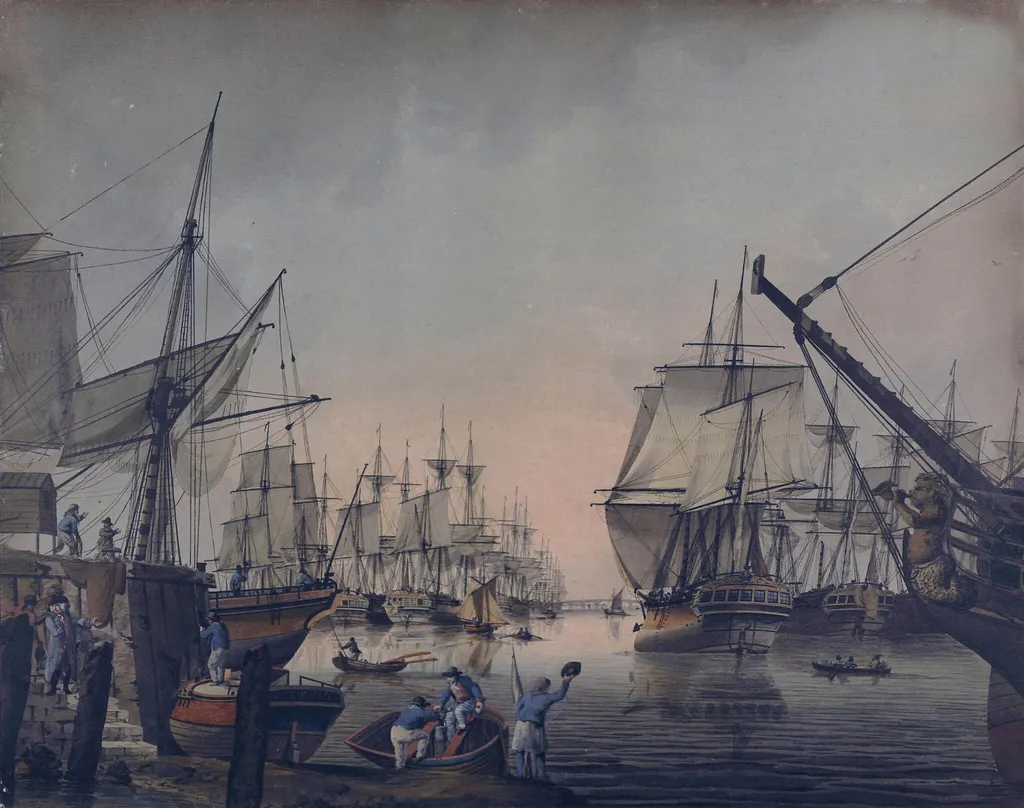
A view of the Pool, below London Bridge. is a watercolor work on paper by the British Romanticist artist Samuel Atkins. It dates from 1790 and is held in the collection of the Victoria and Albert Museum. This watercolour captures a stretch of the River Thames below London Bridge, focusing on the bustling commercial harbor known as the Pool.
About this work
Overview
This watercolour captures a stretch of the River Thames below London Bridge, focusing on the bustling commercial harbor known as the Pool. The scene is rendered in delicate washes, emphasizing the quiet rhythm of daily activity rather than its noise or congestion. Ships of varying sizes fill the water, their masts rising in orderly rows against a soft sky.
Subject & Meaning
The painting portrays the working waterfront of early 19th-century London, where trade and labor defined the urban riverscape. Figures along the docks engage in routine tasks—loading goods, conversing, or waiting—suggesting a sense of quiet industry. The absence of overt drama or spectacle reflects a contemplative view of commerce as an enduring, natural part of the city’s life.
Technique & Style
The artist employs translucent watercolour layers to suggest atmospheric depth and gentle light. Masts and rigging are rendered with precise, fine lines, while the water and sky are softened with blurred washes. This contrast between detail and ambiguity creates a sense of calm realism, avoiding the theatricality common in contemporaneous landscape traditions.
History & Provenance
Created during a period of rapid port expansion, the work likely originated as a topographical record or private commission. Its survival in private collections suggests it was valued for its accuracy and serene tone rather than as a grand public statement. No major institutional acquisition is documented prior to the 20th century.
Context
In the early 1800s, London’s waterfront was a hub of global trade, yet artists often chose to depict it with restraint. This work aligns with Romantic-era tendencies to find quiet dignity in everyday scenes, contrasting with the industrial chaos described in literature. The emphasis on light and space reflects broader shifts in British watercolour practice toward lyrical observation.
Legacy
The painting contributes to a quieter strand of British topographical art that prioritized mood over monumentality. While not widely exhibited in its time, it remains a representative example of how artists captured the Thames as a living, working environment—not as a spectacle, but as a steady presence in the life of the city.
Artist & collection
Artist
Samuel Atkins (fl. 1787–1808), was a British marine painter. Atkins contributed to the Royal Academy between 1787 and 1796. From 1796 to 1804 he was in the East Indies, when he returned to England, and continued to…

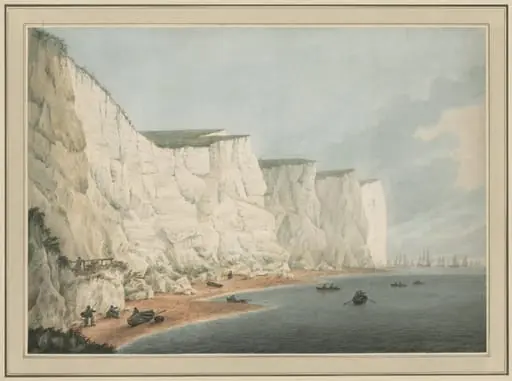
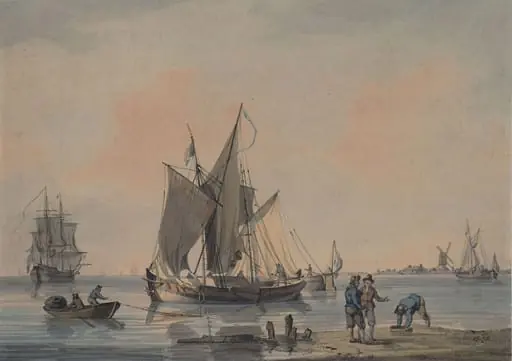 Coast scene with shipping and figures
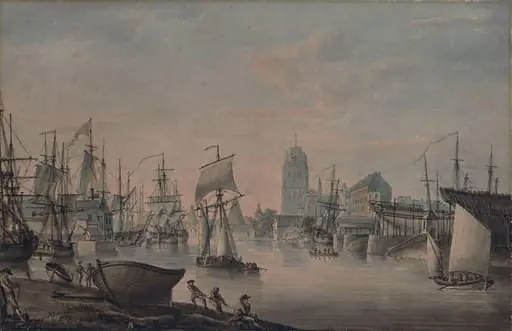 View of Bristol
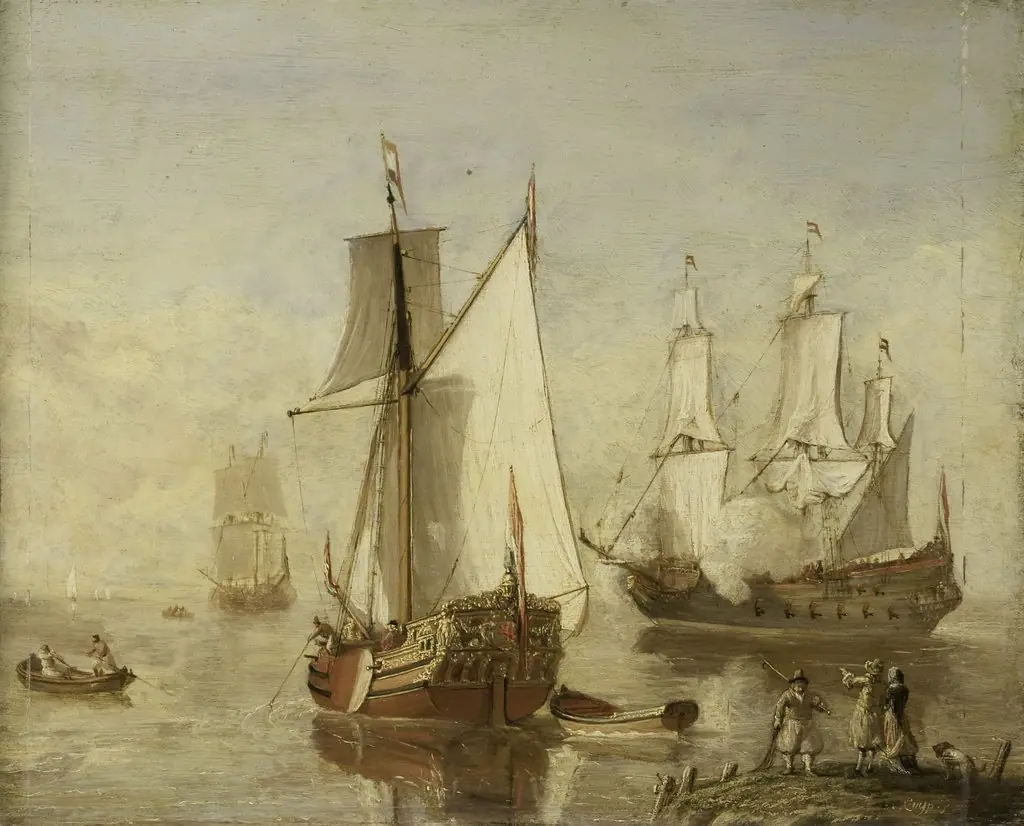 Speeljacht (Pleasure Yacht) and Warship
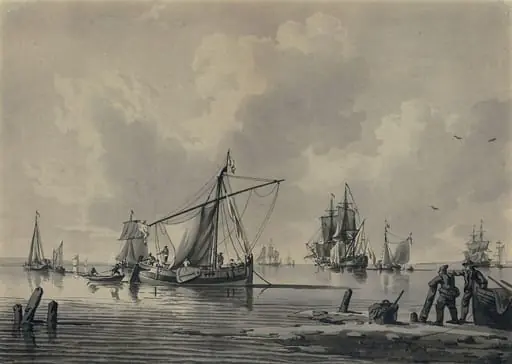 River with Shipping
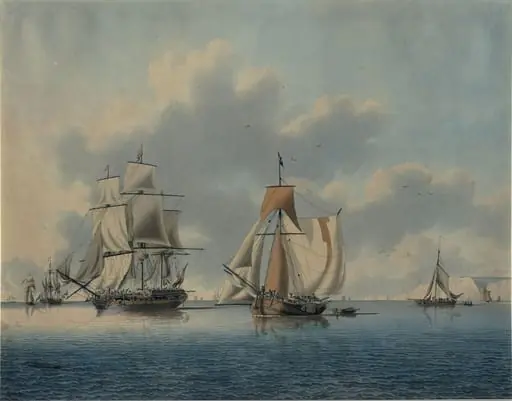 A frigate and Dutch fishing boats off the Isle of Wight
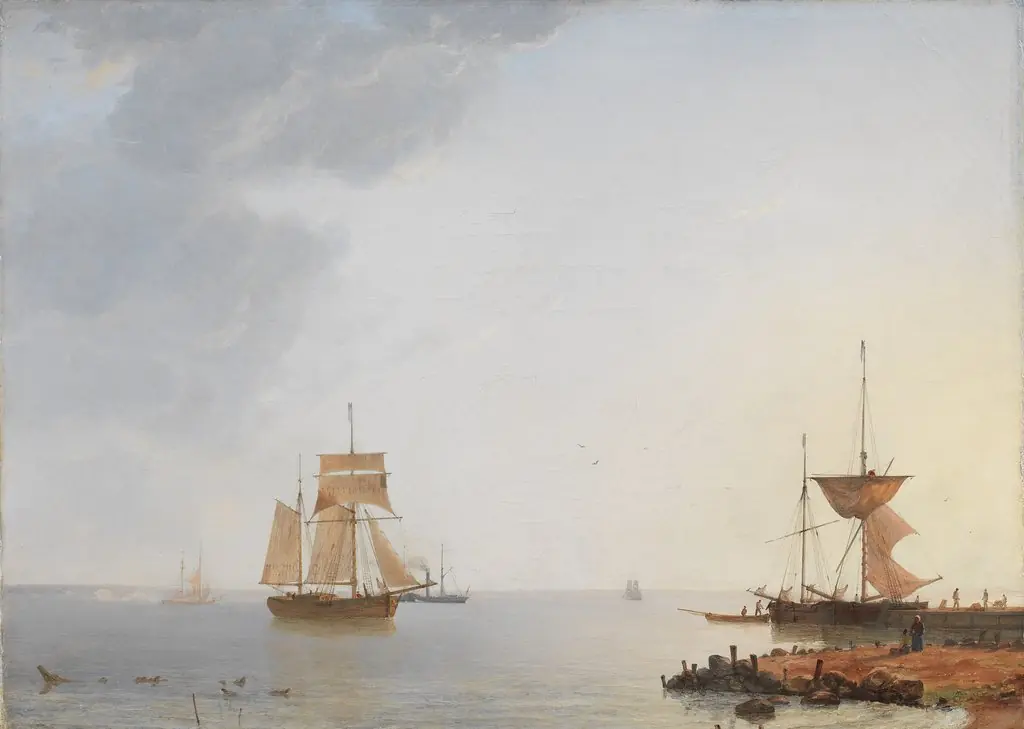 Ships Off the Coast of Zealand. Morning
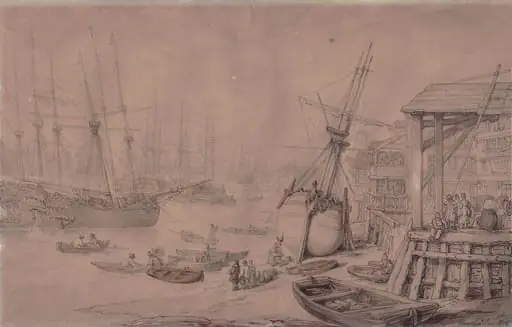 View on the Thames
 Harbor at Sunset
 Shipping: Sunset
 Ships in a calm
 A Russian Fleet at Anchor near Elsinore