Artwork
The Ploughman
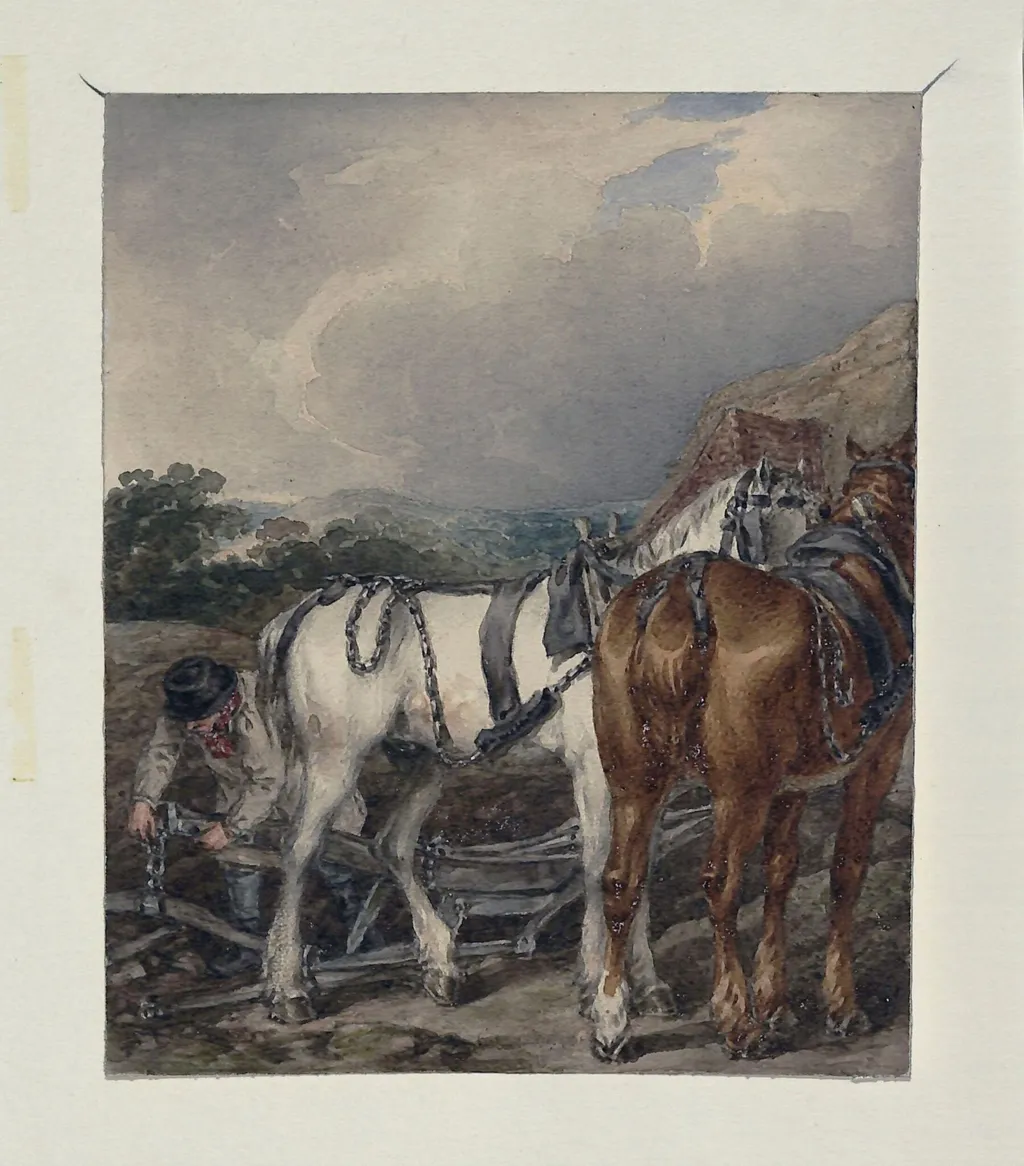
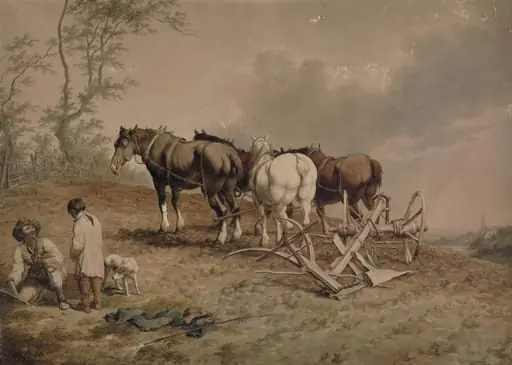
The Ploughman is a watercolor work on paper by the British Romanticist artist Atkinson. It dates from 1800 and is held in the collection of the Victoria and Albert Museum.
About this work
Overview
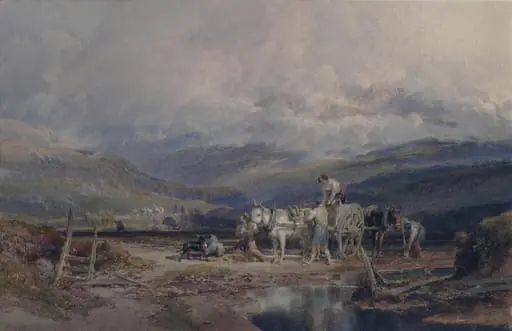
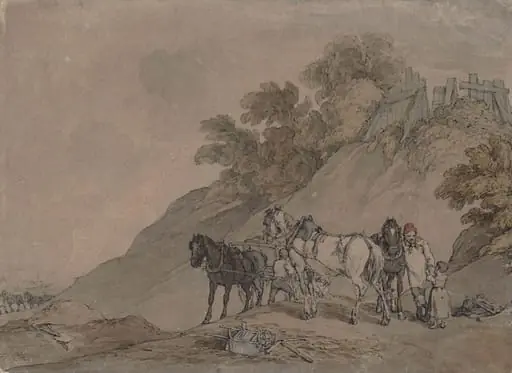
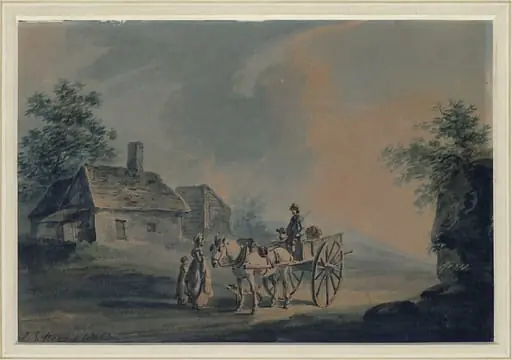
The Ploughman, executed in watercolour in 1800 by the artist Atkinson, is part of the Victoria and Albert Museum’s collection. The work portrays a solitary figure seated upon a plough drawn by a pair of horses, set against a gently undulating landscape that recedes toward a modest village under a muted sky.
Subject & Meaning
The composition foregrounds the physicality of agricultural labour, emphasizing the weariness of both the ploughman and his draft animals. By rendering the farmer’s facial features indistinct, the artist directs attention away from individual identity toward the broader experience of rural toil and endurance.
Technique & Style
Atkinson employs a loose, gestural brushwork characteristic of early nineteenth‑century watercolour, allowing the pigment to bleed and create soft, muddy tones. The visible water marks and unrefined strokes convey a sense of immediacy, reinforcing the painting’s focus on the raw, unvarnished aspects of farm work rather than idealised scenery.
History & Provenance
Created at the turn of the nineteenth century, The Ploughman entered the Victoria and Albert Museum’s holdings as part of its early acquisitions of British watercolours. The work remains catalogued under the museum’s British art collection, providing insight into contemporary visual attitudes toward rural life during the period.
Own this work as a print
Artist & collection