Artwork
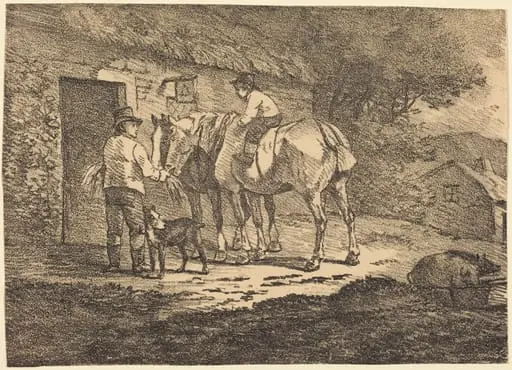
Specimens of Polyautography: Horses at a Cottage Door
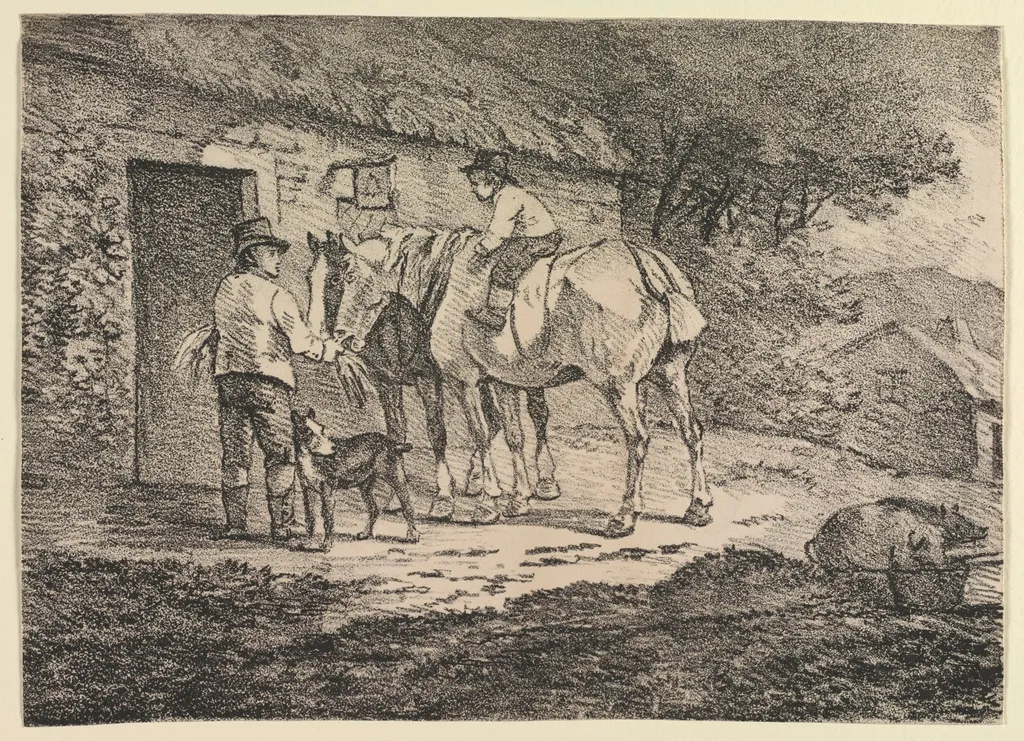
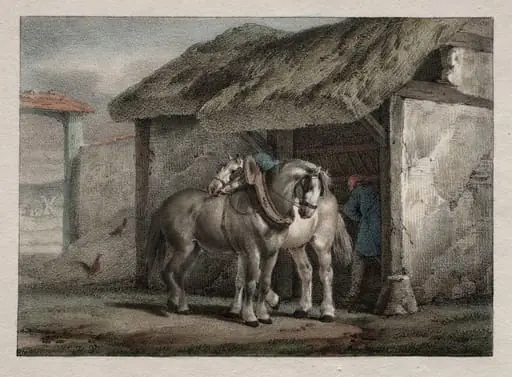
Specimens of Polyautography: Horses at a Cottage Door is a print by the Romanticist artist Conrad Gessner. It dates from 1804 and is held in the collection of the Cleveland Museum of Art.
About this work
Overview
Rendered in delicate, smudged lines with minimal shading, the work avoids dramatic composition, instead capturing an unposed, transient moment.
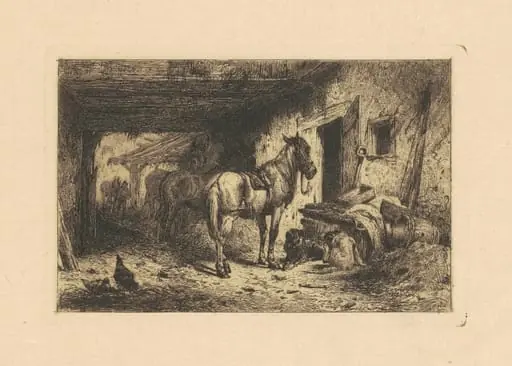
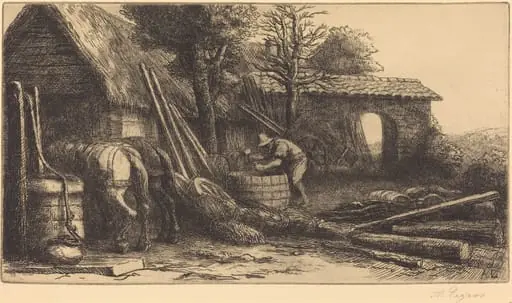
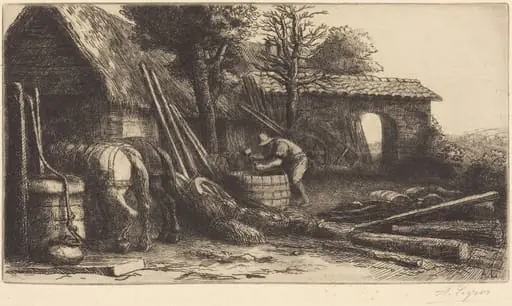
Created in 1804 by Johann Conrad Gessner, this print belongs to the series Specimens of Polyautography. It depicts a quiet rural scene with three horses and two men near a modest stone cottage. Rendered in delicate, smudged lines with minimal shading, the work avoids dramatic composition, instead capturing an unposed, transient moment. The technique emphasizes immediacy over polish, reflecting an interest in ordinary life rather than idealized subjects.
Subject & Meaning
The scene presents unremarkable figures—a man holding reins, another resting by a doorway—surrounded by horses in a muddy yard. There is no narrative climax or symbolic gesture; the power lies in the quiet authenticity of the moment. The awkward grouping and lack of formal arrangement suggest an accidental observation, as if the artist recorded a fleeting pause in daily labor. This understated realism invites contemplation of rural existence without embellishment.
Technique & Style
Gessner employed a soft, linear approach with smudged contours and sparse tonal variation, characteristic of polyautography—a method emphasizing direct drawing over engraving. The absence of strong shadows or detailed textures reinforces the sketchlike quality. Lines are loose and suggestive, conveying form through implication rather than precision. This restrained technique aligns with a preference for spontaneity and observational truth over technical finish.
History & Provenance
The print is part of a small series produced by Gessner in 1804, likely intended as an experimental exploration of printmaking techniques. It entered the collection of The Cleveland Museum of Art through documented acquisition, though its early ownership history remains unclear. As a lesser-known work within Gessner’s output, it survives as a rare example of early 19th-century German printmaking focused on everyday subjects rather than grand themes.
Context
Emerging during the rise of Romanticism, the work reflects a broader cultural shift toward valuing humble, unidealized scenes. While contemporaries like Friedrich elevated nature to the sublime, Gessner’s focus on a modest cottage and working animals aligns with quieter, more intimate observations. His approach resonates with early realist tendencies in German art, where the ordinary was seen as worthy of attention without moral or heroic framing.
Legacy
Though not widely exhibited or reproduced, the print contributes to understanding the diversity of early 19th-century German graphic art. It stands as a quiet counterpoint to more celebrated Romantic works, demonstrating how artists used restrained technique to capture transient moments of rural life. Its preservation in a major museum underscores its value as a document of everyday visual culture during a period of artistic transition.
Artist & collection