Artwork
Death of St. Francis
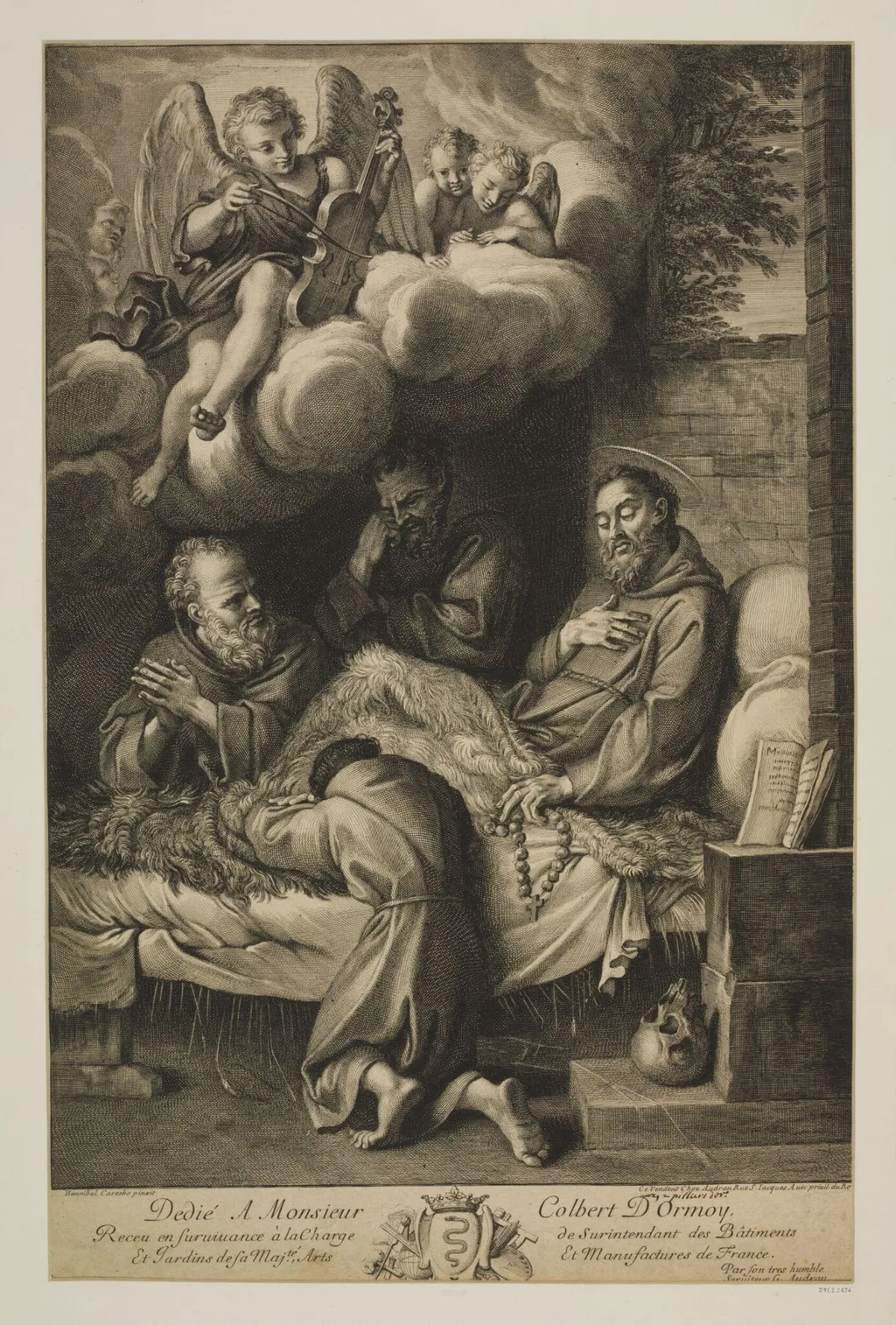
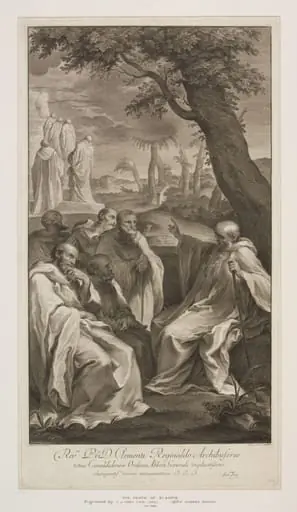
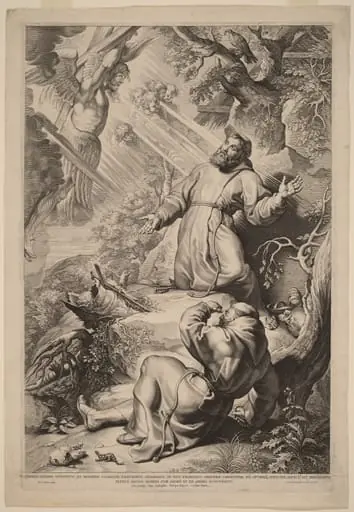
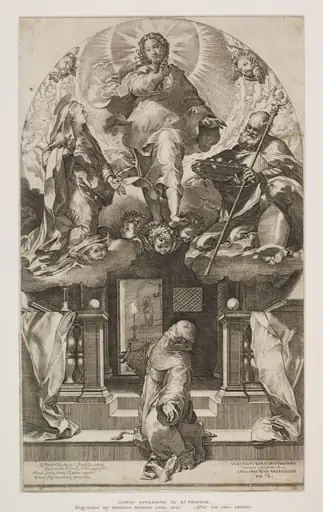
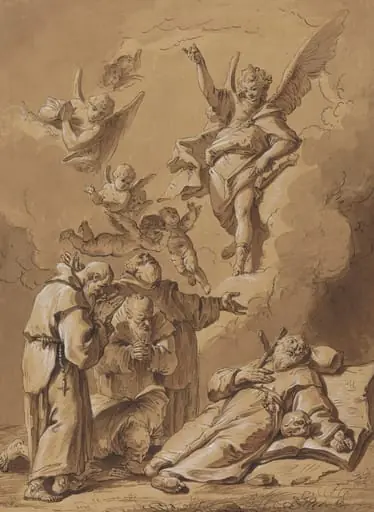
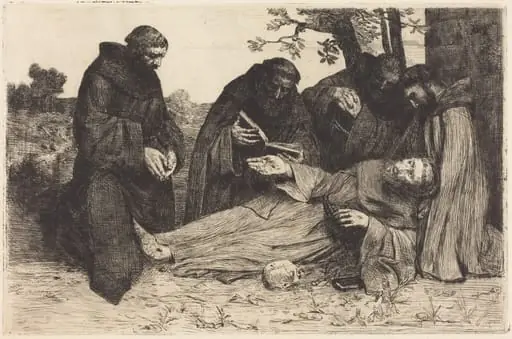
Death of St. Francis is a print by the Baroque artist Gérard Audran. It dates from 1655 and is held in the collection of the Victoria and Albert Museum. This print captures the final moments of St.
About this work
Overview
The work belongs to the tradition of reproductive engraving, translating a painted composition into a detailed black-and-white medium for wider dissemination.
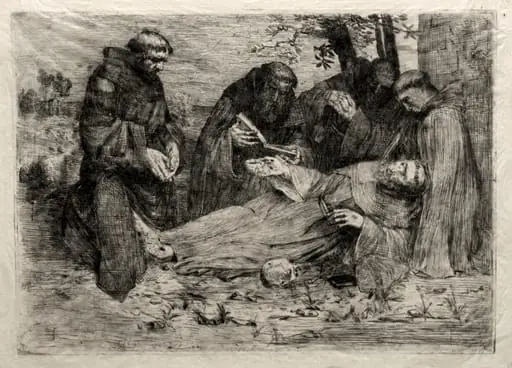
This print captures the final moments of St. Francis of Assisi, rendered in ink on paper by Gérard Audran after a composition by Annibale Carracci. The scene is framed with solemn stillness, emphasizing the saint’s passing amid a group of mourners and celestial figures. The work belongs to the tradition of reproductive engraving, translating a painted composition into a detailed black-and-white medium for wider dissemination.
Subject & Meaning
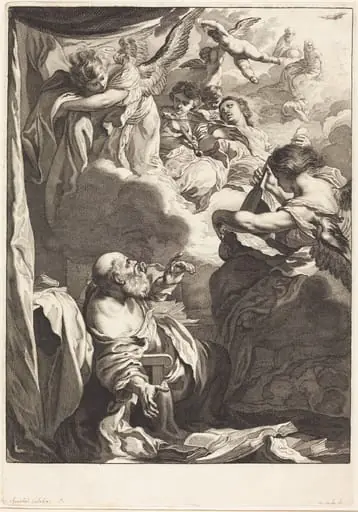
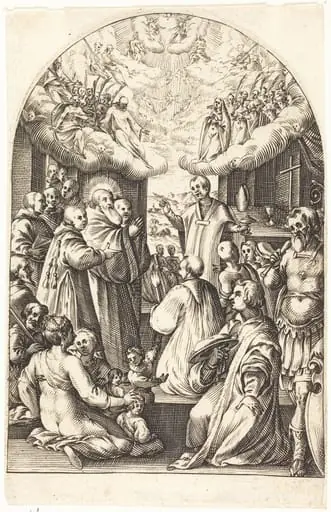
The dying saint lies on the floor, his halo marking his sanctity, surrounded by friars in quiet grief. Above, angels hover on clouds, playing instruments as if offering a heavenly hymn. The presence of a book and a simple pot suggests humility and devotion, core tenets of Francis’s life. The scene conveys transition—not just death, but the soul’s passage from earthly suffering to divine peace.
Technique & Style
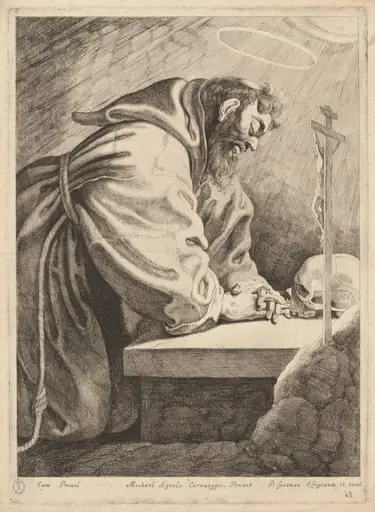
Audran employed fine, controlled lines to render textures—rough wool, fur-lined robes, and the grain of wooden surfaces—with precision. Strong chiaroscuro defines the space, plunging the room into deep shadow while highlighting the saint’s form and the luminous angels. The contrast between earthly darkness and celestial light reinforces the spiritual narrative, characteristic of Baroque visual language adapted to print.
History & Provenance
The image originates from a painting by Annibale Carracci, completed around 1600, which was later engraved by Gérard Audran in the late 17th century. Audran, a renowned French engraver, was known for translating Italian Baroque compositions into prints for European collectors. This reproduction helped circulate Carracci’s vision beyond the confines of private collections and churches.
Context
Created during the height of the Baroque era, the print reflects the Catholic Church’s emphasis on emotional religious narratives following the Counter-Reformation. Depictions of saints’ deaths served as devotional aids, inviting contemplation of mortality and grace. The composition aligns with broader trends in sacred imagery that sought to engage viewers through drama, realism, and spiritual symbolism.
Legacy
Though not widely exhibited today, the print remains an example of how Italian Baroque compositions were disseminated across Europe through skilled engraving. It illustrates the collaborative nature of art production in the 17th century, where painters, engravers, and publishers each contributed to the transmission of religious imagery. Its survival offers insight into devotional practices and print culture of the period.
Artist & collection
Artist
Gérard Audran made engravings of dramatic religious scenes in the late 1600s. His prints show saints in moments of suffering or death, like *Martyrdom of St. Agnes* and *Death of St. Francis*. These works belong to the…