Artwork
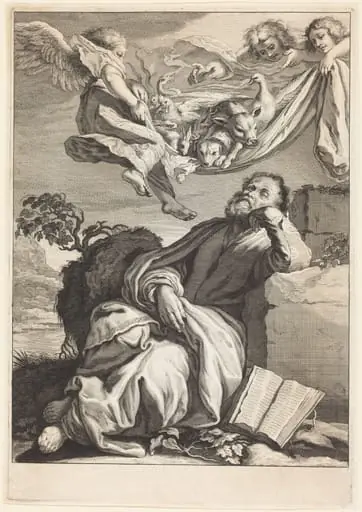
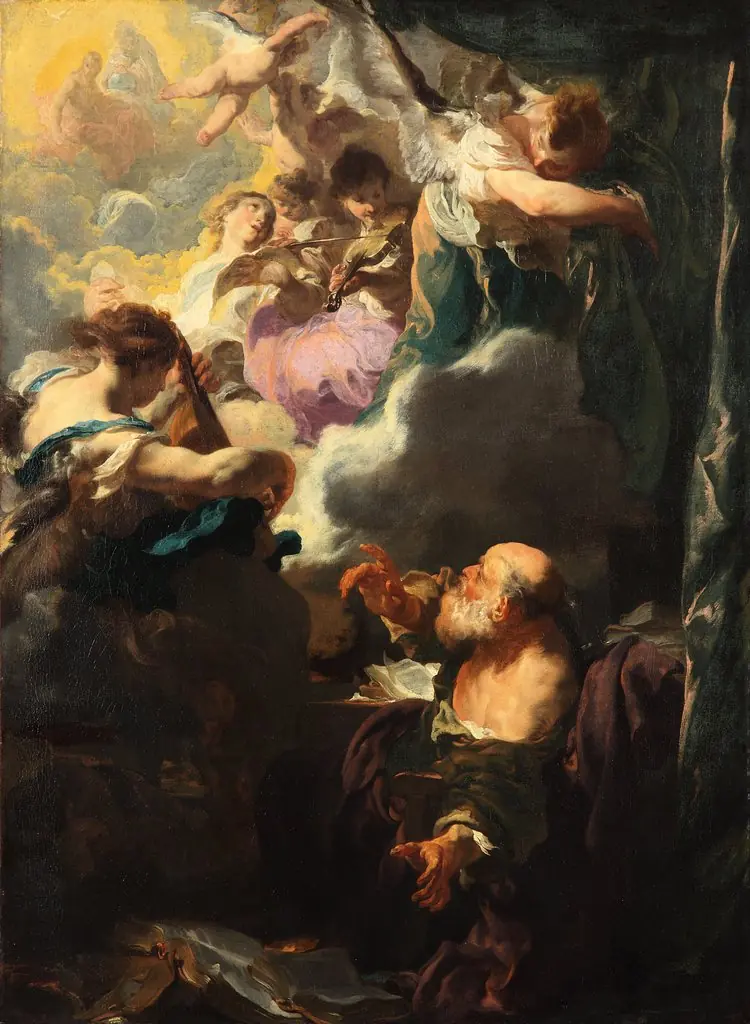
The Ecstasy of Saint Paul
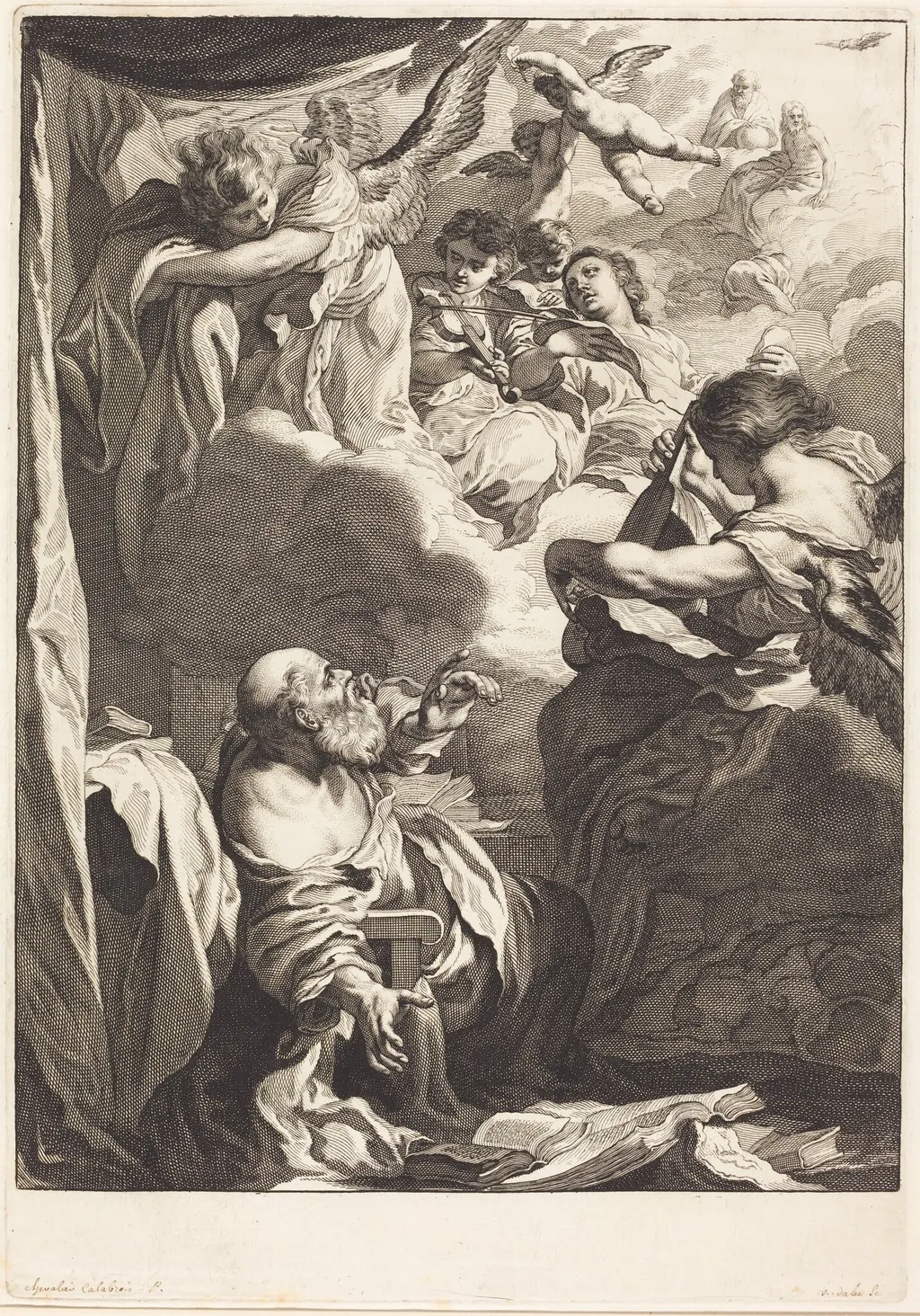
The Ecstasy of Saint Paul is an ink print by the Baroque artist Jeremias Falck. It dates from 1655 and is held in the collection of the National Gallery of Art.
About this work
Overview
The Ecstasy of Saint Paul is a 17th-century print by Jeremias Falck, dating to circa 1655, executed in engraving and etching on laid paper, represented here in a proof state.
Subject & Meaning
Depicting a pivotal religious moment, the print shows Saint Paul in a state of intense spiritual ecstasy.
Depicting a pivotal religious moment, the print shows Saint Paul in a state of intense spiritual ecstasy. Lying on the ground in a white robe, with his right arm raised upwards, the saint's facial expression and body language convey profound emotional and spiritual intensity. Above him, a group of angels, distinguished by their wings and engaged in playing musical instruments, appear to either celebrate or accompany his transcendent experience.
Technique & Style
Technically, the work combines engraving and etching techniques on laid paper. Stylistically, while the source mentions a visual note akin to Baroque (with dramatic lighting and emotional intensity), the print's specific stylistic attributes (e.g., line work, shading) are not detailed here, though the dramatic contrast between the dark background and celestial light is noteworthy.
History & Provenance
Created around 1655 by Jeremias Falck, specific details regarding the print's history, ownership, or exhibition history before its current location are not provided.
Context
Though direct stylistic comparisons are not made in the source, the dramatic lighting and emotional intensity suggest alignment with the broader Baroque movement, which emphasized strong emotions and powerful contrasts in religious subjects.
Legacy
Information on the print's impact, influence, or reception over time is not provided in the source material.
Artist & collection


 The Madonna del Carmelo Appearing to Saint Simon Stock
 Saint Jerome Hearing the Trumpet of the Last Judgment
 Saint Jerome
 The Genius of Franklin (Au Génie de Franklin)
 Saint Jerome Hearing the Trumpet of the Last Judgement
 The Holy Family Adored by Angels (The Large Nativity)
 Le Songe d'Amour (Love's Dream)
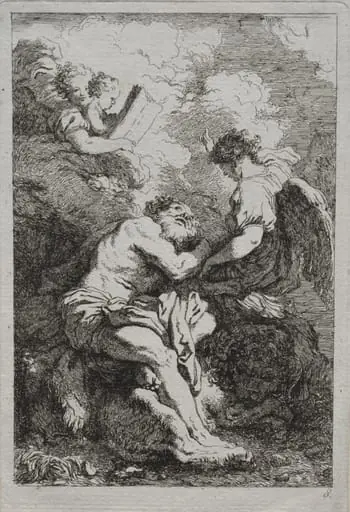 Saint Jerome
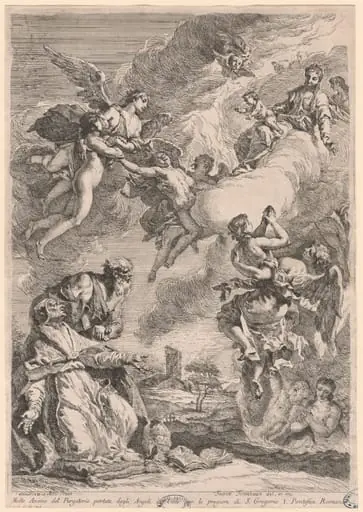 Pope Gregory the Great and Saint Vitale Interceding for the Souls in Purgatory
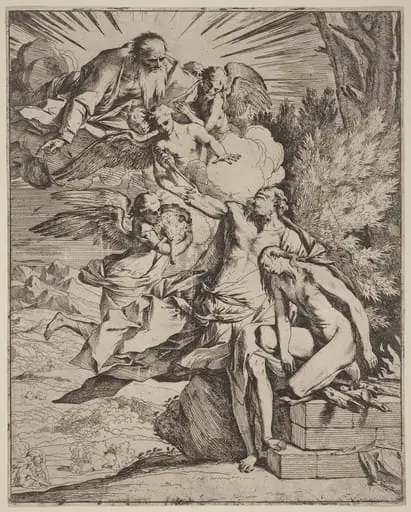 The Sacrifice of Abraham
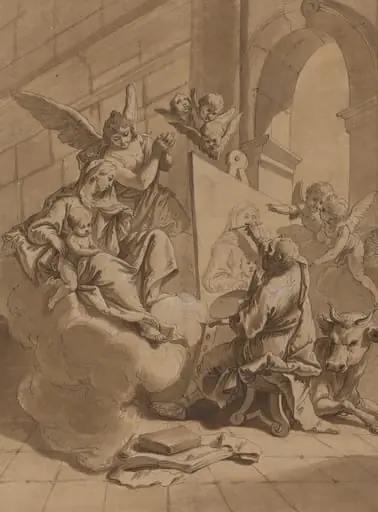 Saint Luke Painting the Virgin
 The rapture of Saint Paul