Artwork
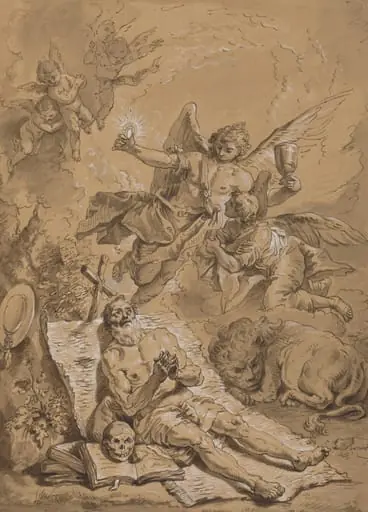
Death of a Holy Friar
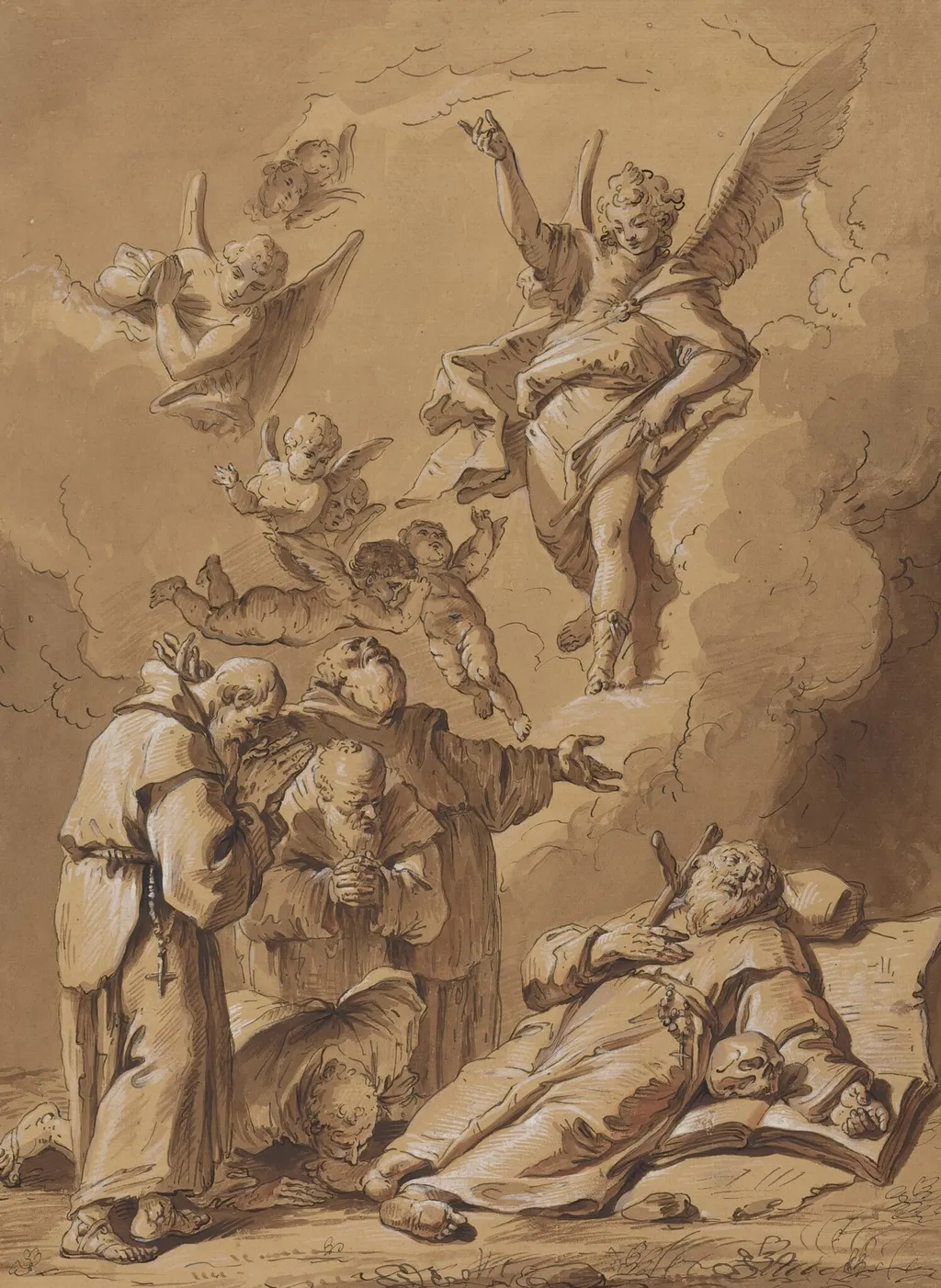
Death of a Holy Friar is an ink drawing by the Baroque artist Unknown. It dates from 1701 and is held in the collection of the National Gallery of Art.
About this work
The painting is called "Death of a Holy Friar" and was made in the 18th century.
It's an interesting work because it was created during a time when art was often used to tell stories and convey emotions. The use of brown ink and wash gives the painting a sense of depth and texture.
You can learn more about this style by looking into the Baroque movement.
Overview
This eighteenth-century drawing, executed in pen, brush, and brown ink with white heightening on prepared laid paper, depicts a solemn religious scene. The work reflects the era’s emphasis on narrative and emotional expression in art, employing a restrained yet evocative technique to convey its subject.
Subject & Meaning
The composition centers on the final moments of a Franciscan friar, a theme common in Counter-Reformation art. Such imagery served to underscore piety, mortality, and the transience of earthly life, inviting contemplation of spiritual devotion and the promise of salvation.
Technique & Style
The artist employs a combination of fluid ink washes and precise penwork to create volume and atmosphere. The use of brown tones, heightened with white, lends the scene a somber, almost monochromatic depth, aligning with Baroque conventions that favored dramatic chiaroscuro and tactile realism.
Context
Produced during a period when religious art often sought to inspire devotion, this drawing may have been intended for private meditation or as a preparatory study. The Baroque movement’s influence is evident in its emotional intensity and attention to human vulnerability.
History & Provenance
Little is documented about the drawing’s early ownership, though its materials and style place it firmly in the eighteenth century. The use of prepared laid paper suggests it was created with care, possibly for a patron or within a workshop setting.
Artist & collection

 Domestic Scene
 Giacomo and Cardinal Marco, investing Andrea, Abbot of San Zeno, with his Benefice
 The Nymph of Fontainebleau
 Portrait of a Woman
 Madonna and Child with Saints in the Enclosed Garden
 Venus and Minerva
 Family Group of Four on Sofa
 Wall painting from Room H of the Villa of P. Fannius Synistor at Boscoreale
 Funeral Procession of a Saint with Angels
 The Education of the Virgin
 Birth of the Virgin
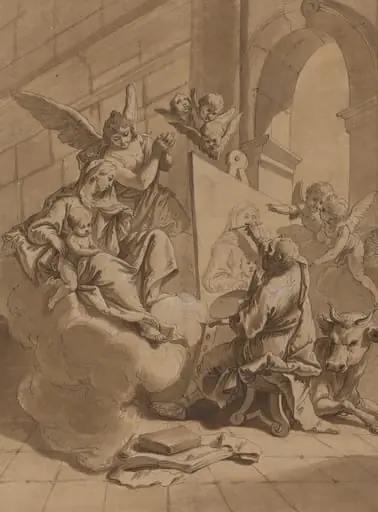 Saint Luke Painting the Virgin
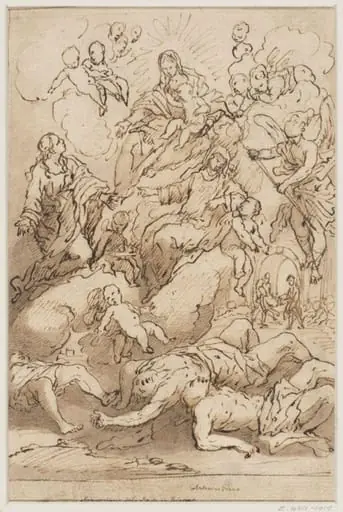 Anniversary of the Plague at Palermo
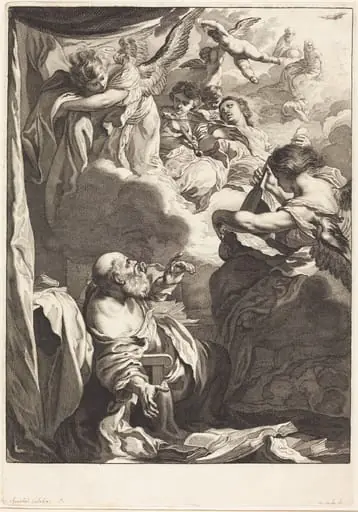 The Ecstasy of Saint Paul
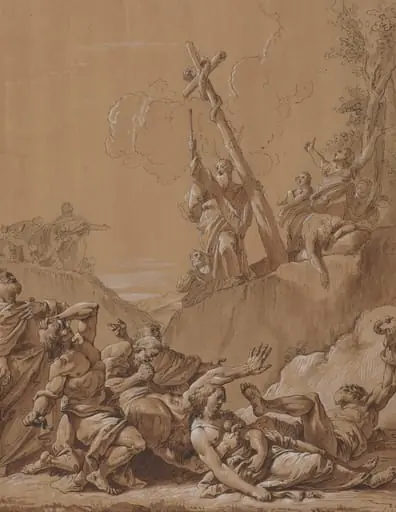 Moses and the Brazen Serpent
 God the Father Standing in Clouds Surrounded by Angels and Putti
 Last Communion of Saint Jerome