Artwork
Antoine Coyzevox
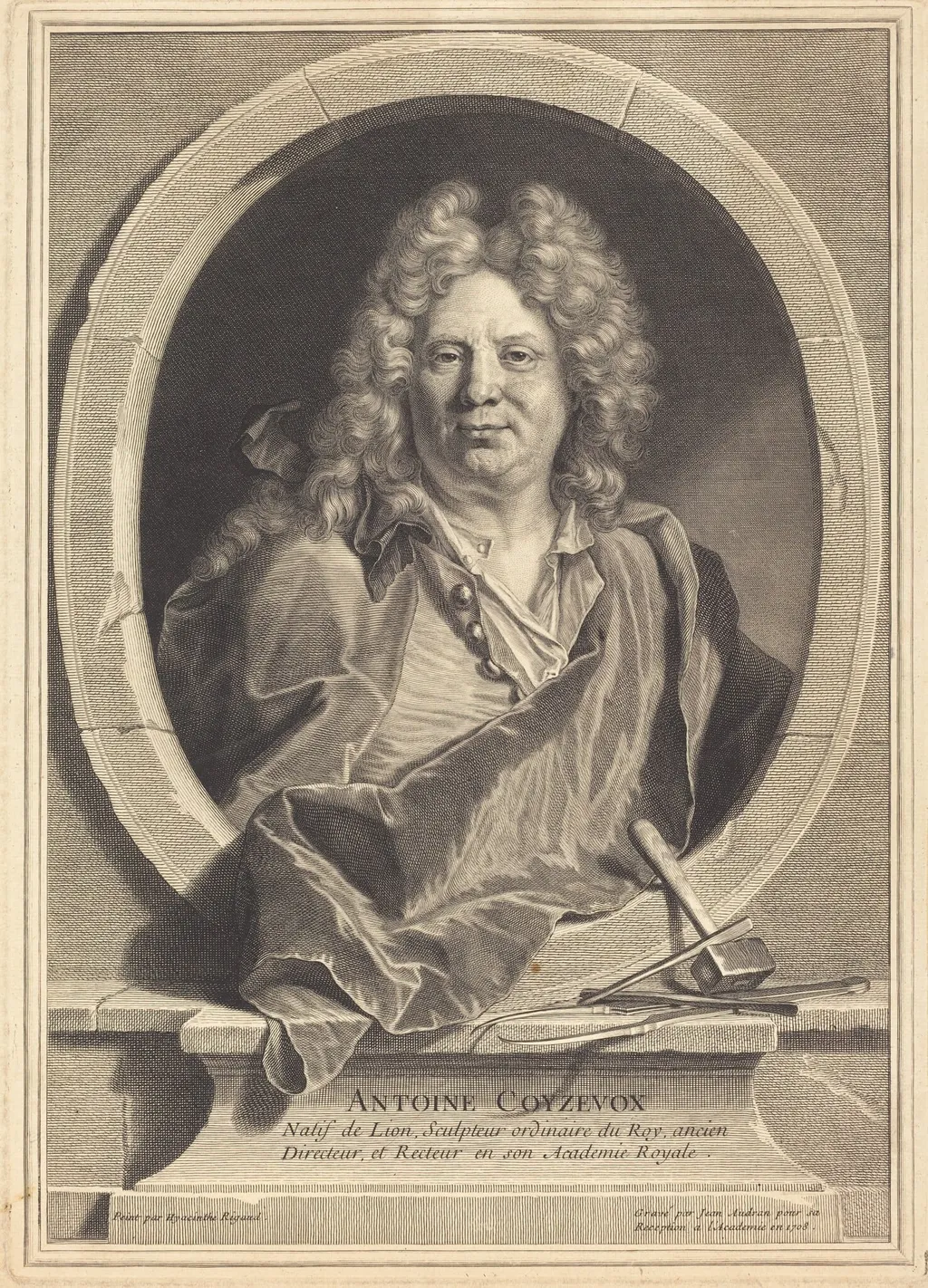
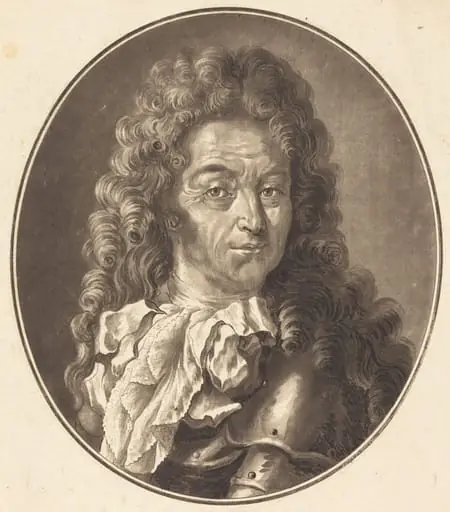
Antoine Coyzevox is an ink print by the Baroque artist Jean Audran. It dates from 1708 and is held in the collection of the National Gallery of Art.
About this work
Overview
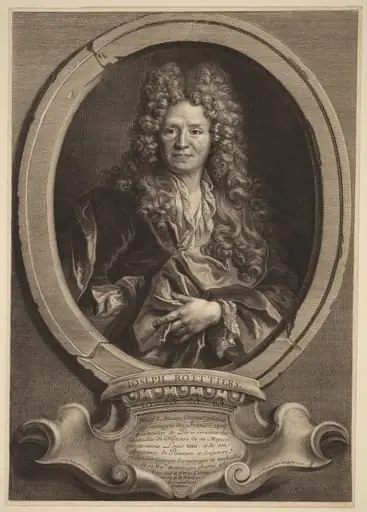
Jean Audran’s 1708 print titled “Antoine Coyzevox” is an engraving with etching executed on laid paper. The image presents a portrait‑type figure, rendered in monochrome, and is bounded by a weathered oval frame that shows signs of cracking.
Subject & Meaning
The central figure is a man with curly hair, dressed in a dark robe that falls over his left shoulder, beneath a lighter‑coloured shirt. He is shown from the chest upward, his head turned slightly to the right, and he looks directly at the viewer, creating an intimate engagement.
Technique & Style
Audran combined line engraving with etching, allowing both precise contour work and softer tonal areas. The dark background contrasts with the illuminated face and clothing, a hallmark of Baroque visual drama that emphasizes chiaroscuro and texture.
History & Provenance
Created in 1708, the print reflects Audran’s activity in early‑18th‑century French printmaking. It was produced on laid paper, a common support for fine prints of the period, and has survived with its original border showing wear that suggests extensive handling.
Context
The work belongs to the Baroque era, a time when artists employed strong lighting effects and detailed surface rendering to convey depth and emotional presence. Audran’s portrait aligns with contemporary French portrait prints that aimed to capture both likeness and status.
Artist & collection