Artwork
Fahrendes Volk beim Aufbruch (Nachfolger)
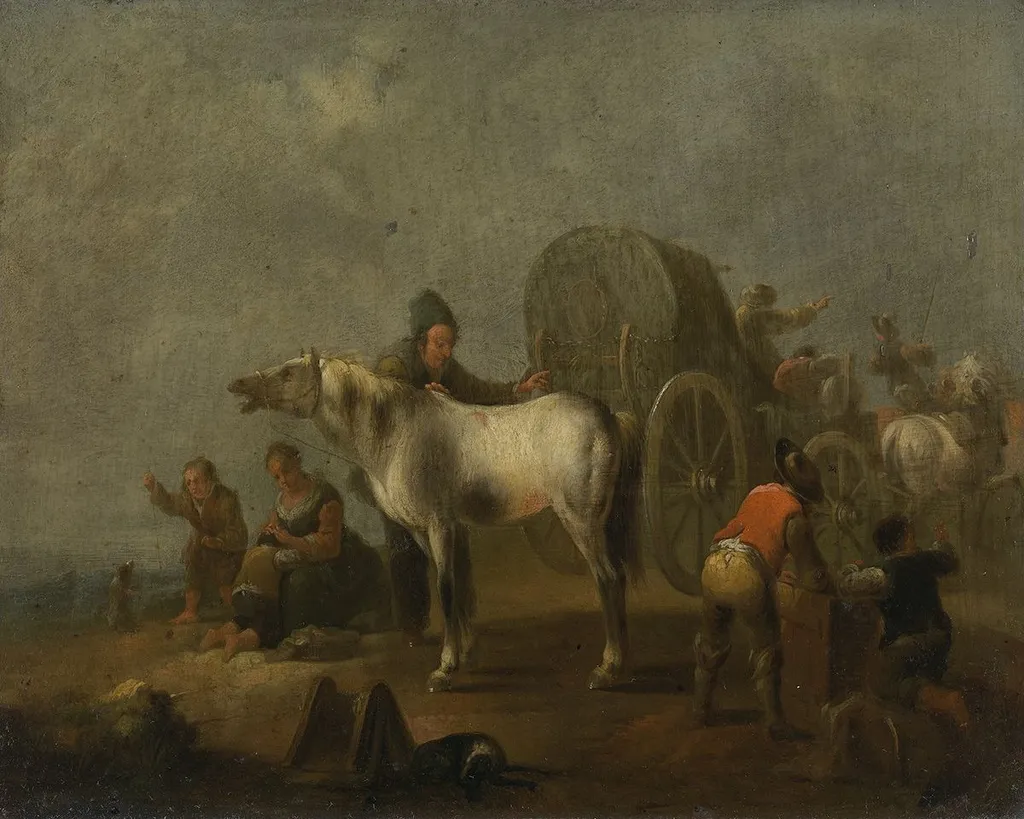
Fahrendes Volk beim Aufbruch (Nachfolger) is an unspecified painting by the Rococo painting artist August Querfurt. It dates from 1750 and is held in the collection of the Bavarian State Painting Collections.
About this work
Overview
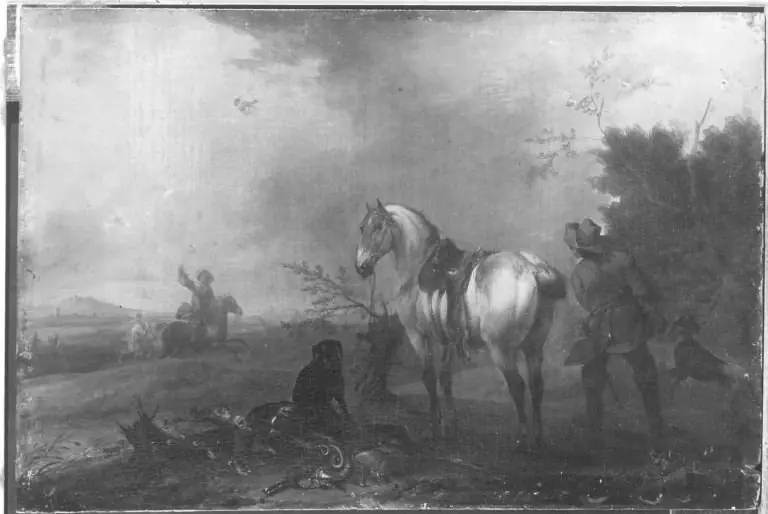
Created circa 1750, *Fahrendes Volk beim Aufbruch (Nachfolger)* is an oil painting by Austrian artist August Querquer. Executed in the Rococo era, the work belongs to the Alte Pinakothek’s holdings. It portrays a bustling roadside scene where people and animals interact in a moment of departure, capturing a slice of eighteenth‑century everyday life.
Subject & Meaning
The composition centers on a man attending to a white horse while figures gather around, some seated, others standing. A large cart looms in the distance, reinforcing the theme of movement and travel. Rather than a grand historical narrative, the painting emphasizes ordinary activity, suggesting the rhythms of rural or military itinerancy.
Technique & Style
Light falls across the figures, creating subtle chiaroscuro that models forms without dramatic contrast.
Querquer employs a lively palette typical of Rococo, with swift brushwork that conveys motion. Light falls across the figures, creating subtle chiaroscuro that models forms without dramatic contrast. The handling of animal anatomy reflects his early training under his father, a specialist in landscapes and animal subjects, while the overall arrangement shows a balanced, yet dynamic, spatial organization.
History & Provenance
August Querquer, trained first by his father and later under the Augsburg painter Rugendas, built a reputation for scenes of soldiers, cavalry and hunts. This particular canvas entered the Alte Pinakothek collection, where it remains displayed as part of the museum’s representation of mid‑eighteenth‑century Austrian genre painting.
Context
The work aligns with the broader European fascination with military and travel motifs during the mid‑1700s. Influences from Dutch battle painters such as Philips Wouwerman are evident in the detailed rendering of horses and the lively crowd. Within the Rococo period, the painting reflects a shift toward lighter, more informal subject matter, focusing on the quotidian rather than heroic spectacle.
Artist & collection
Artist
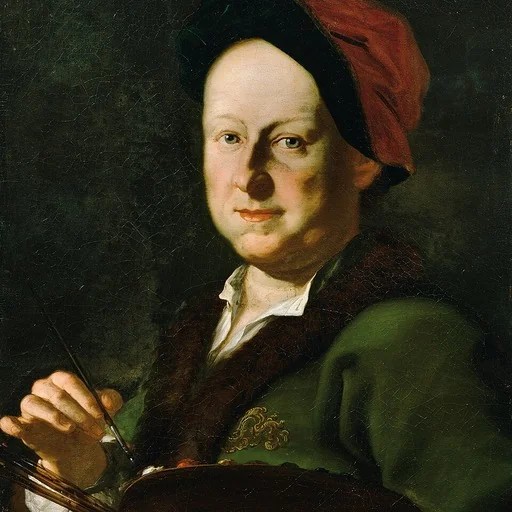
August Querfurt (1696, Wolfenbüttel – 1761, Vienna) was an Austrian painter. He painted primarily soldiers and battle scenes. He was first instructed by his father, Tobias Querfurt, a landscape and animal painter, and…

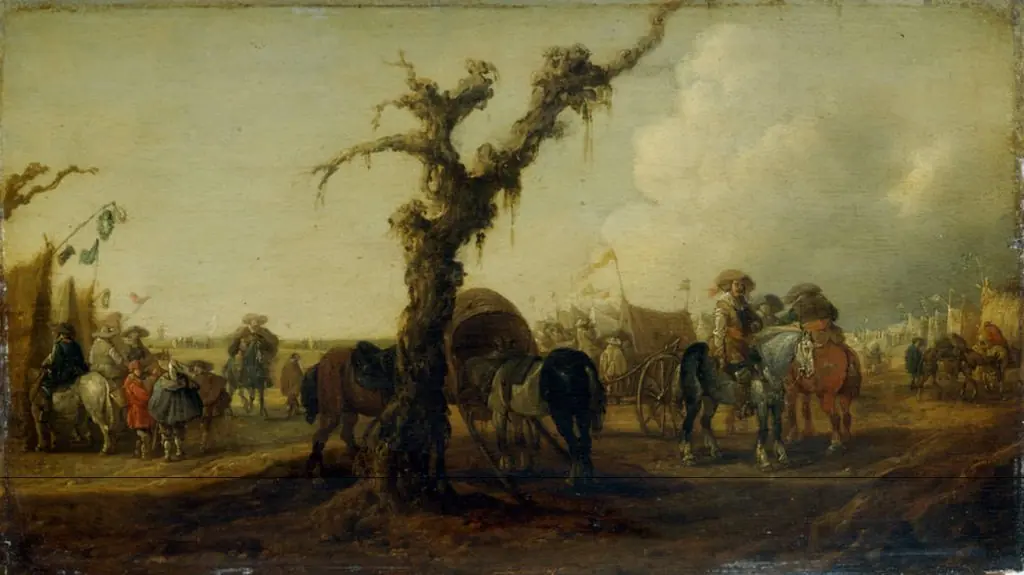 Military camp
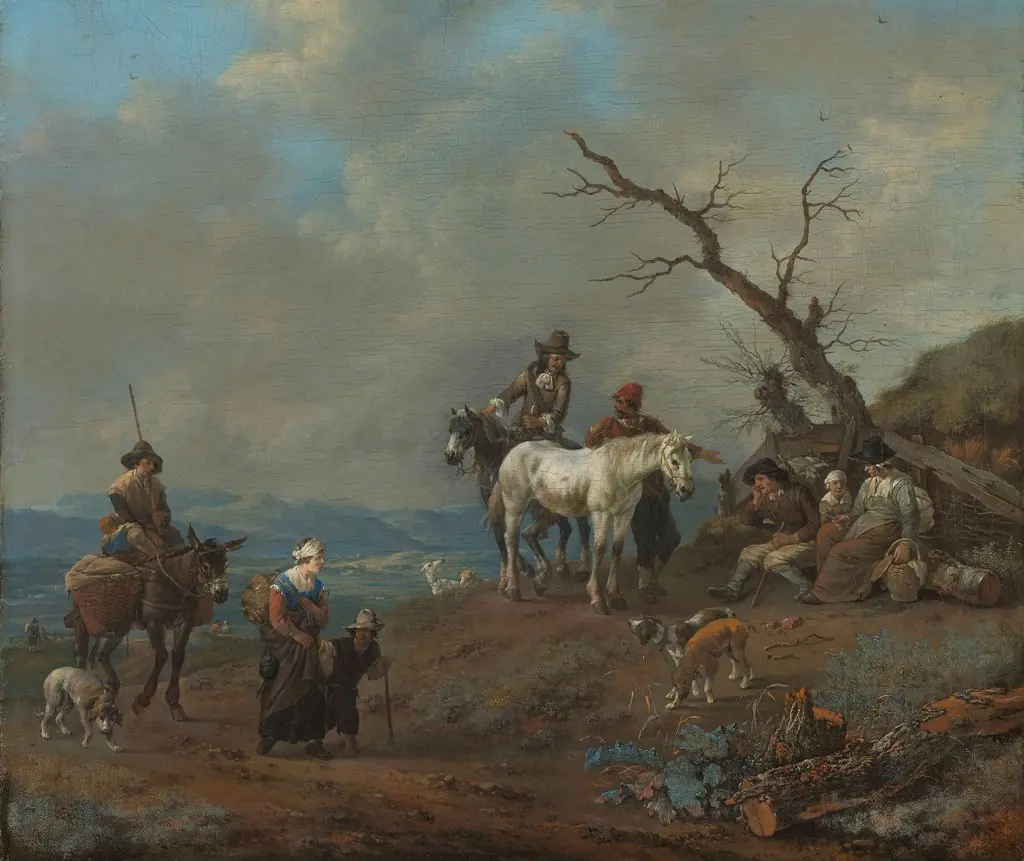 Country road with hunter and peasants
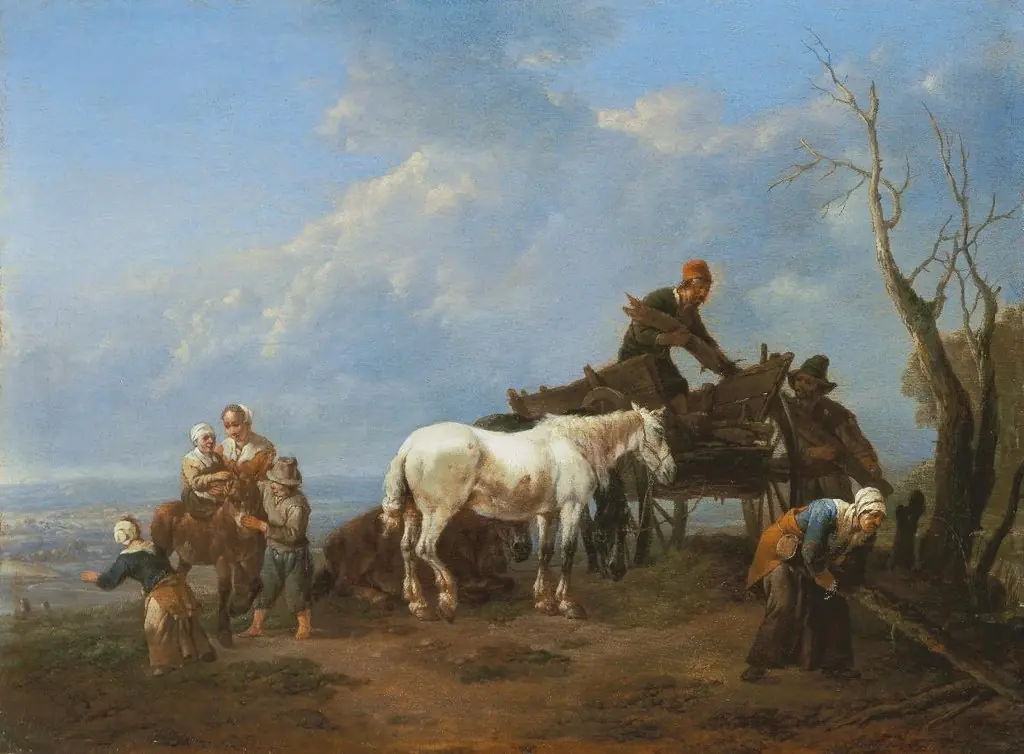 Bauern beim Sammeln von Holz
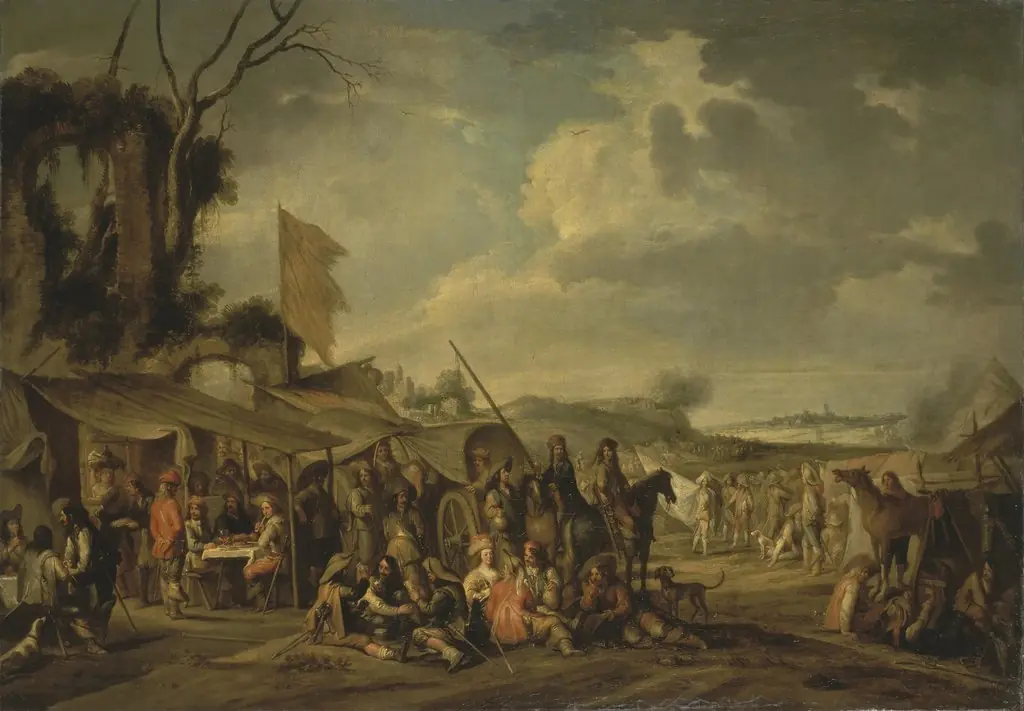 A Camp by the Ruins
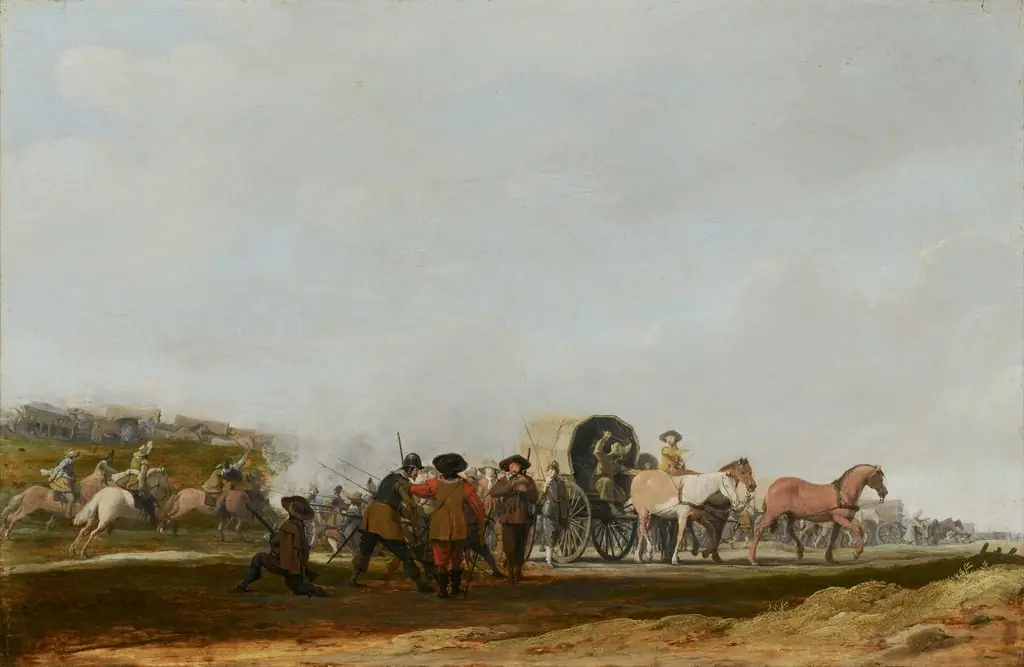 Ambushing an Army Convoy
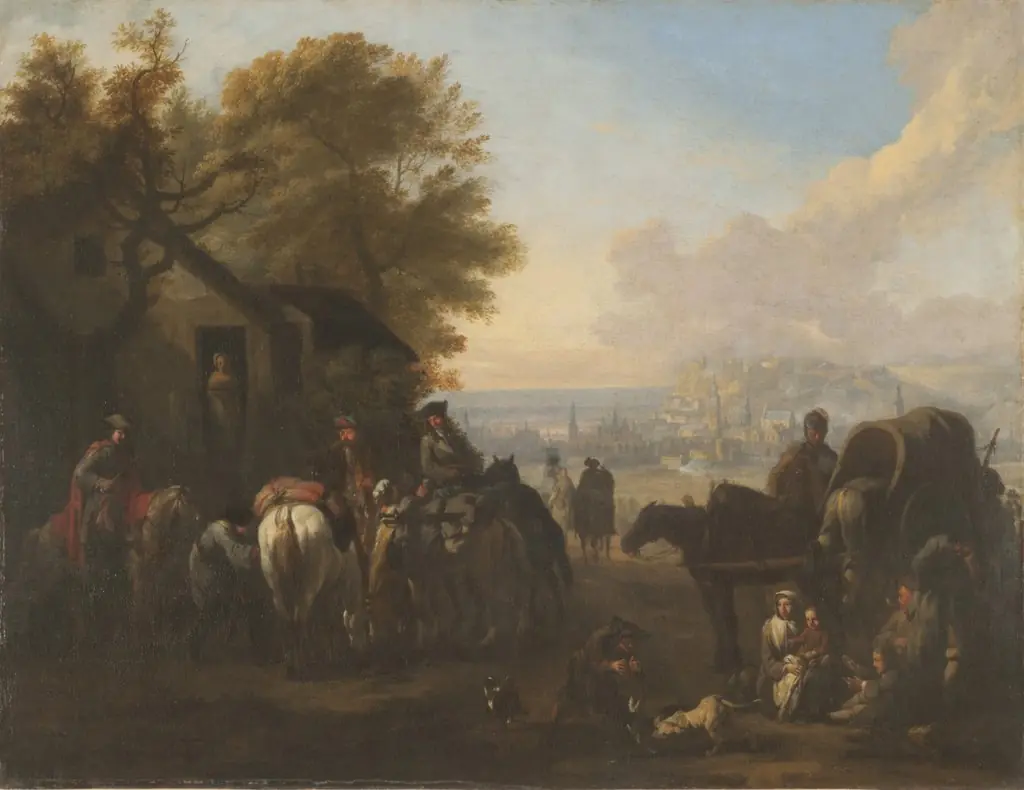 Travelers in Front of the Inn
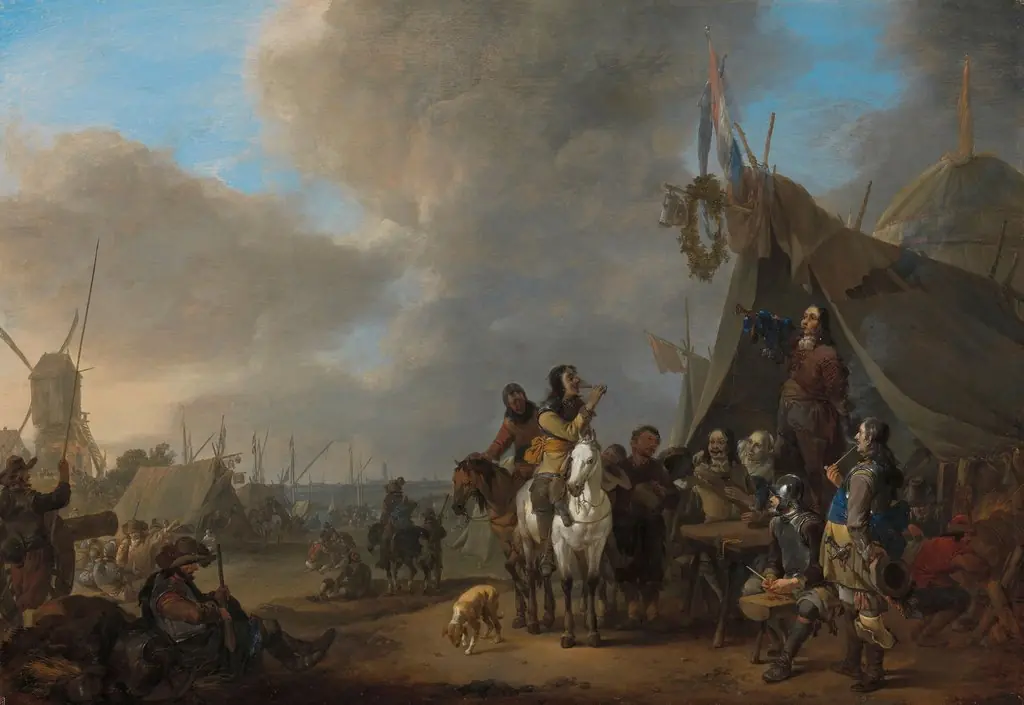 Army camp
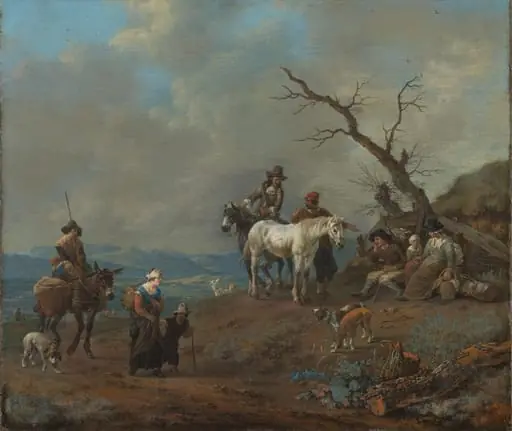 Country Road with Hunter and Peasants
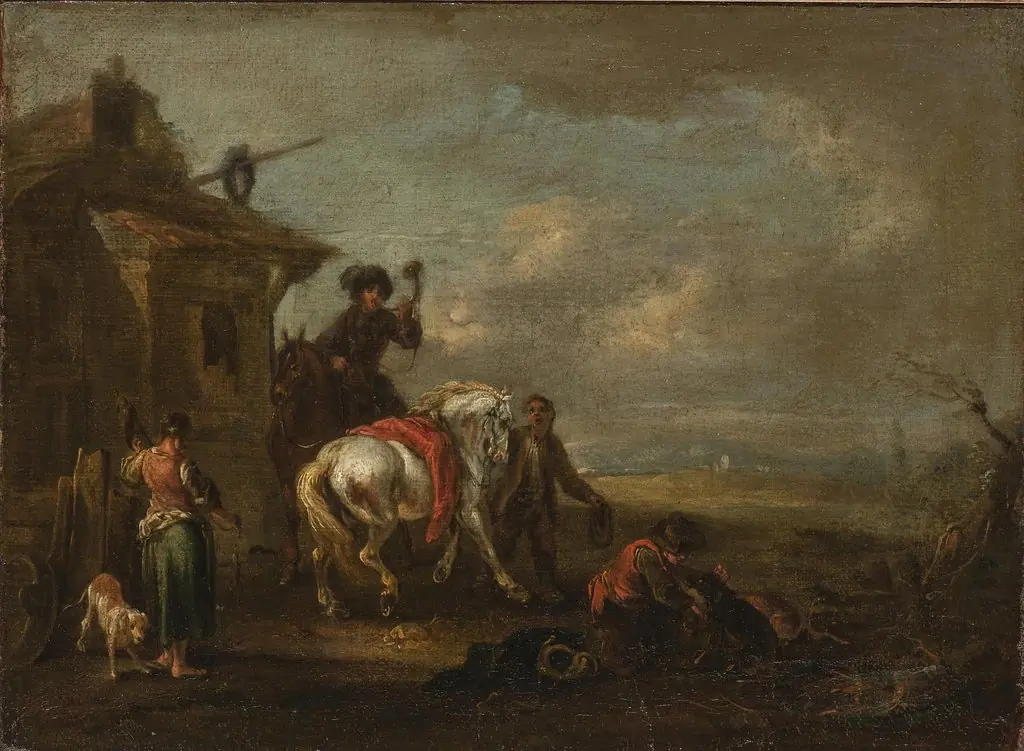 Hunters by a Tavern
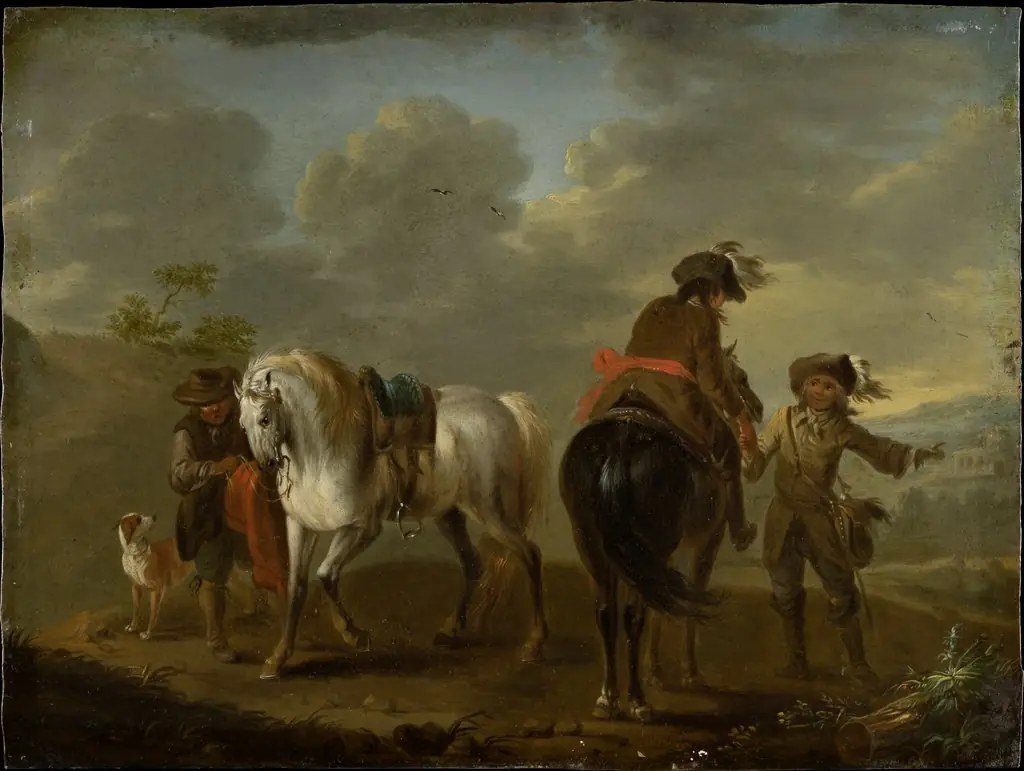 Landscape with Riders
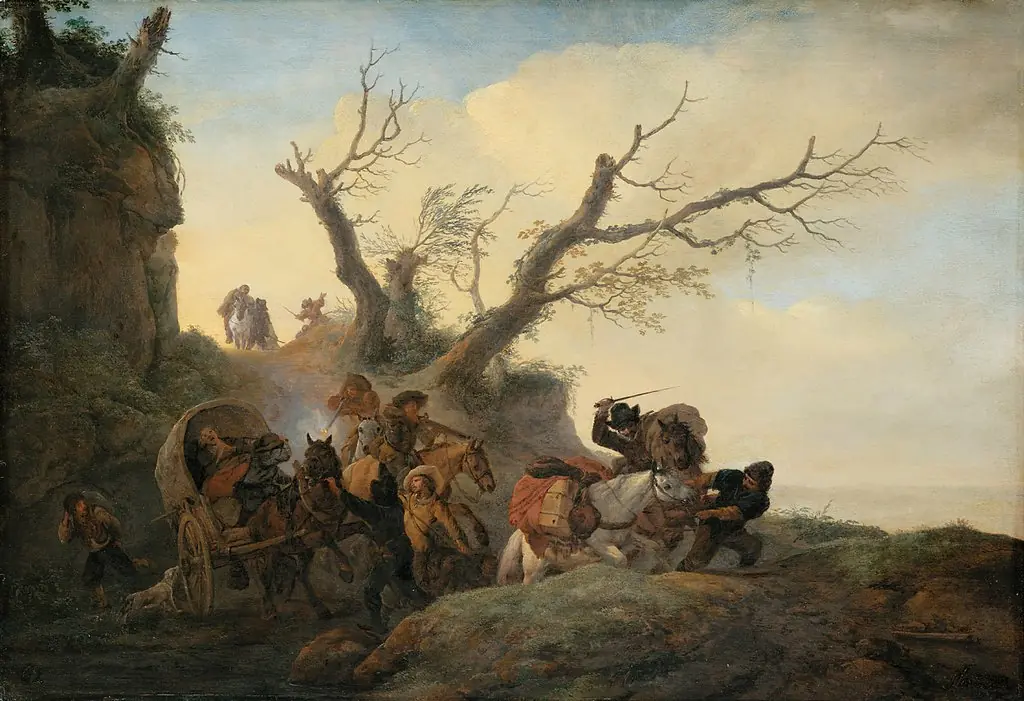 Robbers attacking Travellers
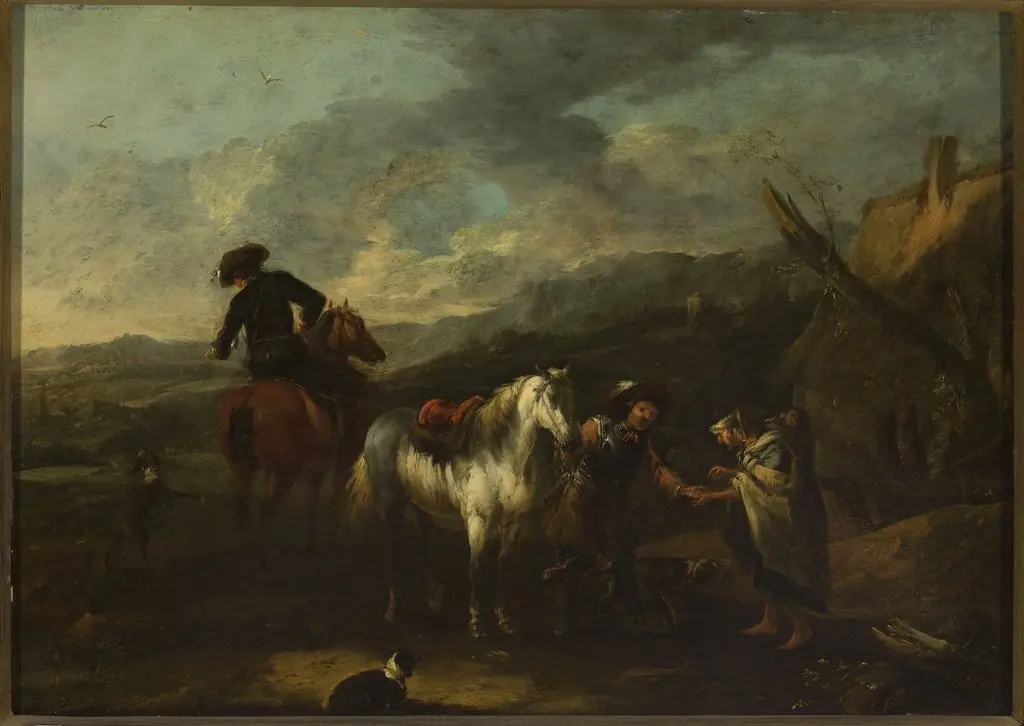 Horsemen and a beggar woman against landscape