Artwork
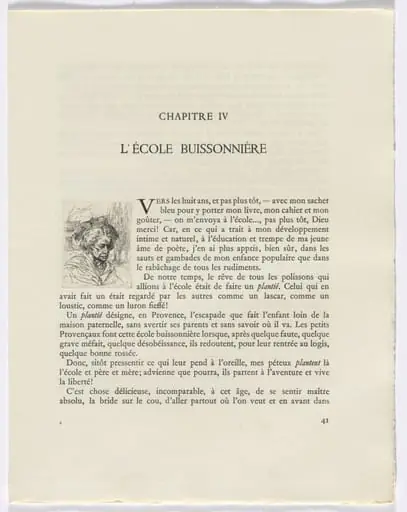
Frédéric Mistral: Mémoires et Recits by Frédéric Mistral: bust of a woman (page 41) DUPLICATE
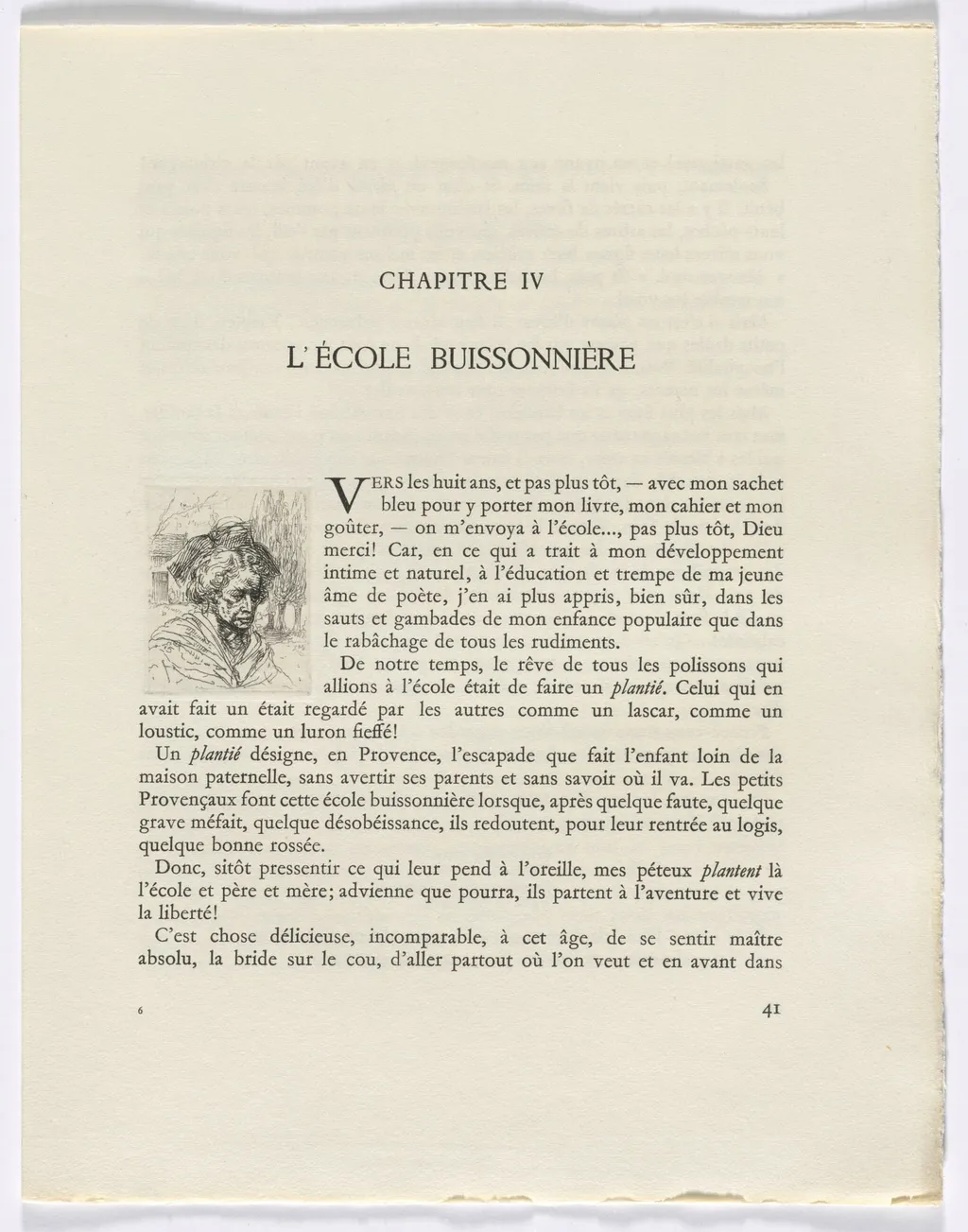
Frédéric Mistral: Mémoires et Recits by Frédéric Mistral: bust of a woman (page 41) DUPLICATE is a work on paper by Auguste Brouet. It dates from 1937 and is held in the collection of the Cleveland Museum of Art.
About this work
Overview
The work is part of a larger publication and reflects Brouet’s interest in capturing fleeting expressions rather than polished portraiture.
This drawing, created by Auguste Brouet in 1937, appears in the portfolio Frédéric Mistral: Mémoires et Recits. It is a pencil sketch depicting a woman’s face in close profile, rendered with loose, energetic lines. The work is part of a larger publication and reflects Brouet’s interest in capturing fleeting expressions rather than polished portraiture. The paper’s aged tone enhances its intimate, archival quality.
Subject & Meaning
The subject is a woman with her hair tightly gathered, her gaze directed forward with quiet intensity. There is no indication of her identity, and the lack of contextual details suggests the image functions as a study of presence rather than a named individual. The solemn expression invites contemplation, evoking a sense of inner focus without narrative explanation.
Technique & Style
Brouet employed rapid, uneven pencil strokes to define the contours of the face and hair, avoiding smooth modeling. The heavy, gestural lines convey volume through suggestion rather than detail. The yellowed paper adds texture and a sense of time passed, reinforcing the sketch’s provisional character. The work reads as an observational note, prioritizing immediacy over finish.
History & Provenance
The drawing was produced in 1937 as part of a limited portfolio illustrating the writings of Frédéric Mistral. It entered the collection of The Cleveland Museum of Art through documented acquisition, where it remains as an example of early 20th-century book illustration. Its inclusion in the portfolio situates it within a literary context, though its artistic value stands independently.
Context
Brouet was known for his illustrations in literary publications, often favoring expressive line work over realism. This sketch aligns with broader interwar European trends that valued the spontaneity of drawing as a bridge between literature and visual art. The portfolio’s design, pairing text with such intimate images, sought to evoke mood rather than illustrate scenes literally.
Legacy
Though not widely exhibited outside the portfolio, the drawing exemplifies Brouet’s contribution to illustrated books of the period. Its unpolished quality has influenced later artists interested in the expressive potential of sketch-like forms. It remains a quiet testament to the role of drawing as a meditative practice within literary publishing.
Artist & collection
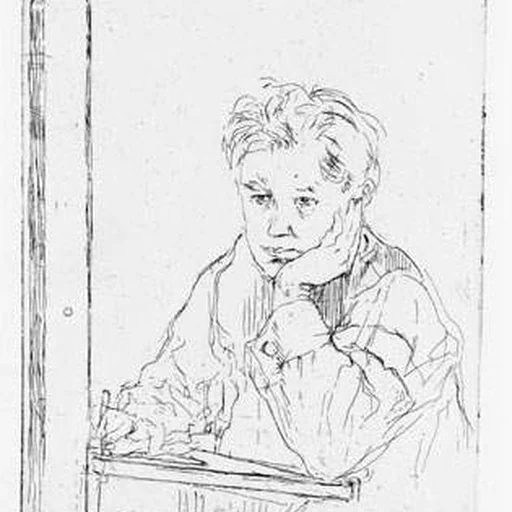

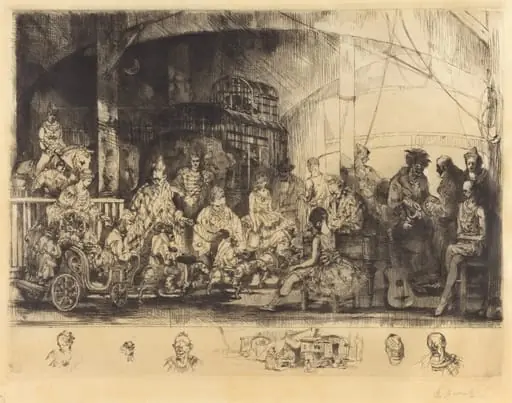
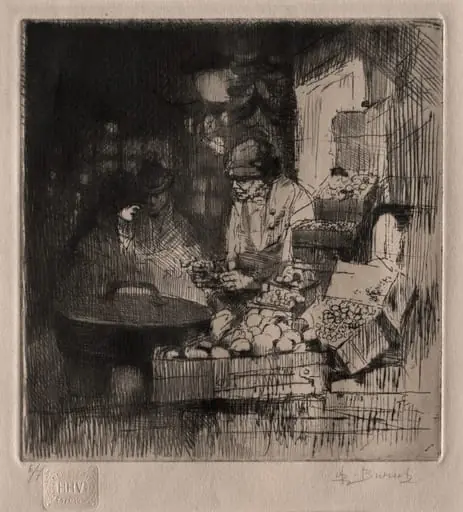
 Frédéric Mistral: Mémoires et Recits by Frédéric Mistral: bust of a woman (page 41)
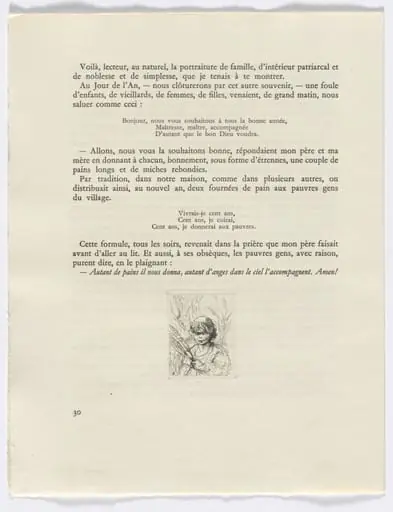 Frédéric Mistral: Mémoires et Recits by Frédéric Mistral: bust of a child (page 30)
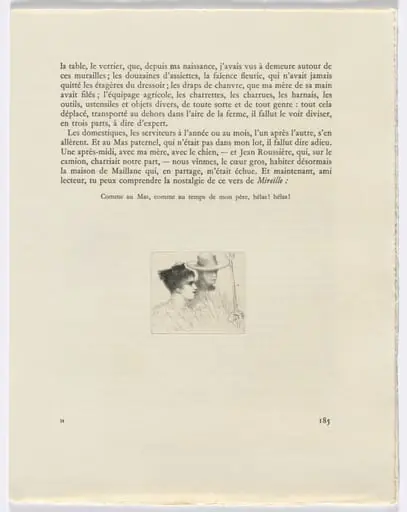 Frédéric Mistral: Mémoires et Recits by Frédéric Mistral: bust of a man and a woman (page 185)
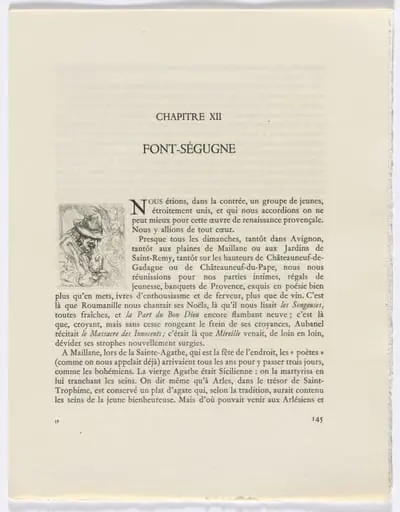 Frédéric Mistral: Mémoires et Recits by Frédéric Mistral: bust of old man (page 145)
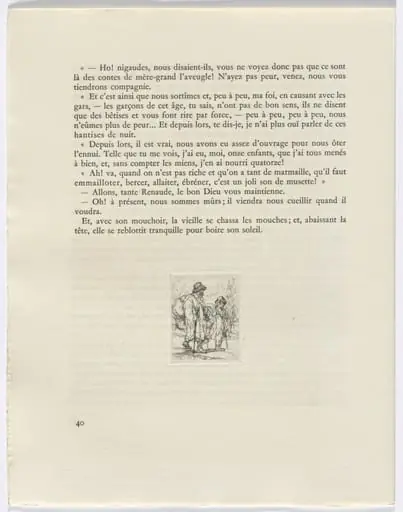 Frédéric Mistral: Mémoires et Recits by Frédéric Mistral: two figures walking (page 40)
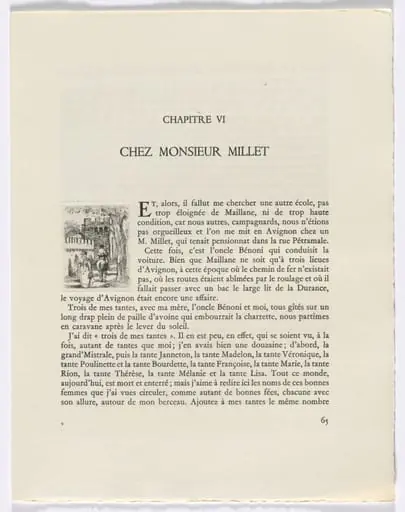 Frédéric Mistral: Mémoires et Recits by Frédéric Mistral: woman and man on horse (page 65)
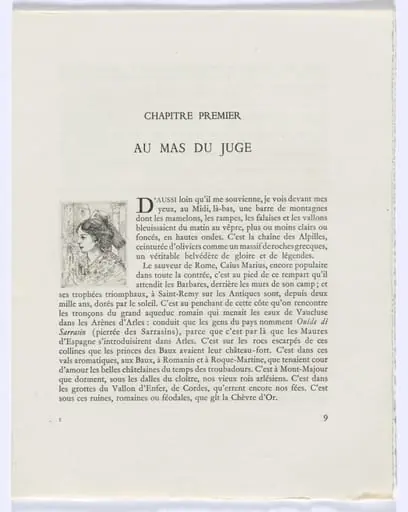 Frédéric Mistral: Mémoires et Recits by Frédéric Mistral: bust of woman in profile (page 9)
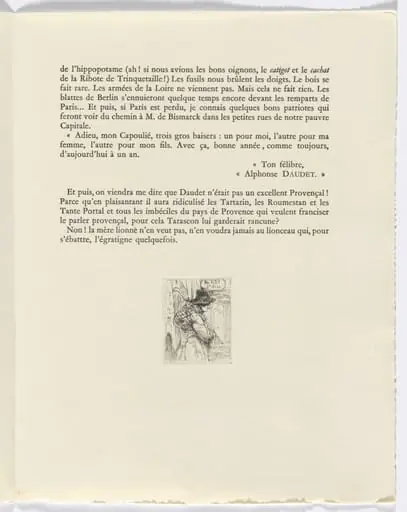 Frédéric Mistral: Mémoires et Recits by Frédéric Mistral: vagabond (page 223)