Artwork
The Halt at the Village
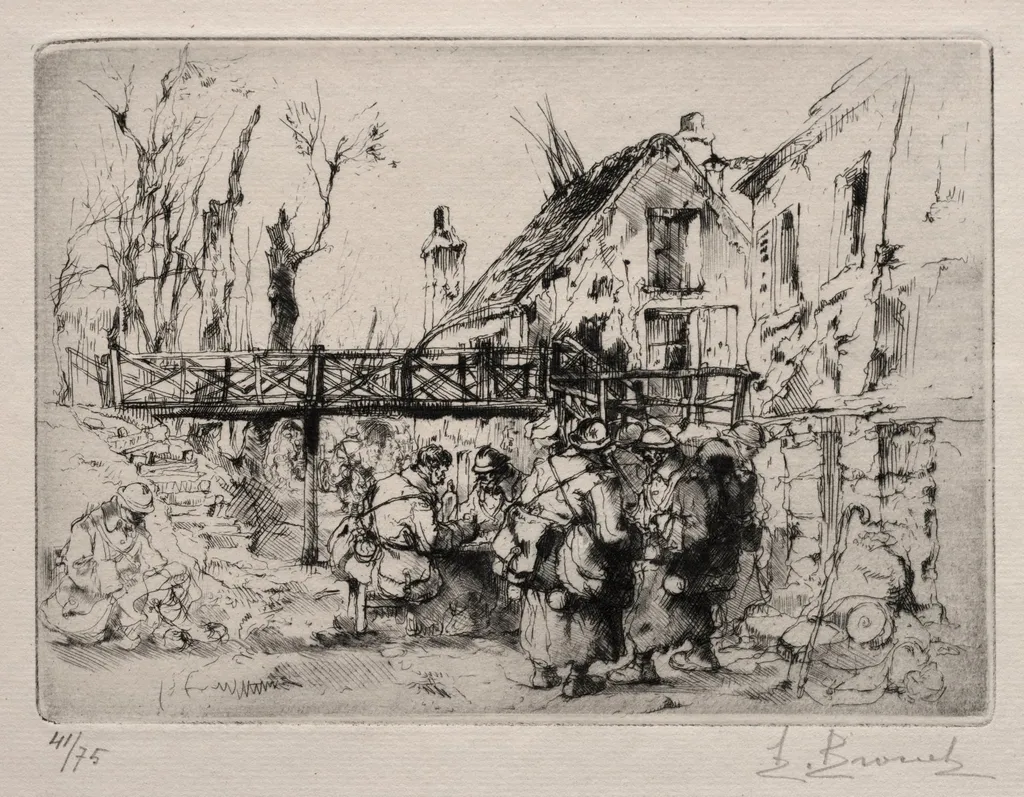
The Halt at the Village is a print by the Impressionist artist Auguste Brouet. It dates from 1925 and is held in the collection of the Cleveland Museum of Art.
About this work
Overview
Auguste Brouet’s 1925 print, The Halt at the Village, is part of the Cleveland Museum of Art’s collection. The work presents a bustling riverside scene beneath a bridge, populated by figures in hats and coats who are either conversing or observing the water. The composition balances the dark mass of the crowd with the lighter tones of the bridge and sky, creating a snapshot of everyday activity.
Subject & Meaning
The image captures a moment of communal pause on a village riverbank, where pedestrians gather under a bridge. The figures, rendered in simple silhouettes, suggest a shared experience of waiting or leisure, emphasizing the ordinary rhythms of public life. The presence of trees, distant buildings, and the flowing water situates the scene within a recognizable, modest urban setting.
Technique & Style
Brouet employs swift, sketch‑like lines that convey movement and immediacy. The contrast between the dense, dark forms of the crowd and the lighter, more open areas of the bridge and sky highlights his use of tonal variation to separate foreground from background. The print’s loose handling aligns with realist tendencies to depict quotidian moments without idealization.
History & Provenance
Created in 1925, The Halt at the Village entered the Cleveland Museum of Art’s holdings at an unspecified date, where it remains on view. The work reflects Brouet’s mature period, during which he produced numerous prints focused on urban and rural scenes, contributing to the museum’s representation of early twentieth‑century French printmaking.
Artist & collection

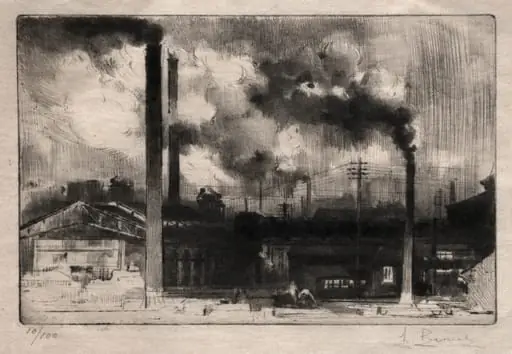
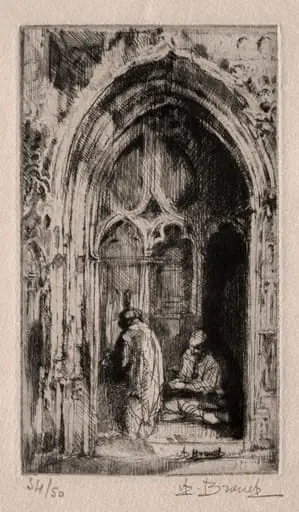
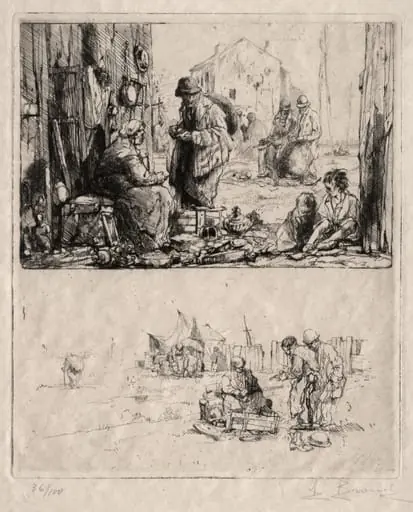 On the Fortifications at Saint-Ouen
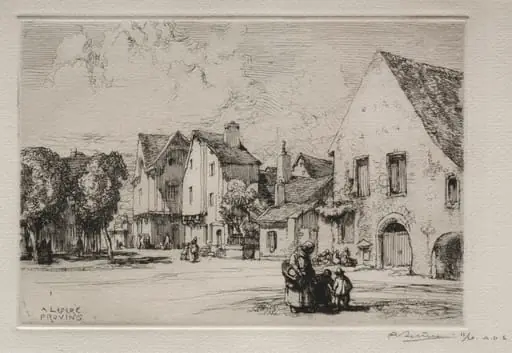 Provins
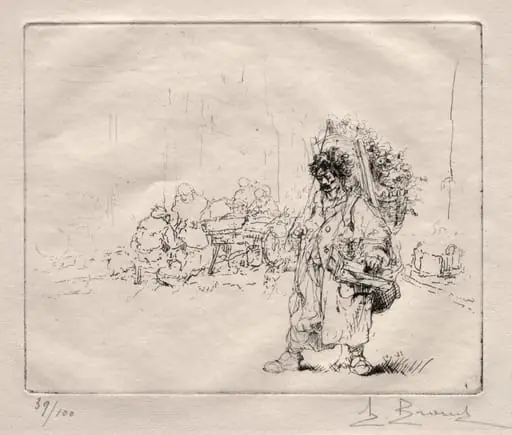 Marchand a la Hotte
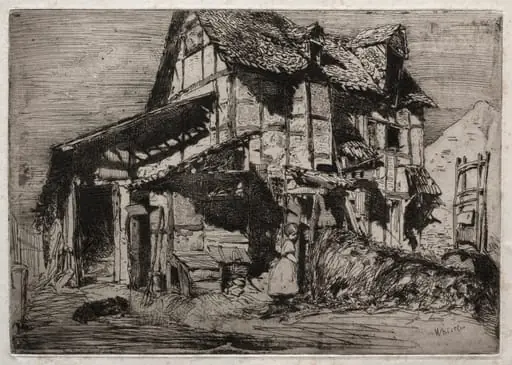 Twelve Etchings from Nature: The Unsafe Tenement
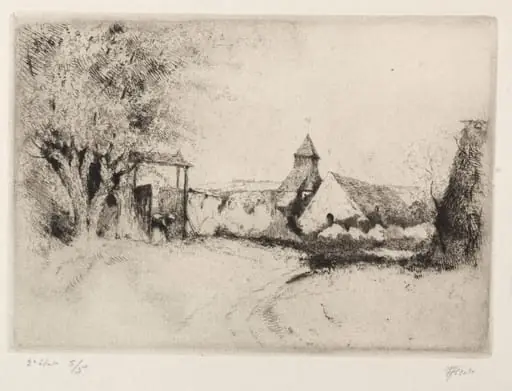 The Belfry by the Willows
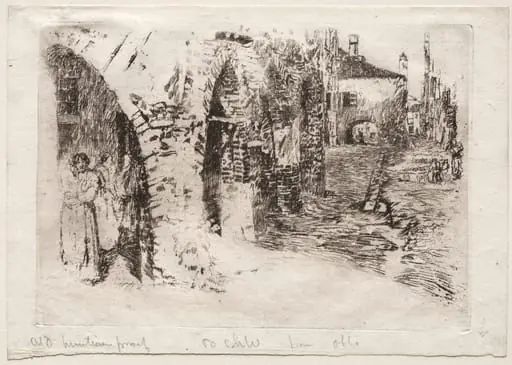 Chioggia
 Shelter for the Poor, Vendee (Le nid de pauvres, Vendee)
 Retour du Marché de St. Jean-de-Mont
 Burial in the Vendeen Marsh (Un enterrement dans le marais Vendeen)
 The Barrow - Quartier des Marolles, Brussels
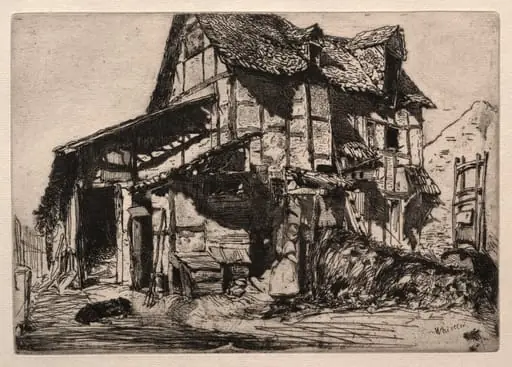 An Unsafe Tenement