Artwork
The Net Menders
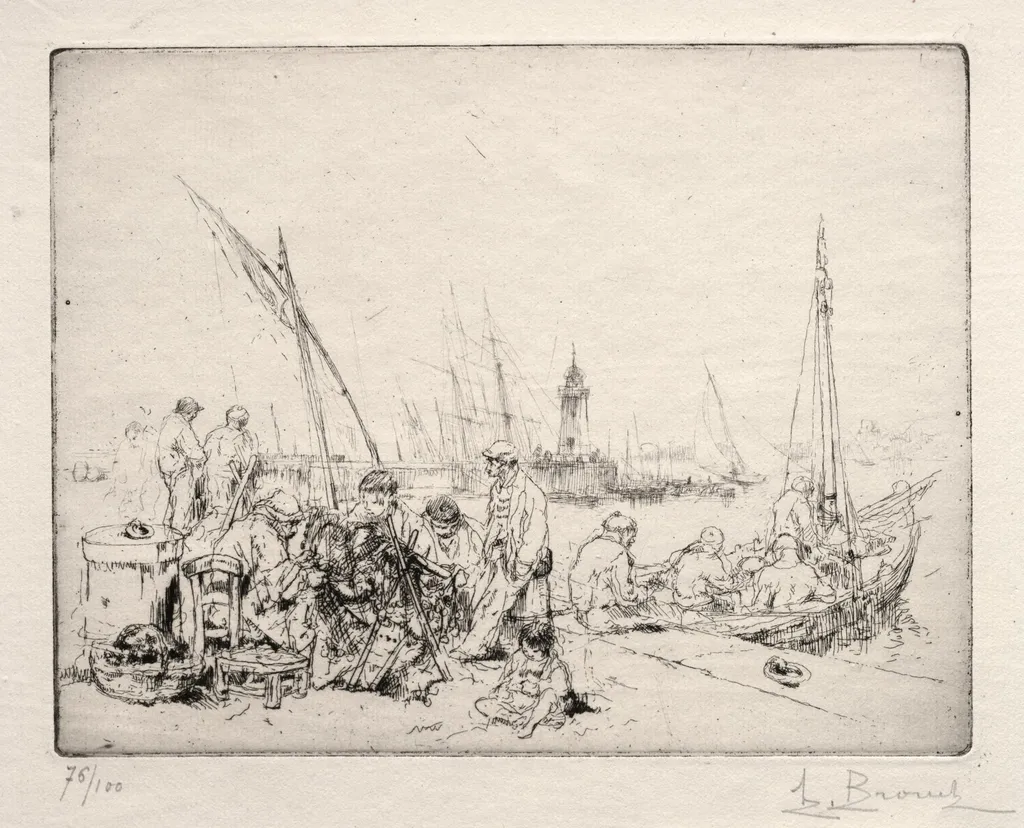
The Net Menders is a print by Auguste Brouet. It dates from 1918 and is held in the collection of the Cleveland Museum of Art.
About this work
Overview
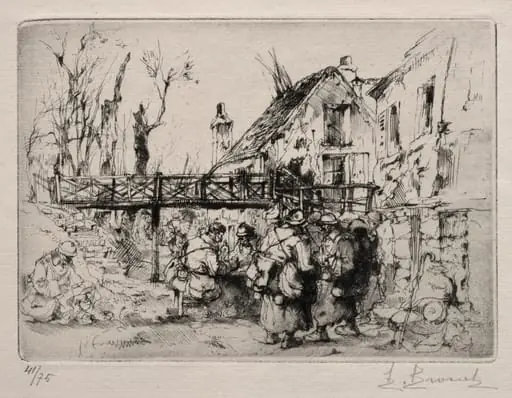
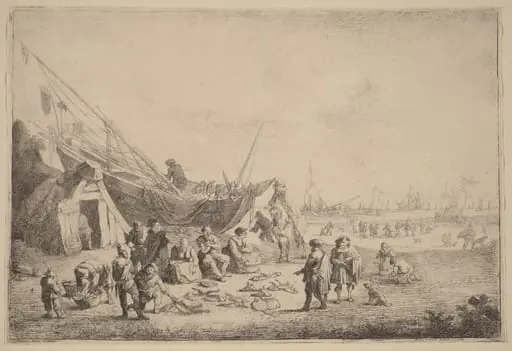
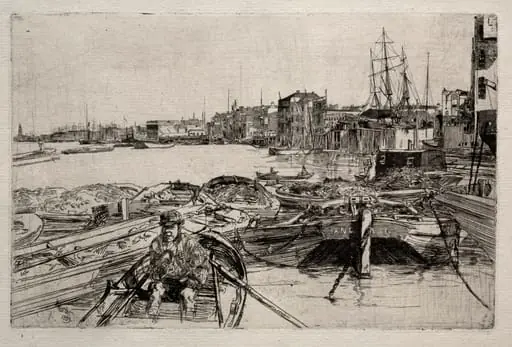
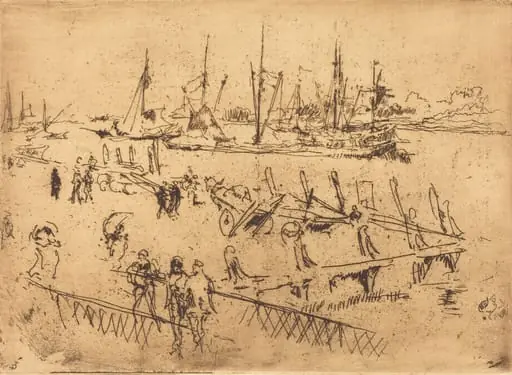
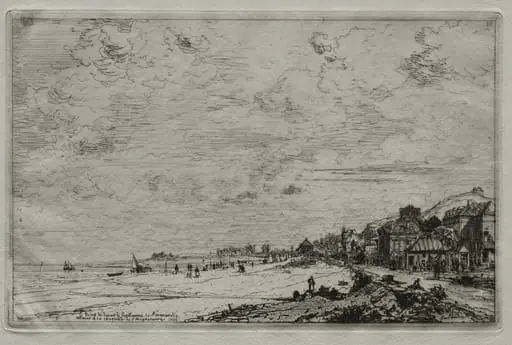
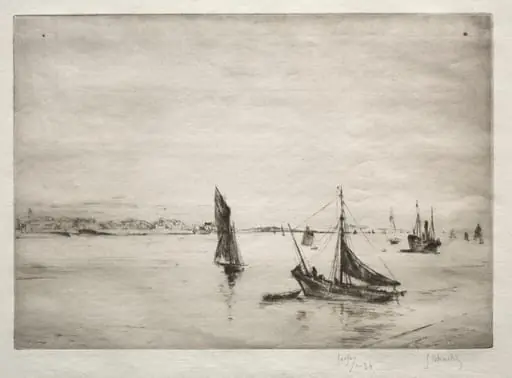
Created around 1918 by Auguste Brouet, The Net Menders is a drypoint print depicting laborers repairing fishing nets along a coastal shore.
Created around 1918 by Auguste Brouet, The Net Menders is a drypoint print depicting laborers repairing fishing nets along a coastal shore. The work is part of the collection at The Cleveland Museum of Art. Brouet captures a moment of quiet industry, emphasizing the rhythm of daily work rather than dramatic action. The composition is grounded in observation, reflecting the artist’s interest in ordinary life.
Subject & Meaning
The scene portrays a group of fishermen and women engaged in the meticulous task of mending nets, a common yet essential activity in coastal communities. Figures are arranged in varied postures—some seated, others standing—suggesting both fatigue and routine. The absence of overt emotion or narrative implies a meditation on endurance and communal labor, valuing the dignity of unseen work.
Technique & Style
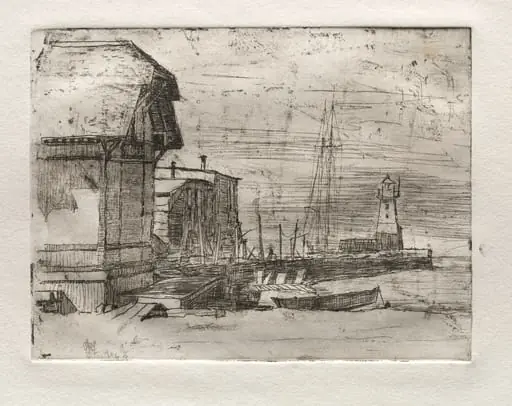
Brouet employed drypoint etching, using rapid, expressive lines to convey texture and motion without fine detail. The inked strokes create a sense of immediacy, with loose contours defining figures and objects. Background elements like masts and a lighthouse are suggested rather than rendered precisely, enhancing the atmospheric quality. The technique prioritizes mood over realism, aligning with early 20th-century printmaking trends.
History & Provenance
The print was made during or shortly after World War I, a period when Brouet focused on rural and maritime labor. It entered The Cleveland Museum of Art’s collection in the 20th century, likely through acquisitions emphasizing modern European prints. Its preservation reflects institutional interest in documentary art that captures everyday life during a time of social change.
Context
Brouet’s work emerged alongside broader European movements that celebrated the working class, influenced by Realism and the rise of printmaking as a medium for social observation. Coastal communities in northern France, where he often worked, provided rich subject matter. The Net Menders aligns with contemporaries who sought to elevate mundane labor through art, countering grand historical themes with intimate scenes.
Legacy
Though not widely known outside printmaking circles, Brouet’s prints, including The Net Menders, remain valued for their quiet authenticity. The work contributes to a legacy of artists who documented labor without sentimentality. Its presence in The Cleveland Museum of Art ensures continued access for scholars and viewers interested in early modern printmaking and social realism.
Artist & collection