Artwork
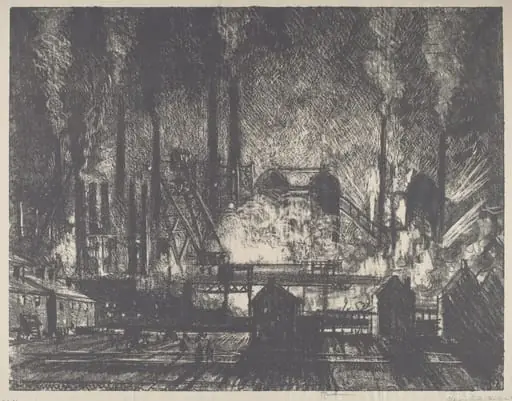
At the Creusot Works: The Smokestacks
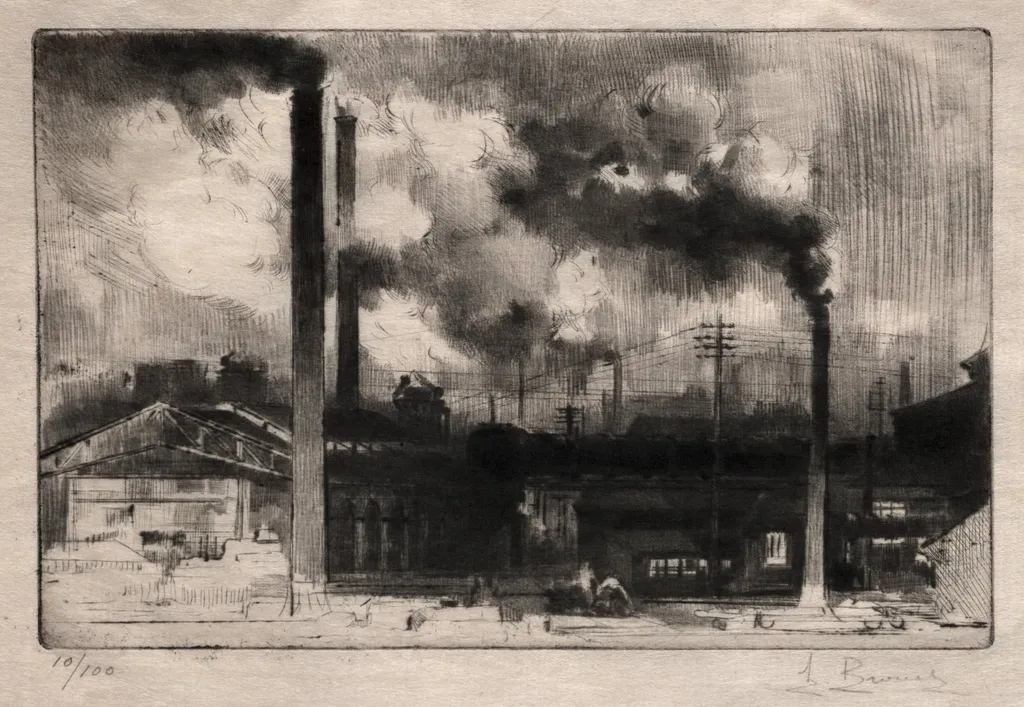
At the Creusot Works: The Smokestacks is a print by Auguste Brouet. It dates from 1922 and is held in the collection of the Cleveland Museum of Art.
About this work
Brouet used a printmaking tool called a drypoint needle to scratch lines into a copper plate.
This print shows tall factory smokestacks belching dark smoke against a cloudy sky. The thick, rough lines make the smoke look heavy and real. You can almost smell the coal in the air.
Brouet used a printmaking tool called a drypoint needle to scratch lines into a copper plate. When inked, these lines catch light differently, making some parts glow.
Look up Auguste Brouet (French, 1872–1941) to see more of his bold etchings.
Overview
The collection comprises eleven individual prints and two illustrated books by Auguste Brouet, totaling ninety-six etchings. This donation stands out for its depth, offering a focused survey of the artist’s output rather than a scattered selection. The works were produced during a period of industrial expansion in France, reflecting Brouet’s interest in labor and infrastructure. The inclusion of bound volumes alongside single sheets suggests a deliberate curation of his graphic narrative.
Subject & Meaning
The print depicts the smokestacks of the Creusot industrial complex, their plumes rising into a muted sky. Rather than glorifying progress, the imagery conveys the weight of industrial labor—dense, oppressive, and unrelenting. The smoke is rendered not as a symbol of innovation but as a physical presence, thick and choking. Brouet’s focus on machinery and smoke suggests a quiet meditation on the human cost of modernization.
Technique & Style
Brouet employed drypoint etching, scratching directly into a copper plate with a sharp needle to create dense, textured lines. These incised marks hold ink deeply, producing rich, velvety blacks that contrast with the faint glow of untouched plate. The roughness of the lines mimics the grit of coal dust and soot, enhancing the tactile quality of the scene. His technique favors immediacy over refinement, emphasizing atmosphere over precision.
History & Provenance
The prints were donated as a unified group, an uncommon gesture that preserved the integrity of Brouet’s thematic series. The donor’s intent appears to have been scholarly rather than decorative, recognizing the body of work as a cohesive record of early 20th-century French industry. The collection’s survival as a single unit offers rare insight into how Brouet’s prints were originally intended to be viewed together.
Context
Created in the early 1900s, these works respond to the rapid industrialization of eastern France, particularly around Le Creusot, a hub of steel and armaments production. Brouet, though not a laborer himself, observed the landscape shaped by factories and workers. His prints align with broader European artistic movements that turned away from idealized rural scenes toward the raw realities of urban and industrial life.
Legacy
Brouet’s etchings remain notable for their unembellished portrayal of industrial labor, distinguishing him from contemporaries who romanticized machinery. His use of drypoint gave his images a visceral quality that influenced later printmakers interested in social realism. Though not widely celebrated in his lifetime, his body of work now serves as a quiet but potent document of France’s industrial transformation.
Own this work as a print
Artist & collection

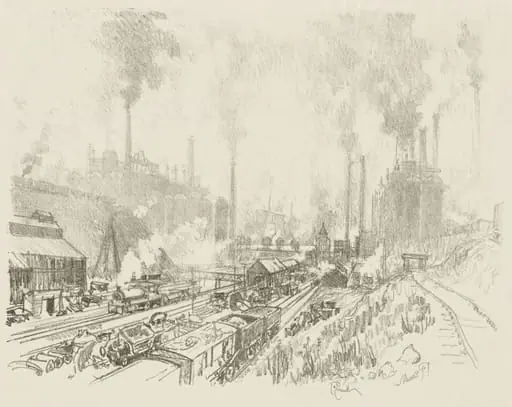 English War Work: In the Land of Iron and Steel
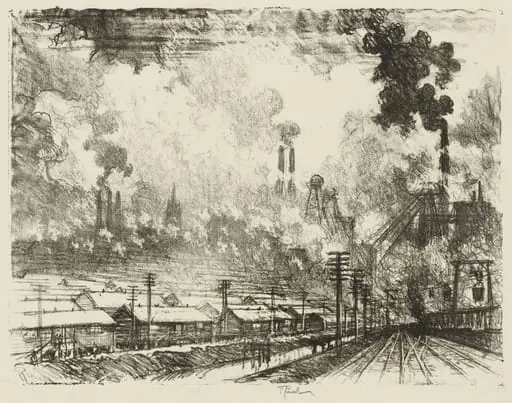 English War Work: The Coal Mines
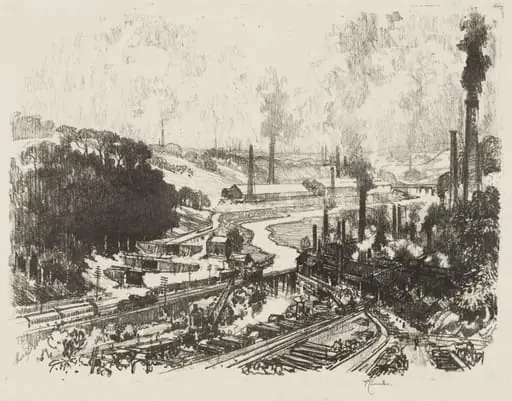 English War Work: Munition Works
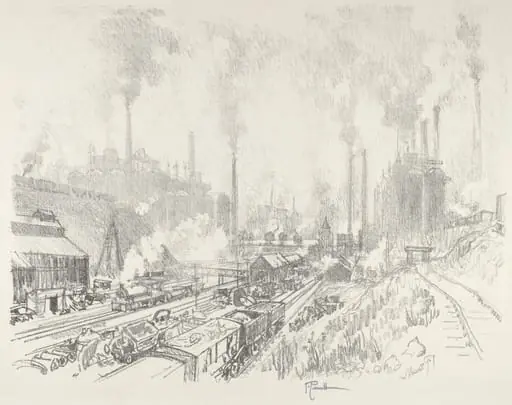 In the Land of Iron and Steel
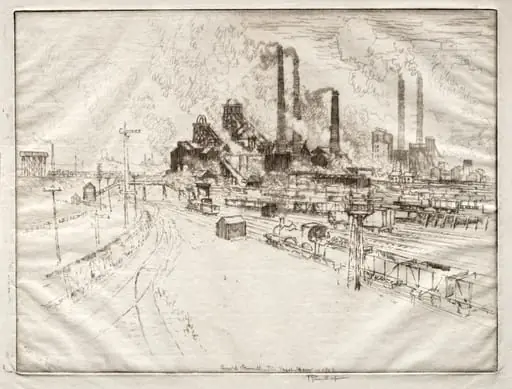 The Great Main, Near Sheffield
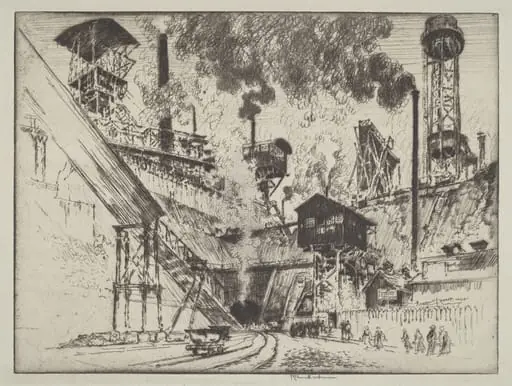 Mouth of the Mine, Ruhrort near Oberhausen
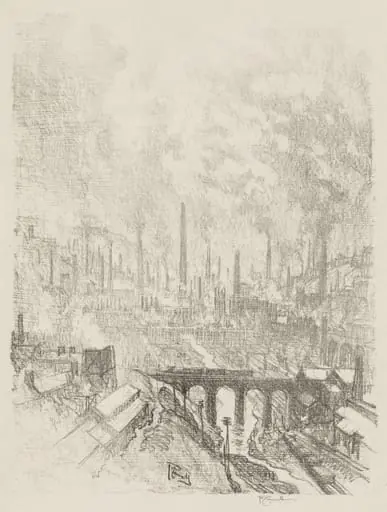 English War Work: Munitions City, No. 1
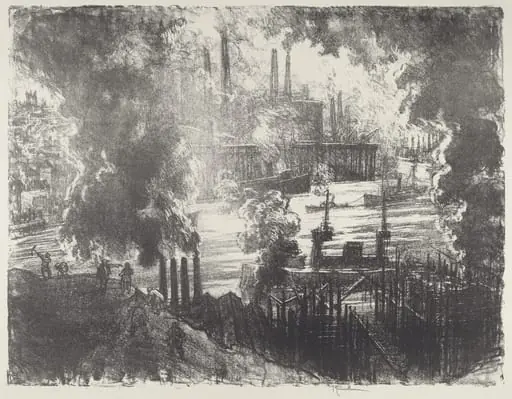 Munitions River
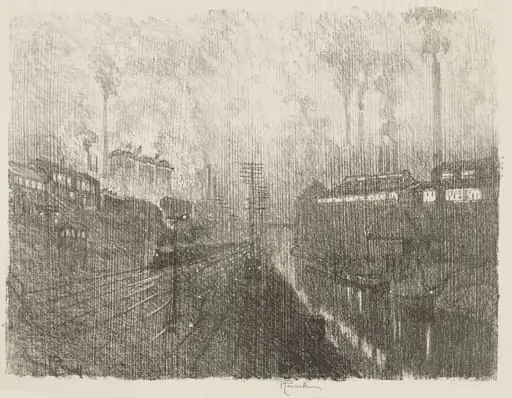 English War Work: Evening in the Munitions Country
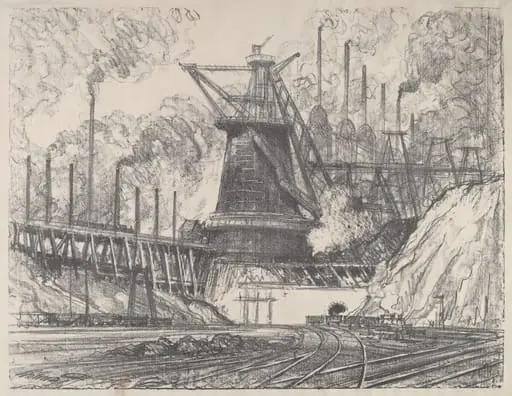 The Big Mill, Gary, Indiana
 Changing Shifts, Charleroi
 English War Work: Munitions River