Artwork
Untitled
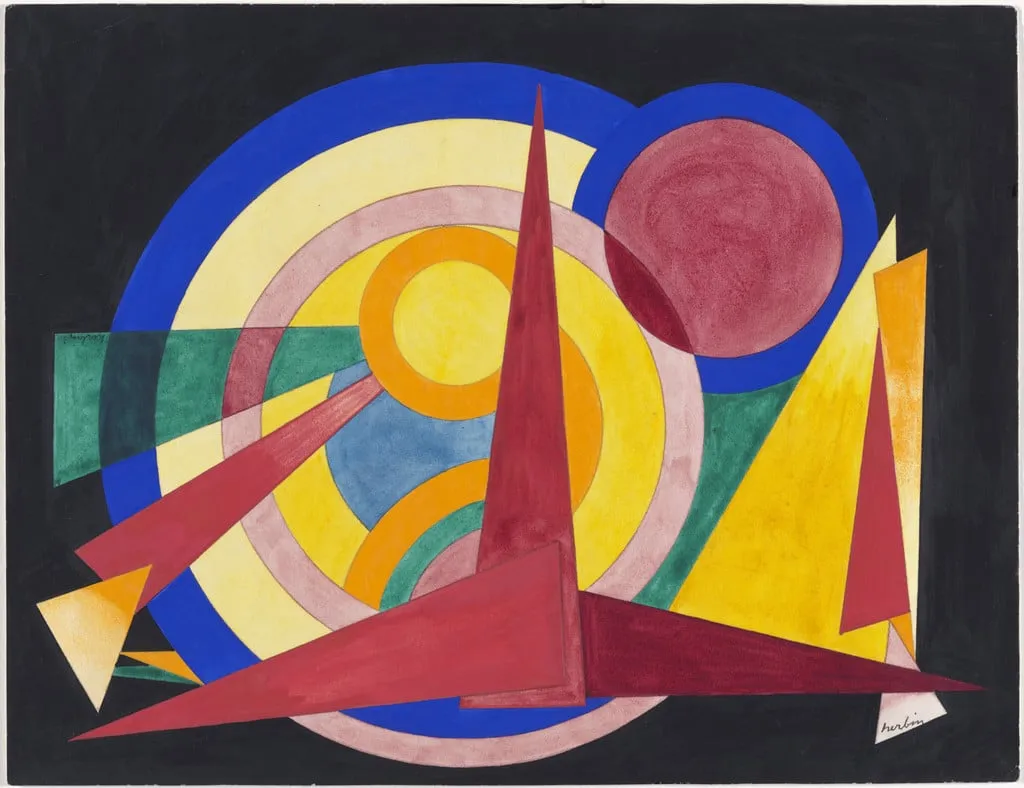
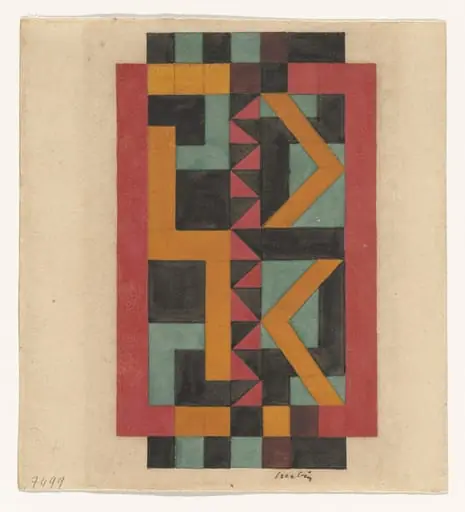
Untitled is a gouache drawing by Auguste Herbin. It dates from 1941 and is held in the collection of the Museum of Modern Art.
About this work
Overview
It is part of The Museum of Modern Art’s collection, reflecting its significance in the development of modern abstraction.
Created in 1941, this gouache on paper drawing by Auguste Herbin exemplifies his commitment to non-representational form. Executed during a period of intense artistic experimentation in occupied France, the work belongs to a series of abstract compositions that prioritize color and geometry over narrative. It is part of The Museum of Modern Art’s collection, reflecting its significance in the development of modern abstraction.
Subject & Meaning
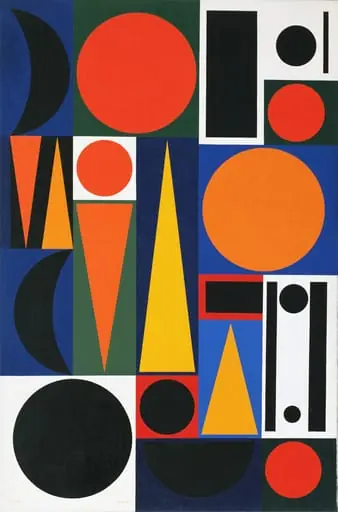
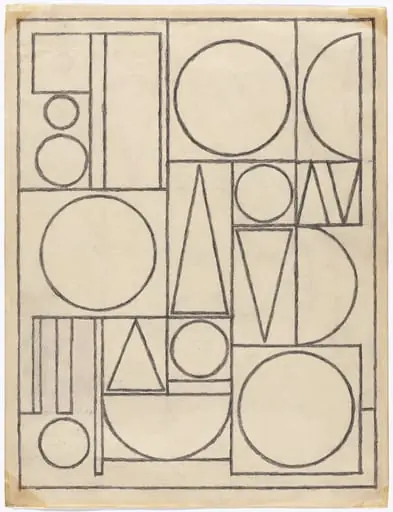
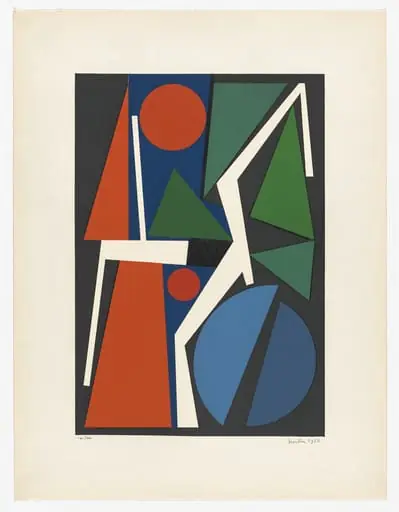
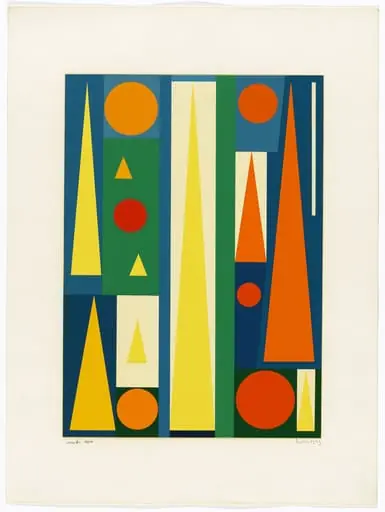
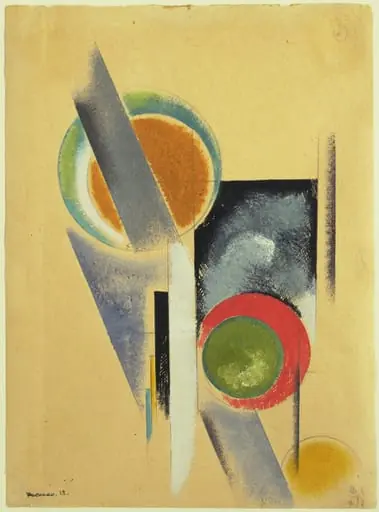
The piece contains no figurative elements; instead, it presents a dynamic arrangement of geometric shapes—triangles, circles, and rings—arranged without hierarchical focus. The absence of recognizable subjects underscores Herbin’s pursuit of pure visual harmony. The composition suggests rhythm and balance through repetition and contrast, inviting contemplation of form rather than representation.
Technique & Style
Herbin employed gouache for its opaque, matte quality, allowing sharp-edged, flat planes of color to sit distinctly against a black ground. The shapes are carefully cut and placed, resembling a constructed puzzle. Clean lines and unmodulated hues—red, blue, yellow—create visual tension without depth, emphasizing the two-dimensionality of the surface and the materiality of the medium.
History & Provenance
Made during World War II, the work emerged from a context in which abstract art was both suppressed and redefined in France. Herbin, a founding member of Abstraction-Création, continued developing his visual language despite political pressures. The drawing entered MoMA’s collection in the postwar period, aligning with the institution’s early focus on European modernism and non-objective art.
Context
Herbin’s work in 1941 reflects the broader European shift toward geometric abstraction, influenced by Constructivism and De Stijl. Alongside peers like Mondrian and Arp, he sought to create universal visual languages through simplified forms. This piece stands as a quiet but deliberate contribution to a movement that rejected traditional representation in favor of structural clarity and color relationships.
Legacy
Herbin’s use of color and geometry in this work influenced later generations of abstract artists, particularly those exploring hard-edge painting and color field composition. His insistence on abstraction as a disciplined practice, rather than an expressive gesture, helped legitimize non-figurative art in institutional settings. The drawing remains a reference point for understanding the evolution of modernist drawing practices.
Artist & collection

Artist
Auguste Herbin (29 April 1882 – 31 January 1960) was a French painter of modern art.