Artwork
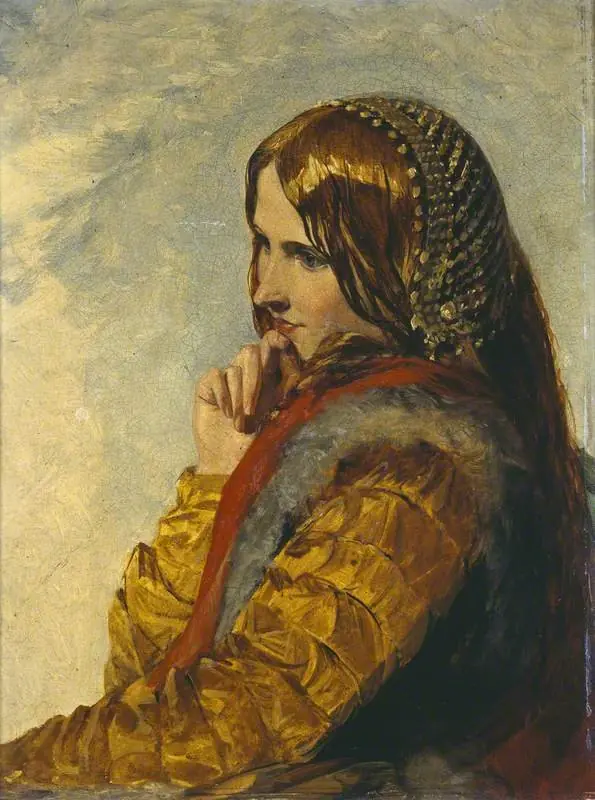
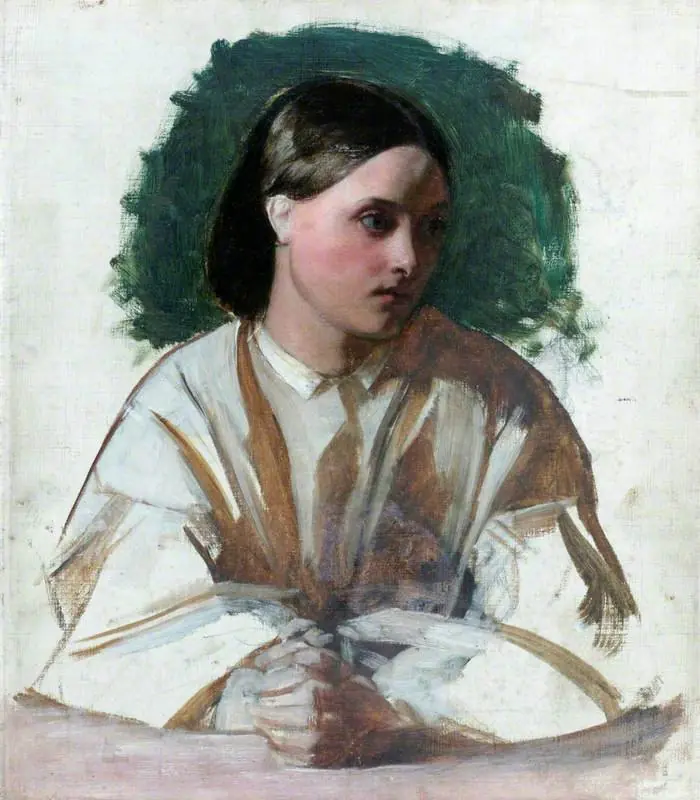
Preparatory Study for 'The Travelling Companions'
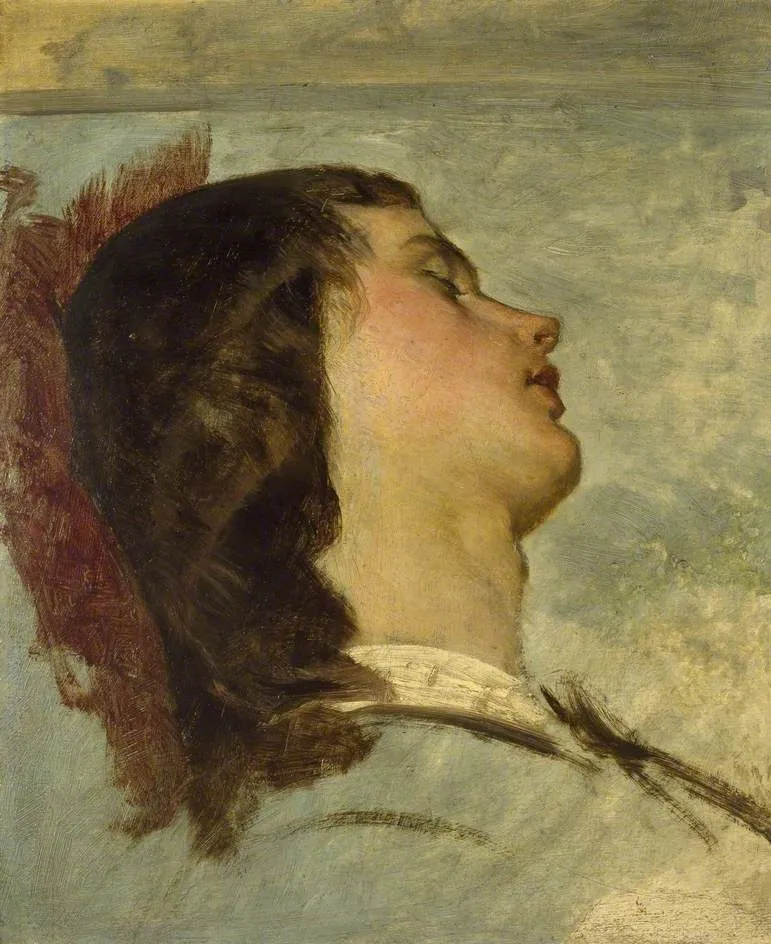
Preparatory Study for 'The Travelling Companions' is an oil painting by Augustus Egg. It dates from 1849 and is held in the collection of the Ashmolean Museum.
About this work
Overview
Created around 1849, this oil study by Augustus Leopold Egg serves as a preliminary exploration for his larger work, 'The Travelling Companions.
Created around 1849, this oil study by Augustus Leopold Egg serves as a preliminary exploration for his larger work, 'The Travelling Companions.' Egg, a member of the British artistic group known as The Clique, focused on scenes of everyday life with psychological nuance. This small-scale piece reveals his method of refining composition and expression before executing final works, a practice common among narrative painters of the period.
Subject & Meaning
The study centers on a woman’s profile, eyes closed, her expression tranquil and introspective. Dressed in a simple white gown with dark hair neatly gathered, she appears in quiet repose, suggesting a moment of contemplation amid travel. The absence of narrative context invites interpretation of inner emotion rather than external action, aligning with Egg’s broader interest in the unspoken tensions of Victorian domesticity.
Technique & Style
Egg employs soft, blended brushwork to model the woman’s face, using subtle shifts in light and shadow to suggest volume without harsh definition. The muted grey-brown background isolates the figure, directing focus to her serene demeanor. The restrained palette and delicate handling reflect a sensitivity to tonal harmony, characteristic of Egg’s approach to capturing fleeting emotional states through controlled chiaroscuro.
History & Provenance
The study remained in Egg’s possession until it entered the Ashmolean Museum’s collection, where it is preserved as part of his artistic process. Its survival offers insight into his working methods, particularly how he developed key figures before committing to final compositions. Unlike his more famous triptych 'Past and Present,' this study was never exhibited publicly during his lifetime, remaining a private step in his creative workflow.
Context
In mid-19th century Britain, artists increasingly turned to contemporary life as subject matter, moving away from historical or mythological themes. Egg’s focus on intimate, psychologically charged moments aligned with this shift. His preparatory studies, like this one, reveal a commitment to authenticity in portraying the emotional undercurrents of middle-class existence during a time of rapid social change.
Legacy
Though overshadowed by his later triptych, this study exemplifies Egg’s consistent interest in quiet, interiorized narratives. It demonstrates his technical discipline and his ability to convey complex emotion through minimal means. As a surviving artifact of his process, it contributes to understanding how Victorian painters constructed meaning through careful observation and deliberate composition.
Artist & collection
Artist
Augustus Leopold Egg RA (2 May 1816 – 26 March 1863) was a British Victorian artist, and member of The Clique best known for his modern triptych Past and Present (1858), which depicts the breakup of a middle-class Victorian family.

 The Artist's Wife (Ellen Moxon, later Lady Orchardson, c 1854 - 1917)
 Study for 'The Execution of Mary, Queen of Scots'
 A Study of a Head
 Cap de femeie pe pernă
 Study to the Painting "The Death of Barbara Radziwiłł" – Head of Quinn Barbara
 Naisen pää, harjoitelma
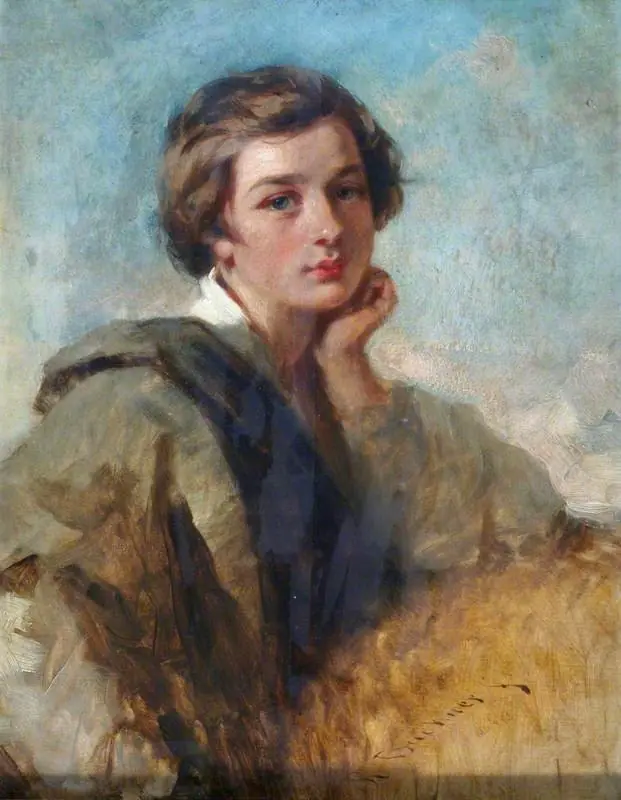 Portrait of a Boy
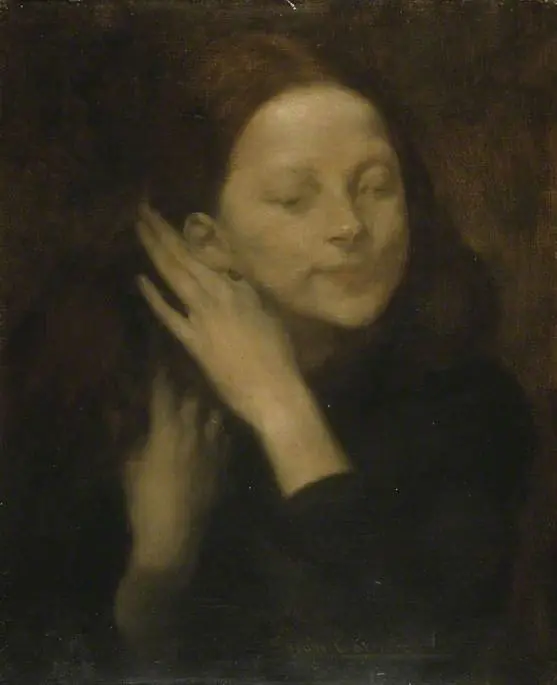 Portrait of his daughter, Lisbeth
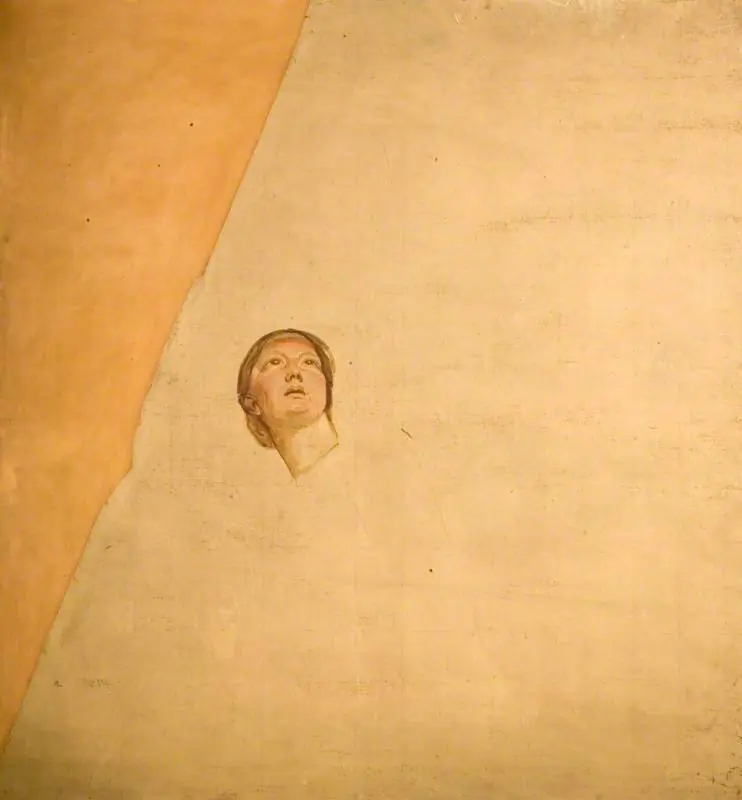 Female Head (cartoon for the south wall, south-east angle of the ceiling cove, dining room, Dorchester House)